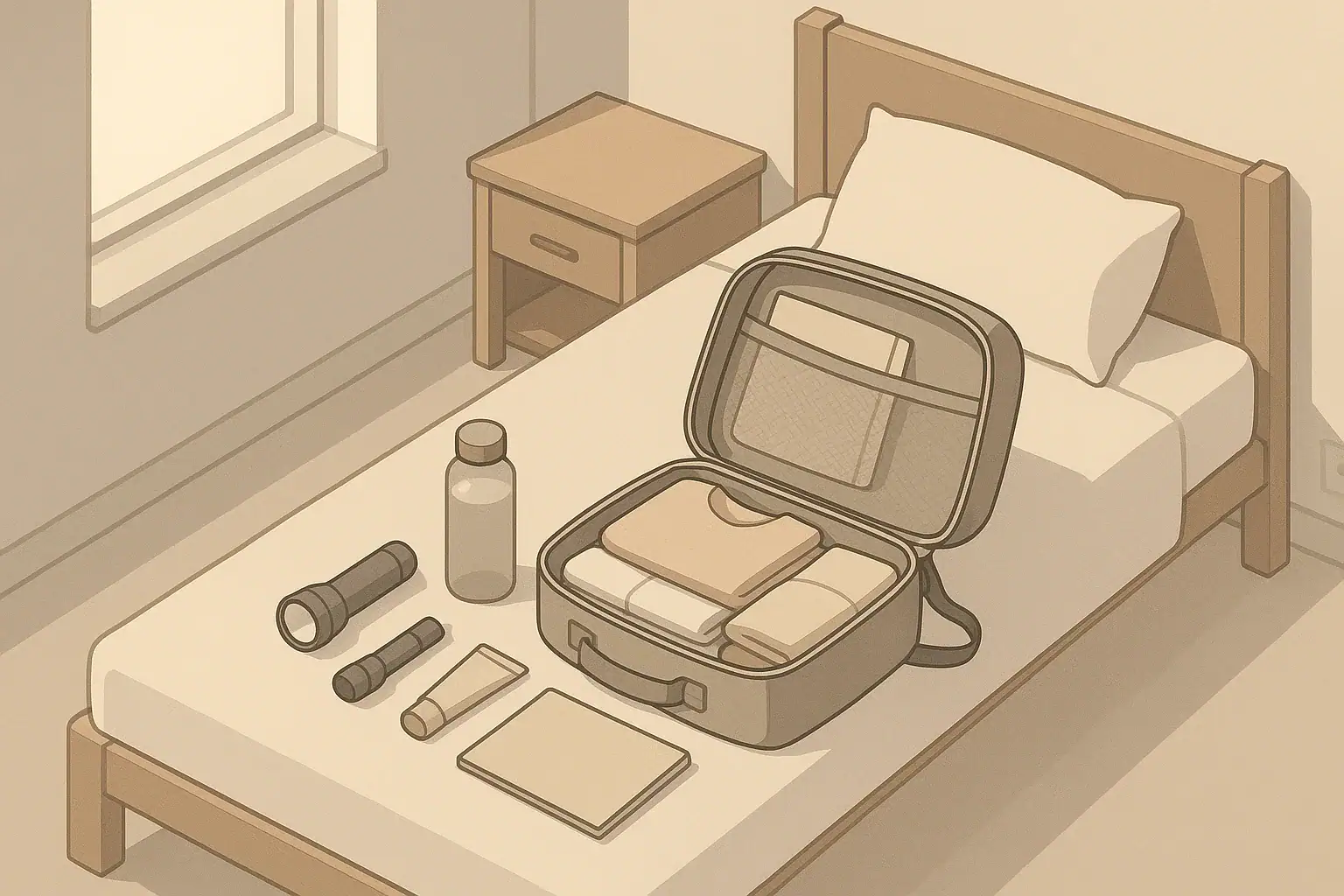
A go-bag is meant to be grabbed quickly during an evacuation or urgent situation. But if it sits untouched for months or years, items can expire, batteries can drain, and clothes may no longer fit. A simple maintenance routine keeps your bag reliable without becoming a big project.
Instead of treating your go-bag as a one-time task, think of it as part of basic home readiness, like checking smoke alarms or changing air filters. A quarterly (every three months) check is usually enough for most households, with a few items getting more frequent attention if needed.
This guide walks through a practical go-bag maintenance schedule suited to apartments, small homes, renters, families with kids, pets, and older adults. The goal is calm, realistic readiness, not stockpiling or worst-case planning.
Why Your Go-Bag Needs Regular Maintenance
A go-bag is meant to be grabbed quickly during an evacuation or urgent situation. But if it sits untouched for months or years, items can expire, batteries can drain, and clothes may no longer fit. A simple maintenance routine keeps your bag reliable without becoming a big project.
Instead of treating your go-bag as a one-time task, think of it as part of basic home readiness, like checking smoke alarms or changing air filters. A quarterly (every three months) check is usually enough for most households, with a few items getting more frequent attention if needed.
This guide walks through a practical go-bag maintenance schedule suited to apartments, small homes, renters, families with kids, pets, and older adults. The goal is calm, realistic readiness, not stockpiling or worst-case planning.
Setting Up a Quarterly Go-Bag Check Routine
Quarterly checks help you stay on top of expiration dates, seasonal needs, and life changes. Many people find it easiest to align checks with the start of each season.
Pick Your Quarterly Check Dates
Choose four recurring reminders each year. For example:
- Early January (winter)
- Early April (spring)
- Early July (summer)
- Early October (fall)
Set digital calendar reminders with a short checklist in the description so you do not have to remember the details each time.
Quick 15–30 Minute Quarterly Check Process
Most quarterly checks can be completed in under half an hour if your bag is reasonably organized. Move everything onto a bed or table, then work through this sequence:
- Inventory: Lay items out and group them (water/food, clothing, documents, hygiene, tools, kids/pets, medications if applicable).
- Scan dates: Look for obvious expiration dates on food, water pouches, batteries (if labeled), and other dated items.
- Test and top off: Check flashlights and other battery-powered items, refill small containers if needed.
- Seasonal swap: Adjust clothing layers and small comfort items for weather and local risks.
- Family updates: Confirm contact lists, copies of key documents, and kid or pet needs are still current.
Keep a simple paper checklist stored in the bag and a digital version on your phone so each quarterly session is repeatable.
Example values for illustration.
| Task | Why it matters | Notes |
|---|---|---|
| Check food and water dates | Avoid spoiled or unusable supplies | Rotate items into regular use before they expire |
| Test flashlights and small electronics | Ensures light and communication work when needed | Replace or recharge batteries if dim or dead |
| Review clothing and footwear | Comfort and safety in current season | Adjust sizes for growing kids and temperature |
| Check documents and contact list | Keeps critical information up to date | Update addresses, phone numbers, and insurance copies |
| Inspect bag and containers | Prevents leaks, tears, and broken zippers | Repair or replace damaged pouches and bags |
| Confirm special items (kids, pets, seniors) | Supports specific daily needs | Swap out sizes, favorite snacks, or comfort items |
| Note restock items | Prevents gradual depletion over time | Keep a running list for your next regular shopping trip |
What to Check and Rotate Each Quarter
Not everything in your go-bag needs the same level of attention. Some items are “check only,” others need active rotation. Below is a breakdown of what to look at every three months.
Food and Water: Simple Rotation, Not Stockpiling
Your go-bag is for short-term emergencies and evacuation, so you generally only need compact, shelf-stable items.
Each quarter:
- Check dates on packaged snacks, energy bars, nut mixes, and other compact foods.
- Rotate near-date items into your regular pantry so they get eaten and replaced.
- Inspect water containers for leaks, bulging, or damage.
- Review your total amount based on who you pack for (adults, kids, pets).
Many people prefer to keep only a small amount of food and water in the go-bag and rely on larger home storage for staying in place. The quarterly check is a good time to confirm that your grab-and-go supplies match your current household size and needs.
Batteries, Lighting, and Small Electronics
Battery-powered items can quietly become useless if they are never tested.
Every quarter:
- Test flashlights, headlamps, and lanterns for brightness.
- Check backup battery packs for charge status if they have an indicator.
- Inspect cables for fraying or damage.
- Confirm your phone’s charging cable type matches current devices.
Some people prefer to store batteries outside devices to reduce the chance of leakage, especially in hot or humid climates. If you do this, keep them in a small, clearly labeled pouch inside the bag.
Clothing, Footwear, and Seasonal Adjustments
Clothing is one of the most seasonal parts of a go-bag. The same outfit will not be comfortable in both a summer heatwave and a winter storm.
At each quarterly check:
- Swap layers to match the coming season (lighter layers for hot months, warmer ones for cold months).
- Verify sizes for children’s clothing, shoes, and diapers.
- Include basic comfort items like a hat, thin gloves, or light scarf depending on your climate.
- Check footwear condition if you store an extra pair of sturdy shoes in or near the bag.
If space is tight in a small apartment, focus on one versatile outfit per person and a few compact extras like socks and undergarments. You can store bulkier seasonal items (like warm coats) near the bag with a note reminding you to grab them.
Documents, Contacts, and Small Essentials
Your go-bag may hold copies of important information, not the originals. These can be physical copies, digital copies on a USB drive, or both, depending on your comfort level.
Each quarter, review:
- Emergency contact list: phone numbers, email addresses, and any meeting point notes.
- Copies of identification: driver’s licenses, ID cards, or similar.
- Insurance and housing information: renters or homeowners details, key policy pages.
- Local emergency details: information relevant to your area’s common events, like evacuation zones.
Update anything that has changed: new phone numbers, new address, new insurance, or new family members. If you keep digital copies, make sure they are readable on at least one device you could reasonably access during an emergency.
Kids, Pets, and Seniors: Special Items to Revisit
Households with children, older adults, or pets benefit from a few tailored items in the go-bag. These can change quickly over time.
Quarterly, take a moment to:
- Check kid items: diapers, wipes, small comfort objects, and activity items like a small toy or blank notebook.
- Update pet supplies: leash, collapsible bowl, waste bags, and a small portion of their usual food in a sealed container.
- Review support items for seniors: spare glasses, simple mobility aids (if appropriate and portable), and any non-medication daily-use items that are particularly helpful.
If anyone in your home takes prescription medications, talk with their healthcare provider or pharmacist about safe ways to ensure access during short disruptions. For example, some people keep a small, labeled backup in a separate, temperature-appropriate location and rotate it using refill cycles.
Annual Deep-Dive: Once-a-Year Detailed Review
Alongside quarterly checks, an annual deep review is helpful for bigger changes. This might align with the start of a season that is higher risk in your area, such as winter storms or hurricane season.
Reassess the Whole Bag
Once a year, take everything out and ask:
- Has my living situation changed? (new city, new building type, different risks)
- Has my household changed? (new roommate, new baby, older child, aging parent)
- Do I still need everything here? (remove duplicates or items you would realistically never use)
- Is the bag itself holding up? (zippers, straps, padding)
This is also a good time to walk through where your bag lives. It should be reasonably accessible, out of direct sunlight and extreme heat if possible, and not buried under heavy items.
Refresh Skills and Family Plans
Your go-bag is one piece of a larger plan. During your annual review, consider:
- Household meeting spots if you cannot return home directly.
- How you would leave without a car if that applies to you.
- How kids would know what to do if they are at school or with another caregiver.
You do not need to rehearse complex scenarios. A calm, simple conversation once a year helps everyone remember that the bag exists and what its purpose is.
Sample Rotation Schedules for Common Go-Bag Items
Different items age at different speeds. Some are fine for years with only brief checks, while others benefit from more regular rotation. The aim is to use what you store rather than discarding it.
Quarterly vs. Annual Rotations
Here is a general way to think about timing:
- Quarterly check and rotate if needed: snacks, water pouches, baby items, pet food, seasonal clothing, and anything that changes with age or size.
- Annual update: copies of documents, full clothing swap if you live in a two-season climate, and a full battery refresh if you prefer a yearly replacement schedule.
- Multi-year review: some tools, compact blankets, and simple shelter items may only need a quick inspection for damage once a year and replacement every few years.
When you rotate food or other consumables out of the go-bag, place them in an obvious spot in your kitchen or pantry so they get used soon, then replace them in the bag with fresh items.
Using Everyday Life to Drive Rotation
You can reduce the feeling of “extra” storage by folding go-bag rotation into normal routines:
- When you buy granola bars, put the new box in the pantry and move older bars into the go-bag.
- When a child outgrows a size, move the next size up into the go-bag and donate or repurpose older items.
- When your pet’s food changes, update the go-bag supply so it matches what their stomach is used to.
This “first in, first out” approach keeps your go-bag aligned with what you actually use and eat.
Example values for illustration.
| Food type | Storage tip | Rotation interval idea | No-cook use |
|---|---|---|---|
| Granola or energy bars | Keep in original wrappers in a small pouch | Check quarterly; use at home a few months before date | Eat directly as snacks or simple breakfast |
| Nut and dried fruit mixes | Store in small, sealed bags or containers | Check quarterly for freshness | Provide calorie-dense, ready-to-eat option |
| Crackers or dry biscuits | Choose sturdy types that resist crumbling | Inspect quarterly for staleness | Pair with shelf-stable spreads |
| Shelf-stable nut or seed butters | Use small sealed containers | Check dates annually and rotate as needed | Spread on crackers or eat by spoon if necessary |
| Instant drink mixes | Store single-serve packets in a dry pouch | Review annually with other drink items | Mix with safe water for variety |
| Simple canned items with easy-open tops | Limit weight; protect from dents | Rotate into home meals once a year | Eat cold if heating is not available |
Storing and Labeling Your Go-Bag for Easy Maintenance
Where and how you store your go-bag affects how easy maintenance feels. A well-placed, clearly labeled bag is more likely to be checked regularly and grabbed quickly if needed.
Placement in Apartments and Small Homes
In smaller spaces, your bag might need to share space with everyday items. Aim for a spot that is:
- Near an exit but not blocking walkways.
- Out of direct sun and away from excess heat if possible.
- Clear of sharp edges that could wear holes in the fabric.
Common options include a front closet floor, under a hall bench, or under a bed that is easy to access. If you live above the ground floor, consider how you would carry the bag down stairs or through common areas.
Labeling and Quick-Reference Notes
Simple labeling helps both you and anyone else in your household know what the bag is for and what is inside.
- Add a discreet tag on the handle with the household name or unit number.
- Keep a one-page inventory inside an outer pocket or just under the top flap.
- Note where companion items are stored (like pet carrier, stroller, or seasonal coats).
Include your quarterly check dates at the top or bottom of that inventory sheet so you see them every time you open the bag. This small cue makes it easier to maintain the routine over time.
Keeping the Routine Manageable
The most sustainable go-bag maintenance plan is the one you will actually follow. If quarterly checks feel like too much at first, start with twice a year and gradually move to four times as you get comfortable. Even basic, occasional maintenance is more helpful than a perfectly packed bag that is never updated.
By tying your go-bag checks to existing patterns in your life—like seasonal closet changes or daylight saving time adjustments—you can keep your bag ready in a calm, low-stress way that supports everyday home readiness.
Authoritative sources
Safety recommendations can change. Confirm critical details with current official guidance and local authorities.
- US EPA: Emergency Disinfection of Drinking Water
- USDA FSIS: Keep Food Safe During Emergencies
- U.S. CPSC: Battery Safety
Frequently asked questions
How detailed should my quarterly go-bag checks be?
Quarterly checks are usually a quick 15–30 minute review focused on inventory, expiration dates, and seasonal swaps. Save a full inventory review and gear inspection for your annual deep-dive unless you notice a specific problem during a quarterly check.
What is the best way to rotate food and water without wasting supplies?
Rotate near-expiry items into your regular pantry and replace them with fresh items in the bag; check food and water each quarter for dates and container integrity. Keep only a small, portable supply in the go-bag and rely on larger home stores for longer-duration needs to reduce waste.
Should I keep batteries inside devices or separately?
Storing batteries separately can reduce the risk of corrosion or leakage, especially in hot or humid climates, but it adds a small step during use. If you store batteries outside devices, keep them in a labeled pouch inside the bag and test devices quarterly to ensure compatibility and function.
Can I store prescription medications in my go-bag?
Short-term spare prescriptions can be helpful but should be discussed with a healthcare provider or pharmacist to ensure safety and legality. Be mindful of temperature sensitivity and rotate medication with refill cycles so doses don’t expire or become unusable.
Where is the most practical place to keep a go-bag in a small apartment?
Choose an accessible location near an exit that does not block walkways and is out of direct sunlight and excessive heat, such as a front closet floor, under a hall bench, or under a bed. Add a discreet tag and a one-page inventory so household members recognize the bag and its purpose quickly.
- Simple checklists and realistic planning
- Water, power, lighting, and pantry basics
- Family plans (kids, pets, seniors) and seasonal prep
Affiliate disclosure
As an Amazon Associate, we earn from qualifying purchases. Some links on this site may be affiliate links. If you buy through these links, we may earn a small commission at no extra cost to you. This helps support our content. Learn more.