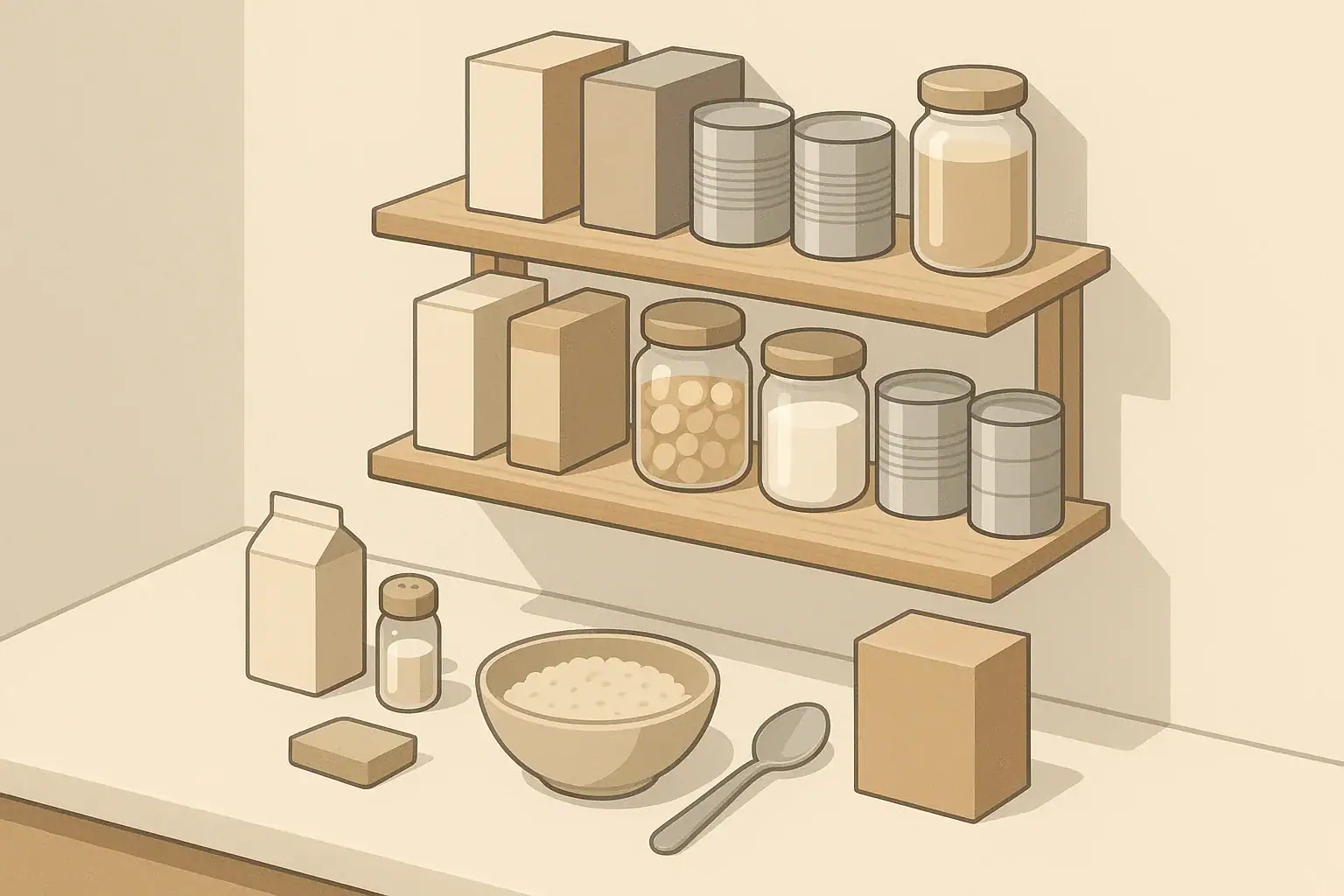
Short-term emergencies like winter storms, heatwaves, or local power outages can make it hard to shop, cook, or use kitchen appliances. For seniors, even a brief disruption can quickly turn routine meals into a challenge.
An emergency pantry for seniors focuses on foods and tools that are:
- Easy to open without strong grip strength or sharp tools
- Easy to prepare with little or no cooking
- Safe to use during power or water interruptions
- Familiar and comforting for everyday-style meals
This type of pantry is not about long-term survival. It is a calm, practical backup that helps older adults continue eating regularly during a few days of disruption, whether they live alone, with family, or in an apartment.
Why an Emergency Pantry Matters Especially for Seniors
Short-term emergencies like winter storms, heatwaves, or local power outages can make it hard to shop, cook, or use kitchen appliances. For seniors, even a brief disruption can quickly turn routine meals into a challenge.
An emergency pantry for seniors focuses on foods and tools that are:
- Easy to open without strong grip strength or sharp tools
- Easy to prepare with little or no cooking
- Safe to use during power or water interruptions
- Familiar and comforting for everyday-style meals
This type of pantry is not about long-term survival. It is a calm, practical backup that helps older adults continue eating regularly during a few days of disruption, whether they live alone, with family, or in an apartment.
Planning Around Realistic Scenarios
Start by thinking about the situations most likely where you live, and how they affect cooking and food access. Common examples include:
- Power outages: Refrigerators, stoves, microwaves, and electric can openers may not work.
- Short-term water interruptions: Tap water may be unavailable or unsafe for a day or two.
- Travel or delivery disruptions: Roads may be blocked, or deliveries may be delayed during storms.
- High heat or cold: Standing over a hot stove or going outside to grill may not be practical or safe.
For many seniors, energy and mobility are also part of the planning. Lifting heavy pots, draining boiling water, or standing in the kitchen for long periods may be difficult. The emergency pantry should keep steps simple: open, assemble, and eat.
Example values for illustration.
| IF this is likely for you… | THEN prioritize these pantry features… |
|---|---|
| Frequent short power outages | No-cook foods, manual can opener, shelf-stable milk or alternatives |
| Winter storms with icy roads | At least a few days of easy-open meals and snacks at home |
| Hot climate with summer brownouts | Meals that do not require stovetop or oven, light cold foods |
| Limited tap water during events | Some stored drinking water and low-water meal ideas |
| Living alone with limited mobility | Single-serve portions, lightweight containers, very simple prep |
| Apartment living without outdoor cooking | Ready-to-eat pantry items, no need for grills or open flames |
Easy-Open Foods: Packaging That Works for Older Hands
Packaging can turn a simple meal into a struggle if it requires strong grip, twisting, or sharp tools. Focus on items that are realistic to open during a stressful moment or in low light.
Look for Easy-Open Features
When choosing pantry items, consider:
- Pull-tab cans: Cans with built-in pull tops reduce reliance on can openers. Keep a backup manual can opener anyway.
- Flip-top or snap-lid containers: These are often easier than tightly screwed lids or sealed jars.
- Pouches: Tear-open pouches of ready-to-eat foods or sides can avoid the need for tools.
- Single-serve cups: Small fruit, pudding, or shelf-stable snack cups are usually easier to manage than large jars.
Adapt Tools for Easier Opening
Even with thoughtful packaging, some items will still be difficult to open. Simple, low-tech aids can help:
- Sturdy manual can opener: Choose a style that feels comfortable and stable to use.
- Jar grippers: Rubber or silicone pads can make twisting lids easier.
- Easy-grip scissors: Helpful for cutting open pouches or thicker packaging.
Store these tools together in a small bin or drawer labeled clearly, so they are easy to find during a power outage.
Easy-Prep and No-Cook Meal Ideas
During a short emergency, the goal is steady, simple eating rather than perfect meals. Build your pantry around foods that can be eaten straight from the package or with very light preparation.
No-Cook or Minimal-Prep Staples
Consider including a mix of the following types of foods. Choose items that are familiar, fit any dietary guidance from health professionals, and that you actually enjoy eating.
- Ready-to-eat canned or pouched foods: For example, vegetables, beans, soups, or simple protein options that can be eaten at room temperature if needed.
- Shelf-stable grains and sides: Crackers, instant oats that can be mixed with room-temperature liquid, or pre-cooked rice that is safe to eat without heating.
- Nut butters and spreads: Creamy spreads that pair with crackers or bread.
- Shelf-stable milk or alternatives: Single-serve cartons are especially practical if refrigeration is uncertain after opening.
- Fruits and vegetables: Canned or shelf-stable fruits in juice, applesauce cups, and canned vegetables or tomatoes.
- Snack-style items: Plain cookies, granola bars, or similar simple snacks.
Simple Meal Combinations
Think in terms of mix-and-match plates rather than recipes. A few examples:
- Canned beans + canned vegetables + crackers
- Instant oats + shelf-stable milk + fruit cup
- Canned soup (heated if possible) + bread or crackers
- Nut butter on crackers + fruit cup
- Pre-cooked grain pouch + canned vegetables
Write down a few favorite pairings and keep the list near the pantry. In a stressful moment, it can be hard to think of combinations, and a simple list can make choices easier.
How Much Food to Store for Short Emergencies
For most households, aiming for at least several days of easy-prep foods is a practical starting point. Many people choose to work toward roughly three days of backup food per person, then increase if space and budget allow.
When planning amounts, consider:
- Number of people: Include anyone who may stay with you during emergencies, such as a caregiver or family member.
- Appetite changes: Some people eat less when stressed; others eat more. Keep options flexible.
- Special diets: If you avoid certain ingredients, make sure your emergency foods follow the same pattern.
- Pets: Add a small buffer of shelf-stable pet food if an animal lives in the home.
If space is limited, even a small drawer or single shelf dedicated to emergency-friendly items is helpful. Add one or two extra easy-prep items to each regular shopping trip and build the pantry gradually.
Storing Water to Support Your Pantry
Many easy-prep foods still require a little water, such as instant oats or powdered drinks. Having some water stored is helpful even when a disruption is expected to be short.
Basic considerations include:
- Drinking and meal prep: Plan for enough water to drink and to mix with foods that require it.
- Container size: Smaller containers are easier to lift and pour for seniors than large jugs.
- Storage location: Keep water in a cool, shaded spot that is easy to access without climbing or bending.
- Rotation: Mark containers with the date they were stored and refresh periodically based on local guidance and container type.
If you use delivered bottled water, consider keeping a few extra bottles set aside for emergencies.
Pantry Layout and Organization for Easy Use
A well-planned emergency pantry is not just about what you store, but how you store it. Good layout reduces strain and confusion when the power goes out or when someone is helping prepare meals.
Make Items Physically Accessible
Organize shelves so older adults can reach what they need without climbing, crouching, or lifting heavy items above shoulder height.
- Place the most-used and heaviest items at waist-to-chest height.
- Use shallow bins to group similar foods (for example, “breakfast,” “soups,” “snacks”).
- Avoid stacking tall towers of cans that can tip or be hard to lift.
Label Clearly and Simply
Clear labels help seniors and helpers quickly find emergency foods, especially in low light. You might:
- Use large, high-contrast labels on bins (such as “No-Cook Meals”).
- Keep a simple printed inventory near the pantry with checkboxes.
- Highlight items that are safe to eat cold if heating is not available.
If eyesight is limited, a family member or caregiver can walk through the pantry together and point out where the emergency section is located.
Special Considerations: Medications and Food Safety
While this article does not provide medical advice, it is helpful to think about how food and medication routines interact during an emergency.
Timing Meals with Medications
Some medications are normally taken with food. To prepare for short disruptions:
- Know which medications are usually taken with a snack or meal.
- Place a few very simple, easy-to-digest food options near where medications are stored.
- Write down a basic daily meal and medication pattern so a helper can follow it if needed.
Any changes to medication timing or routine should be discussed with a healthcare professional.
Using Refrigerated Foods Safely During Outages
Without power, refrigerators generally keep food cold for only a limited time if doors are unopened. During a short outage:
- Keep refrigerator and freezer doors closed as much as possible.
- Use up perishable items early if safe to do so, then switch to pantry foods.
- Discard any food that looks, smells, or feels unusual.
Relying on shelf-stable pantry foods after the first hours of an outage reduces guesswork about what is still safe to eat.
Supporting Seniors Who Receive Help at Home
Many older adults receive support from family, neighbors, or professional caregivers. The emergency pantry can be a shared tool.
- Walk-through practice: Show helpers where the emergency shelf is and how to use it.
- Basic written plan: Keep a one-page sheet with simple instructions like “During outage, use these foods first” or “No-cook choices are here.”
- Contact list: Store key phone numbers in a paper format near the pantry and phone in case cell phones lose power.
If meal delivery services are usually part of the routine, the pantry acts as a backup for days when deliveries are delayed or unavailable.
Gentle Rotation: Using What You Store
Emergency pantry foods stay most useful when they are part of everyday life, not a separate stash that is forgotten on a back shelf.
First-In, First-Out Approach
A simple rotation method keeps foods fresher:
- Place newer foods at the back of the shelf and move older items forward.
- Check dates periodically and plan to eat items before they get too old.
- When you use an item, add it to the next shopping list to replace it.
Make Emergency Foods Part of Regular Meals
Choose foods you genuinely like so they can appear in normal weekly menus. For example:
- Use canned vegetables in soups or casseroles.
- Add shelf-stable milk to coffee or cereal.
- Enjoy fruit cups as routine snacks.
This habit reduces waste and helps everyone stay familiar with what is stored and how to prepare it.
Example values for illustration.
| Food type | Storage tip | Rotation interval idea | No-cook use |
|---|---|---|---|
| Canned beans | Store upright on a cool, dry shelf | Plan to use within a year or so of purchase | Rinse and eat with crackers or vegetables |
| Canned vegetables | Group by type and date-mark tops | Use older cans in soups every few months | Drain and serve as a room-temperature side |
| Fruit cups | Keep boxes together at easy reach height | Include in snacks weekly so they cycle | Eat directly from cup with spoon |
| Crackers | Seal opened sleeves in airtight container | Check for staleness every few months | Pair with spreads or canned items |
| Instant oats | Store packets in a lidded bin | Use packets regularly for breakfast | Mix with shelf-stable milk or water |
| Shelf-stable milk | Keep small cartons in a cool cabinet | Rotate into daily use before printed date | Drink plain or add to cereal or oats |
Starting Small and Adjusting Over Time
An emergency pantry for seniors does not need to be created all at once. Beginning with just a few extra easy-open, easy-prep items can make a future power outage or storm day less stressful.
As you learn what foods are truly convenient and comfortable to eat during busy or tiring days, you can fine-tune the pantry. Over time, this becomes a quiet form of home readiness: everyday foods, stored thoughtfully, that are ready to help during short emergencies without panic or complexity.
Authoritative sources
Safety recommendations can change. Confirm critical details with current official guidance and local authorities.
- CDC: Carbon Monoxide Poisoning Basics
- US EPA: Emergency Disinfection of Drinking Water
- USDA FSIS: Keep Food Safe During Emergencies
Frequently asked questions
How much water should a senior store for a short emergency?
A common guideline is at least 1 gallon (about 3.8 liters) per person per day for drinking and basic sanitation; plan for at least three days’ supply for short emergencies. Use smaller, easy-to-lift containers that are manageable for seniors, and include extra water for mixing foods or taking medications. Rotate stored water according to container guidance and local recommendations.
What easy-open protein options work well in an emergency pantry for seniors?
Canned or pouched proteins such as canned fish, canned chicken, pre-cooked beans, and protein pouches are practical because many have pull-tabs or require minimal handling. Choose single-serve portions when possible and consider lower-sodium options or softer textures if chewing or swallowing is a concern. These items pair easily with crackers or canned vegetables for simple meals.
How can caregivers make sure medications are taken correctly during power or water outages?
Keep a clearly written medication schedule that pairs medications with a few easy-to-digest snacks stored nearby and ensure a small supply of potable water is available for swallowing pills. If a caregiver assists, provide step-by-step instructions and note any foods required with specific medications. Consult the prescribing clinician before changing timing or dose routines.
Are shelf-stable milk alternatives safe for seniors and how should they be stored?
Unopened shelf-stable milk or plant-based cartons labeled as shelf-stable are safe to store at room temperature and are useful when refrigeration may be uncertain. Once opened, most require refrigeration and should be used within the timeframe shown on the label; single-serve cartons avoid this issue and are convenient for seniors. Check nutrition labels if fortified calcium or vitamin D is needed.
What is the safest way to use refrigerated foods during a short outage?
Keep refrigerator doors closed as much as possible; a refrigerator can typically keep food safely cold for about four hours if left unopened. Discard perishable items that have been above 40°F (4°C) for more than two hours, and when in doubt, switch to shelf-stable pantry foods to reduce the risk of foodborne illness. Relying on pre-planned pantry options simplifies decisions during outages.
- Simple checklists and realistic planning
- Water, power, lighting, and pantry basics
- Family plans (kids, pets, seniors) and seasonal prep
Affiliate disclosure
As an Amazon Associate, we earn from qualifying purchases. Some links on this site may be affiliate links. If you buy through these links, we may earn a small commission at no extra cost to you. This helps support our content. Learn more.