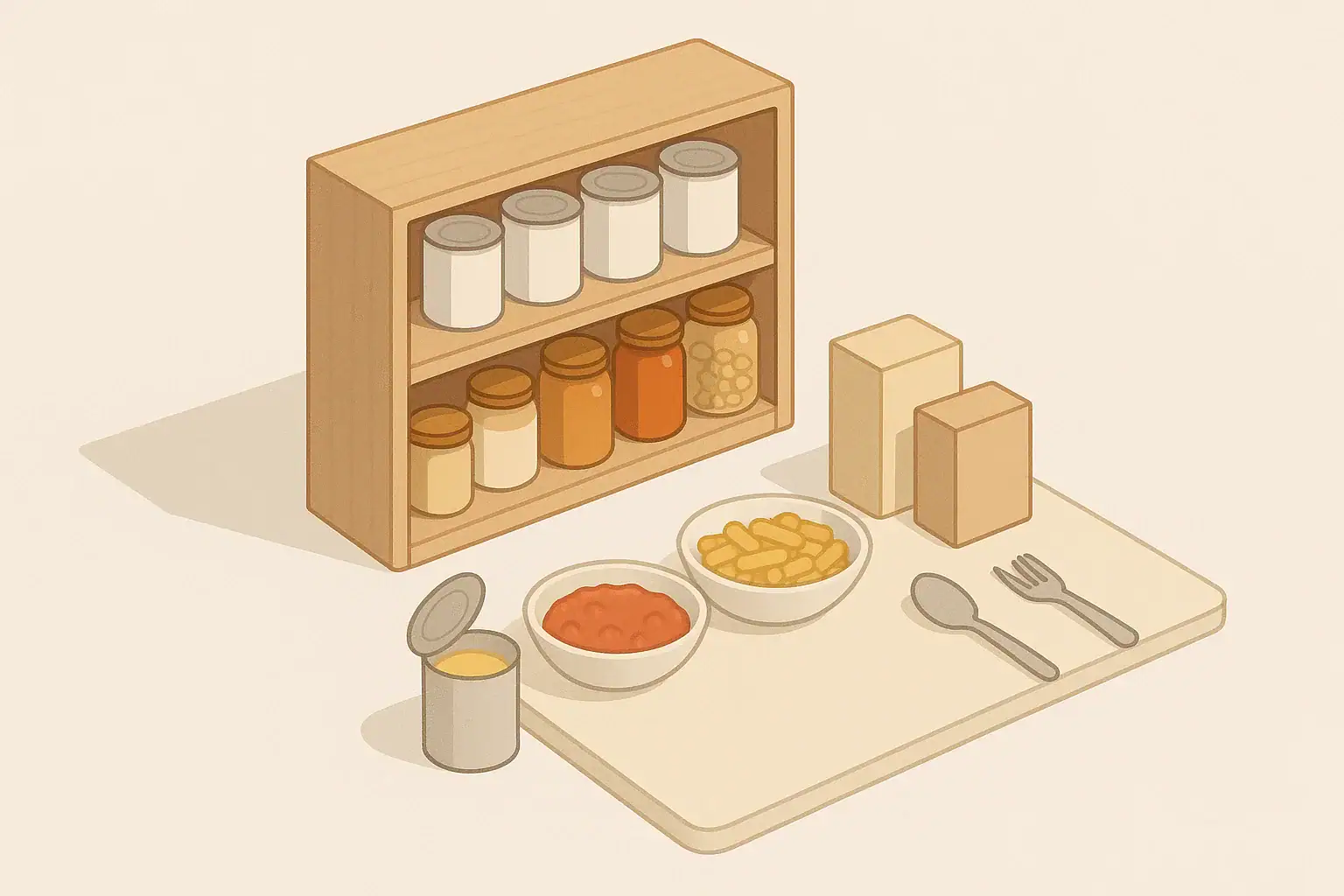
Short-term emergencies like power outages, winter storms, or boil-water advisories can disrupt your normal routines. For families with children, food is often one of the first stress points. Kids may feel unsettled by changes, so familiar, easy meals can provide comfort and a sense of normalcy.
Emergency meal planning for kids is not about stocking unusual items. It is about:
- Choosing shelf-stable versions of foods your kids already like
- Planning meals that need little or no cooking
- Making sure you can prepare and serve food safely during outages
- Avoiding waste by rotating foods into everyday use
This approach works in apartments and houses, for renters and homeowners, and can be tailored to different ages and preferences.
Why Emergency Meal Planning for Kids Matters
Short-term emergencies like power outages, winter storms, or boil-water advisories can disrupt your normal routines. For families with children, food is often one of the first stress points. Kids may feel unsettled by changes, so familiar, easy meals can provide comfort and a sense of normalcy.
Emergency meal planning for kids is not about stocking unusual items. It is about:
- Choosing shelf-stable versions of foods your kids already like
- Planning meals that need little or no cooking
- Making sure you can prepare and serve food safely during outages
- Avoiding waste by rotating foods into everyday use
This approach works in apartments and houses, for renters and homeowners, and can be tailored to different ages and preferences.
Building a Kid-Friendly Emergency Pantry
A kid-friendly emergency pantry focuses on familiar flavors, simple preparation, and safe storage at room temperature. The goal is to have a few days of meals that you could serve even if power or water service is temporarily disrupted.
Comfort Foods Kids Usually Accept
Every child is different, but many kids tend to accept mild, familiar foods during stressful times. Consider shelf-stable versions of:
- Plain or lightly seasoned crackers
- Peanut butter or other nut/seed butters (if safe for your household)
- Instant oatmeal or shelf-stable cooked grains
- Ready-to-eat canned soups or stews with simple flavors
- Pasta with jarred tomato or mild sauce
- Plain rice or shelf-stable rice pouches
- Applesauce cups and canned fruit packed in juice
- Shelf-stable milk or non-dairy alternatives
- Granola bars or soft snack bars
- Plain canned beans or refried beans
When possible, test these foods in regular life so you know what your kids actually like before you rely on them in an emergency.
Basic Pantry Structure for Short-Term Disruptions
You do not need a large storage room to be reasonably prepared. Even a single cabinet can hold a few days of kid-friendly meals. Consider organizing items by meal type:
- Breakfast: instant oatmeal, shelf-stable milk, cereal, nut/seed butters, dried fruit
- Lunch: crackers, canned tuna or chicken, beans, peanut butter, fruit cups
- Dinner: pasta and sauce, rice and beans, canned chili, canned vegetables
- Snacks: granola bars, popcorn kernels (for when you do have heat), pretzels, trail mix
Label a small area as your “backup kids’ pantry” so you can see at a glance what is allocated for emergencies, and rotate items into regular use before they expire.
Example values for illustration.
| Task | Why it matters | Notes |
|---|---|---|
| List 5–8 foods each child reliably eats | Builds your pantry around real preferences | Include at least one breakfast, lunch, dinner, and snack |
| Choose shelf-stable versions of favorites | Ensures foods keep at room temperature | Look for canned, boxed, or vacuum-packed options |
| Set a 3-day minimum meal target | Covers many short power or water disruptions | Adjust up or down based on space and budget |
| Stock manual openers and basic utensils | Allows you to open and serve canned items | Include a manual can opener and sturdy spoons |
| Label a dedicated emergency shelf or bin | Makes it easy to find and track supplies | Place items together, away from daily snacks |
| Note “use by” dates on a calendar | Supports regular rotation before items expire | Set reminders a month or two before dates |
| Try one pantry meal per month | Helps kids get used to backup options | Replace items as you cook them |
Planning No-Cook and Low-Cook Meals
In many emergencies, you may still be able to cook on a stovetop or portable burner. In other cases, you may have no safe heat source at all. Planning a mix of no-cook and low-cook meals gives you options.
No-Cook Meal Ideas for Kids
No-cook meals are valuable during power outages or heatwaves when you want to avoid adding heat to your home. Aim for combinations that include some protein, carbohydrates, and familiar flavors.
- Crackers + nut/seed butter + fruit cup: simple, filling, and easy to assemble.
- Bean and corn salad: mix canned beans, canned corn, and mild seasoning; serve with tortilla chips or crackers.
- Tuna or chicken salad wraps: combine canned meat with shelf-stable mayonnaise packets (if used in your home), spread on tortillas.
- Snack “bento” plate: arrange crackers, cheese from a shelf-stable pack, nuts or seeds (if appropriate), and dried fruit.
- Oatmeal jar: instant oats soaked in shelf-stable milk or water; no heat needed if kids accept the texture.
Consider each child’s chewing ability and food safety needs when choosing no-cook items.
Low-Cook Meals with Simple Heat
If you have a safe way to heat food, such as a gas stovetop, outdoor grill, or other approved cooking device, you can expand your meal options. Focus on meals that cook in one pot or pan and use minimal water.
- One-pot pasta: cook pasta, then stir in jarred sauce and canned vegetables.
- Rice and beans bowl: warm canned beans and pre-cooked rice pouches together with mild spices.
- Soup night: heat canned soups or stews and serve with crackers or bread.
- Oatmeal with add-ins: cook instant oats and top with peanut butter, dried fruit, or cinnamon.
Only use cooking devices in locations and ways approved by the manufacturer and local guidance. Avoid using outdoor grills or camp stoves indoors because of safety risks.
Adapting to Different Household Setups
Your meal plan should match your actual living situation:
- Apartments: Storage space may be limited, so focus on compact, calorie-dense foods like nut butters, beans, and rice pouches.
- Houses: You may have room for larger quantities; still group items so you can find kid-friendly options quickly.
- Renters: Choose portable storage bins so your setup can move with you.
Making Meals Emotionally Comforting
During emergencies, kids often pick up on adult stress. Food routines can help them feel grounded. Even small touches can make pantry meals feel familiar and comforting.
Use Familiar Flavors and Formats
You do not need to create completely new recipes. Instead, recreate familiar meals with shelf-stable ingredients:
- If a child likes pasta with butter, stock shelf-stable fats and simple noodles.
- If tacos are a favorite, keep tortillas, beans, mild salsa, and canned corn.
- If soup and grilled sandwiches are a comfort meal, store canned soup and shelf-stable bread alternatives like crackers or flatbreads.
Familiar serving bowls, cups, or utensils can also help kids feel more at ease, even if the meal itself is slightly different.
Build Small Rituals Around Emergency Meals
Simple rituals can turn an unsettling situation into a special one. Ideas include:
- Using a specific “storm night” tablecloth or picnic blanket indoors
- Letting each child choose one snack from the emergency bin
- Serving meals by flashlight or battery lantern during blackouts
- Playing a quiet game while eating to shift focus away from the disruption
Including kids in safe, age-appropriate food tasks—such as mixing ingredients or arranging “snack plates”—can give them a sense of control.
Planning Around Power, Water, and Storage Limits
Emergency meal planning for kids should also account for basic utilities: electricity, gas, and water. Think about what changes if you lose one or more for a day or two.
When the Power Goes Out
During blackouts, your priorities are food safety and minimal waste. For kid meals, you can:
- Use perishable foods from the refrigerator first while they are still within safe time limits.
- Transition to shelf-stable foods as time passes.
- Limit opening the refrigerator and freezer to keep them cool longer.
If you have any backup power source, reserve it for essentials like refrigeration, medical devices, or communication, and plan meals that do not depend on powered appliances.
When Water Service Is Limited
Water disruptions can affect cooking, cleaning, and dishwashing. To adapt:
- Favor foods that need little or no added water, like canned soups or ready-to-eat beans.
- Use disposable plates and utensils if needed to reduce dishwashing, balancing this with your household’s waste preferences.
- Pre-plan how much water you need for drinking, basic hygiene, and limited food prep.
If you are advised to boil water before drinking, factor fuel and time into your meal planning, or lean more on pre-packaged beverages and sealed water you have stored in advance.
Including Kids in Preparedness Without Creating Worry
Introducing emergency meal planning to kids can be calm and practical. The goal is to help them feel capable, not anxious.
Talk About “Backup Meals” in Simple Terms
Instead of focusing on emergencies, you can frame your pantry as “backup meals for storm days or when we cannot go to the store.” Keep explanations age-appropriate:
- Young children: Emphasize that grown-ups have a plan and extra food ready.
- Older kids: Invite them to help choose foods and create simple meal ideas.
- Teens: Teach them how to assemble no-cook meals and where supplies are stored.
Practice With “Dry Runs”
Occasional practice nights help everyone get comfortable with backup meals:
- Have a “pantry dinner” once a month using only shelf-stable foods.
- Try a “lights out dinner” using flashlights or lanterns while you eat.
- Invite kids to rate meals and suggest improvements.
These practice rounds can reveal gaps in your plan, such as missing utensils, disliked foods, or insufficient drink options.
Example values for illustration.
| Food type | Storage tip | Rotation interval idea | No-cook use |
|---|---|---|---|
| Canned beans | Store together by type at room temperature | Plan to use within about 1 year, checking dates | Rinse and serve with crackers and mild seasoning |
| Canned fruit | Choose fruit in juice rather than heavy syrup if preferred | Rotate into breakfasts or snacks every few months | Serve chilled from fridge if power is on, or room temp |
| Nut or seed butters | Keep tightly sealed in a cool, dry cabinet | Use regularly and replace when you open the last jar | Spread on crackers or tortillas for quick sandwiches |
| Crackers and dry cereal | Store in airtight containers once opened | Check for staleness every few months | Combine with nut butter or shelf-stable milk |
| Shelf-stable milk or alternatives | Keep cartons upright in a cool area | Plan to use in normal cooking before date printed | Drink plain or pour over cereal or oats |
| Granola and snack bars | Store in a labeled bin away from heat | Use in lunchboxes and replace regularly | Serve as ready-to-eat breakfast or snack |
| Instant oats and rice pouches | Protect from moisture in sealed packaging | Schedule occasional “pantry nights” to use and replace | Soak oats in liquid; eat rice pouches at room temperature if acceptable |
Keeping Emergency Meal Planning Simple and Sustainable
A practical emergency meal plan for kids does not need to be complicated or expensive. The most sustainable plans:
- Use foods your family already eats
- Fit within your available storage space
- Rotate items into regular meals to prevent waste
- Account for common local risks, such as winter storms or summer outages
By taking small, steady steps—adding a few extra cans here, trying a pantry dinner there—you can build a calm, reliable backup meal plan that supports your kids during short-term disruptions.
Related guides: Emergency Snack Box: No-Prep Foods for Stressful Days · Low-Sodium Emergency Pantry: Safer Staples for Seniors and Heart-Healthy Homes.
Authoritative sources
Safety recommendations can change. Confirm critical details with current official guidance and local authorities.
- CDC: Carbon Monoxide Poisoning Basics
- US EPA: Emergency Disinfection of Drinking Water
- USDA FSIS: Keep Food Safe During Emergencies
Frequently asked questions
How much emergency food should I store specifically for my children?
A common recommendation is to plan for at least three days of meals and snacks per child, but adjust this based on your family’s needs, local risks, and storage space. Infants and very young children have different requirements (formula, baby food) and may need additional supplies; older children and teens often need more calories. Consider any medical or dietary needs when sizing your stash.
What shelf-stable foods tend to work best for picky eaters during an outage?
Pick familiar formats your child already accepts, such as crackers with nut or seed butter, shelf-stable milk, canned fruit in juice, pasta with jarred sauce, rice pouches, canned beans, and soft snack bars. Test these items during normal times so you know which specific brands or textures your child will eat in a stressful situation.
How should I handle formula, breastmilk, or refrigerated baby food during a power outage?
Follow manufacturer and health guidance for storage: unopened formula is shelf-stable until opened, while prepared formula and opened baby food should be used quickly or discarded if not kept cold. Keep refrigerated items in a cooler with ice if power is out and discard per safety timeframes (for example, when temperatures rise above safe levels); consult a pediatrician for specific concerns.
Are canned meals and pouches nutritionally adequate for short-term feeding of kids?
Many canned goods and pouches provide useful amounts of protein, carbohydrates, and some vitamins and minerals; pairing them (for example, beans or tuna with rice and fruit) helps create balanced meals. For children with special needs or restricted diets, prioritize the familiar nutrient sources they require and contact a healthcare provider if you’re unsure.
How can I involve my kids in emergency meal planning without creating anxiety?
Frame the pantry as “backup meals” rather than focusing on worst-case scenarios, and give kids age-appropriate tasks like choosing favorites, assembling simple snacks, or helping with monthly pantry dinners. Practice nights and calm, simple explanations reassure children that adults are prepared and in control.
- Simple checklists and realistic planning
- Water, power, lighting, and pantry basics
- Family plans (kids, pets, seniors) and seasonal prep
Affiliate disclosure
As an Amazon Associate, we earn from qualifying purchases. Some links on this site may be affiliate links. If you buy through these links, we may earn a small commission at no extra cost to you. This helps support our content. Learn more.