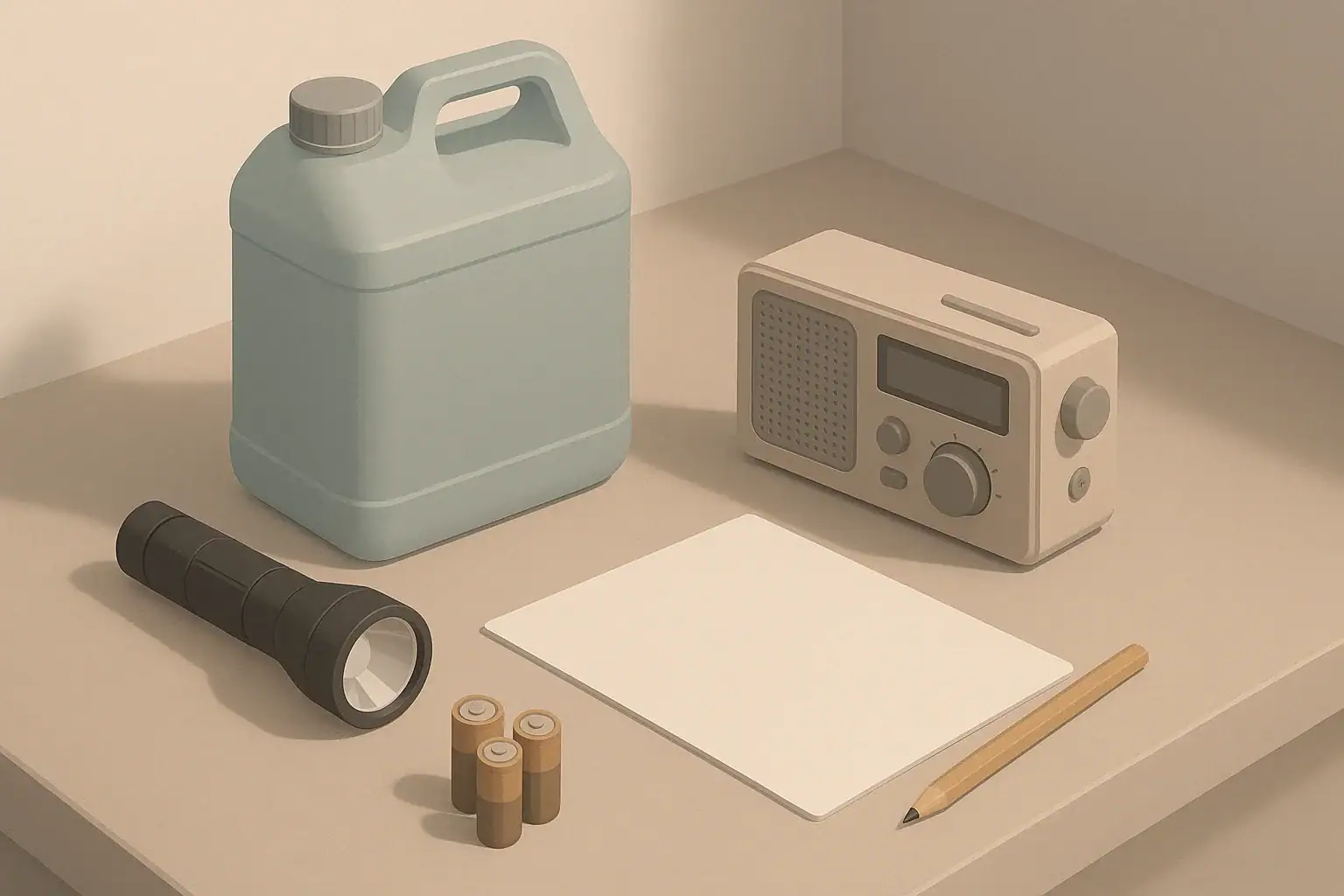
How to Use This 20-Minute Room-by-Room Audit
This quick audit is a calm, practical way to spot gaps in your home emergency supplies. It focuses on short-term situations many households experience at some point in the U.S.: power outages, water disruptions, heatwaves, winter storms, smoke days, and short evacuations.
You are not building a perfect kit in one day. You are simply checking what you already have, where it is, and what is missing. Use a timer and move briskly. If you live in a small apartment or have roommates, you can still follow the same steps.
- Timebox: 20 minutes total
- Tools: pen and paper (or a notes app)
- Goal: list of 5–10 clear next steps, not a full shopping list
Think in three layers as you walk through each room:
- Stay-put basics: what helps you stay safe and comfortable at home for a few days
- Grab-and-go: what you would take if you needed to leave quickly
- Special needs: kids, pets, seniors, assistive devices, medications (planning only, no medical advice)
Front Door & Entryway: Quick Exit and Re-Entry
Start where you would leave if you ever had to go quickly. This is also where you are most likely to remember items on your way out.
Keys and Access
- Check that spare house keys are easy to grab.
- Confirm you know where car keys are stored.
- If you live in an apartment, note your building access method (fob, code, key) and whether you have a backup.
Mini Exit Kit
Look near your door for a small, easy-to-grab pouch or hook space. You are only auditing today, not fully building it.
- Is there a spot for a small flashlight or keychain light?
- Do you have a simple card or note with at least one out-of-area contact written down? (Planning only; you can write it later.)
- Is there space for a small amount of cash for card outages (if you choose to keep any)?
Building Information
- Note where fire exits or stairwells are if you are in a multi-story building.
- Check if you can locate building shutoffs information (water, gas, main power) if that is appropriate for your housing type and responsibilities.
Example values for illustration.
| Task | Why it matters | Notes |
|---|---|---|
| Confirm spare keys location | Reduces stress if primary keys are misplaced | Note who else has a copy |
| Choose a flashlight spot by the door | Makes night evacuations or outages safer | Check that batteries are removed or fresh |
| Designate a hook or bowl for essentials | Keeps keys, wallet, and small items together | Avoid clutter that buries these items |
| Write down one emergency contact | Helps if phone battery dies or contacts are unavailable | Store in wallet or near door |
| Identify main exit and backup exit | Useful during fire alarms or blocked hallways | Especially important in apartments |
| Note building information source | Helps you find shutoff and safety rules later | Could be lease, handbook, or posted sign |
Living Room: Lighting, Comfort, and Communication
The living room is often where people gather during outages. You probably already have many useful items here; this audit just helps you group and track them.
Safe Lighting
- Locate every flashlight and lantern in this area.
- Note which ones currently have batteries and which do not.
- If you use candles, note where they are and whether you have sturdy holders and a lighter or matches stored nearby. Consider safer lighting as your main option.
Basic Power and Charging
- Count how many charging cables you have for phones and small devices.
- Note if you have any backup battery packs or small power stations.
- Identify at least one outlet that would be convenient for a backup power device during an outage.
Information and Communication
- Check where you usually keep your phone during the day and at night.
- Note if you have a battery-powered or hand-powered radio to receive weather or emergency information.
- Decide on a simple family plan: if cell networks are busy, where in the home will you meet and wait together?
Comfort Items
- Locate blankets or extra layers accessible from this room.
- For hot climates, note if you have battery-powered fans or simple ways to stay cooler without power (shades, curtains, cool cloths).
- For smoke days, note which windows close fully and where you might place a portable air cleaner if you use one.
Kitchen: Water, Food, and Manual Workarounds
The kitchen is central to short-term emergencies. During this audit, you are not stockpiling; you are simply noting what you have and where it is.
Water Readiness
- Estimate how many gallons or large bottles of drinking water you have on hand.
- Note any containers you could fill in advance if you had warning (pitchers, jugs, clean storage containers).
- If you use any type of water filter or treatment method, note where it is stored and whether you know how to use it.
Pantry and No-Cook Options
- Glance through your pantry or cabinets: how many quick, no-cook meals could you assemble from shelf-stable foods?
- Note simple combinations like canned beans and vegetables, nut butters, crackers, and ready-to-eat items.
- If you rely heavily on a freezer, consider what would be easy to eat first in a power outage.
Manual Cooking and Tools
- Check for a manual can opener that actually works.
- Note any non-electric cooking options you might have (such as grills) and where fuel is stored. Follow local safety rules and never use outdoor appliances indoors.
- Identify a stable, well-ventilated area that would be safe for any allowed outdoor cooking method.
Sanitation in the Kitchen
- Locate dish soap, sponges, and cleaning supplies that work without hot water.
- Note where trash bags are stored and whether you have extra for short disruptions.
- Consider how you would limit dishes if water were limited (reusable bottles, single cutting board, simpler meals).
Bedroom: Nighttime Safety and Grab-and-Go Essentials
Emergencies often feel more stressful at night. A few small adjustments in the bedroom can make power outages, alarms, or early-morning evacuations more manageable.
Bedside Basics
- Check that you can reach a flashlight from your bed without getting up.
- Note where you place your phone and whether a charging cable reaches that spot.
- Decide on a safe place for glasses, hearing aids, or mobility aids so you can find them in the dark.
Clothing and Footwear
- Identify one pair of sturdy shoes within arm’s reach of your bed.
- Set aside a simple “grab outfit” that works in most seasons: long pants, a long-sleeved top or light layer, and socks.
- For colder climates, note where you keep an extra warm layer near the bed.
Personal Documents and Small Valuables
Without handling sensitive information directly during this audit, you can still plan where it should live.
- Choose a safe, consistent location for important papers, if you keep printed copies.
- Consider using one envelope or folder for items you might need to grab quickly (for example, identification, lease copies, or insurance information).
- Note if any of these items are scattered in different rooms; your follow-up task can be to centralize them.
Sleep and Noise Considerations
- Check that battery-powered alarms (where used) are audible from the bedroom.
- If you rely on electric white noise or fans, think about a backup (simple earplugs, a battery-powered fan, or accepting a temporary change in sound level).
Bathroom: Hygiene, Simple First Aid, and Water Use
The bathroom is where you will feel many disruptions most quickly: no power for lights, limited water, or temporary plumbing issues. This audit focuses on simple supplies and workarounds, not medical care.
Everyday Hygiene Supplies
- Note your current stock of toilet paper, soap, toothpaste, and other daily items.
- Check if you have a small reserve of these items you would rather not run out of.
- Consider keeping a separate, small kit of travel-sized items that stays untouched except during disruptions.
Basic First Aid Supplies
This is not medical advice, and you do not need a complex kit. Many households already own simple first aid items but have them scattered.
- Gather mentally: adhesive bandages, gauze, tape, non-prescription pain relievers, and similar basics you already own.
- Note whether they are all in one easy-to-find container or spread between drawers.
- Check expiration dates later as a separate task; in this 20-minute audit, just list what exists and whether you can find it quickly.
Water and Sanitation Backups
- Consider how you would handle washing hands if water service were interrupted (stored water, hand sanitizer, or wipes you already have).
- If you have a tub, note whether you could use it to store water in advance of a planned disruption, following local guidance.
- Think about how you would limit water use temporarily (shorter rinses, fewer items to wash).
Kids’ Rooms and Family Areas: Special Needs and Comfort
If you live with children, teens, or other dependents, this part of the audit focuses on calm, realistic steps to keep them more comfortable during disruptions.
Age-Appropriate Essentials
- Note any items a particular child would struggle without for a day or two (favorite comfort item, basic sensory tools, sleep aid like a specific blanket).
- Check whether each child has a small flashlight or glow item they can handle safely, if appropriate for their age.
- List any supplies related to diapers, formula, or other age-specific needs you would not want to run out of suddenly.
Quiet Entertainment
- Identify a few non-electric activities: books, coloring supplies, card games, or simple toys.
- Consider placing a small “boredom kit” in a shared family area for power outages.
- Note any noisy or battery-dependent toys you may want to limit during a stressful situation.
Teens and Communication
- Talk through where everyone will put phones to charge overnight.
- Agree on one or two people outside your immediate area that family members could update if local communication is difficult.
- Encourage teens to memorize at least one contact number in case devices are not available.
Pet Areas: Food, Leashes, and Comfort Items
Pets are part of many households’ emergency planning. This quick audit helps you notice what you already have for them.
Everyday Pet Supplies
- Check how many days of pet food you typically keep on hand.
- Note where leashes, carriers, or harnesses are stored and whether you can grab them quickly.
- Identify a container or bag that could hold a small amount of extra pet supplies.
Water and Waste
- Consider how much of your household water planning would need to be reserved for pets.
- Note any litter, waste bags, or cleaning supplies that would be useful during a short disruption.
- Think about where you would safely keep pets if doors or windows needed to stay closed due to smoke or weather.
Hallway, Utility Closet, or Storage: Core Home Readiness Supplies
Many homes have a hallway closet, utility area, or storage nook where rarely used items gather. This is often the best place to consolidate emergency supplies over time.
Centralizing Your Kit
- Identify one shelf, bin, or crate as your main emergency supplies area, even if it is mostly empty now.
- List items already stored there that fit your readiness goals: flashlights, batteries, water, basic tools, or blankets.
- Note any hazards (leaks, temperature extremes, pests) that might affect where you store supplies.
Tools and Safety Items
- Locate simple tools you already own, such as a manual screwdriver, wrench, or utility knife, and make sure they are accessible.
- Check for a fire extinguisher if your home has one and whether you can reach it easily, following manufacturer instructions and local guidance.
- Note the locations of smoke and carbon monoxide detectors and when you last checked their test buttons.
Go-Bag vs Stay-at-Home Kit
In this 20-minute audit, you only need to decide where these things would live eventually, not fully pack them.
- Stay-at-home kit: heavier water, bulkier food, some tools, extra blankets, and larger light sources.
- Go-bag: lighter items you could carry if you needed to evacuate, such as a change of clothes, small hygiene items, a compact flashlight, and copies of important information.
- Note where you could store a go-bag so it is easy to grab but not in the way.
Example values for illustration.
| Food type | Storage tip | Rotation interval idea | No-cook use |
|---|---|---|---|
| Canned beans and vegetables | Store at room temperature and avoid dents | Use and replace during regular meals every few months | Combine for simple salads or side dishes |
| Nut butters | Keep in a cool cabinet away from stove heat | Rotate as part of weekly snacks | Spread on crackers or fruit |
| Crackers and dry snacks | Seal tightly once opened | Check freshness every month | Pair with canned items or spreads |
| Ready-to-eat soups or chili | Group by type on a single shelf | Use older cans first when planning meals | Eat at room temperature if heating is not possible |
| Instant oatmeal or cereal | Store in airtight containers if possible | Rotate during normal breakfasts | Eat dry or with shelf-stable milk |
| Shelf-stable milk or milk alternatives | Keep in a dark cabinet | Check dates during monthly kitchen checks | Drink alone or add to cereals |
Turning Your 20-Minute Audit Into Simple Next Steps
When your timer ends, you should have a short list of observations from each room. The goal now is to translate those notes into a few realistic actions you can spread out over time.
Prioritize by Comfort and Likely Events
- Look at local patterns: do you see more short power outages, winter storms, thunderstorms, or smoke days?
- Pick one or two improvements that would make those situations easier: better lighting, a bit more water, or clearer communication plans.
- Focus on comfort and convenience as much as safety to make your plan feel worthwhile.
Make Small, Specific Tasks
- Convert each gap into a concrete action, such as “move all flashlights to one basket in the hallway” or “place manual can opener with emergency foods.”
- Spread these tasks over several weeks so they feel manageable.
- Set a simple reminder to repeat this audit once or twice a year, perhaps when you adjust clocks or do seasonal cleaning.
Include Everyone in the Household
- Walk family members through where key items are stored.
- Invite kids and teens to suggest one comfort item they would like included in stay-at-home or go-bag plans.
- Check in with anyone who has mobility, sensory, or medical needs to see what small adjustments would help them feel more prepared.
Authoritative sources
Safety recommendations can change. Confirm critical details with current official guidance and local authorities.
- CDC: Carbon Monoxide Poisoning Basics
- US EPA: Emergency Disinfection of Drinking Water
- USDA FSIS: Keep Food Safe During Emergencies
Frequently asked questions
How long should a room-by-room emergency kit audit take and what should I aim to accomplish?
This 20-minute audit is designed to be quick and focused: use a timer and move briskly through rooms to note what you have, where it is, and what’s missing. The realistic goal is a short list of 5–10 next steps (for example, relocating flashlights or identifying a grab-and-go spot), not building a complete kit in one session.
Which rooms should I prioritize during a 20-minute audit?
Prioritize the front door/entryway, living room, kitchen, bedroom, bathroom, and a central storage or hallway closet because these areas hold items for immediate exit, comfort, water/food, nighttime safety, hygiene, and consolidated supplies. If you have children, pets, or dependents, also check their rooms or caregiving areas for special items.
What quick items are useful for a mini exit kit by the front door?
A compact mini exit kit should include an easy-to-grab light source (keychain flashlight), spare keys, a paper card with an out-of-area contact, a small amount of cash for card outages, and a simple charging cable if space allows. Keep the kit minimal so it is fast to grab during an unexpected departure.
How should I handle medications and other special needs during the audit?
During the audit, note where essential medications, mobility or assistive devices, infant supplies, and pet medications are stored and whether you have a short reserve on hand. Treat this as planning only—keep an up-to-date list of medications and dosages in a central place and consult a health professional for any medical guidance.
How often should I repeat a room-by-room emergency kit audit?
Repeat the audit at least once or twice a year, and after major household changes (moving, new household members, or seasonal shifts) to catch expiring items, moved supplies, or new needs. Regular, short audits keep plans realistic and easier to maintain over time.
This room-by-room emergency kit audit is less about gathering gear and more about knowing what you have, where it is, and how you would use it. With 20 minutes of focused attention and a few follow-up steps, your home can be noticeably easier to manage during the kinds of short-term disruptions many households encounter.
- Simple checklists and realistic planning
- Water, power, lighting, and pantry basics
- Family plans (kids, pets, seniors) and seasonal prep
Affiliate disclosure
As an Amazon Associate, we earn from qualifying purchases. Some links on this site may be affiliate links. If you buy through these links, we may earn a small commission at no extra cost to you. This helps support our content. Learn more.