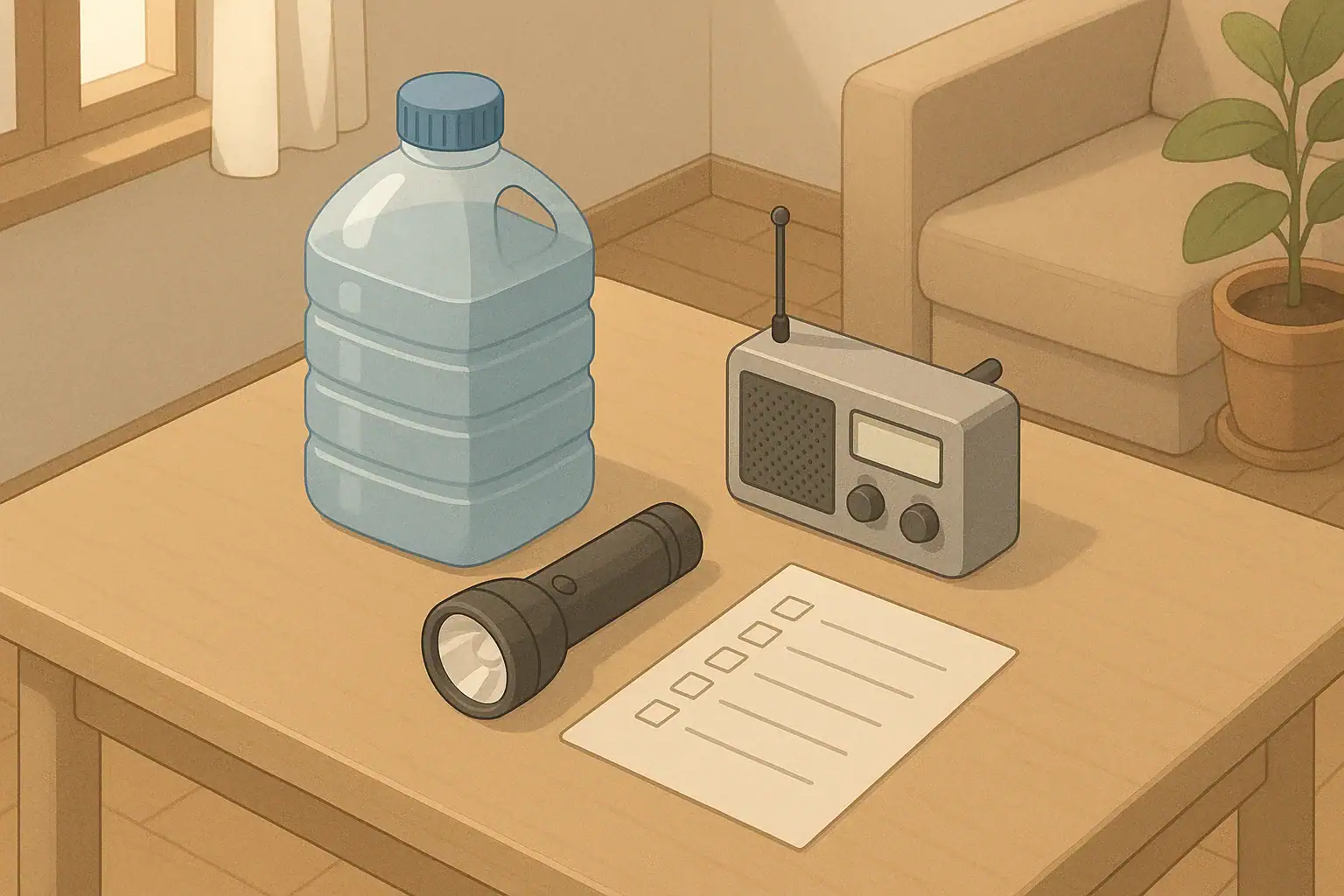
Moving into a new apartment usually means unpacking boxes, setting up furniture, and learning where everything is. It is also the best time to build a simple emergency setup that fits your space, budget, and lifestyle.
Short-term disruptions are much more common than major disasters. In an apartment, you might deal with:
- Power outages from storms or grid issues
- Water shutoffs for building repairs
- Elevator outages and stair-only access
- Smoke or small fires in the building
- Heatwaves, cold snaps, or poor air quality
This checklist focuses on realistic, short-term scenarios and simple steps you can take within the first days and weeks after moving in.
Why Emergency Readiness Matters in a New Apartment
First 24 Hours: Safety Walkthrough and Basics
Before you fully settle in, do a quick safety walkthrough. This helps you learn your new space and catch any obvious issues early.
Locate and test safety equipment
- Smoke detectors: Find every unit, test the alarm, and note the type of battery so you can keep spares.
- Carbon monoxide detector (if present): Test it and note whether it is plug-in, hardwired, or battery powered.
- Fire extinguisher: Locate any provided by the landlord or building. Make sure you can reach at least one from the kitchen.
If something appears missing or not working, document it and notify your landlord or property manager promptly.
Map exits and building information
- Walk to the nearest stairwells and a second alternate exit.
- Note your apartment number, floor, and closest stair to share with family or roommates.
- Find the building mailbox area and notice boards for posted emergency numbers and procedures.
- Store building management and maintenance contacts in your phone.
Set aside a simple “Day One” mini kit
Even before you unpack, pull a few basics into one spot so you are not searching in the dark if something happens your first night:
- Small flashlight or headlamp
- Spare batteries that match your lights
- Manual can opener
- Basic first-aid items (bandages, antiseptic wipes, simple pain reliever as personally appropriate)
- A few bottles or jugs of drinking water
- Ready-to-eat food that does not require cooking
Example values for illustration.
| Task | Why it matters | Notes |
|---|---|---|
| Test smoke and CO detectors | Confirms alarms work before you sleep there | Report issues to landlord in writing |
| Locate stairwells and exits | Reduces confusion if hallway is smoky or dark | Practice two routes from your door |
| Build a small lighting kit | Makes power outages less stressful | At least two flashlights for the apartment |
| Store basic water supply | Covers short shutoffs or boil notices | Start with a few gallons and expand later |
| Prepare simple no-cook foods | Lets you eat if stove or power is out | Choose foods you already like and use |
| Save building and emergency contacts | Saves time when something goes wrong | Keep in your phone and on paper |
| Identify shelter-in-place room | Useful for smoke, bad air, or storms | Prefer an interior room with few windows |
Power Outages: Safe Lighting and Basic Backup
Apartment dwellers usually cannot install large generators, but you can still prepare for typical power outages with safe, compact options.
Choose safe lighting for small spaces
Avoid open flames in apartments if possible, especially in older buildings or around pets and children. Focus on:
- LED flashlights and headlamps: Efficient, bright, and easy to direct where needed.
- Battery-powered lanterns: Provide room-filling light without heat or smoke.
- Small clip-on or stick-on lights: Useful for hallways, bathrooms, or stair landings.
Store lights where you can find them in the dark: one by the bed, one near the front door, and one in the main living area.
Understand simple backup power options
For most apartments, backup power is about keeping small devices running, not your entire home. Consider:
- Battery banks: Compact power banks can recharge phones and small devices several times.
- Small indoor-safe power stations: May run a fan, modem, or several devices for a few hours, depending on their capacity and what you plug in.
- Charging plans: Top off batteries and power banks when severe weather is forecast.
Be realistic about what you can power. Refrigerators, space heaters, and air conditioners use a lot of energy and are usually not practical on small backup systems.
Keep unplug and reset steps handy
- Know how to switch off surge-prone electronics during an outage, then plug them back in after power stabilizes.
- Write down Wi-Fi network details so you can quickly reconnect devices when service returns.
- Keep a simple power outage routine: fill pitchers or bottles with water, charge all devices, and set out flashlights.
Water Disruptions: Storage and Simple Treatment
Water issues in apartments often come from maintenance shutoffs, main breaks, or short-term boil advisories. You can prepare without storing huge barrels.
Plan compact water storage
A common approach is to store several gallons of drinking water per person, spread between:
- Refillable containers or jugs
- Sealed bottled water
- Pitchers in the fridge for daily use
Use what fits in your space. Many renters choose a mix of a few gallon jugs plus smaller bottles stored under sinks, in closets, or on lower pantry shelves.
Prepare for short-term shutoffs
When the building posts a notice about upcoming work:
- Fill the bathtub or large containers (if safe and clean) for flushing and basic cleaning.
- Top off all drinking water containers.
- Do dishes and laundry beforehand if possible.
For unplanned shutoffs, having some water already stored gives you time to adapt without rushing to the store.
Simple treatment options
If authorities issue a boil notice and you cannot boil water, having a basic filtration or disinfection method can help. Options include:
- Portable water filters intended for household or personal use
- Water disinfection tablets used according to their instructions
- Storing some commercially bottled water to use during advisories
Choose methods that match your comfort level and storage space, and follow product directions carefully.
Pantry Readiness in a Small Apartment Kitchen
A simple pantry setup can get you through power outages, late-night disruptions, or times when you cannot easily leave the building.
Focus on no-cook and low-cook foods
- Canned beans, vegetables, and soups
- Nut butters and shelf-stable spreads
- Crackers, rice cakes, or tortillas
- Ready-to-eat cereals and shelf-stable milk alternatives
- Dried fruit, nuts, and trail mixes
Prioritize foods you already eat. This makes rotation easy and avoids waste.
Work with limited cabinet space
- Store heavier cans and bottles on lower shelves for safety.
- Use baskets or bins to group “no-cook” items together for quick access.
- Keep a manual can opener in the same spot every time.
Plan for special diets and family members
Include options for:
- Infants or toddlers (appropriate formula or foods)
- Older adults with chewing or digestion needs
- People with allergies or dietary restrictions
- Pets (a small extra supply of their usual food)
Go-Bags vs Stay-at-Home Kits for Renters
In an apartment, you should be ready for two different situations:
- Staying in: Most likely for storms, brief outages, or citywide events.
- Leaving quickly: Less common, but possible for building fires, gas leaks, or structural issues.
Stay-at-home kit basics
A stay-at-home kit is simply a collection of supplies that make it easier and safer to remain in your apartment for a few days. Ideally stored in a closet or under a bed, it can include:
- Water for drinking and basic hygiene
- No-cook pantry foods and snacks
- Lighting and spare batteries
- Back-up phone charging method
- Basic first-aid supplies
- Trash bags, paper towels, and cleaning wipes
Simple go-bag for apartment evacuations
A go-bag is a small, grab-and-go bag you can carry down the stairs or to a shelter. You do not need a large backpack; a modest bag is often enough. Common contents include:
- Copies of important documents in a waterproof sleeve
- Small amount of cash
- Essential medications and a current list of prescriptions
- Basic hygiene items (toothbrush, soap, tissues)
- Change of clothes and an extra layer
- Lightweight snacks and a small water bottle
- Compact flashlight and extra batteries
Store the bag in an easy-to-grab spot near your main exit, but out of direct view from hallways or windows.
Consider kids, seniors, and pets
- Kids: Add a comfort item, simple toy, or blank notebook and pencils.
- Seniors: Include mobility aids, glasses, hearing aid supplies, and clear instruction notes.
- Pets: Leash or carrier, small supply of food, and waste bags.
Communication and Contact Plans
In a new building or city, it helps to decide in advance how you will stay in touch if service is spotty or you need help.
Save and back up key information
- Local non-emergency police and fire numbers
- Building management, superintendent, or maintenance
- Trusted neighbors or nearby friends
- Work, school, or daycare contact details
Store this list in your phone and also on paper in your go-bag and stay-at-home kit.
Plan simple communication steps
- Choose an out-of-area contact everyone in your household can text or call if local networks are busy.
- Agree on check-in times during storms or power outages, such as morning and evening.
- Decide on a nearby meeting spot if you must leave the building and cannot reunite at the front entrance.
Keep low-tech reminders
If phones die or signals are weak, printed information is useful. Consider:
- A small card in your wallet or bag with key contacts and your apartment number.
- A note on the inside of your front door with quick steps: grab go-bag, lock door, head to specific stairwell.
Example values for illustration.
| Who to contact | Method | Fallback | Meeting point note |
|---|---|---|---|
| Out-of-area relative | Group text update | Short phone call if text fails | No meeting point; used for status only |
| Roommate or partner | Messaging app | Note left on fridge or table | Meet at building lobby if safe |
| Nearby friend | Phone call | Visit in person next day | Coffee shop or park within walking distance |
| Building management | Phone or email | Office drop-in during posted hours | On-site office or front desk |
| Children’s school or daycare | Official notification system | Phone hotline or voicemail | Follow school pickup instructions |
| Neighbors you trust | Door knock or note | Message under door if they are out | Hallway outside your units |
Seasonal and Regional Touch-Ups
Once your basic setup is in place, add small seasonal adjustments based on where you live and the time of year.
Winter storms and cold snaps
- Extra blankets and warm layers stored where you can reach them easily.
- Draft stoppers or simple window coverings to help reduce heat loss.
- Non-electric entertainment: books, cards, or simple games.
Never use outdoor grills or unvented combustion devices indoors for heat; they can be dangerous in enclosed spaces.
Heatwaves
- Plan a cool room with fans, shades, and minimal direct sun.
- Keep plenty of drinking water and electrolytes from everyday beverages or foods.
- Know nearby air-conditioned public places you can visit if your apartment becomes too warm.
Wildfire smoke or poor air quality
- Choose a shelter-in-place room with fewer windows and doors.
- Use well-fitting windows and door seals where possible.
- Consider an air-cleaning device suited for indoor use and the size of your space, if feasible.
Storms and heavy rain
- Move important documents and electronics off the floor, especially in lower-level units.
- Keep a small towel and bucket set accessible for minor leaks.
- Charge devices before major storm systems pass through.
Quick Weekly Habit to Keep Your Setup Ready
Emergency readiness works best when it blends into normal life. A five-minute weekly check keeps your new apartment setup current:
- Glance at water and pantry levels and add needed items to your regular shopping list.
- Test one flashlight and rotate or recharge batteries if needed.
- Return go-bag items that may have been borrowed for everyday use.
- Update your paper contact list if phone numbers or roommates change.
Small, steady habits matter more than buying large amounts of gear at once. As you get used to your new apartment, you can adjust your emergency setup to match your space, local risks, and the people and pets who share your home.
Authoritative sources
Safety recommendations can change. Confirm critical details with current official guidance and local authorities.
- CDC: Carbon Monoxide Poisoning Basics
- US EPA: Emergency Disinfection of Drinking Water
- USDA FSIS: Keep Food Safe During Emergencies
Frequently asked questions
How much water should I store in a small apartment for short-term shutoffs?
A practical starting point is to keep at least a few gallons per person for short-term shutoffs, with many renters storing 3–5 gallons and expanding as space allows. Use a mix of sealed bottled water and refillable jugs for flexibility, and rotate or replace supplies periodically to maintain freshness.
What are safe lighting options for apartments during power outages?
Prefer battery-powered LED flashlights, headlamps, and battery lanterns over open flames to reduce fire and carbon monoxide risks. Keep lights in consistent, easy-to-reach spots (near the bed, the main exit, and the living area) and store spare batteries.
Can I use a portable generator in an apartment?
Portable fuel-powered generators are not safe for indoor use and should never be operated inside, on balconies, or near open windows because of carbon monoxide and ventilation hazards. Apartment residents should consider indoor-safe battery power stations or power banks and follow building policies and local regulations.
What should I include in a simple go-bag for quick apartment evacuations?
A basic go-bag should include copies of important documents in a waterproof sleeve, essential medications and a prescriptions list, a small amount of cash, a change of clothes, basic hygiene items, a compact flashlight, and a small water bottle or snacks. Tailor contents for children, older adults, or pets and store the bag near your main exit.
How often should I test smoke and carbon monoxide detectors after moving in?
Test smoke and carbon monoxide detectors immediately after moving in and then at least monthly. Replace batteries according to manufacturer guidance or when the device chirps, and report any missing or faulty units to your landlord or property manager in writing.
- Simple checklists and realistic planning
- Water, power, lighting, and pantry basics
- Family plans (kids, pets, seniors) and seasonal prep
Affiliate disclosure
As an Amazon Associate, we earn from qualifying purchases. Some links on this site may be affiliate links. If you buy through these links, we may earn a small commission at no extra cost to you. This helps support our content. Learn more.