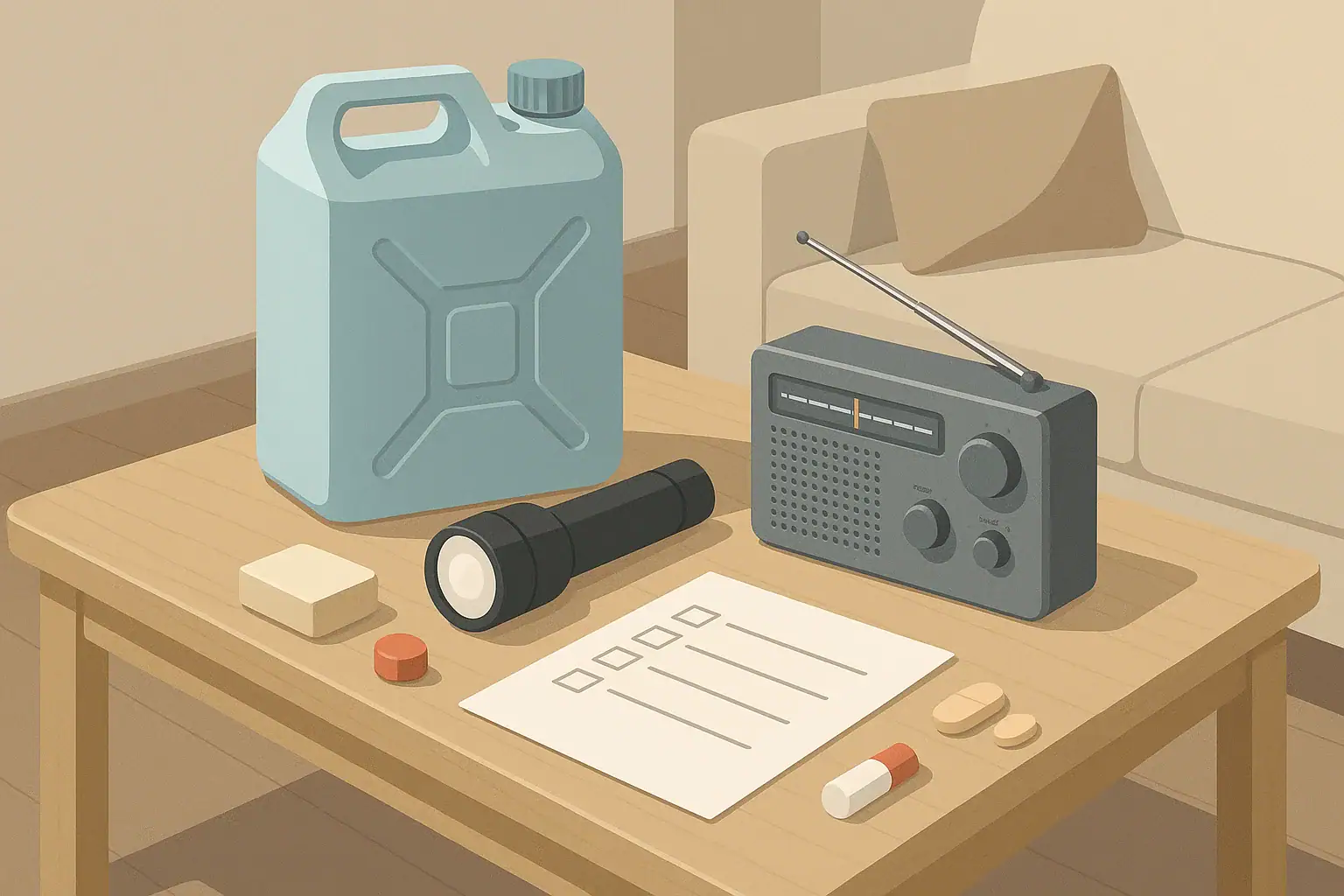
The first hour of any home emergency is when small decisions can make a big difference. You usually will not have perfect information. Power might be out, alarms may be sounding, or the situation may be unclear. The goal in this window is not to solve everything. It is to stay calm, avoid new hazards, and stabilize the basics: safety, communication, power, water, and shelter.
Common home emergencies in the United States include:
- Power outages from storms or grid issues
- Localized flooding or water disruptions
- Severe weather alerts (tornado, hurricane, winter storm)
- Wildfire smoke or poor outdoor air quality
- Heatwaves and extreme cold events
- Minor home damage from wind, fallen branches, or small fires that are already out
This guide focuses on practical actions for everyday people in apartments, rental units, and houses. It assumes you may be caring for kids, pets, or older adults, and that you want to be prepared without panic or complex “prepper” setups.
Why the First Hour Matters in a Home Emergency
The first hour of any home emergency is when small decisions can make a big difference. You usually will not have perfect information. Power might be out, alarms may be sounding, or the situation may be unclear. The goal in this window is not to solve everything. It is to stay calm, avoid new hazards, and stabilize the basics: safety, communication, power, water, and shelter.
Common home emergencies in the United States include:
- Power outages from storms or grid issues
- Localized flooding or water disruptions
- Severe weather alerts (tornado, hurricane, winter storm)
- Wildfire smoke or poor outdoor air quality
- Heatwaves and extreme cold events
- Minor home damage from wind, fallen branches, or small fires that are already out
This guide focuses on practical actions for everyday people in apartments, rental units, and houses. It assumes you may be caring for kids, pets, or older adults, and that you want to be prepared without panic or complex “prepper” setups.
Minute 0–10: Immediate Safety and Situational Check
Use the first few minutes to quickly understand what is happening and remove yourself from obvious danger. Work through these steps in a calm, steady way.
1. Stop, Breathe, and Do a Quick Safety Scan
Before moving around, take a moment to look and listen. A quick scan can prevent you from walking into a hazard.
Check for:
- Fire or smoke: Visible flames, smoke smell, or triggered smoke alarms.
- Structural concerns: Cracks that appeared suddenly, sagging ceilings, broken glass, or fallen fixtures.
- Water issues: Standing water, dripping from ceilings, or active leaks near outlets.
- Gas or chemical odors: Strong unusual smells, especially near appliances or storage areas.
- Electrical risks: Sparking, buzzing outlets, or hot electrical panels.
2. Decide: Stay Inside, Shelter in Place, or Get Out
In most emergencies you will either shelter in place or leave the building. Use simple rules of thumb:
- Evacuate immediately if there is fire, strong gas smell, structural damage, or you are told to leave by authorities.
- Shelter in place if the hazard is outside (severe weather, wildfire smoke, poor air quality, neighborhood incident) and your home is structurally sound.
- Move to a safer spot inside (inner room, hallway, basement or lowest interior level) if there are high winds, tornado warnings, or flying debris risk.
Always prioritize getting people and pets out of immediate danger over saving property.
3. Check on People, Then Pets
Once you have a basic sense of the situation, make sure everyone in the home is accounted for.
- Call out and have everyone respond from where they are.
- Do a quick headcount, including pets.
- Look for anyone who is disoriented, especially kids and older adults.
- Move everyone away from windows in severe wind or hail.
If you have a simple family plan written down, this is when you use it: agreed meeting spots inside the home, who checks on which room, and where to keep carriers or leashes for pets.
Example values for illustration.
| Situation | First Task | Why It Matters | Notes |
|---|---|---|---|
| Power outage only | Turn on one safe light source | Prevents trips and falls | Avoid open flames if possible |
| Strong outdoor smoke | Close windows and doors | Limits smoke and particles entering | Use one room as a cleaner-air space |
| Severe thunderstorm warning | Move to interior room | Reduces risk from glass and debris | Bring flashlight and basic kit |
| Localized flooding | Avoid standing water indoors | Reduces electrical shock risk | Unplug devices if safe and dry |
| Heatwave with power loss | Close blinds, limit heat sources | Slows indoor temperature rise | Identify coolest room to use |
| Winter storm power loss | Gather in one closed room | Concentrates body heat | Use layered clothing and blankets |
| Gas smell inside | Leave building immediately | Reduces explosion and inhalation risk | Call provider from outside |
Minute 10–30: Stabilize Power, Lighting, and Communication
Once everyone is safe and accounted for, focus on seeing clearly, staying reachable, and avoiding preventable damage. These steps apply to both apartments and houses.
4. Set Up Safe Lighting
Good lighting lowers the chance of falls, cuts, and other small injuries that are common during outages.
- Use: Battery-powered flashlights, lanterns, or headlamps.
- Avoid when possible: Candles or open flames, especially around kids, pets, or clutter.
- Designate: One light that stays in a central hallway or main room.
If you have a small backup power unit, plug in only essential low-wattage lights or a small fan, and keep cords out of walking paths.
5. Protect Appliances and Electronics
Power can come back with brief surges. Protecting electronics early can save them.
- Unplug non-essential devices like televisions and gaming systems.
- Turn off or unplug desktop computers and sensitive audio equipment.
- Leave at least one light switched on so you can see when power returns.
If you use medical devices that require power, connect them to your most reliable backup source first, and conserve that source for as long as possible.
6. Preserve Phone Battery and Set a Check-In Plan
Communication helps reduce stress and confusion. In the first half hour:
- Charge phones with any available battery packs or backup units while they still have some charge.
- Switch to battery-saver modes and lower screen brightness.
- Avoid streaming or gaming to save power and reduce network strain.
Decide on a simple check-in plan:
- Choose one contact outside your immediate area as your main point person.
- Send a brief update and agree on when you will message next (for example, every few hours).
- Let them know your current plan: staying home, moving to a friend’s place, or waiting for updates.
7. Gather a Simple First-Hour Kit in One Spot
Even if you do not have a full go-bag or home kit, bringing key items into one place saves time and energy.
Collect items such as:
- Flashlights or lanterns plus extra batteries
- Portable power bank or small backup power unit
- Basic first-aid supplies
- Any required medications for the next day or two
- Copies or photos of important contact information
- Water bottles or a pitcher of safe water
- Simple snacks that do not need cooking
Set these in the room where you plan to spend most of your time, such as a living room, interior hallway, or bedroom, depending on the situation.
Minute 30–45: Check Water, Food, and Indoor Conditions
After the first round of urgent actions, shift attention to short-term comfort and basic needs. The next 15 minutes can help you stay stable for the next several hours or overnight.
8. Verify Water Situation and Store a Small Reserve
Not all emergencies affect water, but it is easier to store some early than to wish you had later.
- Check taps: Run cold water briefly to see if pressure and clarity are normal.
- If water is on and seems normal:
- Fill clean pitchers, bottles, or cooking pots with tap water.
- Aim for at least a few liters per person to cover drinking and basic hygiene for the next day.
- If there is an advisory or unclear water quality:
- Use stored water if you have it.
- Avoid using questionable water for drinking or brushing teeth.
Label any containers in your mind by time and purpose (for example, today’s drinking water vs. handwashing water) so you use the best water for the most important tasks.
9. Identify Easy, No-Cook Food Options
Food is usually not an emergency in the first hours, but planning simple meals now can reduce stress later.
- Choose shelf-stable items that do not require cooking, such as canned goods that can be eaten at room temperature, nut butters, or dry snacks.
- Open the refrigerator and freezer as little as possible to preserve cold.
- If you must open the fridge, grab several items at once that can cover the next few hours so you do not keep reopening it.
Use foods that are already open or close to their usual use-by dates first, saving long-shelf-life items for later if the outage continues.
10. Manage Indoor Temperature and Air Quality
Indoor comfort can change quickly in certain emergencies, especially heatwaves, cold snaps, and wildfire smoke.
For heat:
- Close blinds or curtains on sunny windows.
- Move to the lowest, shadiest part of the home if you can.
- Wear lightweight, loose clothing and drink water regularly.
For cold:
- Pick one smaller room as your main space and close doors to unused areas.
- Layer clothing, including hats and warm socks.
- Use blankets and sleeping bags to trap body heat.
For smoke or poor outdoor air:
- Close all windows and exterior doors.
- Block obvious gaps around windows or doors with rolled towels if needed.
- Use an interior room as a cleaner-air space and limit opening doors.
Minute 45–60: Plan the Next Few Hours and Adjust
The end of the first hour is the time to make a calm, short-term plan. Very few home emergencies are fully resolved in 60 minutes, but by now you can usually see the general direction: short disruption or something that might last longer.
11. Reassess: How Serious and How Long Might This Last?
Use any reliable information sources you have: local alerts, radio, or messages from trusted contacts. Ask yourself:
- Is this likely a short outage or disruption (for example, a passing storm)?
- Are there official warnings that suggest this could last many hours or more?
- Is my home still a safe place to stay, or should I start planning to go somewhere else later?
For renters and apartment dwellers, consider building-specific factors, such as elevators not working, shared laundry rooms, or underground parking gates being stuck.
12. Make a Simple Written Plan for the Next 6–24 Hours
A short written plan helps everyone in the home stay on the same page and reduces repeated questions, especially from kids or anxious adults.
On a piece of paper or in a notes app, jot down:
- Your current status (power on/off, water status, cell signal strength).
- Your main room or shelter area inside the home.
- Food and water you will use first.
- Who you will check on (neighbors, relatives nearby) and when.
- When you will reevaluate (for example, every two to four hours).
Share this plan with everyone at home in simple language. Give children age-appropriate tasks, such as keeping a flashlight in a designated spot, to help them feel involved and calmer.
13. Light Hygiene and Sanitation Planning
Sanitation can become challenging when water or power is disrupted for more than a few hours. You do not need to solve everything in the first hour, but you can set yourself up for later.
- Keep bathroom visits organized so you can manage flushing if water supply is uncertain.
- Set aside a small trash bag for used tissues, wipes, or disposable items.
- Place soap or hand sanitizer where everyone can find it in low light.
If you have infants, older adults, or anyone with special hygiene needs, locate their supplies now and move them near your main room.
14. Special Considerations for Kids, Older Adults, and Pets
Different household members may need additional support in the first hour.
For kids:
- Explain in simple, calm terms what is happening and what the plan is.
- Offer a quiet activity or familiar comfort item to keep them occupied.
- Involve them with small, safe tasks so they feel useful.
For older adults:
- Check mobility aids, glasses, and hearing devices are within reach.
- Gather any daily medications needed over the next day.
- Ensure walkways are clear to reduce fall risk in low light.
For pets:
- Secure leashes, carriers, and basic food and water for at least a day.
- Keep pets indoors and away from open doors during storms or smoke.
- Provide a familiar blanket or resting spot near your main room.
15. Note Improvements for Future Readiness
Even in the first hour, you may notice gaps in your setup. Without blaming yourself, make a simple list of what would make next time easier. Examples might include:
- Adding one or two more flashlights or a lantern.
- Storing a small amount of bottled water out of direct sunlight.
- Creating a basic written phone tree for family or neighbors.
- Preparing a small stay-at-home kit with snacks, hygiene supplies, and backup light.
Set this list aside in a safe place. When the emergency is over, it can guide your gradual improvements without needing to overhaul your whole home at once.
Example values for illustration.
| People and Pets | Days to Cover (Example) | Storage Approach | Rotation Cue Idea |
|---|---|---|---|
| 1 adult in a studio | 2–3 days | Small bottles in a closet or under bed | Use and replace 1–2 bottles each month |
| 2 adults in apartment | 3 days | Mixed bottles and filled jugs in a cool corner | Check levels at start of each season |
| Family of 4 with small kids | 3 days | Stacked containers in a hall closet | Rotate during twice-yearly time changes |
| Adult with one medium dog | 3 days | Separate labeled jug reserved for pet use | Refill pet jug every few months |
| Multi-generational household | 3–5 days | Larger containers stored on low, stable shelves | Review and top up once per season |
| Roommates in shared house | 2–3 days | Each person keeps a personal stash in their room | Brief group check at start of each year |
Putting It All Together Calmly
The first hour of a home emergency does not need to be perfect. A calm, step-by-step approach is enough: get everyone safe, turn on one reliable light, protect your ability to communicate, secure some drinking water, and make a short written plan. From there, you can adapt as new information comes in.
Over time, you can use what you learned from each event to gradually build a practical, right-sized home readiness setup that fits your space, budget, and household.
Authoritative sources
Safety recommendations can change. Confirm critical details with current official guidance and local authorities.
- US EPA: Emergency Disinfection of Drinking Water
- USDA FSIS: Keep Food Safe During Emergencies
- U.S. CPSC: Battery Safety
Frequently asked questions
What should I prioritize in the first hour of a home emergency?
Prioritize immediate safety by checking on people and pets and removing anyone from obvious hazards. Next, decide whether to shelter in place or evacuate, then stabilize communication, lighting, and basic water and shelter needs for the short term.
How can I quickly preserve my phone battery and stay reachable?
Switch phones to battery-saver mode, lower screen brightness, and charge from a power bank or vehicle charger if available. Pick one out-of-area contact to update and agree on periodic check-ins to reduce repeated use and conserve power.
Are candles safe to use during the first hour of a power outage?
Candles increase fire risk and should be avoided when possible; battery-powered flashlights or lanterns are safer alternatives. If you must use a candle, place it on a stable, non-flammable surface away from children and pets and never leave it unattended.
How much water should I collect in the first hour if water service is uncertain?
Fill clean pitchers, bottles, or jugs with at least a few liters per person to cover drinking and basic hygiene for the next day. Prioritize drinking water and mentally or physically label containers so you reserve the best water for essential uses.
What quick actions protect electronics when power is unstable?
Unplug non-essential devices to protect them from potential surges and leave one light on so you can see when power returns. Connect critical medical devices to your most reliable backup source and conserve that power for essential needs.
- Simple checklists and realistic planning
- Water, power, lighting, and pantry basics
- Family plans (kids, pets, seniors) and seasonal prep
Affiliate disclosure
As an Amazon Associate, we earn from qualifying purchases. Some links on this site may be affiliate links. If you buy through these links, we may earn a small commission at no extra cost to you. This helps support our content. Learn more.