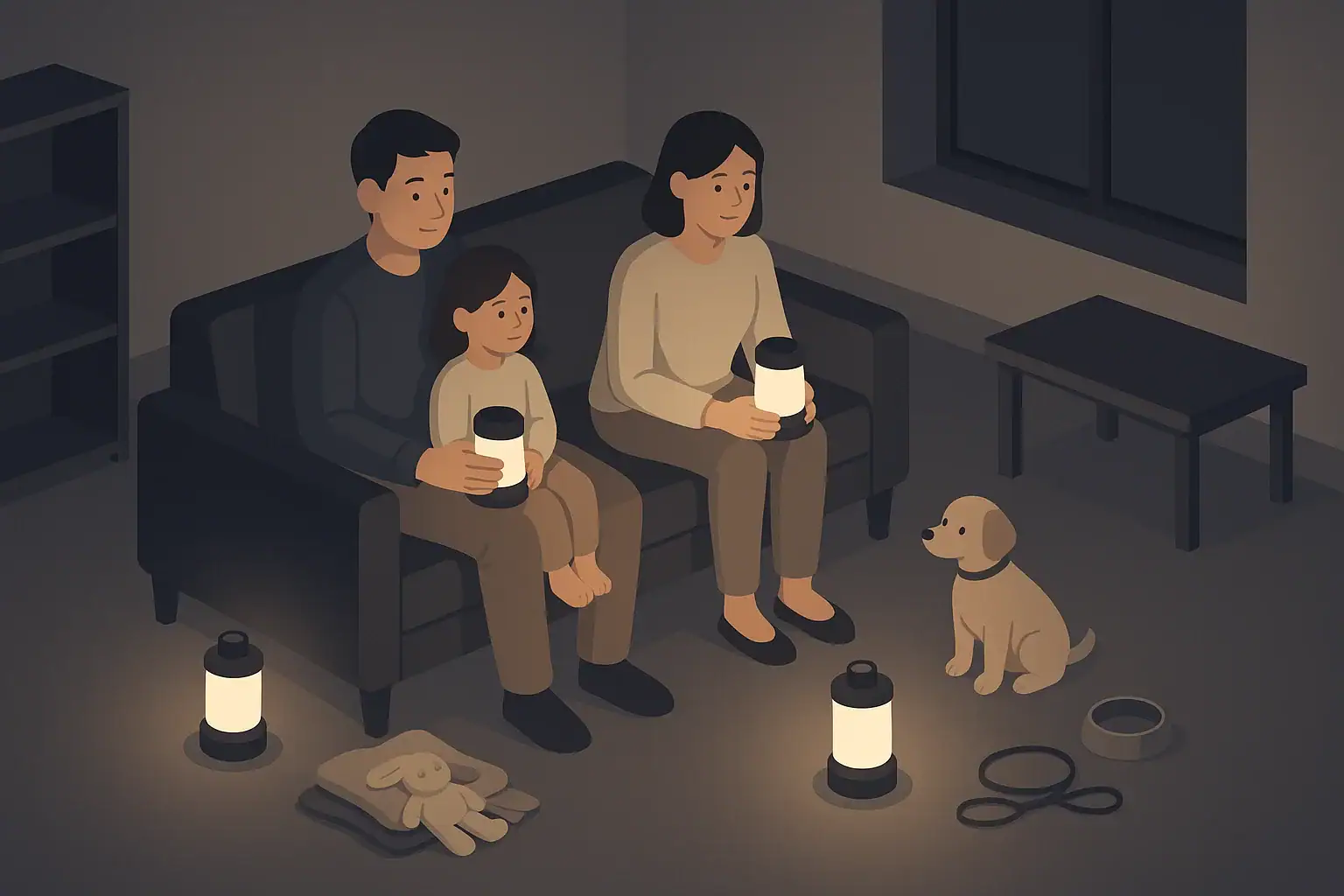
Overnight power outages are usually short and manageable, but they can feel unsettling for children. Sudden darkness, unfamiliar noises, and changes to bedtime routines can all increase stress. A simple comfort plan helps you handle these moments calmly and keeps kids feeling secure.
Preparing does not mean expecting disaster. It simply means thinking ahead about light, warmth, and routine so your family can ride out a few dark hours with less disruption. This planning is useful whether you live in an apartment or house, rent or own, and whether your outage is caused by a thunderstorm, winter weather, or scheduled maintenance.
For kids, safety and comfort often come down to predictable steps:
- Knowing where safe lights are and how to turn them on
- Having cozy layers and blankets ready
- Keeping bedtime and morning routines as familiar as possible
- Making the situation feel like a temporary change, not a crisis
Why a Comfort Plan Matters for Kids During Overnight Outages
Overnight power outages are usually short and manageable, but they can feel unsettling for children. Sudden darkness, unfamiliar noises, and changes to bedtime routines can all increase stress. A simple comfort plan helps you handle these moments calmly and keeps kids feeling secure.
Preparing does not mean expecting disaster. It simply means thinking ahead about light, warmth, and routine so your family can ride out a few dark hours with less disruption. This planning is useful whether you live in an apartment or house, rent or own, and whether your outage is caused by a thunderstorm, winter weather, or scheduled maintenance.
For kids, safety and comfort often come down to predictable steps:
- Knowing where safe lights are and how to turn them on
- Having cozy layers and blankets ready
- Keeping bedtime and morning routines as familiar as possible
- Making the situation feel like a temporary change, not a crisis
Preparing Light and Calm for Nighttime Blackouts
Darkness is often the first and most noticeable change in an outage. Planning gentle, safe lighting can dramatically reduce fear and make it easier to move around at night. Focus on light that is steady, placed safely, and easy to find in the dark.
Safe Lighting Options for Families
Keep a small set of lights dedicated to outages and store them in the same spot every time. Aim for at least one main light for common areas and a smaller light for each child’s room or sleeping area.
- Battery-powered lanterns: Good for lighting a whole room or hallway; place them on a stable surface away from flammable materials.
- Flashlights: Useful for walking around or checking on kids, but not ideal as the only light for a whole room.
- Headlamps: Helpful for caregivers doing tasks, but bright beams can feel harsh for kids trying to fall asleep.
- String lights on batteries: Can create a softer glow for children if used carefully and secured out of reach of very young kids.
Avoid open flames like candles, especially around children and pets. In unfamiliar darkness, it is easy to bump into or knock over candles. Battery lighting is safer, easier to control, and often lasts long enough for a typical overnight outage.
Setting Up a Nighttime Lighting Routine
Build a simple routine for what happens when the power goes out at night. Practicing this with kids ahead of time can make the real thing feel like a familiar drill rather than a surprise.
- Keep one small flashlight or mini lantern in each child’s room in the same drawer or basket.
- Store extra lights, along with spare batteries, in a central spot that adults can reach quickly in the dark.
- Decide on a “family meeting light” such as a lantern in the hallway or living room that you always switch on first.
- Use softer, indirect light for bedtime by pointing lanterns at walls or ceilings rather than directly in kids’ faces.
Talk with children about what you will do if the lights go out at night. Simple phrases like, “If the power goes out, we turn on the hallway lantern and cuddle with our blankets,” can help them remember the plan.
Example values for illustration.
| If this happens… | Then we will… | Notes for kids |
|---|---|---|
| Power goes out before bedtime | Switch to battery lanterns and finish the bedtime routine on time | “We still brush teeth, read a story, and go to bed.” |
| Power goes out after kids are asleep | Quietly place a dim light in the hallway and check smoke and CO detectors | “If you wake up, follow the light to find us.” |
| Child wakes up scared in the dark | Turn on their small flashlight or lantern and speak calmly about the plan | “The lights are taking a break, but we are here with you.” |
| Outage is noisy outside (storm, wind) | Close curtains, add soft background sound if available, and stay away from windows | “We are cozy inside while the weather is loud outside.” |
| Power returns suddenly at night | Turn off battery lights and quickly check that devices and appliances are safe | “The power came back; now we turn off our lanterns.” |
| Outage continues into early morning | Open shades if it is light outside and continue a simplified morning routine | “We can still have breakfast, just a little differently.” |
Keeping Kids Warm and Comfortable Overnight
Depending on season and climate, warmth can be just as important as light. Many homes rely on electric systems for heating, even if the fuel source is gas or another type. Without power, indoor temperatures may slowly drop overnight, especially in colder regions or during winter storms.
For short outages, you can often maintain comfort with passive measures: layers of clothing, blankets, and keeping everyone in a smaller shared space. Focus on reasonable comfort, not perfect temperature control.
Layering for Warmth and Flexibility
Preparing a simple “nighttime warmth kit” for each child can make it faster to adjust to cooler indoor temperatures during an outage.
- Base layer: Lightweight pajamas or long-sleeve top and pants that are comfortable for sleep.
- Middle layer: A soft sweatshirt, fleece, or extra pajama layer that can go on or off easily.
- Outer layer: A robe, hoodie, or extra blanket for especially chilly nights.
- Feet and head: Cozy socks and, if needed, a light hat for very cool rooms.
Store these items where they are easy to reach in the dark, such as in a bin under the bed or a dedicated drawer. This way, if the heater stops during the night, you can add layers quietly without searching.
Using Spaces Wisely in Apartments and Houses
Your comfort options will differ depending on your living space. In smaller apartments, gathering in a single room can be easier. In larger houses, you may want to choose the room that stays warmest or coolest, depending on season.
- Choose interior rooms: Spaces with fewer windows often hold temperature more evenly.
- Close doors: Limiting the area you are trying to keep comfortable can make a big difference.
- Use curtains and blinds: Close them tightly during cold weather to reduce drafts and heat loss; in hot climates, keep them closed during the day to keep rooms cooler.
- Move sleeping arrangements: If safe and practical, consider bringing kids’ mattresses or sleeping bags into one shared room for warmth and reassurance.
Avoid using outdoor cooking appliances, grills, or unvented fuel-burning heaters indoors, as they can create serious safety risks. Instead, lean on clothing, blankets, and room choice to stay comfortable during short outages.
Protecting Sleep and Bedtime Routines
Sleep disruption is one of the most common challenges of overnight outages with children. Even if you cannot control the timing of an outage, you can protect the pattern of bedtime and wake-up as much as possible.
Adapting Bedtime Rituals Without Power
Familiar steps help kids feel safe. Aim to keep your usual sequence, even if you adjust the details. For example:
- Brush teeth using a small flashlight or lantern placed on the counter.
- Do a shorter version of your typical bath or skip it if water access is limited, explaining that it is just for tonight.
- Read bedtime stories by battery light, or tell a story aloud if printed books are hard to see.
- Use the same comfort items, such as favorite blankets or stuffed animals.
Try to keep bedtime within a similar time window, even if kids feel excited or nervous about the outage. Predictable timing supports calmer behavior, especially for younger children.
Planning for Different Ages and Needs
Children of different ages respond differently to changes in environment and routine. Adjust your comfort plan to fit your household.
- Toddlers and preschoolers: Focus on reassurance, physical closeness, and simple explanations. Short, repeated phrases can be calming.
- School-age kids: Involve them in small tasks like placing lanterns or checking that blankets are ready. Feeling helpful can reduce worry.
- Preteens and teens: They may be more concerned about missing devices or internet access. Acknowledge the inconvenience and suggest quiet, low-light activities like drawing or reading.
- Kids with sensory sensitivities or anxiety: Have specific comfort tools ready, such as noise-masking options that do not rely heavily on power, like simple earplugs or a familiar object.
Where possible, pair each child with one or two familiar comfort strategies that you can still use in the dark, such as a particular song, story, or game that does not require screens.
Simple Entertainment and Comfort Items in the Dark
Calm activities can turn an outage from something frightening into something manageable or even a bit special. Your goal is not to recreate a normal evening fully but to provide low-effort ways to pass the time until sleep.
Low-Light, Low-Energy Activities
Choose activities that work well with dim light and do not need power. Keep them grouped together in a clearly marked container or basket so you can access them quickly when the lights go out.
- Paper books and simple story collections
- Coloring books and pencils (markers may be harder to see in very low light)
- Word games, riddles, or oral storytelling
- Small, quiet toys like building blocks or dolls
- Card games or compact board games that do not require much setup
For very short outages, you may simply sit together and talk about the day. The goal is to keep stimulation low and reassuring so children can transition to sleep when it is time.
Comfort Items and “Dark Night” Kits
It can help to create a small, named kit for each child to use only during outages or similar situations. Having something “special” set aside can make the experience feel more like a planned event than an interruption.
- A small flashlight or mini lantern labeled as theirs (if old enough to use safely)
- A favorite small toy or stuffed animal that stays in the kit
- A simple notebook and pencil for drawing or writing
- A pair of warm socks and a light hat in colder climates
Store these kits in a consistent place, such as under the bed or on a closet shelf. Explain to your child that these are for “dark nights when the lights take a break,” and practice opening the kit once or twice during the evening so it feels familiar.
Example values for illustration.
| Food type | Storage tip | Rotation interval idea | No-cook use during outages |
|---|---|---|---|
| Dry cereal and oats | Keep in sealed containers away from moisture | Use within a few months as part of regular breakfasts | Eat dry as a snack or with shelf-stable milk |
| Nut butters and spreads | Store in a cool cupboard and close lids tightly | Rotate every few months by finishing older jars first | Spread on crackers, bread, or sliced fruit |
| Canned beans | Group by type and label purchase dates on tops | Use older cans in soups or salads weekly | Rinse and eat cold with simple seasoning |
| Canned fruit | Store upright in a single layer shelf where labels stay readable | Serve older cans as dessert or snack once or twice a month | Serve straight from the can in a clean bowl |
| Crackers and rice cakes | Keep in airtight bags or boxes to preserve crunch | Open older packages first for everyday snacks | Pair with spreads, cheese alternatives, or canned items |
| Shelf-stable milk or milk alternatives | Store unopened cartons in a cool cabinet | Use and replace a carton every month or two | Pour over cereal or drink as a beverage |
| Granola bars and simple snack bars | Place in a labeled bin so older bars are on top | Include in school lunches to keep stock fresh | Serve as quick snacks when cooking is not an option |
Morning-After Plans and Reassuring Follow-Through
How you handle the hours after an overnight outage matters as much as the night itself. A calm, predictable morning helps children file the experience away as something they managed successfully with your support.
Checking the Home and Resetting Routines
Once the power is back and it is safe to move around, take a few basic steps before snapping straight back into a busy schedule.
- Walk through the home to make sure lights, appliances, and heating or cooling systems are operating as expected.
- Unplug or reset any devices that may have turned on suddenly when power returned.
- Put away lanterns, flashlights, and kits so they are ready for next time.
- If refrigerated food was affected by a longer outage, follow general food safety guidance from trusted authorities when deciding what to keep.
With kids, briefly review what went well: they stayed warm, followed the plan, and made it through the night. This reinforces their sense of capability and reduces future anxiety.
Adjusting for Lost Sleep and Emotions
Even with a good comfort plan, some children will sleep less soundly or feel unsettled after a nighttime outage. If possible, allow for a slightly slower morning:
- Build in a bit of extra time for breakfast and conversation.
- Notice any lingering worries and answer questions simply and honestly.
- Encourage quiet activities later in the day if they seem more tired than usual.
You do not need to dwell on the outage, but a few reassuring comments can help kids process what happened. Over time, they will come to see these events as something your family can handle together with practical steps and shared routines, rather than something to fear.
Authoritative sources
Safety recommendations can change. Confirm critical details with current official guidance and local authorities.
- CDC: Carbon Monoxide Poisoning Basics
- USDA FSIS: Keep Food Safe During Emergencies
- U.S. CPSC: Battery Safety
Frequently asked questions
What lighting options are safest and most comforting for children during an overnight outage?
Battery-powered lanterns and flashlights provide steady, controllable light and are safer than open flames; place lanterns on stable surfaces away from flammable materials. Use softer, indirect light for bedtime by pointing lights at walls or ceilings so beams aren’t in children’s faces, and keep spare batteries with your lights.
How can I keep my child warm overnight if the heating stops during a power outage?
Layer clothing and blankets, gather family members into a single interior room if practical, and use extra blankets or a robe as outer layers. Avoid bringing fuel-burning appliances indoors and prioritize passive measures like closed doors and curtains to retain heat.
What are quick steps to keep a bedtime routine during a blackout so kids can still sleep?
Keep the usual sequence of bedtime tasks (brush teeth, story, comfort item) but adapt details using battery lights and shorter activities. Maintaining a similar bedtime window and familiar comfort objects helps reduce anxiety and supports sleep even in low light.
What should I include in a “dark night” kit for each child?
A reliable kit can include a small flashlight or mini lantern, spare batteries, a favorite small toy or stuffed animal, warm socks or a hat, and a notebook and pencil. Store kits in a consistent, easy-to-reach place and explain their purpose so children recognize them during an outage.
How should I respond if a child wakes up scared during an overnight outage?
Turn on a small nearby light, use a calm, reassuring voice, and offer physical comfort or proximity until they settle. Remind them briefly of the plan and check that safety devices like smoke and CO detectors are functioning, then help them return to sleep with a familiar routine.
- Simple checklists and realistic planning
- Water, power, lighting, and pantry basics
- Family plans (kids, pets, seniors) and seasonal prep
Affiliate disclosure
As an Amazon Associate, we earn from qualifying purchases. Some links on this site may be affiliate links. If you buy through these links, we may earn a small commission at no extra cost to you. This helps support our content. Learn more.