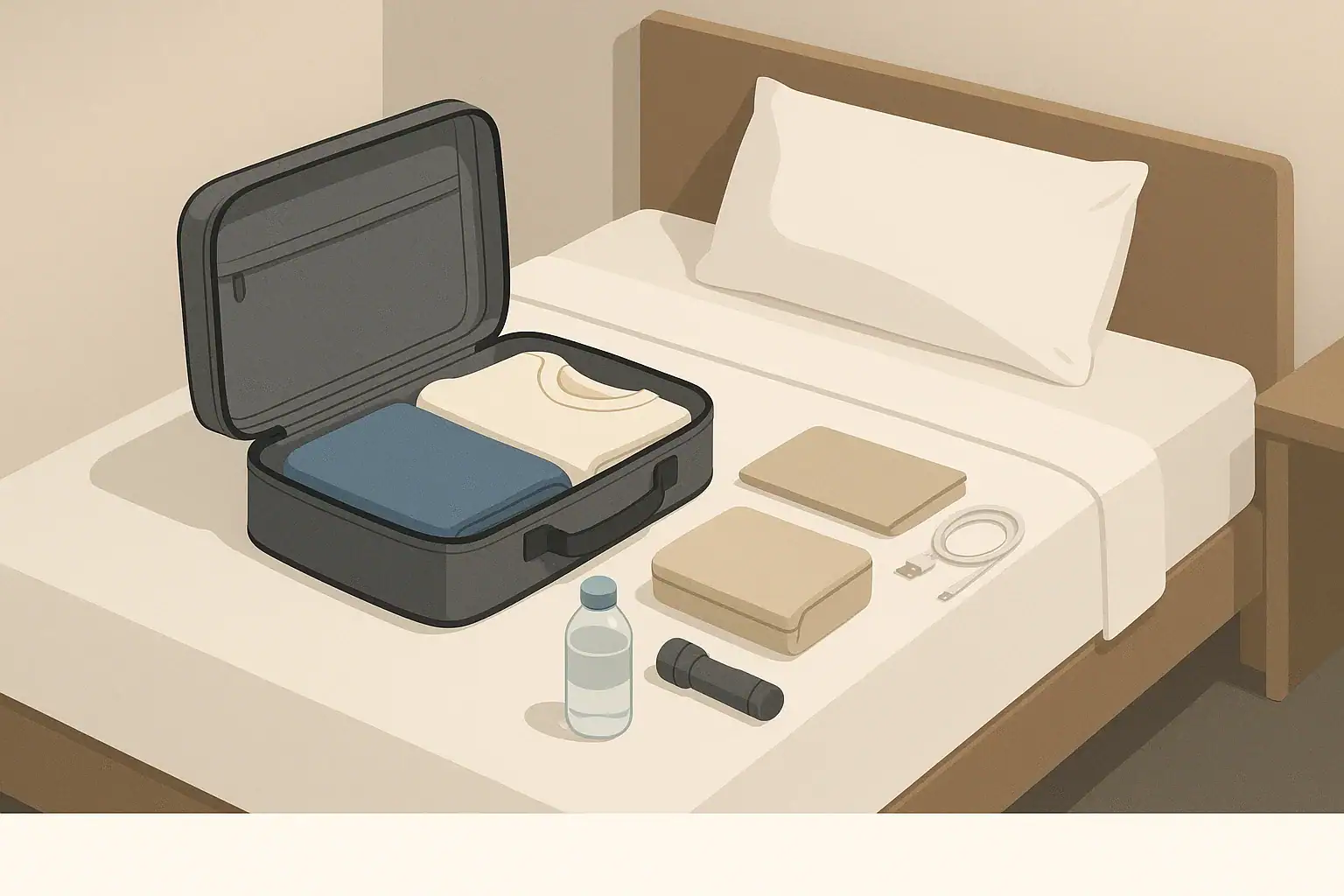
Unexpected hotel stays are more common than many people realize. A small fire in your apartment building, a water leak that floods your bedroom, a nearby chemical spill, a neighborhood power outage in extreme weather, or a wildfire advisory can all lead to short-notice evacuations where a hotel is the most practical option.
A hotel evacuation bag is a pre-packed, grab-and-go bag designed for a few nights away from home in a standard hotel or motel. It focuses less on camping-style survival gear and more on practical comfort and function when you suddenly cannot sleep at home.
This approach fits a calm, realistic view of preparedness. Instead of planning for extreme scenarios, you set yourself up to handle common disruptions: you can check into a hotel safely, keep your routine as steady as possible, care for family members and pets, and make decisions without rushing.
Why a Hotel Evacuation Bag Belongs in Everyday Readiness
Unexpected hotel stays are more common than many people realize. A small fire in your apartment building, a water leak that floods your bedroom, a nearby chemical spill, a neighborhood power outage in extreme weather, or a wildfire advisory can all lead to short-notice evacuations where a hotel is the most practical option.
A hotel evacuation bag is a pre-packed, grab-and-go bag designed for a few nights away from home in a standard hotel or motel. It focuses less on camping-style survival gear and more on practical comfort and function when you suddenly cannot sleep at home.
This approach fits a calm, realistic view of preparedness. Instead of planning for extreme scenarios, you set yourself up to handle common disruptions: you can check into a hotel safely, keep your routine as steady as possible, care for family members and pets, and make decisions without rushing.
How a Hotel Evacuation Bag Differs from a Traditional Go-Bag
Many resources describe general emergency go-bags built for shelters, cars, or outdoor conditions. A hotel evacuation bag assumes you will have basic shelter, climate control, and a bathroom, but not your usual belongings or household supplies.
That changes what you prioritize. You still want important documents and basics, but you can lean more on small comforts and items that help you function in a new space for a few days.
- Short-term focus: Typically packed for about 2–4 nights away.
- Hotel-based: Assumes four walls, a bed, and running water but not your usual linens, toiletries, or tools.
- Compact and portable: Designed so you can carry it through stairs, parking lots, and hotel lobbies without strain.
- Quiet and discreet: Looks like normal luggage or a backpack, not specialized gear.
For most people in apartments, condos, or rentals, this type of bag can be more realistic than a large wilderness-style kit. It aims for “temporary disruption” rather than long-term self-reliance.
| Task | Why it matters | Notes |
|---|---|---|
| Choose one dedicated bag | Makes grab-and-go easier | Backpack or small rolling bag |
| Set a clothing target | Prevents overpacking | Example: 2–3 days of outfits |
| Gather travel-size toiletries | Covers first nights away | Refill from home supplies as needed |
| Add basic power & lighting | Keeps devices usable and room lit | Small flashlight and charging cables |
| Prepare document copies | Simplifies check-in and follow-up tasks | Store in a simple waterproof sleeve |
| Include simple snacks | Covers late arrivals or closures | Shelf-stable, no-cook options |
| Plan for kids or pets | Reduces stress for dependents | Comfort items and basic supplies |
Core Essentials for Any Hotel Evacuation Bag
Start with items that almost everyone will find useful, regardless of region or household size. Aim for a bag you can carry comfortably with one hand or on your back.
Identification and Basic Documentation
When you arrive at a hotel unexpectedly, you may need quick access to identification and simple documentation for check-in, payments, and follow-up with your landlord, insurer, or workplace.
- Photo ID (driver’s license or similar)
- Copy of health insurance information (physical or securely stored digitally)
- List of key phone numbers (family, landlord or property manager, workplace, insurance, trusted neighbor)
- Simple record of your home address and unit number (helpful under stress)
- Basic documentation about pets (for pet-friendly hotels), such as proof of vaccinations if you have it available
Store physical copies in a simple, moisture-resistant sleeve or envelope. Digital copies can be kept in secure cloud storage or password-protected notes, but having at least some basics on paper is helpful if phones lose power or service.
Clothing and Personal Comfort
Pack comfortable, simple clothing suitable for a few days in a hotel and trips outside for food, work, or errands.
- 2–3 changes of underwear and socks
- 1–2 comfortable tops and 1–2 pairs of pants or shorts
- Sleepwear you would be comfortable wearing in a shared hallway if needed
- Lightweight sweater or layer for cool hotel rooms or lobbies
- Comfortable walking shoes (if you usually wear shoes that are not ideal for walking)
Favor clothes that pack small, dry reasonably fast if washed in a sink, and mix and match. Roll clothing to save space and help you see everything at a glance.
Toiletries and Hygiene
Hotels often provide basic soap and shampoo, but they may not have what you prefer, and arriving late at night can make it hard to buy what you need right away.
- Toothbrush and travel-size toothpaste
- Travel-size soap or body wash and shampoo
- Deodorant in a small format
- Comb or small brush and simple hair ties if needed
- Menstrual products, if relevant, for at least one cycle
- Basic nail clippers and simple personal care items you use daily
Keep liquids in small, tightly closed containers in a separate pouch. This makes it easier if you ever need to fly, but it is also practical for avoiding spills inside your bag.
Medications and Daily Health Needs
While specific medical advice should come from a licensed professional, many people benefit from setting aside a small buffer of their usual, non-expired medications. This can make short-notice evacuations less stressful.
- A few days of regularly used prescription medications, if your situation allows
- Any regularly used over-the-counter items you rely on in daily life (for example, certain pain relievers or allergy aids), stored according to label directions
- Glasses, spare contacts, and basic contact supplies if you use them
- Simple first-aid basics such as adhesive bandages and a small roll of medical tape
Rotate medications so they remain in date, and follow storage and usage directions on the packaging or from your healthcare provider.
Money and Payments
Paying for lodging, transportation, food, and incidentals can be smoother if you have more than one way to pay.
- Primary payment card
- Backup card, if you have one
- A modest amount of cash in small bills (for tips, vending machines, or places that do not accept cards)
Keep payment methods in a wallet or small pouch you can carry separately if you need to leave your room quickly.
Power, Lighting, and Communication in a Hotel Setting
Most hotels provide steady electricity, but regional outages, storms, or building-level issues can still interrupt service. Even when power is on, outlets may be limited or inconveniently placed, and you might arrive with low phone battery after an evacuation.
Charging and Power Basics
Plan to keep your essential devices usable without relying on loaned chargers or crowded outlets in a lobby.
- Charging cables for each device you rely on (phone, tablet, e-reader)
- Simple wall plug with multiple USB ports, if you have more than one device
- Small power bank sized for at least one full phone charge, stored according to manufacturer guidance
These items are compact but make it easier to communicate with family, check local updates, navigate to the hotel, and coordinate with work or school.
Safe, Compact Lighting
Battery-powered lighting is useful if hallways or rooms go dark, or if you need to navigate unfamiliar spaces at night without relying on your phone flashlight.
- Small flashlight with fresh batteries
- Compact headlamp if you like hands-free lighting
- Set of spare batteries stored in a small case or pouch
Avoid open flames in hotel rooms. Battery lights are generally a safer fit for shared buildings.
Communication and Simple Information Plan
Before an emergency, decide how you will use your phone and who you will contact if you need to leave home quickly.
- Written list of a few key contacts in case your phone battery is low or your device is unavailable
- Agreed-upon family check-in method (text, group chat, or a specific contact everyone updates)
- Note of a potential out-of-area contact who can relay information for your family
Keeping communication simple reduces confusion during busy evacuations or when networks are congested.
Food, Water, and Small Comforts for Short Hotel Stays
Hotels offer varying access to food, water, and small appliances. Some have microwaves, mini-fridges, and restaurants; others may not. Packing a few basics ensures you can get through the first night comfortably, especially if you arrive late or during adverse weather.
Water Access and Simple Supplies
Most hotels provide potable tap water, but you may not feel like searching for cups or ice when you first arrive.
- Refillable water bottle for each adult
- Small foldable or compact bottle if space is tight
- Optional: a few packets of simple drink mix, if you prefer a flavored drink
These small items support hydration without requiring a trip to a vending machine when you are tired or stressed.
No-Cook and Easy-Snack Options
For a short hotel stay, focus on no-cook, low-mess items that can handle changing temperatures and being carried in a bag.
- Individually wrapped snack bars
- Small pouches or containers of nuts, seeds, or similar items
- Packages of crackers or similar dry snacks
- Single-serve, shelf-stable items that do not require refrigeration before opening
Rotate snacks periodically so they stay fresh, and choose foods that fit your household’s usual preferences and any dietary restrictions.
Comfort Items to Reduce Stress
A sudden hotel stay can be disorienting, especially for kids, seniors, or anyone who relies on routine. A few small comfort items can help a new room feel more manageable.
- Eye mask and simple earplugs if you are sensitive to light or noise
- Lightweight scarf or extra socks for added warmth
- Small notebook and pen for jotting down room numbers, parking locations, or questions for your landlord or insurer
- Simple entertainment: a deck of cards, lightweight book, or downloaded content on a device
These items are inexpensive but can make hotel stays calmer, especially when normal life is temporarily on hold.
Packing for Families, Kids, and Pets
If you care for children, older adults, or animals, your hotel evacuation bag should reflect their specific needs. You can either create one combined family bag or a shared base bag plus small add-on pouches for each person or pet.
Considerations for Children
Children often handle change better when they have familiar items and predictable routines.
- Change of clothes and sleepwear for each child
- Small blanket or comfort item that can handle travel
- Compact toy, coloring supplies, or puzzle activity
- Diapers, wipes, and changing supplies for infants and toddlers
- Any daily-use items (such as specialized cups or utensils) that make eating and drinking easier
Involve older children in packing a small personal pouch. This helps them feel more in control and increases the chance they will use what you pack.
Supporting Older Adults or Those with Mobility Limits
For seniors or anyone with mobility or sensory considerations, think about what makes a hotel stay practical and safe.
- Footwear that is easy to put on and stable for hallways and stairs
- Any regularly used mobility aids that are reasonably portable
- Simple nightlight-style light (battery-powered) for trips to the bathroom
- Written list of medications and daily routines for caregivers or hotel staff, if needed
When considering hotels in general, think ahead about elevator access, proximity to exits, and quiet floors to match the person’s comfort level.
Hotel Planning with Pets
Pet-friendly hotels can fill quickly during regional emergencies, so it helps to know your options in advance. For the bag itself, keep pet supplies compact and focused on immediate needs.
- Collar or harness and leash
- Small supply of pet food in a sealed bag or container
- Collapsible or lightweight food and water bowls
- Waste bags and any simple cleanup items you normally use
- Copy of vaccination records, if available
Consider keeping a short list of nearby pet-friendly hotel chains or general types of lodging in your area, even if you do not book in advance.
Where to Store Your Hotel Evacuation Bag and How to Keep It Current
An evacuation bag only helps if you can reach it quickly and trust that what is inside still fits your life. A few simple habits will keep it useful over time.
Smart Storage Locations in Apartments and Houses
Store your bag where you can access it quickly without needing to cross the entire dwelling or move heavy items.
- Near the main exit door in a closet or on a stable hook
- Under a hall table or bench near your shoes and coats
- In a bedroom corner, if that is your clearest exit path
If you live in a multi-story home, consider where you would most likely exit during a fire alarm or water leak and store the bag accordingly.
Simple Rotation and Update Routine
Schedule brief check-ins a few times a year so your bag keeps up with your life and the seasons.
- Every 3–6 months: Swap snacks, check toiletries, and confirm batteries are in good shape.
- Seasonally: Adjust clothing layers and add or remove cold-weather accessories.
- When life changes: Update medications, children’s clothing sizes, pet needs, and any new devices or chargers.
Mark these check-ins on a digital calendar or on a note taped inside a closet, so they become part of your normal home maintenance routine rather than an extra project.
| Food type | Storage tip | Rotation interval idea | No-cook use |
|---|---|---|---|
| Snack bars | Keep in original wrappers in a small pouch | Check every 3–4 months | Quick breakfast or late-night snack |
| Crackers | Use small, sealed sleeves inside a hard container | Rotate with regular pantry every few months | Base for spreads or eaten plain |
| Nuts or seeds | Store in single-serve packets | Use and replace a few times a year | Portable protein-rich snack |
| Dried fruit | Keep sealed and away from heat | Swap with pantry supply periodically | Sweet snack or mix-in with nuts |
| Instant oatmeal packets | Bag together with disposable spoon | Refresh at least annually | Use with hotel hot water |
| Single-serve shelf-stable items | Place in rigid box to prevent crushing | Check label dates twice a year | Simple meal component without cooking |
Example values for illustration.
Keeping Hotel Evacuations Manageable and Low-Stress
A hotel evacuation bag is less about expecting disaster and more about accepting that short disruptions happen. By deciding in advance what you need for a few nights away, you remove dozens of small, stressful decisions from an already busy moment.
Whether you live in an apartment with shared walls, a townhouse in a dense neighborhood, or a single-family home, a compact, hotel-focused bag supports a smoother transition when you cannot sleep at home. With basics for documents, clothing, hygiene, power, communication, food, and family or pet needs, you can check into a room, lock the door, and focus on the next step rather than scrambling for missing items.
Authoritative sources
Safety recommendations can change. Confirm critical details with current official guidance and local authorities.
- US EPA: Emergency Disinfection of Drinking Water
- USDA FSIS: Keep Food Safe During Emergencies
- U.S. CPSC: Battery Safety
Frequently asked questions
How many nights should I pack my hotel evacuation bag for?
Plan for about 2 to 4 nights as a practical default; this covers most short-notice evacuations such as brief repairs, temporary outages, or short-term displacement. Packing for this window keeps the bag compact while ensuring you have essentials to remain comfortable and functional.
Can I use a regular suitcase instead of a dedicated hotel evacuation bag?
A regular suitcase can work if it is accessible and already contains the right items, but a dedicated bag is easier to grab quickly and tends to be more portable for stairs or crowded exits. The advantage of a dedicated hotel evacuation bag is that it stays packed with rotated items ready for use without last-minute searching.
Which documents should I keep physical copies of in my hotel evacuation bag?
Keep a photo ID, a basic insurance or medical card copy, and a short printed list of key contacts and your home address; these are most useful at check-in and when you have low battery or no service. Digital backups are helpful, but physical copies avoid problems if devices fail.
How should I store and rotate medications in a hotel evacuation bag?
Store a small buffer supply in the original labeled containers when possible and check expiration dates every few months. Replace or update prescriptions when dosages or devices change, and follow any specific storage instructions, such as refrigeration needs handled separately.
What pet items are most important for a short-notice hotel stay?
Focus on a leash or harness, a small sealed supply of food, collapsible food and water bowls, waste bags, and a copy of vaccination records if available. These items cover immediate needs and simplify check-in at pet-friendly lodging during the first nights away.
- Simple checklists and realistic planning
- Water, power, lighting, and pantry basics
- Family plans (kids, pets, seniors) and seasonal prep
Affiliate disclosure
As an Amazon Associate, we earn from qualifying purchases. Some links on this site may be affiliate links. If you buy through these links, we may earn a small commission at no extra cost to you. This helps support our content. Learn more.