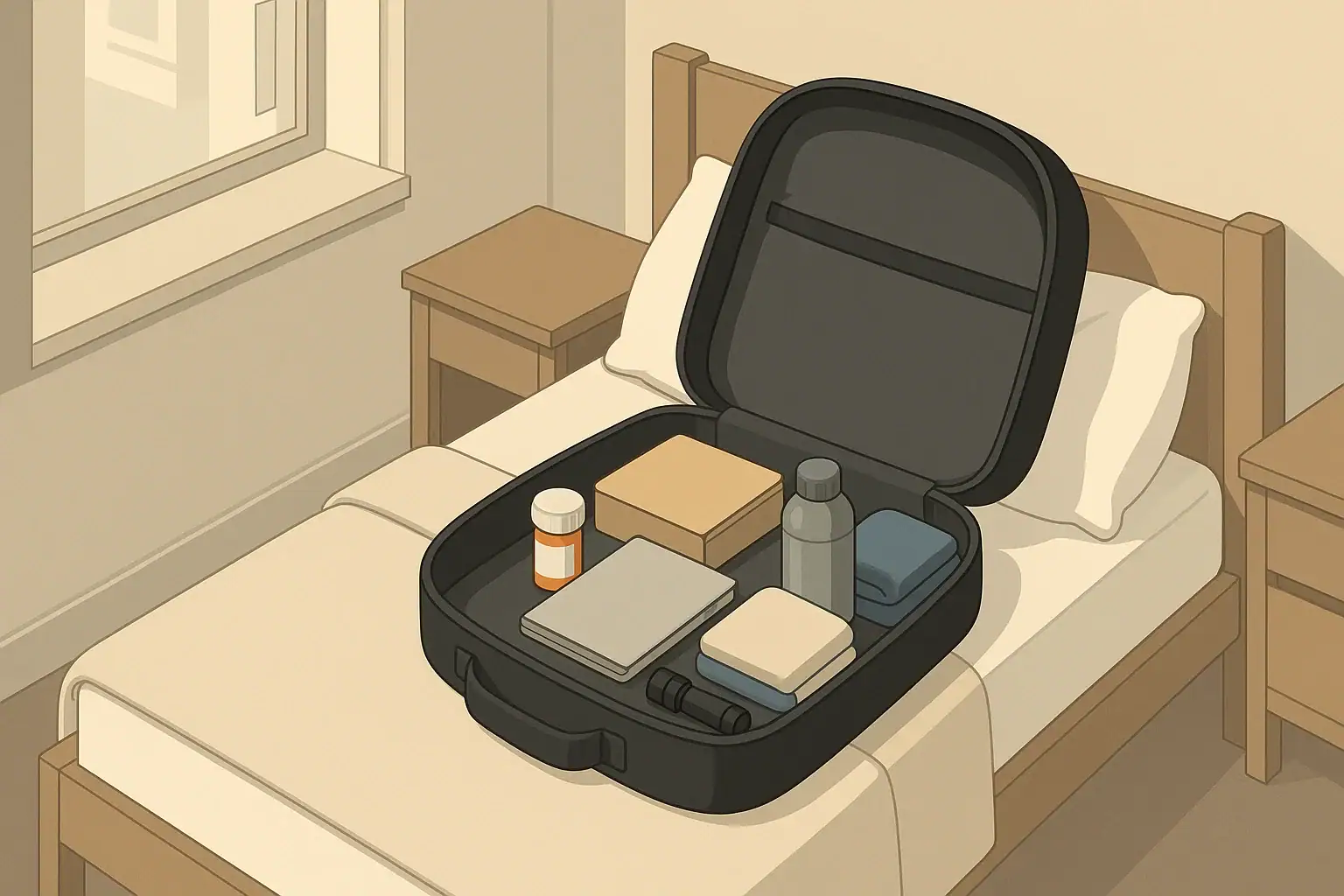
Short disruptions like storms, building issues, or localized evacuations can happen with little notice. For anyone who uses medications or medical supplies, being ready to leave home for a day or two is less about gear and more about access to the medicines you rely on.
A go-bag medication list is a simple, written or printed record of what you take and how you take it, plus a small supply stored safely with your emergency kit. The goal is not to stock a full pharmacy, but to bridge a short gap if you cannot get to your usual pharmacy or if you have to leave home quickly.
This approach keeps preparedness practical and low stress. It focuses on ordinary situations: a power outage that shuts down local stores, a brief evacuation due to a nearby fire, or a burst pipe that makes your apartment temporarily unsafe.
Why Your Go-Bag Medication List Matters
What to Include in a Go-Bag Medication List
Your list should be clear, current, and easy for another adult or a responder to understand. Keep the language simple and avoid abbreviations that might confuse someone who does not know your routine.
Core information for each medication
For each prescription or over-the-counter medicine you use regularly, consider recording:
- Name of the medication (generic name is helpful)
- What it is for (for example, blood pressure, allergies)
- Dose and how often you take it
- How you take it (by mouth, inhaler, injection, patch, etc.)
- Time of day you usually take it (morning, bedtime, with meals)
- Any important notes from your clinician about use
Additional details that can help in an emergency
A short list of extra details can make it easier to replace lost or damaged medications if you have to leave home quickly:
- Your name and date of birth
- Names and contact information for your usual pharmacy or clinic
- Known allergies or medication sensitivities
- Any medical devices you use (for example, inhalers, test strips, insulin pens)
- Names and contact information for key family or household members who know your routine
Keep this list printed and folded in a protective sleeve or envelope in your go-bag. You can still store a copy on your phone, but a paper version does not depend on power or connectivity.
Example values for illustration.
| Task | Why it matters | Notes |
|---|---|---|
| List every daily prescription | Helps avoid missed essential doses | Include dose and schedule |
| Add important “as needed” meds | Covers pain, allergies, or other flares | Note typical reasons you use them |
| Write your medication allergies | Reduces risk of receiving something unsuitable | Include reactions you have experienced |
| Record pharmacy and clinic contacts | Makes refills easier if you are away from home | Phone number is often enough |
| Print two copies of the list | Paper works when devices or power fail | One for your bag, one for home files |
| Date the list | Makes it clear how current the information is | Update when medications change |
Building a Small Medication Supply for Your Go-Bag
After your list is ready, the next step is deciding what physical medications to keep in your go-bag. This does not need to be a large supply. A modest cushion can give you time to reach a pharmacy or clinic, even during a short disruption.
Deciding which medications to store
Focus on medicines that would create problems if you missed them for a day or two. Many people prioritize:
- Daily prescriptions that manage ongoing conditions
- Critical “as needed” medications (for example, for breathing or severe allergic reactions)
- Basic over-the-counter options that you rely on, such as for pain relief, fever, or digestive discomfort
You do not need to duplicate everything. Think in terms of the minimum supply that keeps you comfortable and safe during a short stay away from home or while local services are disrupted.
Safe storage in a go-bag
Medicine storage should balance accessibility and safety, especially around children or pets. Consider:
- Leaving medicines in their labeled containers when possible
- Using a small, closable pouch or case within your go-bag to keep items together
- Keeping the go-bag itself in a location that is easy for adults to reach but not a play space for children
- Avoiding extreme heat or freezing conditions when deciding where to store the bag in your home
If you live in a very hot or cold climate, storing your go-bag in the most temperature-stable room available (often an interior closet) can help protect the contents.
Managing Refills Without Extra Stress
Maintaining a small emergency supply can feel complicated if you already work hard to stay on schedule with refills. The goal is not to stockpile, but to use timing and planning so your go-bag always holds a modest, current supply.
Ways to build a small buffer
Depending on your situation and coverage, some people are able to create a small buffer over time by:
- Refilling on the earliest allowed date, so there is a slight overlap
- Setting aside a few doses from each refill, clearly labeled for emergency use
- Asking their care team about practical ways to keep a short backup supply
Any approach should stay within your usual prescription and refill schedule. The idea is steady, incremental preparation, not sudden large changes.
Using reminders for refills
Refill timing is easier to manage with simple reminders. Options include:
- Calendar alerts on your phone
- A note on a paper calendar or planner
- Placing your printed medication list where you see it often and writing refill dates on it
When you pick up a refill, it can be a natural moment to check your go-bag supply and rotate older doses out (more on rotation below).
Copies of Prescriptions and Key Documents
Copies of important documents can make it easier to replace lost medications or explain your needs in a new setting. These do not need to be elaborate—just enough information to help you and anyone assisting you.
Documents to keep with your go-bag medications
Many households find it useful to include:
- A copy of your current medication list
- Copies of recent prescription labels or printouts
- A list of your medical conditions in simple language
- Names and phone numbers for your main health contacts
- A copy of your health insurance card, if you have one
If you care for children, older adults, or others who might need help communicating, consider including their information as well. For shared households, separate envelopes or folders for each person can reduce confusion.
Where and how to store copies
Simple storage steps can keep documents usable when you need them:
- Place paper copies in a sealable plastic sleeve or envelope to protect from moisture
- Keep one set in the go-bag and another in a safe home location
- Consider a secure digital backup if you are comfortable using one
Keeping documents current matters more than keeping a large stack of papers. Review them whenever your medications or pharmacy details change.
Consider a secure digital backup if you are comfortable using one.
Rotation: Keeping Your Go-Bag Medications Current
Rotation is simply the habit of using the oldest items first and replacing them with newer ones. For medications, this helps you maintain a small emergency supply without letting anything sit unused for long periods.
Setting a rotation schedule
A simple system is often best. Many people find it manageable to:
- Check their go-bag medications when they pick up regular refills
- Review the printed list and document copies a few times a year
- Look at expiration dates while the go-bag is already open for seasonal checks
You might tie rotation to routine events, such as the start of a school term, daylight saving time changes, or a recurring household chore, so it becomes part of your normal rhythm.
How to rotate medications
A basic rotation pattern could look like this:
- When you receive a new refill, move a small number of older doses into your go-bag, if they are still within their labeled timeframe
- Bring the oldest doses from your go-bag into your regular, everyday supply and use them next, if appropriate for you
- Remove and discard anything that is clearly damaged or no longer appropriate to use
Labeling your go-bag medication pouch with a simple note such as “checked in March” can remind you how current the contents are the next time you open it.
Organizing for Different Households and Living Spaces
Medication readiness looks different in a studio apartment than in a large house, and different again for families with children or older adults. The aim is to adapt the same basic ideas—list, copies, small supply, rotation—to your space and daily life.
Small apartments and shared spaces
If storage is limited or you share space with roommates:
- Use a compact go-bag with one small, labeled medication pouch
- Keep personal medication information in a sealed envelope for privacy
- Choose a storage spot that is easy to reach in a hurry but not crowded by other items
For shared households, discuss where the go-bag will live and who is responsible for checking it, so there is no confusion during a rushed moment.
Families, kids, and older adults
When several people rely on medications, clarity becomes especially important. Helpful steps include:
- Color-coding or clearly labeling small pouches for each person’s medications
- Attaching a brief medication list to each pouch
- Keeping children’s medications out of their reach while still accessible to adults
- For older adults, storing spare glasses, hearing aid supplies, or other everyday items with the go-bag, if helpful
If a family member has difficulty communicating, adding a short note about how best to support them can assist helpers in an unfamiliar setting.
Medication Readiness and Other Home Preparedness Tasks
Taking care of your go-bag medications fits naturally with other small home readiness tasks. You can bundle them together seasonally to avoid feeling overwhelmed and to keep your kit aligned with everyday life.
Pairing medication checks with routine planning
Examples of natural times to review medication readiness include:
- Before seasonal weather shifts, such as winter storms or hurricane season
- When you update your contact list or communication plan
- When you refresh water, food, or basic hygiene supplies
A short, predictable checklist can reduce the mental load. You open the go-bag, look at a few clearly labeled sections, and close it again knowing it matches your current needs.
Example values for illustration.
| Food type | Storage tip | Rotation interval idea | No-cook use |
|---|---|---|---|
| Canned beans | Store in a cool, dry cabinet | Review every 6–12 months | Eat from can with simple seasoning |
| Canned vegetables | Group by type and date | Use oldest first during regular meals | Serve at room temperature as a side |
| Ready-to-eat soups | Keep together for easy grabbing | Check twice a year | Eat at room temperature if needed |
| Nut butters | Seal tightly after each use | Rotate into lunches regularly | Spread on crackers or bread |
| Granola or energy bars | Store in a small labeled box | Replace during seasonal checks | Use as quick snacks |
| Shelf-stable milk or drinks | Keep in original packaging | Use older boxes in everyday meals | Drink as-is for calories and fluids |
Keeping Preparedness Calm and Sustainable
A go-bag medication list, a few spare doses, and a simple rotation habit are small steps that can reduce stress during everyday disruptions. The aim is not to predict every possible event, but to make it easier to leave home briefly without worrying about missing essential medications.
By combining clear information, modest supplies, and routine checks tied to other household tasks, you can support your health needs in a balanced way that fits apartments, houses, shared spaces, and family homes alike.
Authoritative sources
Safety recommendations can change. Confirm critical details with current official guidance and local authorities.
- USDA FSIS: Keep Food Safe During Emergencies
- CDC: Guidelines for Cleaning Safely After a Disaster
- Ready.gov: Preparedness Tips for People with Disabilities
Frequently asked questions
How many days of medication should I aim to keep in a go-bag?
A reasonable target for a go-bag medication list is a 24–72 hour supply, since most short disruptions last a day or two. Even a single extra day of critical medications can provide time to reach a pharmacy or clinic. Adjust the amount based on how quickly you can normally access care and any travel or evacuation plans.
Can I store controlled or prescription-only medications in a go-bag?
Yes, but take extra precautions: keep them in their original labeled containers when possible and include documentation such as prescription labels or clinician contact information. Secure storage and awareness of legal or prescription limits are important, so check with your prescriber or pharmacist if you have questions about allowable quantities or safe transport.
What is the best way to handle temperature-sensitive medications like insulin in a go-bag?
For short-term storage, use an insulated pouch and cold packs designed for medicines, and avoid prolonged exposure to heat or freezing temperatures. Store the go-bag in the most temperature-stable place in your home and consult the medication guidance or your clinician for specific temperature ranges and handling instructions.
What documents should I include with my go-bag medication list to replace meds if lost?
Include a dated medication list with doses and administration instructions, copies or photos of recent prescription labels, pharmacy and clinician contact information, your allergies, and a copy of your health insurance card if available. These items make it easier for a pharmacy or clinician to verify your needs if you must obtain replacements away from home.
How often should I check and rotate items in my go-bag medications?
Check your go-bag medications whenever you pick up regular refills and perform a more thorough review at least twice a year or during seasonal household checks. Look for expiration dates, damaged packaging, and whether lists or contact details need updating, then rotate older doses into your everyday supply if appropriate.
- Simple checklists and realistic planning
- Water, power, lighting, and pantry basics
- Family plans (kids, pets, seniors) and seasonal prep
Affiliate disclosure
As an Amazon Associate, we earn from qualifying purchases. Some links on this site may be affiliate links. If you buy through these links, we may earn a small commission at no extra cost to you. This helps support our content. Learn more.