Why Safe Water Transport Matters in Everyday Readiness
Moving water sounds simple until you have to do it in real life: hauling jugs from the car, carrying buckets up stairs, or shifting heavy containers during a short-term water disruption. Water is dense and awkward. One gallon weighs about 8 pounds, so even a small supply becomes heavy quickly.
For most households, especially in apartments or multi-story homes, safe water transport is as important as water storage. Good planning reduces the risk of:
- Back strain or falls from lifting too much at once
- Spills that create slip hazards on stairs or floors
- Damaged floors, car interiors, or stored supplies
- Contamination from open or poorly sealed containers
This guide focuses on calm, practical steps to move water safely in three common situations: in a car, on stairs, and in heavy containers at home.
Basics of Handling Heavy Water Containers
Before looking at specific locations like cars or stairwells, it helps to understand some basic principles for moving any heavy water container. These apply whether you live in a small apartment, a townhome, or a larger house.
Know How Much You Can Safely Carry
Everyone’s safe lifting limit is different, and it changes with age, fitness, and health. Instead of aiming for the largest possible container, choose sizes you can carry without straining.
- Test with a single gallon: Fill a one-gallon container and walk a short distance. If that already feels heavy, plan for multiple small containers instead of large ones.
- Use two hands when possible: Keeping the load close to your body reduces strain on your back and shoulders.
- Aim for multiple trips, not one giant lift: Several safe trips are better than one dangerous one.
Choose Container Types That Match How You Move
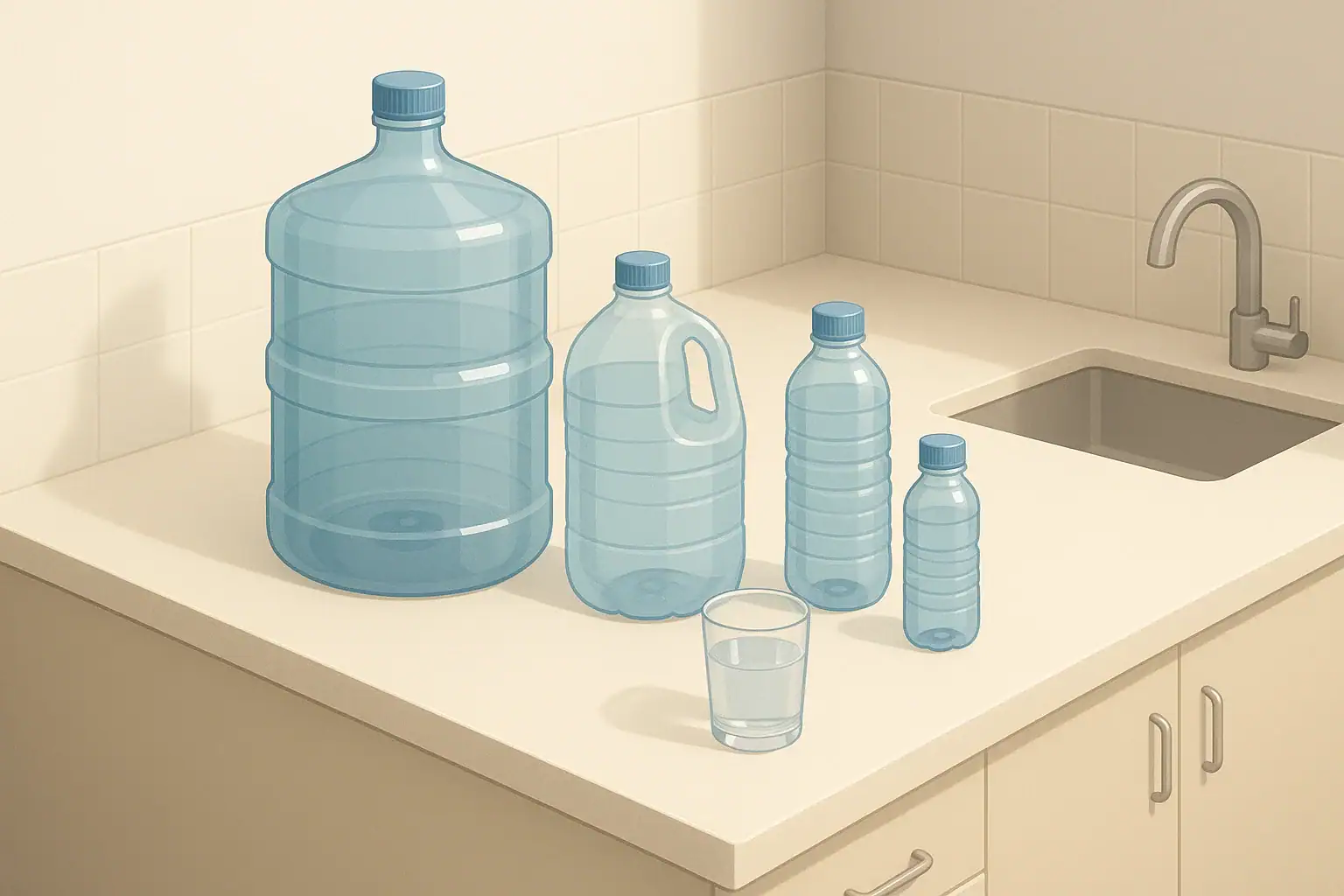
Instead of one large, hard-to-move container, many people find it safer to use a mix of sizes:
- Small jugs or bottles (1–2 gallons total): Easier to carry up stairs and safer for older adults or kids to help with under supervision.
- Medium containers (3–5 gallons): More efficient for storage but may be too heavy for some people to move when full.
- Large stationary containers: Best treated as “fill and leave in place” storage. Plan to draw from them with smaller portable containers rather than lifting them when full.
Basic Lifting and Carrying Tips
Use simple body mechanics to lower the risk of injury:
- Bend at the hips and knees, not your back.
- Keep containers close to your body when lifting.
- Avoid twisting while holding a heavy container; turn with your feet instead.
- If the container pulls you off balance immediately, set it down and transfer some water out before trying again.
Example values for illustration.
| Situation | Suggested container size focus | Why it may work better |
|---|---|---|
| Apartment with stairs and no elevator | Mostly 1–2 gallon containers | Lighter loads reduce strain and fall risk on stairways |
| Single-story home with nearby parking | Mix of 3–5 gallon and small containers | Short carry distance makes medium containers easier to manage |
| Family with young kids who help | Several small bottles or 1-gallon jugs | Children can safely move very small amounts under adult guidance |
| Older adults or anyone with mobility limits | Smaller containers plus simple cart | Reduces lifting and allows rolling containers when possible |
| Long-term storage in a closet or corner | One larger container kept stationary | Fill once, then draw water into smaller portable vessels when needed |
| Transport from shared outdoor spigot | 1–3 gallon containers | Easier to carry safely over uneven ground or ice |
Transporting Water Safely in a Car
Many people bring water home by car from stores, filling stations, or community distribution points during temporary disruptions. The goal is to keep containers upright, prevent spills, and avoid heavy objects becoming projectiles if you stop suddenly.
Plan the Loading Area in Your Vehicle
Think about where water will ride before you start loading:
- Cargo area or trunk: Often safest for heavier containers because they are separated from passengers.
- Floor behind the front seats: A good spot for smaller jugs that can be braced by the seat backs.
- Avoid seats when possible: Containers on seats tip easily and may slide during turns or stops.
Keep Containers Upright and Stable
Use simple methods to reduce movement:
- Place containers in boxes or plastic crates to keep them grouped together.
- Use towels, blankets, or other soft items as wedges to prevent sliding.
- Load heavier containers closest to the back seats or trunk wall so they have a solid surface behind them.
- Check each container’s cap or lid to be sure it is fully closed before driving.
Loading and Unloading Without Injury
Many strains happen while lifting containers in or out of the car, not while driving.
- Lift from the trunk or cargo area in small batches rather than trying to carry several containers at once.
- If a container is too heavy to lift out safely, consider dipping water into smaller containers before moving it.
- Park as close as possible to your building entrance to shorten carrying distance.
- On rainy or icy days, walk slowly and keep one hand free if possible to balance or hold railings.
Carrying Water Up and Down Stairs
Stairs add complexity to water transport, especially in apartment buildings, townhomes, or multi-story houses. Falling while carrying water can cause injuries, so it is worth planning your route and load size.
Prepare the Stairway First
Before carrying anything, make the path as safe as you reasonably can:
- Clear clutter and loose items from steps and landings.
- Turn on lights so each step is visible.
- Wipe up moisture or dirt that could be slippery.
- Confirm that handrails are secure and reachable.
Use Smaller Loads and Maintain Balance
On stairs, balance is more important than speed:
- Carry smaller containers in one hand and keep the other hand free for the rail when possible.
- If using two small containers to balance your load, make sure you can still see your feet and the next step.
- Take your time—short, steady steps are safer than rushing.
- If a container sloshes heavily, stop at a landing and let the water settle before continuing.
Consider Simple Tools for Multi-Story Buildings
Even in small homes, a few basic items can make stair transport easier:
- Small hand cart for landings and hallways: Useful when there are long flat hallways between stairwells.
- Backpack-rated water bladders or small bottles: Carrying water on your back may feel more stable for some people than carrying in hands, as long as the total weight is manageable.
- Multiple trips spread out over time: Instead of carrying everything at once, plan several smaller runs to reduce strain.
Managing Very Heavy or Large Water Containers
Some households store water in large drums, under-bed containers, or big stackable containers. These are efficient for storage but are not meant to be lifted when full.
Place Large Containers Where They Will Stay
It is much easier to position a large container while it is empty than after it is filled.
- Decide on the long-term location first—such as a closet corner, under a table, or along a wall on a ground floor.
- Place a waterproof mat or tray underneath if you are concerned about minor drips or condensation.
- Fill the container in place using smaller jugs, a hose, or a nearby faucet if allowed and practical.
Draw From Large Containers Into Smaller Ones
Rather than trying to move a large container, plan to take water out in smaller portions:
- Use a clean siphon hose, spigot, or pump if your container supports it.
- Transfer water into 1–2 gallon containers for carrying to sinks, toilets, or cooking areas.
- Mark one small container as your regular “transfer jug” so you are not constantly rinsing multiple items.
Protect Floors and Nearby Items
Even a slow leak from a large container can damage flooring or stored belongings over time.
- Keep paper products, electronics, and fabrics stored above floor level near large water containers.
- Check the area under and around large containers once in a while for signs of dampness.
- If you notice container walls flexing or seams stressing, transfer water out until the container is less full.
Short-Term Scenarios: Power Outages and Water Disruptions
Safe water transport becomes more important during short-term events such as power outages, water main breaks, or winter storms. In these situations, you might be carrying water from bathtubs, outdoor spigots, or community distribution points back to your home.
Collecting Water Indoors Without Plumbing Pressure
During an outage or plumbing issue, you might rely on water stored in bathtubs, buckets, or large containers.
- Use dedicated buckets or pitchers to move water from a bathtub to smaller storage containers.
- Label containers clearly for their intended use, such as “washing only” versus “for treating and drinking,” using removable tags or location-based separation.
- Avoid lifting overfilled buckets; consider filling them halfway to reduce strain.
Bringing Water from Outside the Home
If you need to collect water from an outdoor spigot, shared building tap, or community point:
- Plan your route before filling containers and identify obstacles like curbs, uneven ground, or ice.
- Choose containers with secure caps or lids to reduce spills in common areas such as hallways and elevators.
- For longer walks, multiple small containers or a simple cart may be more realistic than a few heavy ones.
Family and Household Planning
In homes with children, older adults, or pets, consider everyone’s abilities when planning water transport.
- Assign lighter tasks, such as carrying empty containers or opening doors, to those who should not lift heavy weight.
- Make sure pets are secure so they do not crowd stairways or walkways while you are carrying water.
- Talk through simple safety rules in advance, like not running on wet floors and staying clear of someone walking with heavy containers.
Example values for illustration.
| People and pets | Days you want to cover (example) | Storage approach idea | Rotation cue idea |
|---|---|---|---|
| Single person, no pets | 3 days | Several 1-gallon jugs for easy carrying | Check and refresh during seasonal time change |
| Two adults, one small pet | 3–5 days | Mix of 1-gallon jugs and a few 2–3 gallon containers | Rotate when you do deep cleaning of the kitchen |
| Family of four, one pet | 5–7 days | One larger stationary container plus small portable ones | Review at the start of each school term |
| Older adult living alone | 3 days | Mostly small bottles or 1-gallon jugs, limited lifting | Check on the same day as regular medical appointments |
| Household in upper-floor apartment | 3–5 days | More small containers that are easier to carry up stairs | Rotate when heating or cooling systems change seasons |
| Home with frequent guests | Extra 2–3 days | Keep some containers in a shared closet or under beds | Check before major holidays or expected visits |
Keeping Water Transport Safe, Simple, and Sustainable
Safe water transport is about practicality, not perfection. For most households, especially renters and those in small spaces, a few realistic habits go a long way: favor smaller containers you can truly carry, secure loads in your car, keep stairways clear and well lit, and treat large storage containers as stationary sources you draw from rather than move when full.
By matching container sizes to your body, your home layout, and your everyday routines, you make it far more likely that you can move the water you have when you actually need it—without unnecessary risk or strain.
Authoritative sources
Safety recommendations can change. Confirm critical details with current official guidance and local authorities.
- US EPA: Emergency Disinfection of Drinking Water
- CDC: Guidelines for Cleaning Safely After a Disaster
- Ready.gov: Prepare Your Pets for Disasters
Frequently asked questions
How much water can one person safely carry up stairs?
Safe carry limits vary by age, fitness, and stair steepness. A one-gallon jug (~8 lb) is a useful baseline test—if that feels heavy, use smaller containers and make multiple trips. Prioritize keeping one hand free for the rail and moving at a steady, controlled pace.
What is the safest way to secure water containers in a car to prevent spills and shifting?
Put heavier containers in the trunk or cargo area, group them in crates or boxes, and wedge them with towels or blankets to stop sliding. Load heavy items against the back seats or trunk wall and ensure lids are fully tightened. Non-slip liners or simple tie-downs further reduce the chance of tipping during sudden stops.
How should I manage large stationary water containers so I don’t have to move them when full?
Choose their long-term location before filling, place a waterproof mat underneath, and fill them in place using smaller jugs, a hose, or a pump. Use a spigot, siphon, or hand pump to transfer water into portable 1–2 gallon containers for regular use. Treat large containers as fixed sources and check around them periodically for leaks or stress on seams.
What simple tools can help older adults or people with limited mobility transport water safely?
Small wheeled carts, two-wheeled hand trucks, or backpack-style water bladders (kept to a manageable total weight) can reduce lifting. Ensure routes are clear, well lit, and have handrails where possible, and choose containers with comfortable handles. When in doubt, plan shorter, more frequent trips or arrange for assistance with heavier loads.
How can I avoid contaminating drinking water during transport?
clean, food-grade containers with tight-fitting caps and keep drinking water containers separate from those marked for washing or other uses. Rinse transfer jugs regularly, avoid setting lids on dirty surfaces, and wash hands before handling drinking water. If contamination is suspected, treat or boil the water before drinking.
- Simple checklists and realistic planning
- Water, power, lighting, and pantry basics
- Family plans (kids, pets, seniors) and seasonal prep
Affiliate disclosure
As an Amazon Associate, we earn from qualifying purchases. Some links on this site may be affiliate links. If you buy through these links, we may earn a small commission at no extra cost to you. This helps support our content. Learn more.