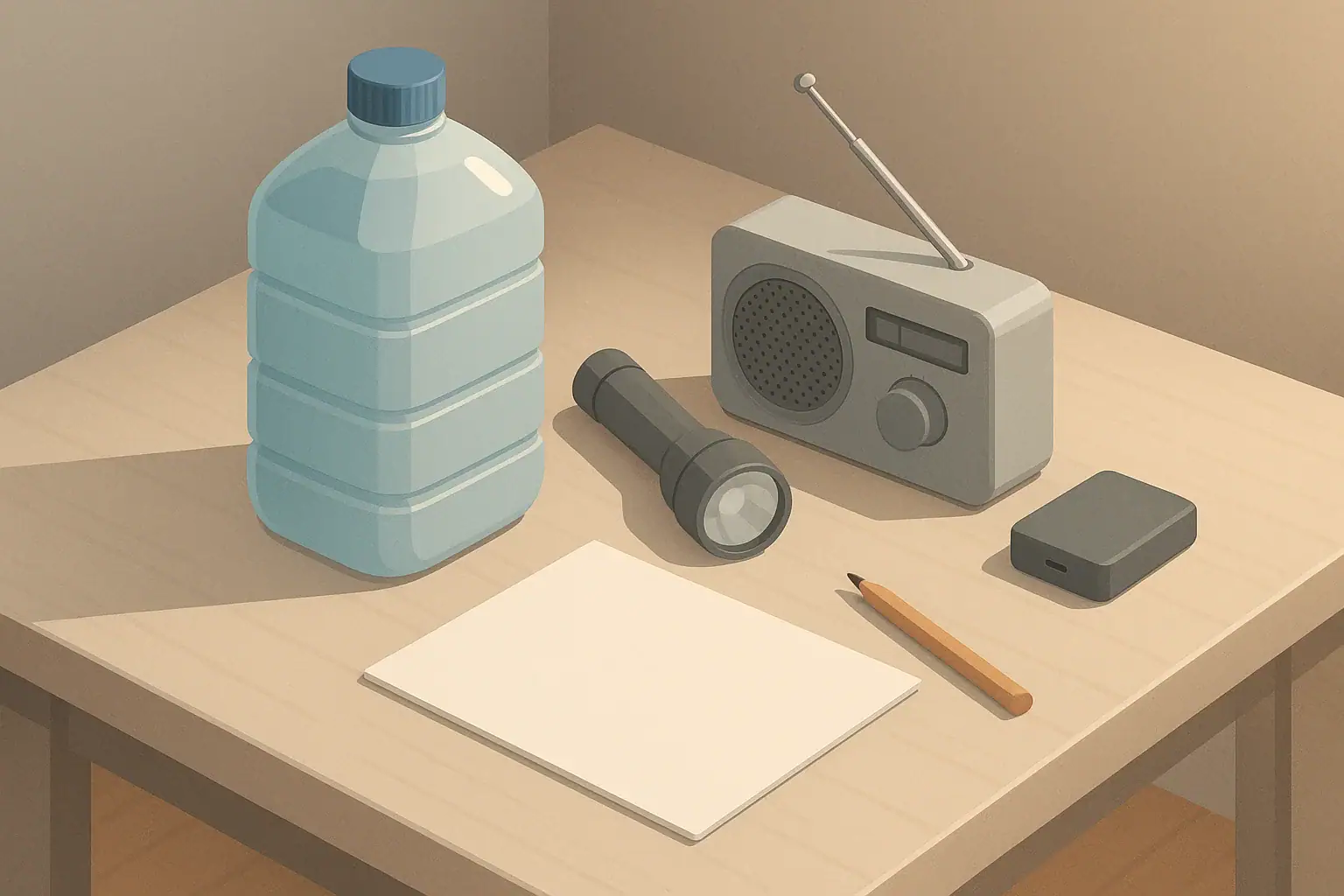
Why Renter-Friendly Readiness Matters
Renting an apartment or house often means limited storage, no drilling into walls, and strict lease rules. That can make home readiness feel out of reach. But many meaningful upgrades are possible with simple, low-cost items that do not damage surfaces or require permanent changes. This renter-focused guide keeps things practical and calm. The goal is not to prepare for every extreme scenario, but to handle the most common disruptions with less stress:- Short power outages
- Temporary water disruptions or boil notices
- Weather events that keep you indoors for a few days
- Smoke or poor outdoor air quality
Setting Priorities: What Actually Matters First
Before buying anything, it helps to decide what matters most for your situation. A renter in a high-rise will have different needs than someone in a ground-floor duplex. Consider:- Building type: High-rise, garden apartment, basement, or single-family rental
- Climate and season: Heatwaves, winter storms, hurricanes, or wildfire smoke
- Who lives with you: Kids, elders, pets, roommates
- Utilities: All-electric or gas, city water or well, elevator or stairs
- Safe lighting without open flames
- Basic water access and simple treatment backups
- Low-cook or no-cook food options
- Basic communication when power or internet is down
- Simple comfort upgrades for heat, cold, or smoke
| Task | Why it matters | Notes |
|---|---|---|
| Assemble 3-day water plan | Covers short disruptions or boil notices | Use store-bought jugs or refillable containers |
| Add battery or rechargeable lights | Reduces fall risk and candle use | Keep one in each main room if possible |
| Set up small power backup | Keeps phones and small devices running | Start with a basic power bank |
| Create a simple contact plan | Avoids confusion if networks are spotty | Write key numbers on paper |
| Build a no-cook food shelf | Supports stay-at-home days without cooking | Rotate into normal meals a few times a year |
| Organize a grab-and-go pouch | Saves time if you need to leave quickly | Include IDs, basic cash, and essentials |
No-Drill Lighting: Safer Than Candles, Better Than Phone Flashlights
Lighting is one of the easiest and most important renter upgrades. Many people default to candles or phone flashlights during an outage, but both have drawbacks. Candles add fire risk, and phone lights drain batteries you may need for communication.Portable Lighting Options That Do Not Need Drilling
Consider keeping at least one of the following in each main area:- Battery-powered lanterns: Free-standing, bright enough to light a whole small room.
- Headlamps: Hands-free for cooking, checking breakers, or carrying items.
- Compact flashlights: Good for navigating hallways and stairwells.
No-Drill Mounting and Storage Ideas
To keep lights where you can find them in the dark, use non-permanent solutions:- Adhesive hooks near doors or by the bed (removable designs that release cleanly)
- Magnetic hooks on metal door frames, fridge sides, or metal shelving
- Small baskets or bins by the entryway or under coffee tables
Backup Power Basics for Renters
Most renters do not have space or permission for hardwired generators. Still, you can maintain basic power for phones, small fans, or lights with renter-friendly options that sit on a shelf and plug into a normal outlet.Starting Small: Power for Phones and Essentials
For many apartments, a single charged device is enough to get through a typical short outage. You might combine:- Small power bank: Fits in a pocket; keeps a phone and maybe a small light going.
- Medium-size battery pack: Can support several phone charges, small LED lights, or a tiny fan for comfort.
Using Power Wisely During an Outage
Even a modest battery can last much longer with simple habits:- Switch phones to low-power mode and reduce screen brightness.
- Download maps and key information ahead of time when storms are forecast.
- Limit streaming and games; use text and short calls instead of video.
- Charge lights and radios first, then handheld devices.
Water Readiness in Apartments and Rentals
Even if tap water is usually safe and reliable, short-term disruptions or boil notices can happen. In a rental, there is rarely room for large barrels or permanent tanks, but you can still plan for at least a few days of drinking and basic hygiene needs.Compact Water Storage That Works in Small Spaces
Consider a mix of:- Store-bought jugs or bottles: Easy and landlord-neutral, though heavier to carry upstairs.
- Collapsible containers: Fold flat when not in use; filled if a storm or outage is forecast.
- Pitchers and clean jars: Everyday items that can double as short-term storage.
Low-Impact Water Treatment Options
There are several apartment-friendly ways to improve questionable tap water during advisories:- Simple filters that attach to the faucet without tools or that sit on the counter
- Gravity-fed filters that rest on the counter or a shelf
- Disinfecting methods such as boiling (if power or gas is available)
Pantry Readiness Without a Garage or Basement
Apartment kitchens are often small, but you can still create a steady, low-cost pantry plan that supports short stay-at-home periods. Focus on foods you already eat that store well and need little or no cooking.No-Drill, Shelf-Only Food Strategies
Helpful categories for renters include:- Ready-to-eat items: Nut butters, shelf-stable milk or milk alternatives, canned beans, canned fruits and vegetables.
- Low-cook meals: Instant grains, pasta, or soups that only need boiling water.
- Comfort staples: Crackers, granola, dried fruit, and simple snacks that reduce stress.
Rotation Without Waste
To keep food fresh and avoid waste:- Place newer items behind older ones, so older ones are used first.
- Pick a few dates each year (season changes or rent renewal) to check and restock.
- Incorporate backup foods into normal meals so nothing lingers for years.
Air, Temperature, and Comfort Upgrades for Renters
Staying reasonably comfortable can make short disruptions much easier, especially in heatwaves, cold snaps, or days with poor outdoor air quality. Many upgrades here are completely non-permanent.No-Drill Air Quality Improvements
For renters dealing with traffic pollution, wildfire smoke, or dusty buildings, look for:- Portable air cleaners: Units that simply plug into the wall and sit on the floor or table.
- Simple window sealing: Removable weatherstripping foam or draft-stopping tape that peels off later.
- Draft stoppers: Fabric or foam rolls placed along the bottom of doors.
Staying Cooler or Warmer Without Modifying the Building
Four renter-friendly strategies for comfort include:- Thermal curtains on tension rods: No drilling; can reduce heat gain or loss through windows.
- Reflective window film: Removable types can reduce summer heat while preserving the glass.
- Layered clothing and blankets: Simple, space-efficient way to stay warmer during winter outages.
- Small fans: Plug-in or USB fans that run off a power bank to move air during hot, still conditions.
Organization, Grab-and-Go Kits, and Communication
Readiness is not only about supplies; it is also about being able to find and use them quickly. This is especially important in shared rentals, apartments with kids, or homes with pets.Simple, Renter-Friendly Storage Ideas
To keep items accessible without installing shelves:- Use under-bed bins for water treatment, extra batteries, and backup hygiene supplies.
- Place labeled totes in closets for seasonal gear like blankets, fans, or masks.
- Keep a small “power basket” near your usual charging area for power banks and cables.
Lightweight Go-Bags for Renters
Even if evacuation is unlikely, having a small bag ready can reduce stress if you ever need to leave quickly due to a building issue, water leak, or local emergency. Contents might include:- Copies of key documents and IDs in a waterproof sleeve
- Basic toiletries and medications (rotated regularly)
- Compact flashlight and small power bank
- Simple snacks and a small bottle of water
- Leash and small pet supplies if you have animals
Communication Plans From a Renter Perspective
In multi-unit buildings, confusion can spread quickly when alarms go off or power fails. A simple communication plan can help everyone stay calmer:- Agree on a primary contact person outside your region if local networks are saturated.
- Write down phone numbers for family, work, property management, and medical providers.
- Decide on a meeting point near your building if you must leave suddenly.
| Need | Simple supplies | Safe use note | Disposal idea |
|---|---|---|---|
| Hand cleaning | Soap, small towel, alcohol-based hand gel | Use gel on visibly clean hands only | Use normal bathroom trash for empties |
| Toilet use during short outage | Extra toilet paper, trash bags, sealable bags | Follow building guidance; avoid clogs | Double-bag and place in building trash as allowed |
| Surface wipe-down | Multi-surface cleaner, paper towels, cloths | Ventilate room when using cleaners | Bag used towels if heavily soiled |
| Pet areas | Extra litter or pads, bags, basic cleaner | Keep pets away from wet cleaner | Follow local pet waste rules |
| Limited shower access | Washcloths, small basin, mild soap | Use minimal water; dry surfaces after | Drain water as usual if allowed |
| Laundry delays | Spare basics, stain remover, line for air-dry | Dry clothes fully to prevent mustiness | Reuse hangers and removable lines |
Bringing It All Together Without Overdoing It
Renter-friendly readiness does not require major spending or permanent changes. The most useful upgrades are often small, calm adjustments you barely notice day-to-day:- A few extra water containers tucked into a closet
- Battery lights in predictable spots instead of candles
- A modest power bank that stays charged
- A pantry shelf that can carry you through a long weekend at home
- Simple plans for staying in touch and staying reasonably comfortable
Frequently asked questions
What are the most effective no-drill lighting options for renters?
Battery-powered lanterns, headlamps, and compact flashlights provide bright, portable light without any installation. Keep at least one charged or stocked with fresh batteries in each main room and store spare batteries or charging cables together with the lights. Avoid candles due to fire risk.How can I safely store drinking water in a small rental without permanent tanks?
Use store-bought jugs, collapsible containers, and clean pitchers or jars that tuck into closets or under beds. Label containers for emergency use and rotate them into regular use periodically so water stays fresh. Aim for a few days’ supply per person as a starting point and adjust for pets and household needs.How can renters improve indoor air quality during smoke or pollution events without modifying the building?
Use a portable air cleaner in a single designated “cleaner air” room and add removable window sealing or draft stoppers to reduce infiltration. Run the air cleaner continuously while outdoor air is poor and keep doors closed to maintain a cleaner space. Focus efforts on one room rather than trying to seal the entire unit.Are portable solar panels and power banks allowed on balconies, and how should renters use them safely?
Building rules on balcony use vary, so check your lease or property management before placing panels outside. Small foldable solar panels can recharge power banks if positioned securely and used according to manufacturer instructions, but avoid blocking pathways or creating hazards. When in doubt, recharge power banks near a window instead of on a balcony.What no-drill mounting and storage methods keep emergency items accessible without damaging the rental?
Removable adhesive hooks, magnetic hooks on metal surfaces, small baskets, labeled totes, and under-bed bins work well for keeping supplies visible and accessible. Test removable adhesives for weight limits and follow product guidance to avoid surface damage. Keep an organized “power basket” or grab-and-go kit near exits for quick access.Recommended next:
- Start Here: A Calm Home Emergency Readiness Plan
- Emergency Plan Checklist: A Simple One-Page List for Home Readiness
- Emergency Readiness Calculators: Water, Power, and Pantry Planning
- 72-Hour Kit: What to Pack, Where to Store It, and How to Maintain It
- 72-Hour Kit vs 7-Day Plan vs 14-Day Plan: What to Add at Each Step
- Apartment vs House Readiness: The Key Differences in Your Plan
- More in Start Here →
About
ReadyHomePlan
ReadyHomePlan publishes practical home readiness guides for outages and short-term emergencies—power, water, food basics, communication, and family planning—without hype.
- Simple checklists and realistic planning
- Water, power, lighting, and pantry basics
- Family plans (kids, pets, seniors) and seasonal prep
How to Practice Your Plan: Simple Drills You Can Do in 15 Minutes
How to Create a Two-Week Home Readiness Plan Without Overbuying
Emergency Preparedness for Small Spaces: Storage Ideas That Work
Shelter-in-Place vs Evacuation: How to Decide Quickly
Emergency Documents: What to Copy, Print, and Store Safely
10 Common Preparedness Mistakes (and Easy Fixes)
Keep reading