Why a One-Person Emergency Pantry Matters
A small, well-planned emergency pantry can keep one adult comfortable through short-term disruptions like winter storms, water main breaks, or brief power outages. You do not need to buy months of food or turn your home into a storage room.
For most everyday situations in the United States, planning for about three to seven days of simple, low-effort meals is a practical goal. This gives you a cushion if:
- Roads are unsafe or transit is disrupted for a few days
- Stores are closed or quickly sell out of basics
- You cannot cook normally due to a power outage
The key is matching your pantry to your space, budget, and what you will actually eat, not what looks impressive on a shelf.
Step 1: Set a Realistic Timeframe and Space Limit
Before choosing foods, decide two things: how many days you want to cover, and where the food will live. This keeps your plan from turning into overbuying.
Choosing a Timeframe
For one adult in typical U.S. conditions, these examples are a reasonable starting point:
- 3 days: Basic cushion for short outages and storms
- 5 days: Good for areas with frequent winter storms or hurricanes
- 7 days: Helpful if you live alone, rely on public transit, or are far from stores
You can always expand later. It is easier to maintain a small, organized pantry than a large one that quietly expires.
Setting a Space Budget
Pick your storage zone first, then build to fit it. Common options in small apartments or rooms include:
- One kitchen cabinet or part of a cabinet
- A plastic bin under the bed
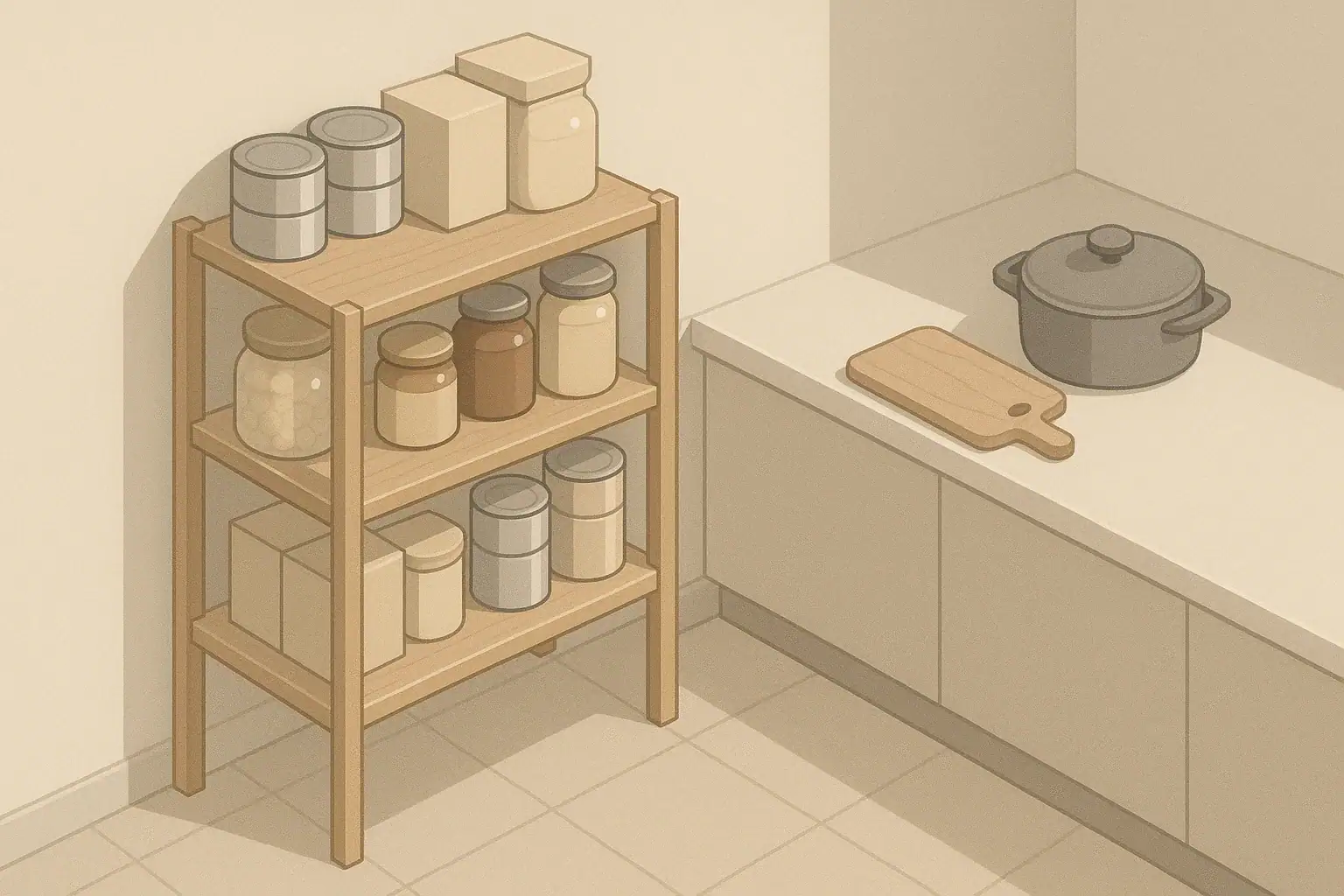
- A small shelving unit in a closet
- The top shelf of a clothes closet for lighter items
Think of your space like a suitcase: if it does not fit in the chosen spot while staying organized, you are probably buying more than you need for short-term use.
Example values for illustration.
| Living situation | Suggested days of food | Space idea | Why this can work |
|---|---|---|---|
| Studio apartment | 3–5 days (example) | One kitchen cabinet | Limits clutter while still covering brief outages |
| Shared apartment | 3–5 days (example) | Labeled bin under bed | Keeps your food separate and easy to find |
| Small house | 5–7 days (example) | Small shelving unit in closet | More flexibility for storms and supply delays |
| Rural home | 7+ days (example) | Dedicated pantry shelf | Helpful if stores are farther away |
| Frequent traveler | 3 days (example) | Half of a cabinet | Enough coverage for the time you are usually home |
| Senior living alone | 5–7 days (example) | Easy-access shelf height | Reduces need for urgent trips during disruptions |
Step 2: Estimate Simple Daily Food Needs
You do not need to count every calorie, but a rough daily structure helps avoid both shortages and waste. Think in terms of meals and snacks you would actually eat.
A Basic One-Day Example
For one adult, an example single day could look like:
- Breakfast: Instant oatmeal packet with nut butter, or granola with shelf-stable milk
- Lunch: Ready-to-eat soup or chili with crackers
- Dinner: Canned beans and rice, or pasta with jarred sauce
- Snacks: Nuts, dried fruit, granola bars, peanut butter with crackers
From this, you can sketch a simple rule of thumb for each day of your plan:
- 1 breakfast item
- 1 lunch item
- 1 dinner item
- 2–3 small snacks
If you are planning for five days, multiply those daily pieces by five. Adjust for your own appetite and preferences.
Cook vs No-Cook Planning
During emergencies, you may or may not be able to cook normally. Build your pantry so you can eat even if you have no stove and limited hot water:
- Include: Ready-to-eat foods that only need opening or minimal preparation
- Also include: A few easy-to-cook staples for when power or gas is available
For example, you might aim for a roughly even mix:
- About half of your meals from no-cook options
- About half from quick-cook options (boil, heat, or microwave if available)
Step 3: Choose Pantry-Friendly Foods You Already Like
The best emergency pantry is full of items you already enjoy in everyday life. This makes rotation simple and reduces the chance of wasting food you do not like.
No-Cook or Minimal-Prep Staples
These are useful if you lose power or cannot use your stove safely:
- Canned beans, lentils, or chickpeas
- Canned vegetables and fruit
- Canned tuna, chicken, or similar protein options
- Ready-to-eat soups or stews (that can be eaten at room temperature if needed)
- Nut butters and seed butters
- Shelf-stable hummus, salsa, or similar spreads
- Crackers, flatbreads, or tortillas
- Granola bars, trail mix, or mixed nuts
- Dried fruit such as raisins or apricots
- Shelf-stable milk or plant-based milk cartons
When possible, choose items you already buy, just a little extra for backup.
Easy-Cook Pantry Staples
If you have a working stove, hotplate, or other safe heat source, these can stretch your meals:
- Rice (white or quick-cooking varieties for faster prep)
- Pasta and instant noodles
- Instant or quick-cooking oats
- Dry lentils or split peas
- Boxed or instant potatoes
- Jarred pasta sauce
- Boxed meal starters or grain mixes
- Baking basics like flour, sugar, oil, and baking powder if you cook regularly
Focus on items with straightforward directions and ingredients you are used to working with.
Small Comforts Make a Difference
Stressful situations feel easier with familiar flavors. Consider adding a few items that make meals more enjoyable:
- Tea, coffee, or drink mixes that work with hot or cold water
- Spices, salt, pepper, or seasoning blends
- Hot sauce, soy sauce, or vinegar packets
- A favorite shelf-stable snack or dessert item
These small additions can make simple meals feel more normal without taking much space.
Step 4: Simple Quantity Examples Without Overbuying
Once you know your timeframe, you can sketch out quantities. The examples below are for one adult and are meant to be adjusted to your preferences.
Example: 3-Day Pantry for One Person
This sample list aims for three days of simple meals that can be mixed and matched. It assumes you may not be able to cook much.
- 3–4 single-serve breakfast options (instant oatmeal packets or granola)
- 3–4 cans or pouches of ready-to-eat soup, chili, or stews
- 3–4 cans of beans or lentils
- 2–3 small bags or cups of ready rice or similar quick grains
- 2 cans of tuna, chicken, or similar protein options
- 2–3 sleeves of crackers or a few packages of tortillas
- 1 medium jar of nut butter
- 6–9 snack items like granola bars, nuts, or dried fruit
- 1–2 cartons of shelf-stable milk or similar beverage
You might already have some of this at home; your emergency pantry could be as simple as keeping a small buffer instead of waiting until you are completely out.
Example: 5–7 Day Pantry for One Person
For a longer period, you can add a few more staples without doubling everything. For example, building on the three-day idea:
- 7 breakfast options (a mix of instant oats and cereal or granola)
- 7–8 cans or pouches of ready-to-eat soup, chili, or stews
- 6–8 cans of beans or lentils
- 4–5 cans of vegetables and 3–4 cans of fruit
- 4–5 bags of ready rice, quinoa, or grain mixes
- 3–4 cans or pouches of tuna, chicken, or similar protein options
- 2 jars of nut or seed butter
- 2 packages of pasta and 2 jars of pasta sauce
- 12–16 snack items like bars, nuts, and dried fruit
- 2–3 cartons of shelf-stable milk or similar beverages
Spread these items across your chosen shelf or bin so you can see everything easily. That visibility helps you use food before it expires.
Step 5: Do Not Forget Water and Simple Drinks
Food is only part of your emergency pantry. Having enough safe water is equally important, especially in situations where taps are disrupted or advisories are issued.
Basic Water Planning for One Person
A common planning guideline is to store several liters of drinking water per day per person. For a three-day supply, that adds up to multiple large bottles or jugs. For five to seven days, you will need more space and possibly a mix of containers.
In small homes or apartments, you can combine:
- Commercially bottled water in manageable sizes
- Refillable containers that you top up before storms or heatwaves
- Pitchers or clean bottles you can fill if you get advance warning
Store water away from direct sunlight and away from chemicals or cleaning products when possible.
Flavor and Warmth Options
Plain water is essential, but having variety helps when you are stressed or tired. Consider adding:
- Tea bags or instant coffee packets
- Electrolyte or flavor drink powders
- Broth cubes or shelf-stable broth boxes
These items take little space and can be prepared with hot or warm water when available.
Step 6: Tools, Safety, and Simple Backup Cooking
A few basic tools make an emergency pantry much more usable, especially if the power goes out.
Low-Tech Tools
Consider keeping near your pantry:
- Manual can opener
- Basic utensils and a small cutting board
- A sturdy bowl, mug, and plate
- Resealable bags or small containers for leftovers
- Napkins or paper towels
If you have limited kitchen storage, a small caddy or bin can hold these items together.
Backup Cooking and Safety
If you use any alternative cooking method during an outage, follow safety guidance for that device. In general:
- Use fuel-burning stoves and grills only outdoors in well-ventilated areas
- Keep flammable items away from heat sources
- Have a way to light your stove if it does not use automatic ignition
- Keep a flashlight or lantern near the pantry so you can see labels clearly
If you are not comfortable with special equipment, focus your pantry on no-cook options and food that can be safely eaten at room temperature.
Step 7: Keep It Fresh With Simple Rotation
An emergency pantry works best if it is part of your normal life, not a sealed box you forget about. Rotation means using and replacing items so they stay within their best-by dates.
Basic Rotation Habits
You do not need a complicated system. A few small habits can keep things simple:
- Front to back: Place newer items behind older ones
- Use what you store: Regularly eat from your emergency pantry and replace items during normal shopping
- Quick glance check: Every month or two, scan dates and move anything getting older to the front of your regular use
- Note favorites: Keep items you reach for; phase out those you consistently avoid
Labeling and Reminders
If you like visual cues, you can:
- Write purchase month and year on the top of cans or boxes
- Group items by type (breakfast, mains, snacks) for easier tracking
- Set a recurring reminder in your calendar to check your pantry a few times a year
Simple organization reduces guesswork during an actual emergency, when you may feel rushed or distracted.
Example values for illustration.
| Food type | Storage tip | Rotation interval idea | No-cook use example |
|---|---|---|---|
| Canned beans | Store upright in a cool, dry cabinet | Use in regular meals a few times per month | Rinse and mix with salsa and spices |
| Ready soups and stews | Group by flavor so you see variety | Plan one soup night every week or two | Eat at room temperature if needed |
| Nut butter | Keep tightly closed; avoid heat | Use in breakfast or snacks weekly | Spread on crackers or fruit |
| Crackers and tortillas | Seal well after opening | Rotate into lunches every few weeks | Top with beans, tuna, or spreads |
| Granola bars and nuts | Store in a small bin to avoid crushing | Use as grab-and-go snacks monthly | Eat directly from package |
| Shelf-stable milk | Keep in the darkest part of the cabinet | Use in cooking or cereal every couple of months | Drink chilled if refrigeration is available |
Keeping Your One-Person Pantry Manageable
Your emergency pantry should feel like a quiet safety net, not a second full-time job. A practical approach is to:
- Pick a timeframe that fits your comfort level and space
- Stock foods that match your everyday tastes and cooking habits
- Blend no-cook options with easy-cook staples
- Rotate and replace gradually during normal shopping
With a small amount of planning and a shelf or bin of thoughtful choices, one person can be ready for many common disruptions without overbuying or overcrowding their home.
Authoritative sources
Safety recommendations can change. Confirm critical details with current official guidance and local authorities.
- CDC: Carbon Monoxide Poisoning Basics
- US EPA: Emergency Disinfection of Drinking Water
- USDA FSIS: Keep Food Safe During Emergencies
Frequently asked questions
How much water should I store for a one person emergency pantry?
Plan on about 1 gallon (roughly 3.8 liters) per person per day to cover drinking and minimal hygiene needs. That means about 3 gallons for a three-day supply and 5–7 gallons for a five- to seven-day supply; adjust if you live in very hot conditions or have additional needs.
What mix of no-cook and cookable food is best if I might lose stove access?
A practical approach is to aim for roughly half no-cook items and half easy-cook staples. No-cook items (canned proteins, ready-to-eat soups, nut butters, crackers) let you eat during outages, while quick-cook grains or pasta stretch meals when heat is available.
How often should I rotate and check my one person emergency pantry?
Do a quick glance at dates and visibility every month or two and rotate items into regular meals as they near their dates. Replace consumed items during normal shopping so the pantry remains current without a large single restock.
Can I include perishable items like fresh bread or produce in my emergency pantry?
An emergency pantry should focus on shelf-stable items that keep without refrigeration. Fresh bread and produce are fine for short-term use but are not reliable for a multi-day emergency; instead choose canned, dried, or shelf-stable alternatives.
Where is the best place to store a one-person emergency pantry in a small apartment?
Pick a cool, dry, dark spot such as a kitchen cabinet, a labeled bin under the bed, or a closet shelf at reachable height. Avoid places exposed to heat, moisture, or chemical storage, and keep items visible so you can rotate them easily.
- Simple checklists and realistic planning
- Water, power, lighting, and pantry basics
- Family plans (kids, pets, seniors) and seasonal prep
Affiliate disclosure
As an Amazon Associate, we earn from qualifying purchases. Some links on this site may be affiliate links. If you buy through these links, we may earn a small commission at no extra cost to you. This helps support our content. Learn more.