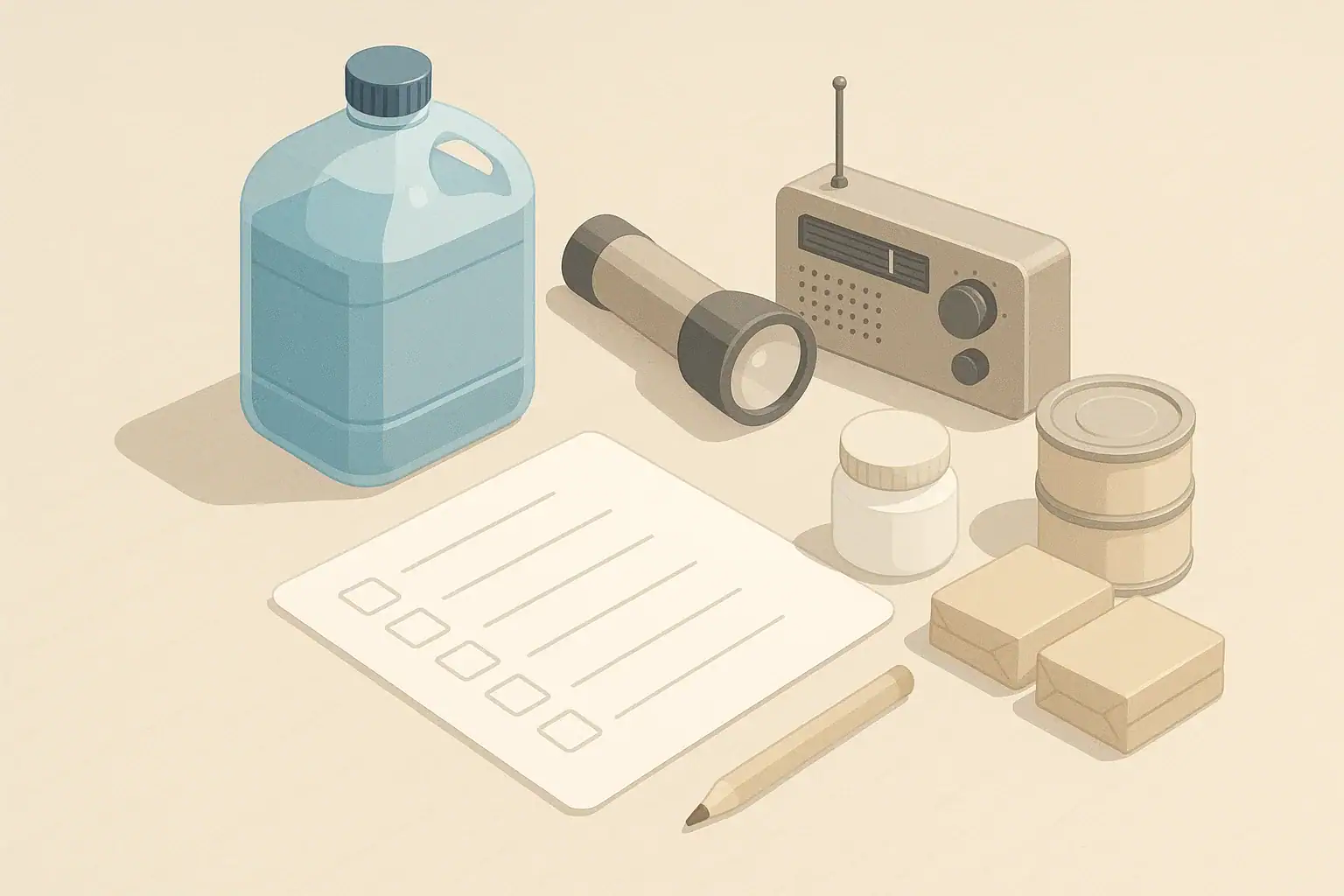
1. Planning for Rare Disasters but Ignoring Likely Problems
Many people picture extreme scenarios and overlook the everyday events that are far more likely. Short power outages, a broken water main, or being stuck at home for a few days are common, and they are usually where simple preparedness matters most. When planning only for rare, dramatic events, you can end up with gear you never use while missing basics like water containers, safe lighting, and a small communication plan.Easy fix
- Start with your history: Think about issues you have seen in your area in the last few years: storms, boil-water notices, heatwaves, wildfire smoke, or neighborhood power failures.
- List three “most likely” events: For example: 24–48 hour power outage, two-day water disruption, or a weekend of heavy smoke or bad roads.
- Build for 3 days at home: Focus on water, simple food, lighting, basic power for communication, and hygiene for at least 72 hours.
2. Ignoring Your Actual Home Type and Lifestyle
Preparedness advice often assumes a large house, a garage, and plenty of storage. Apartment residents, renters, and people in small spaces have different limits and options. Copying a one-size-fits-all checklist can leave you frustrated or non-compliant with your lease or building rules. Your plan should match your space, your household, and your building’s policies.Easy fix
- Apartment or condo: Focus on compact, stackable storage; low-noise equipment; and portable items that can be carried if you need to leave.
- House with yard: You may have room for more water storage, a basic outdoor cooking option, and possibly small-scale solar or other backup power, subject to local rules.
- Renters: Favor non-permanent solutions like freestanding shelves, portable power stations, and removable window coverings for temperature control.
- Check building rules: Understand policies on grills, fuel, generators, and balcony use before buying equipment.
| Home situation | Key focus | Notes |
|---|---|---|
| Small apartment | Compact storage, portable kits | Use under-bed bins and closet shelves. |
| Large apartment/condo | Water, communication plan | Coordinate with neighbors for stairwell help. |
| Single-family house | Water, backup power, outdoor gear | Consider safe outdoor cooking options. |
| House with seniors | Mobility, medications, backups | Plan for ramps, walkers, spare glasses. |
| Family with kids | Comfort, routines, identification | Include quiet activities and familiar snacks. |
| Household with pets | Pet food, carriers, leashes | Store extra water and waste bags. |
| Roommates | Shared supplies and roles | Decide who buys and stores what. |
3. Underestimating Water Needs
Water disruptions are one of the most common issues in storms and infrastructure problems. Many people store far less water than they would realistically use, or have no way to collect or treat water if a disruption lasts longer than expected. Water is not just for drinking. Cooking, cleaning, washing hands, and basic sanitation all add up quickly.Easy fix
- Set a simple target: Aim for several gallons of safe water per person per day as an example planning number, recognizing that needs vary by climate, activity level, and health.
- Start small and build: Begin with a few sealed containers or jugs, then add stackable containers or larger storage as space allows.
- Plan for pets: Store extra water specifically for animals.
- Include a basic treatment method: Keep a simple, widely-available household disinfectant product or basic filter intended for treating drinking water, and follow manufacturer instructions carefully.
4. Relying on Unsafe Lighting or Heat Sources
During power outages, it is common to reach for candles or makeshift heaters. These can increase fire and indoor air quality risks, especially in small homes, around children or pets, or when people are tired and stressed. Good lighting and safe temperature management can be simple and low-tech, without creating new hazards.Easy fix
- Use battery-powered lighting: Keep a mix of flashlights, headlamps, and lantern-style lights with extra batteries.
- Assign one light per person: Small lights for each household member make moving around safer.
- Avoid open flames where possible: If you use candles, place them on stable, non-flammable surfaces, away from curtains and reachable areas for kids and pets, and never leave them unattended.
- Think layers for warmth: Warm clothing, blankets, draft-blocking, and closing doors to fewer rooms often help maintain comfort during short outages.
5. Forgetting Backup Power Basics
Backup power does not have to mean whole-house systems. Many people either skip backup power entirely or buy equipment without understanding what it can realistically support. The most important devices are often small: phones, modems or routers if available, a radio, and a few lights. Matching realistic loads to simple, manageable power options is usually enough for short-term events.Easy fix
- Prioritize devices: List must-have items for a short outage, like a phone, a small radio, and a light. Note which are battery-powered and which need an outlet.
- Use simple backups first: Keep charged power banks, extra device batteries where applicable, and spare charging cables.
- Learn your limits: If you use a portable power station or similar device, understand that high-wattage appliances (like large heaters) can drain it quickly.
- Consider charging options: If you live in a sunny area and have access to outdoor space, a small solar panel paired with a compatible power bank or power station can help recharge slowly during extended outages.
6. Treating the Pantry as an Afterthought
In many homes, pantry items are not planned with disruptions in mind. This can leave you with food that requires long cooking times, is unfamiliar to family members, or depends on ingredients you do not have during an outage. A small, intentional shelf of ready-to-eat or low-cook items can make short-term disruptions much easier.Easy fix
- Build a “comfort shelf”: Choose shelf-stable foods your household already likes and knows how to prepare.
- Include no-cook options: Add some foods that can be eaten directly from the container or with minimal preparation.
- Think simple combinations: Pair items that go together easily, such as grains with sauce or beans with simple seasonings.
- Rotate during normal life: Use these items in your regular meals and replace them as you go, so nothing sits for years.
7. Overlooking Communication and Contact Plans
In many disruptions, information and reassurance matter as much as supplies. People often assume phones will work normally or that everyone “just knows” where to meet, which can lead to confusion and stress. Simple, written communication plans help keep family, roommates, and close contacts coordinated.Easy fix
- Designate an out-of-area contact: Choose a friend or relative in another region whom everyone can text or call if local networks are busy.
- Write key numbers: Put important phone numbers on a paper card in wallets, bags, and near the main home phone charging spot.
- Choose two meeting points: One just outside your home (for fires) and one a short walk away (for neighborhood issues).
- Plan for low battery: If possible, keep at least one low-power communication option, such as a simple radio, and practice short, necessary calls or messages only.
8. Forgetting Kids, Seniors, and Pets in the Plan
Households are rarely made up of identical, able-bodied adults. Children, older adults, people with mobility or sensory needs, and pets may require different supplies, time, and support during an emergency. General checklists do not always include these needs, which can cause last-minute scrambling.Easy fix
- List special items: Note items like mobility aids, extra eyeglasses, hearing aid batteries, comfort objects, or adaptive equipment.
- Plan medications: Work with healthcare providers and pharmacists for options to maintain an adequate buffer of essential medications where possible and allowed.
- Create comfort kits for kids: Include familiar snacks, a small toy or game, and a quiet activity for each child.
- Prepare for pets: Store extra pet food, a leash or carrier, waste bags or litter, and any medications they may need.
9. Building Kits Once and Never Updating Them
Another common mistake is creating a kit, putting it in a closet, and forgetting about it. Over time, batteries discharge, food expires, documents change, and family needs shift. A kit that is never updated can feel less reliable when you finally need it.Easy fix
- Set a reminder: Pick two dates each year, such as the start of spring and fall, to check your supplies.
- Check expiring items: Review dates on food, water containers (where marked), batteries, and other perishable items.
- Update documents: Refresh copies of key records and contact lists when your address, insurance, or family situation changes.
- Adjust for growth: As children grow, or household members change, update clothing sizes and personal items in your kits.
10. Skipping Simple Hygiene and Sanitation Planning
Many people focus on food and power but forget about staying reasonably clean and managing waste during disruptions. Even short-term interruptions to water or plumbing can be uncomfortable and inconvenient without a basic plan. Hygiene and sanitation planning does not need to be complex. A few common supplies and clear steps can make a big difference in comfort and cleanliness.Easy fix
- Pack a basic hygiene kit: Include items like soap, a simple hand-cleaning option, toothbrushes, toothpaste, and toilet paper.
- Store extra trash bags: They are useful for waste, temporary storage, and keeping items dry.
- Plan for short toilet disruptions: Keep supplies that your household can safely use if water service is limited, while following local guidance for waste disposal.
- Think about ventilation: If you must keep windows closed due to weather or smoke, pay attention to indoor odors and moisture, and open windows when conditions improve.
| People and pets | Days at home | Storage approach | Rotation cue |
|---|---|---|---|
| 1 adult | 3 days | Several gallon jugs | Use and replace every few months. |
| 2 adults | 3 days | Stackable containers plus jugs | Check when seasons change. |
| 2 adults, 2 kids | 3–5 days | Larger container plus bottles | Rotate during regular grocery trips. |
| Family with pets | 3–5 days | Separate pet-labeled containers | Refresh when pet food is restocked. |
| Shared apartment (3 people) | 2–3 days | Case of bottles under bed | Replace as bottles are used. |
| Senior couple | 3 days | Easy-lift smaller containers | Review with health visits. |
Putting It All Together Calmly
You do not need to address every possible situation at once. Preparedness works best when it is built slowly into everyday life. Start with realistic local risks, match your home type and household, and focus on a few basics: water, simple food, safe lighting, essential power, communication, and hygiene. Review your plan once or twice a year, adjust as your life changes, and involve everyone in the household. Small, steady steps can add up to a home that is ready for common, short-term disruptions without panic or overwhelm.Authoritative sources
Safety recommendations can change. Confirm critical details with current official guidance and local authorities.
- CDC: Carbon Monoxide Poisoning Basics
- US EPA: Emergency Disinfection of Drinking Water
- USDA FSIS: Keep Food Safe During Emergencies
Frequently asked questions
How much water should I store per person for a 72-hour outage?
A common planning target is about 1 gallon (roughly 3.8 liters) per person per day to cover drinking and basic sanitation, so plan for about 3 gallons per person for 72 hours. Adjust upward for hot climates, heavy physical activity, breastfeeding, or medical needs, and store additional water for pets.What are safe lighting and heating choices for short outages in small homes?
Battery-powered LED headlamps and lanterns provide bright, low-heat lighting with minimal risk and are preferable to open flames. For heat, rely first on layering clothing and blankets; if using a portable fuel heater, ensure proper ventilation and a carbon monoxide alarm, and follow all safety instructions.How often should I inspect and update my emergency kit and supplies?
Check kits at least twice a year—commonly at the start of spring and fall—to replace expired food, rotate water and batteries, and update documents or medication needs. Also review kits after major life changes such as a new household member, change of address, or new medical requirements.What can renters or apartment residents do when storage and building rules limit preparedness options?
Prioritize compact, portable, and non-permanent items like stackable containers, power banks, headlamps, and a small comfort-food shelf. Always check building rules on fuels, grills, and generators, and consider coordination with neighbors for shared resources or assistance if needed.What should a simple household communication plan include for short-term disruptions?
Keep an out-of-area contact for everyone to check in with, record key phone numbers on paper, and agree on two meeting points: one close to home for immediate evacuation and one a short distance away for other situations. Also plan for low-battery scenarios by conserving phone use and keeping a charged power bank or a battery-powered radio available.About
ReadyHomePlan
ReadyHomePlan publishes practical home readiness guides for outages and short-term emergencies—power, water, food basics, communication, and family planning—without hype.
- Simple checklists and realistic planning
- Water, power, lighting, and pantry basics
- Family plans (kids, pets, seniors) and seasonal prep
Affiliate disclosure
As an Amazon Associate, we earn from qualifying purchases. Some links on this site may be affiliate links. If you buy through these links, we may earn a small commission at no extra cost to you. This helps support our content. Learn more.