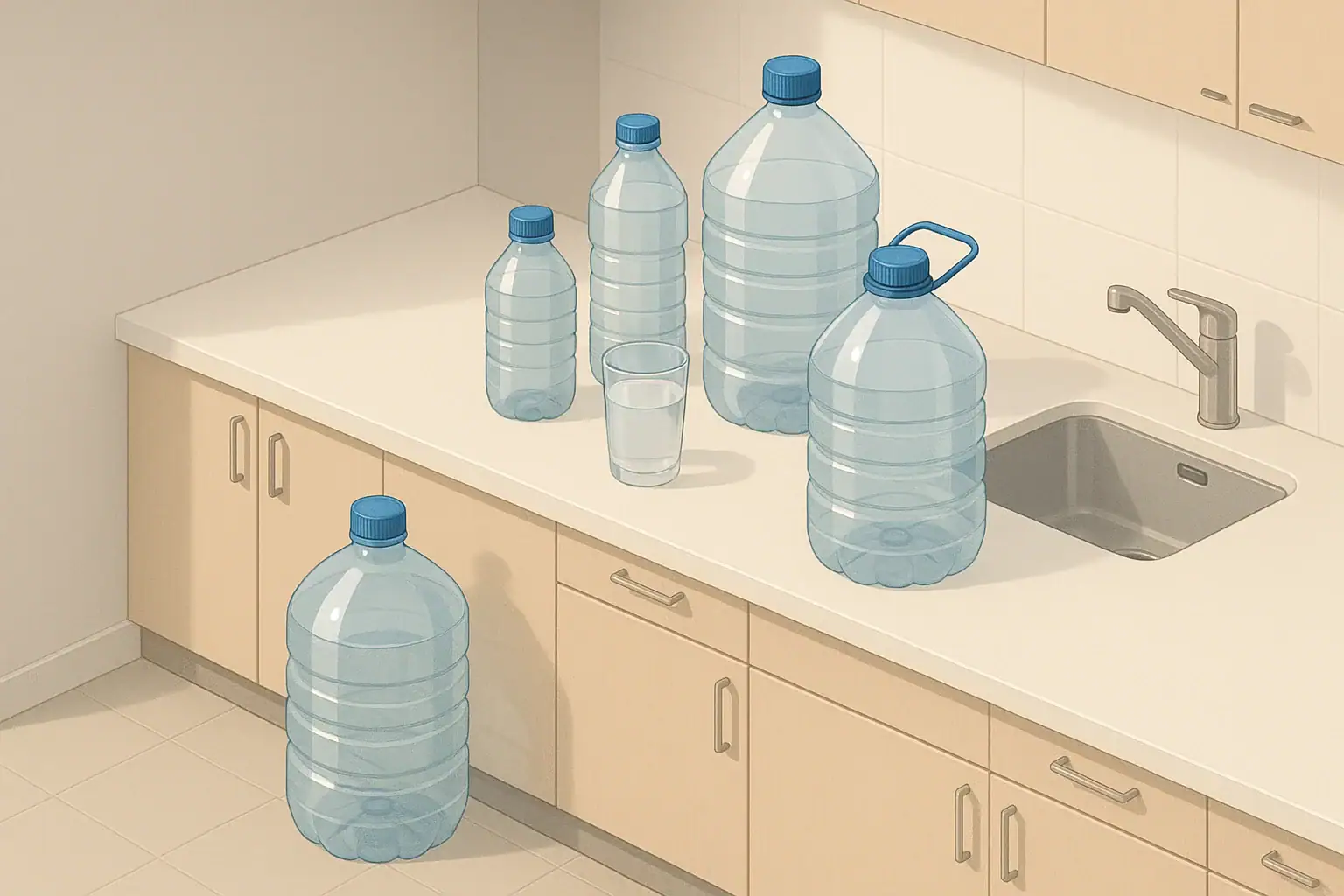
A reliable 7-day water plan is one of the simplest ways to make short-term emergencies less stressful. Power outages, water main breaks, boil-water advisories, winter storms, and hurricanes can all limit access to safe tap water for several days at a time. Having a basic plan means you can stay put safely, even if stores are closed or shelves are picked over.
This guide focuses on realistic, home-based planning for everyday people in the United States. You do not need a basement full of barrels or specialized equipment. With a few containers, some space-conscious strategies, and simple rotation habits, most households can build and maintain a 7-day water buffer over time.
We will walk through how much water to store, what types of containers to use, where to put them in apartments or houses, and how to keep it all fresh without turning preparedness into a full-time job.
Why a 7-Day Water Plan Matters
A reliable 7-day water plan is one of the simplest ways to make short-term emergencies less stressful. Power outages, water main breaks, boil-water advisories, winter storms, and hurricanes can all limit access to safe tap water for several days at a time. Having a basic plan means you can stay put safely, even if stores are closed or shelves are picked over.
This guide focuses on realistic, home-based planning for everyday people in the United States. You do not need a basement full of barrels or specialized equipment. With a few containers, some space-conscious strategies, and simple rotation habits, most households can build and maintain a 7-day water buffer over time.
We will walk through how much water to store, what types of containers to use, where to put them in apartments or houses, and how to keep it all fresh without turning preparedness into a full-time job.
How Much Water to Store for 7 Days
For short-term emergencies, a common planning idea is at least one gallon of water per person per day. This is a simple starting point that covers basic drinking and light hygiene when you are being conservative with use.
Basic Storage Target
To plan a 7-day supply, multiply:
- Number of people in your household
- Days you want to cover (7 for this plan)
- Gallons per person per day (often 1 gallon as a minimum planning figure)
Example only:
- 1 person × 7 days × 1 gallon = 7 gallons
- 2 people × 7 days × 1 gallon = 14 gallons
- 4 people × 7 days × 1 gallon = 28 gallons
Households with children, seniors, pregnancy, hot climates, or higher activity may choose to increase that figure to allow more drinking water and basic cleaning. You can build up in stages so the amount feels manageable.
Including Pets in Your Plan
Pets also need water in an emergency. A simple example figure some people use is about one cup of water per 10 pounds of body weight per day, then rounding up for safety and hot weather. For planning, it is easier to add an extra half-gallon to a gallon per day for all household pets combined, depending on size and number.
This does not need to be exact. The most important part is remembering to include pets in your total gallons and storage containers.
Planning for Different Home Types
Your water plan will look different depending on your space and living situation:
- Small apartments: Rely on compact containers, stackable jugs, and under-bed or closet storage.
- Renters: Choose portable, easy-to-move containers and avoid permanent plumbing changes.
- Single-family homes: You may be able to use larger containers in a garage or utility area, plus smaller jugs indoors.
- Shared housing: Coordinate with roommates so everyone understands where water is stored and how long it is meant to last.
| Task | Why it matters | Notes |
|---|---|---|
| Count people and pets | Sets your total gallon target | Include frequent visitors if applicable |
| Choose daily gallons per person | Balances comfort with storage space | Many people start with 1 gallon per day |
| List current containers on hand | Uses what you already own | Clean pitchers, jugs, and large bottles |
| Pick primary storage locations | Makes water easy to find in a hurry | Consider under beds, closets, and low shelves |
| Label fill or purchase dates | Supports safe rotation over time | Use tape and a marker |
| Set a reminder to rotate | Helps avoid stale or forgotten water | Calendar or phone reminder 1–2 times per year |
Choosing Water Storage Containers
You do not need specialized gear to begin storing water. Many everyday containers can work if they are food-safe, cleaned properly, and stored in reasonable conditions. The right mix for you depends on space, budget, and how portable you want your water to be.
Types of Containers to Consider
Common options include:
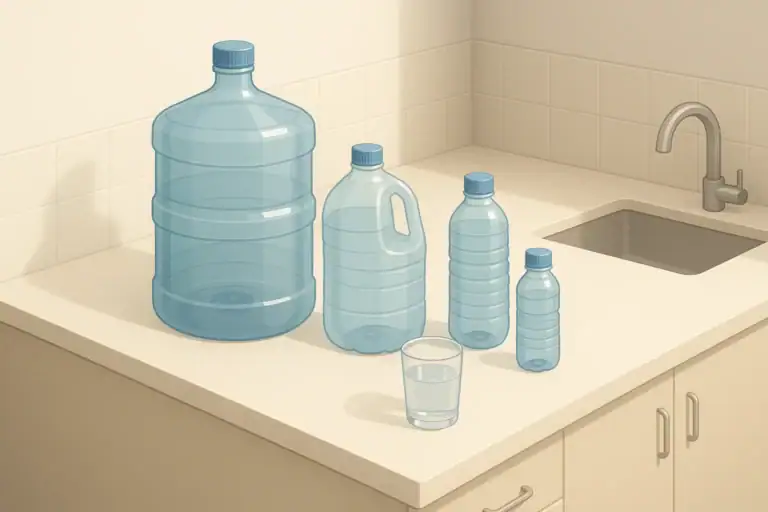
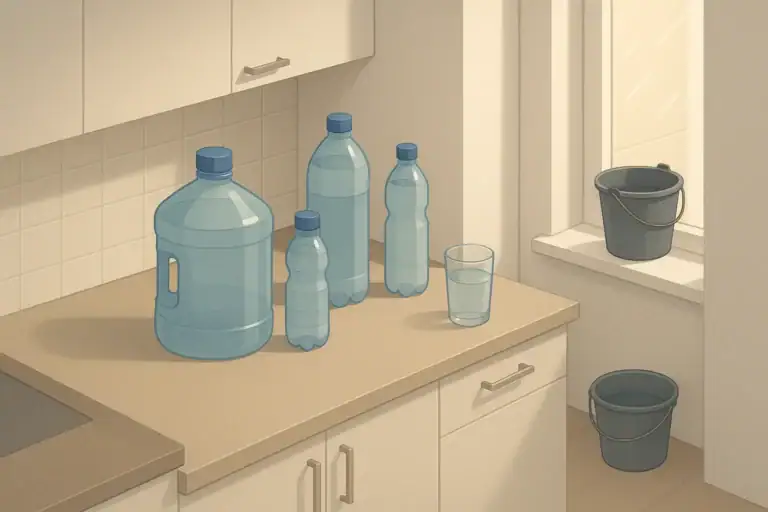
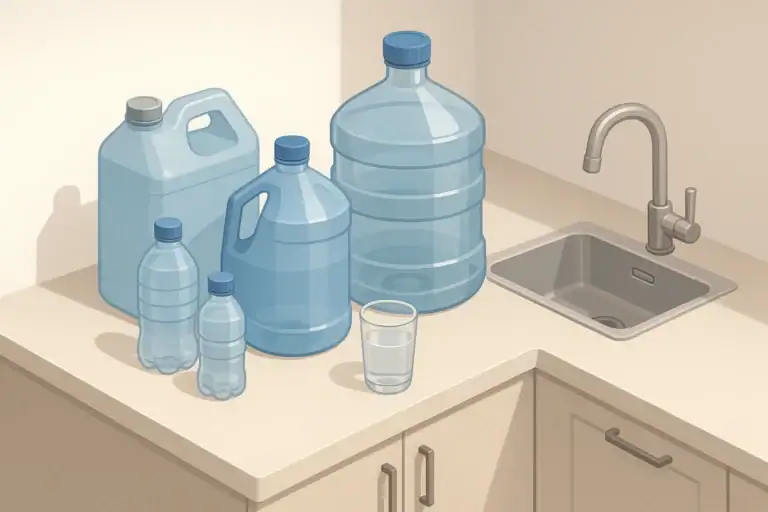
- Store-bought bottled water: Convenient, portable, and already sealed. Works well for apartments and for go-bags. Takes up shelf or closet space and generates more recycling.
- Reusable jugs and containers: Larger refillable containers can be filled from your tap and refilled during rotation. Useful for people who prefer less single-use plastic.
- Stackable containers: Some water containers are shaped for stacking, making use of vertical space in closets or corners.
- Large home storage tanks: In houses with more space, larger tanks or barrels can supply more days of water, but they are heavy when full and not portable.
Whatever you choose, make sure containers are intended for food or beverage use. Containers that previously held chemicals are not suitable for drinking water, even if washed.
Preparing and Filling Reusable Containers
When using refillable containers for tap water, simple cleaning steps help maintain quality:
- Wash the container, lid, and any spout with dish soap and clean water.
- Rinse thoroughly to remove all soap.
- Allow any obvious debris to rinse out completely.
- Fill with drinking-quality tap water.
- Close tightly to limit exposure to dust and insects.
If your local tap water is already treated and safe to drink, many households simply fill containers directly and focus on proper storage and rotation. For well water or uncertain sources, local water guidance is important; this guide focuses on typical municipal tap water situations.
Where to Store Water in Your Home
Water is heavy, and space is often limited, especially in apartments. The goal is to place containers in cool, relatively dark, stable locations where they will not be knocked over or exposed to chemicals.
Common storage spots include:
- Under beds (especially for flat or low-profile containers)
- Bedroom or hallway closets, using the floor or low shelves
- Pantry floors or the bottom shelves of cabinets
- Laundry rooms or utility areas, away from cleaning chemicals
- Garages or storage rooms, if temperatures are moderate and containers are protected from fuel and solvents
Avoid placing water directly next to strong-smelling chemicals or fuels. Although sealed containers offer protection, keeping distance reduces the chance of spills, leaks, or absorbed odors.
Space-Smart Water Storage for Apartments and Houses
Different homes call for different strategies. A 7-day water plan should fit into your daily life without feeling overwhelming or cluttered.
Small Spaces and Apartments
If you live in a small apartment or share a room, focus on compact, stackable, and dual-purpose storage:
- Under-bed storage: Low containers or short jugs can slide under the bed and stay out of sight.
- Closet corners: Line up containers along one wall of a closet or behind hanging clothes.
- Behind furniture: Place a row of bottles or jugs behind a couch or along a wall, leaving room for airflow and easy access.
- High shelves with support: Use only sturdy shelves that can handle the weight; water weighs about 8 pounds per gallon.
For renters, portability matters. If you move frequently, smaller containers are easier to transport than one large, heavy tank. You can also mix store-bought cases of water with a few reusable containers to keep costs reasonable.
Houses with More Storage Options
In a house, you may have access to basements, garages, or dedicated storage rooms. This allows for a blended approach:
- Keep a portion of your water indoors where temperatures are more stable and access is quick.
- Use larger containers in a garage or utility space for additional days of water.
- Spread storage across more than one area so a single leak or localized issue does not affect all your supplies.
Even with more space, it helps to prioritize convenience. Store at least some of your weekly supply near where you would actually drink, cook, and wash, so it is easy to use during a disruption.
Planning for Families, Kids, and Seniors
Households with children, older adults, or anyone with limited mobility may use more water and need easier access to it.
- Lighter containers: Several smaller jugs or bottles are easier to lift than one large tank.
- Kid-friendly access: Keep some water at heights children can safely reach with supervision.
- Spill control: Use trays or shallow bins under containers to catch minor leaks.
It can help to briefly walk your household through where the water is kept and how long you intend it to last. Simple, clear expectations reduce unnecessary use during a disruption.
Rotation Tips: Keeping Stored Water Fresh
Once your 7-day water supply is in place, gentle maintenance keeps it ready for use. Rotation does not need to be complicated or frequent. A realistic schedule that fits your existing routines is far more useful than an ideal plan that is hard to follow.
Simple Rotation Schedules
For tap-filled containers stored under typical home conditions, many households choose to rotate water about once or twice per year. Factory-sealed bottled water often comes with a printed date; many people use this date as a reminder to rotate, even if the water inside remains clear and odor-free.
To keep things easy, you might:
- Pick two months each year (for example, when clocks change) as your water check months.
- During those months, use up older water for plants, cleaning, or other non-critical uses.
- Refill or replace containers and update labels with the new date.
Labeling and Tracking
Labeling is a low-effort way to keep track of when water was stored:
- Use masking tape or painter’s tape on each container.
- Write the fill date and a simple “rotate by” reminder if you like.
- Place labels where they are easy to see without moving heavy containers.
A calendar reminder, note on a family whiteboard, or digital reminder can nudge you to check dates and condition. Grouping water rotation with another recurring task, like checking smoke alarms, makes it part of normal home care.
Checking Water Before Use
When you are ready to use stored water, a quick look and sniff can help you decide whether it is suitable for drinking, or better for cleaning tasks:
- Check that the container is intact, without cracks or heavy discoloration.
- Look at the water for obvious cloudiness or floating material that should not be there.
- Smell the water. If it has an unusual or strong odor, set it aside for non-drinking uses or discard it.
This basic check is part of routine household judgment. If you are ever uncertain about water quality, you can reserve that water for cleaning and prioritize clearer, fresher supplies for drinking and food preparation.
Using and Conserving Your 7-Day Supply
During a real disruption, how you use your stored water affects how long it will last. A calm, measured approach helps stretch supplies without creating unnecessary stress.
Setting Daily Water Expectations
When you start relying on stored water, it helps to set a simple daily plan:
- Decide how many gallons you are willing to use each day based on your total supply.
- Assign rough amounts for drinking, light hygiene (like handwashing), and limited food preparation.
- Explain the plan to everyone in the home so there are fewer surprises.
For example, a two-person household with 14 gallons might aim to use about 2 gallons per day for drinking and 0.5–1 gallon for handwashing, simple dish rinsing, or sponge baths, adjusting as needed.
Small Ways to Stretch Water
When municipal water is off or unsafe, you can make a few temporary changes:
- Use disposable plates or bowls if available to reduce dishwashing.
- Favor one-pot or no-cook meals from your pantry to limit cleanup.
- Use a basin for handwashing and reuse that water for flushing if local guidance allows.
- Pause non-essential uses like watering lawns or washing cars.
The goal is not to be perfect but to be thoughtful, so your 7-day supply truly lasts as long as you intended.
Special Considerations for Heatwaves and Cold Weather
In very hot weather, people and pets usually drink more. If you live in a hot climate or expect heatwaves, consider gradually increasing your stored amount or keeping an extra case or two of bottled water on hand.
In freezing climates, remember that water can expand and containers can crack if they freeze completely. Avoid storing all your water where it might freeze solid. Keeping at least some of your supply in temperature-moderated indoor areas helps ensure you have liquid water available.
Building a Simple 7-Day Water Kit Over Time
You do not have to buy or fill all 7 days of water at once. Many households find it easier to build up slowly, adding a little at a time.
Step-by-Step Build-Up Ideas
Consider these gradual approaches:
- Add one extra gallon or small case of water to your usual grocery trips until you reach your goal.
- Clean and repurpose sturdy food-safe containers instead of discarding them, filling them with tap water for storage.
- Each season, review how much water you have, your household size, and your space, then adjust as needed.
Over a few months, these small actions can quietly build a 7-day buffer without a large upfront purchase or major storage changes.
Including Water in a Broader Home Readiness Plan
A 7-day water plan works best when it fits into broader home readiness for short-term disruptions:
- Power outages: If the power goes out, water pumps and treatment systems can be affected. Your stored water helps bridge these gaps.
- Storms and flooding: Heavy rain or flooding can lead to boil-water advisories. Having clean water on hand avoids last-minute store trips.
- Heatwaves: Extra water supports staying hydrated when you are relying on passive cooling and limited electric fans or air conditioning.
As you become more comfortable with water storage, you can add related supplies like simple containers for handwashing, a basic sanitation plan when water is limited, and a small go-bag with a portable water component if you ever need to leave home temporarily.
| People and pets | Days | Storage approach | Rotation cue |
|---|---|---|---|
| 1 adult | 7 | Mix of small bottles and 1-gallon jugs | Check every 6–12 months |
| 2 adults | 7 | Case water plus several refillable containers | Rotate with seasonal home checks |
| 2 adults, 1 child | 7 | More small bottles for easy carrying | Use and replace during regular meals |
| 2 adults, 2 kids, small pet | 7 | Stackable jugs plus a few pet-only containers | Label pet water and review yearly |
| Older adult living alone | 7 | Several light, easy-to-lift bottles | Family member helps check twice a year |
| Shared house, 4 adults | 7 | Combination of individual and shared containers | Set group reminder to review supplies |
Keeping Your Water Plan Practical and Calm
A 7-day water plan is less about preparing for rare extremes and more about smoothing out the everyday disruptions that happen in many regions each year. By understanding your household’s needs, choosing containers that fit your space, and setting simple rotation reminders, you build a quiet layer of comfort into your home.
The goal is not perfection. It is having enough clean water on hand so that when the tap stops or the power flickers, you can focus on staying comfortable and looking after one another, rather than rushing to find supplies at the last minute.
Frequently asked questions
How much water should I store per person for a 7-day water plan?
A common baseline is at least 1 gallon per person per day, which generally covers drinking and light hygiene for short-term needs. Multiply that by seven days to get your minimum target, and increase the amount for children, older adults, pregnancy, high activity, or hot climates.
How often should I rotate tap-filled containers and what is an easy tracking method?
Many households rotate tap-filled containers about once or twice per year; factory-sealed bottled water can follow its printed date as a cue. Use masking or painter’s tape to label fill dates and set calendar reminders (for example, when clocks change) to check and replace older supplies.
Are store-bought bottled water and refillable tap containers equally safe for a 7-day supply?
Both can be safe if handled correctly: factory-sealed bottled water is convenient and ready to store, while refillable containers should be food-grade, cleaned before filling, and tightly sealed. Avoid using containers that previously held chemicals and rotate tap-filled containers on a schedule to maintain freshness.
How should I store water if I live in an area that freezes or experiences heatwaves?
In freezing climates, avoid storing all your water where it can freeze solid because expanding ice can crack containers; keep some supply in temperature-moderated indoor spaces. In hot climates, store water in cool, shaded areas and consider keeping extra on hand since people and pets typically use more water in heat.
How much water should I include for pets in a 7-day plan?
A useful planning rule is roughly one cup of water per 10 pounds of body weight per day, then round up for safety and hot weather; many households simply add about 0.5–1 gallon per day for all pets combined. Adjust based on the number, size, and activity level of your animals and include their needs in your household total.
Recommended next:
- Water Storage Guide: How Much You Need, Where to Put It, and How to Rotate
- Water Storage Calculator: People × Days (Plus a Pet Add-On)
- Best Water Containers for Home Storage: Materials, Sizes, and Caps
- Storing Water in Small Spaces: Apartment and Closet-Friendly Options
- Water Rotation Schedule: A Simple FIFO System Anyone Can Follow
- How to Clean and Sanitize Water Containers Safely
- More in Water Readiness →
- Simple checklists and realistic planning
- Water, power, lighting, and pantry basics
- Family plans (kids, pets, seniors) and seasonal prep
Water Plan for 14 Days: Storage Targets and Space-Saving Options
Water for a 72-Hour Kit: Simple Packing and Storage Tips
Signs Your Stored Water Should Be Replaced (and How to Prevent It)
How to Transport Water Safely: Car, Stairs, and Heavy Containers
Rainwater for Emergency Use: Practical Limits and Safety Basics
Emergency Household Water Sources: What’s Safe to Use and What’s Not