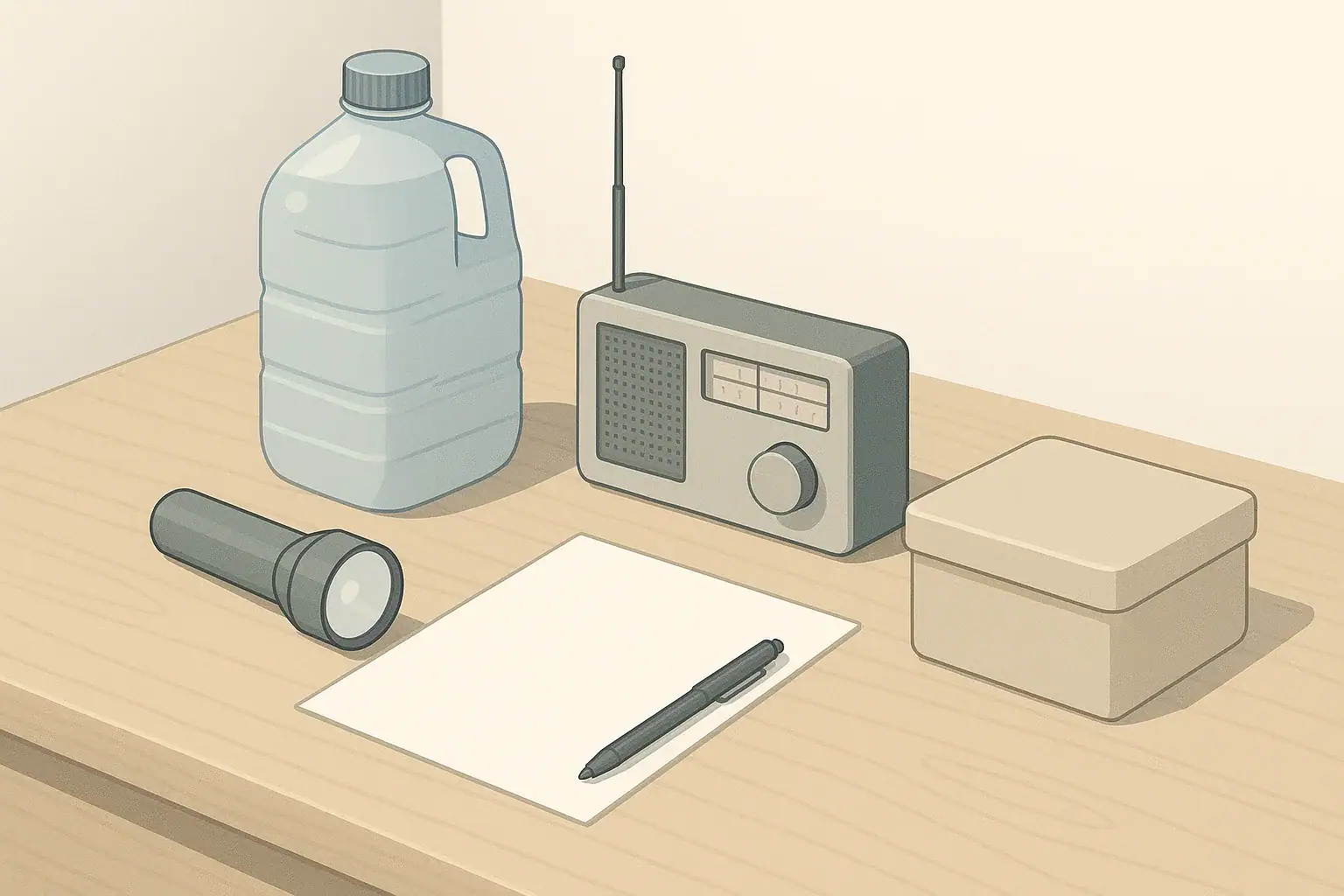
Why Shelter-in-Place vs Evacuation Matters
When something unexpected happens near your home—a wildfire in the region, a chemical spill, a fast-moving storm—you may have only a few minutes to decide: stay or go. Knowing in advance how you will make that call can reduce stress and help you act quickly and calmly. This guide focuses on everyday households in the United States: apartments and houses, renters and owners, families with kids, pets, and older adults. The goal is simple: give you a clear way to decide when to shelter in place and when to evacuate, without panic or guesswork. Emergency officials are the primary source for real-time instructions. This article helps you understand their guidance, think through common scenarios, and prepare a basic plan so you can move faster when it counts.Core Difference: What “Shelter-in-Place” and “Evacuate” Really Mean
First, it helps to be clear on what each option usually involves.What Shelter-in-Place Usually Means
Shelter-in-place is about staying where you are and making that space safer for a short period. It is often recommended when it is more dangerous to be outside than indoors. Depending on the situation, sheltering in place may include:- Going indoors and staying there
- Closing windows and doors
- Turning off fans that pull outside air in
- Moving to an interior room or lower level (for some hazards)
- Using your stored water, food, lighting, and communication tools
What Evacuation Usually Means
Evacuation means leaving the area for a safer place, either on your own or under official orders. It is usually recommended when remaining in your current location is expected to become unsafe. Evacuation can range from:- Leaving your neighborhood for a few hours
- Staying with family or friends in another part of town
- Going to a public shelter or hotel in a different area
- Making a longer trip out of the region for major storms or wildfires
| Condition you notice | Leaning toward | Key question to ask |
|---|---|---|
| Official order to evacuate your block or zone | Evacuation | Can we leave safely now on at least two possible routes? |
| Officials instruct to stay indoors and close windows | Shelter-in-place | Can we safely seal up one room and monitor updates? |
| Fire or flood clearly approaching your street | Evacuation | Is it still safe to drive or walk out before conditions worsen? |
| Short power outage during a storm, house intact | Shelter-in-place | Do we have light, water, and communication for at least 24 hours? |
| Structural damage (leaning walls, strong gas odor) | Evacuation | Can we get everyone out quickly, including pets and neighbors needing help? |
| Unhealthy air outside but home is intact and sealable | Shelter-in-place | Can we stay inside with reduced outdoor air for several hours? |
| Evacuation recommended for your specific zone before a hurricane | Evacuation | Do we have a pre-agreed destination and packed go-bags? |
Step 1: Listen for Official Guidance First
Your first filter for any emergency decision is simple: what are officials asking people in your area to do? This includes local emergency management, fire departments, law enforcement, and weather services.How to Get Real-Time Instructions
In an emergency, power and cell service can be unreliable. Having more than one way to receive information helps you avoid guesswork. Common options include:- Wireless emergency alerts on your cell phone
- Local radio stations (battery-powered or hand-crank radios are helpful)
- Local television broadcasts, if power and reception are available
- Community alert systems where you live (text or call lists)
What If Guidance Is Vague or Slow to Arrive?
Sometimes alerts are general (“avoid the area”) or delayed. While you wait for clearer information, consider:- Your direct observations (smell of smoke, water rising, visible flames)
- The vulnerability of your household (limited mobility, medical equipment that needs power, infants, pets)
- How quickly conditions are changing (wind direction, storm intensity, traffic building up)
Step 2: Check the Type of Threat
Different situations favor different responses. Understanding a few broad patterns can help you lean toward sheltering or evacuating while you await instructions.Situations That Often Favor Shelter-in-Place
Staying put is often safer when the main danger is outside and your home can provide reasonable protection. Examples include:- Short-duration severe weather such as thunderstorms, hail, or fast-moving squall lines, when your home is structurally sound.
- Hazardous air from distant wildfires or certain industrial incidents, when officials recommend staying indoors and reducing outdoor air intake.
- Brief power outages from storms or grid issues, when temperatures are moderate and your building holds heat or cool reasonably well.
- Nearby law enforcement activity where officials advise residents to remain inside.
Situations That Often Favor Evacuation
Leaving is more likely to be the safer option when the danger is coming directly toward your home or could compromise the structure itself. Examples include:- Wildfires moving toward neighborhoods, especially with official evacuation warnings or orders.
- Flooding where water is already entering lower levels or forecast to rise significantly in your area.
- Coastal storms and hurricanes when your evacuation zone is included in official evacuation guidance.
- Structural risks after certain emergencies (tilting walls, large cracks, partial collapse, strong smell of gas).
Step 3: Evaluate Your Home’s Safety Right Now
Beyond the general type of threat, your next step is to ask whether your specific home is a reasonably safe place to remain for the next several hours.Quick Home Safety Scan
Do a fast but focused scan, asking:- Is the building sound? Any visible leaning, sagging ceilings, or large new cracks?
- Any signs of fire or heat? Hot walls, visible flames nearby, heavy ash or embers falling?
- Any signs of water intrusion? Rapidly rising water in the basement, ground floor, or garage?
- Any strong unusual odors? For example, a strong gas smell that makes it feel unsafe to stay inside.
Apartment vs House Considerations
Your decision may also depend on your type of housing:- Apartments and condos: You may have interior hallways, stairwells, and shared ventilation. Consider how easy it is to move to an interior room away from windows, and whether you have multiple exit routes.
- Single-family houses: You may have more options for sealing specific rooms, accessing stored water or supplies, and using garages or sheds for storage. On the other hand, you may be more exposed to wind or wildfire embers.
Step 4: Consider Your Household Needs
Even if your building is intact, your household’s specific needs may tilt the decision toward sheltering or evacuating.Who Is in Your Household?
Think about:- Young children who may need more frequent food, water, and comfort.
- Older adults who might have mobility challenges or need specific equipment.
- People using powered medical devices who depend on electricity or battery backups.
- Pets that need carriers, leashes, or specific supplies to travel safely.
Supplies for 24–48 Hours
A simple way to think about readiness is whether you can manage at home for at least a day or two without outside help. Ask yourself:- Do we have drinking water stored for everyone, including pets?
- Do we have easy, low-effort foods that do not require cooking or refrigeration?
- Do we have safe lighting (flashlights, lanterns) and spare batteries?
- Can we keep phones charged for at least part of the time (solar charger, power bank, or vehicle charging)?
- Do we have basic hygiene supplies if water service is interrupted?
Step 5: Decide Early, Act Calmly
Many risky situations develop gradually enough that you can choose to leave before the situation becomes critical.When to Lean Toward Leaving Early
Consider evacuating sooner rather than later when:- There is an official evacuation warning for your area (even before a mandatory order).
- You see conditions worsening in real time (flames closer, water rising, winds increasing).
- Your household includes members who move slowly or need extra time (mobility aids, multiple pets, young children).
- You do not have enough supplies or power options to shelter safely for more than a short period.
When to Commit to Staying Put
If it is temporarily more dangerous to be on the road or outside than indoors, focus on making shelter-in-place as safe and comfortable as possible. This might be the case during severe thunderstorms, brief but intense wind events, or specific air quality events. Once you commit to staying, you can:- Select the best room or area (interior, away from windows, easy to seal if needed).
- Gather key supplies (water, snacks, flashlights, a radio, and medications).
- Limit opening doors and windows to keep outside conditions out.
- Set a simple schedule for checking official updates.
Simple Tools to Decide Faster Next Time
You can make future decisions easier by doing a small amount of planning before anything happens. This does not require a large budget or a lot of storage space.Make a Family Communication Plan
In any emergency, communication can be more of a challenge than supplies. A basic plan might include:- At least one out-of-area contact everyone can try to reach.
- A preferred group text or chat to check in when possible.
- A backup plan if phones are not working (meet at a nearby landmark, or leave written notes in a pre-agreed place at home).
Prepare Light “Stay” and “Go” Kits
Having small, organized sets of supplies makes it easier to follow through once you decide to stay or go.- Stay-at-home kit: Emphasize water storage, pantry items that do not need cooking, safe lighting, a way to charge phones, basic hygiene, and ways to stay reasonably comfortable indoors.
- Go-bag: Focus on essentials you would want if you had to leave quickly: basic clothing layers, a small amount of food and water, copies of important documents, medications, and simple comfort items for kids and pets.
| Food type | Storage tip | Rotation interval idea | No-cook use |
|---|---|---|---|
| Canned beans | Store at room temperature, away from moisture | Use and replace every few months | Rinse and eat with spices or simple condiments |
| Canned vegetables | Keep with similar items so you see them often | Rotate during regular weekly meals | Drain or use liquid; mix with beans or grains |
| Nut butters | Store tightly closed; avoid excess heat | Replace when opened jars are nearly empty | Spread on crackers or bread for quick calories |
| Dry crackers | Keep in sealed containers or bags | Check for staleness a few times a year | Pair with canned items, spreads, or soups |
| Ready-to-eat soups | Group by flavor; mark earliest dates on top | Use oldest cans in normal meals first | Eat at room temperature if heating is not available |
| Instant oats | Store in dry, sealed containers | Cycle through with regular breakfasts | Soak in water or shelf-stable milk until soft |
Practicing the Decision Before You Need It
You do not need to predict every possible emergency. Instead, practice a few realistic scenarios for your household:- Short power outage on a hot or cold day: Would you stay or go? What would you use first?
- Smoke from a regional wildfire: How would you seal a room and limit outdoor air?
- Regional storm with advance warning: If an evacuation was recommended, where would you go and what route would you take?
Frequently asked questions
How can I tell if a shelter-in-place order applies to my home or neighborhood?
Official alerts and messages will usually include zone names, street ranges, or other location details—check wireless emergency alerts, local emergency management notices, and community notification systems. If you are unsure, monitor multiple official channels (radio, local government social accounts, or community alerts) and, if possible, contact local authorities for clarification. Follow the specific instructions for your address unless immediate conditions make compliance unsafe.If officials tell me to shelter in place during a wildfire or chemical incident, what should I do first?
Go indoors immediately, close and lock all windows and doors, and turn off HVAC systems or vents that pull outside air into your home. Move to an interior room without windows if possible, use a battery-powered radio or phone for updates, and avoid going outside until officials confirm it is safe. Limit opening doors and use damp towels or tape to seal gaps if advised for air quality reasons.When is it safer to evacuate early rather than wait for an official evacuation order?
Leaving early is often safer when you see conditions worsening (fire visible or very near, rapidly rising water, or strong winds), when officials issue an evacuation warning for your area, or if members of your household need extra time to leave. Evacuating before roads get congested gives you more route options and reduces exposure to sudden hazards. If roads look unsafe or officials advise staying put, follow shelter-in-place guidance instead.What should I pack in a basic go-bag versus a stay-at-home emergency kit?
A go-bag should include essentials for 24–72 hours: water, nonperishable snacks, copies of IDs and important documents, necessary medications, a flashlight, spare clothing layers, and phone charging options. A stay-at-home kit should prioritize water storage, no-cook or ready-to-eat foods, safe lighting, battery backups or power banks, basic hygiene supplies, and any items needed for pets or medical devices. Keep both kits accessible and review contents periodically.How long can most households safely shelter in place during a power outage or poor air quality event?
Many households can safely shelter for 24–48 hours if they have adequate water, foods that do not require cooking, safe lighting, and ways to charge phones or receive updates. The safe duration is shorter if you rely on powered medical equipment, have infants, or face extreme temperatures, in which case relocating to a location with power may be necessary. Always reassess conditions and follow official guidance as the situation evolves.Recommended next:
- Start Here: A Calm Home Emergency Readiness Plan
- Emergency Plan Checklist: A Simple One-Page List for Home Readiness
- Emergency Readiness Calculators: Water, Power, and Pantry Planning
- 72-Hour Kit: What to Pack, Where to Store It, and How to Maintain It
- 72-Hour Kit vs 7-Day Plan vs 14-Day Plan: What to Add at Each Step
- Apartment vs House Readiness: The Key Differences in Your Plan
- More in Start Here →
About
ReadyHomePlan
ReadyHomePlan publishes practical home readiness guides for outages and short-term emergencies—power, water, food basics, communication, and family planning—without hype.
- Simple checklists and realistic planning
- Water, power, lighting, and pantry basics
- Family plans (kids, pets, seniors) and seasonal prep
How to Practice Your Plan: Simple Drills You Can Do in 15 Minutes
How to Create a Two-Week Home Readiness Plan Without Overbuying
Emergency Preparedness for Small Spaces: Storage Ideas That Work

Readiness for Renters: No-Drill, Low-Cost Upgrades That Matter
Emergency Documents: What to Copy, Print, and Store Safely
10 Common Preparedness Mistakes (and Easy Fixes)
Keep reading