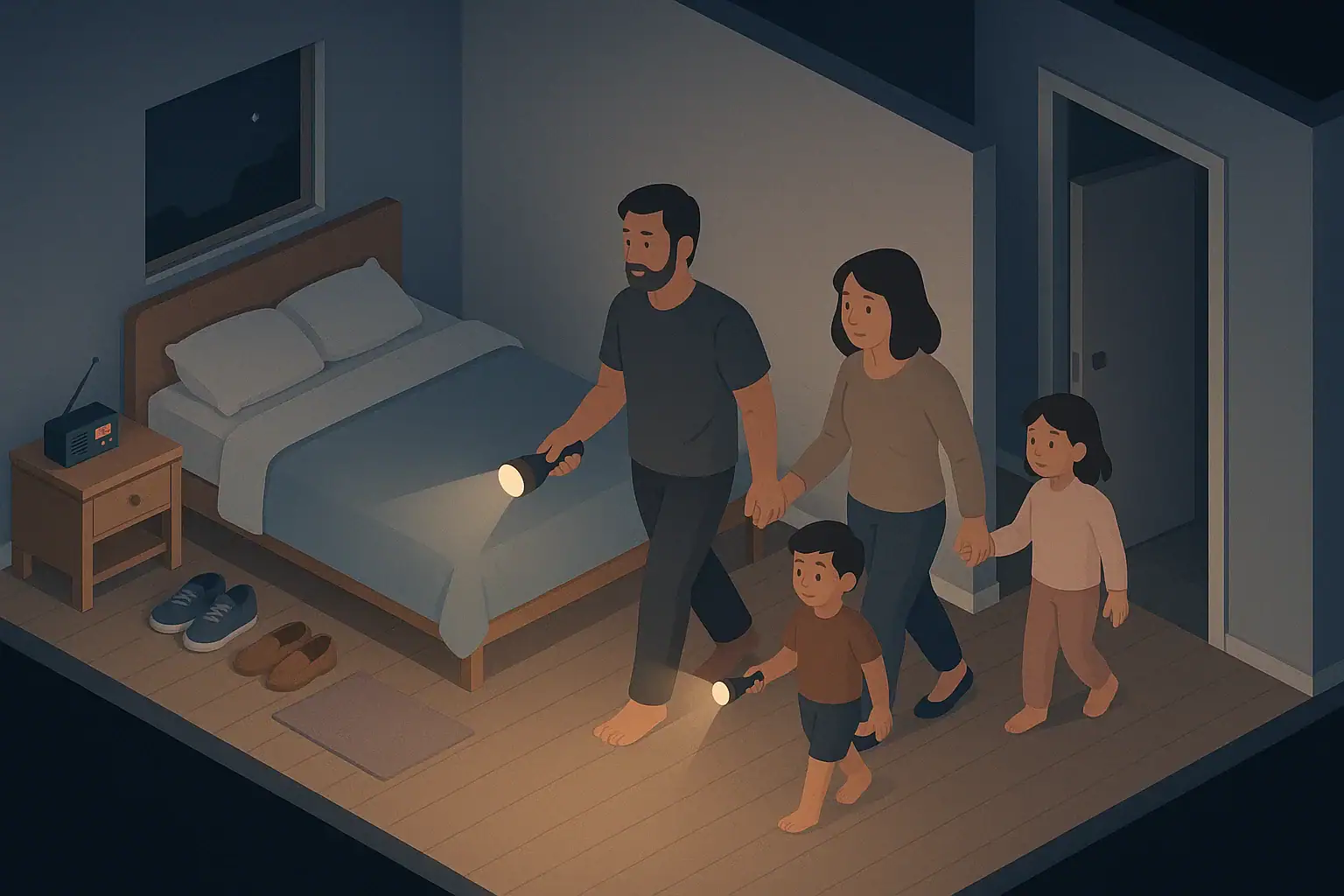
Why a nighttime tornado plan is different
Nighttime tornadoes are especially dangerous because people are asleep, visibility is low, and storms can move quickly. A good nighttime tornado warning plan focuses on three things:
- Alerts that will actually wake you up
- Shoes and basic gear ready by the bed
- A clear, fast route into your safest room
Your goal is simple: if a warning is issued while you are sleeping, you can wake up, get your feet protected, grab essentials, and be in your safe space in under a couple of minutes.
Set up alerts that wake you up
Relying on hearing outdoor sirens through closed windows and running HVAC is risky, especially at night. Build layers of alerts so at least one will wake you.
Use Wireless Emergency Alerts on your phone
Most modern phones in the U.S. can receive Wireless Emergency Alerts (WEA) for tornado warnings. These alerts are sent by authorized government agencies and are designed to override silent mode in many cases.
- Check that government alerts are turned on in your phone settings.
- Keep your phone charged and in the bedroom, close enough for you to hear or feel it.
- If you use “Do Not Disturb,” make sure emergency alerts are allowed through.
The Federal Emergency Management Agency explains how these alerts work on its page about Wireless Emergency Alerts.
Add a weather radio with alert function
A NOAA Weather Radio with an alert feature can sound an alarm when a tornado warning is issued for your area.
- Place it in or near your bedroom so you can hear it at night.
- Use backup batteries in case the power goes out.
- Program it for your county and nearby counties if the radio allows.
The National Weather Service describes these radios and how they are used on its page about NOAA Weather Radio All Hazards.
Consider backup ways to be alerted
Depending on your situation, you might also:
- Enable severe weather alerts in a trusted weather app.
- Ask a nearby family member or neighbor to call or text if they see a warning affecting your area overnight.
- Use a loud alarm clock or smart speaker routine that can be triggered by alerts, if you are comfortable setting that up.
Outdoor sirens can be helpful, but they are mainly intended for people who are outside. Treat them as a backup, not your only warning method.
Prepare your bedroom for fast action
When a warning hits at 2 a.m., you will be groggy and disoriented. Arrange your bedroom so you can move safely and quickly even in low light.
Keep shoes and basic gear by the bed
Stepping on broken glass, splinters, or debris can slow you down or keep you from reaching your safe room. Keep these items within arm’s reach of where you sleep:
- Sturdy closed-toe shoes for each person, pointed in the direction you will walk.
- Flashlight or headlamp with fresh batteries.
- Gloves (work or garden gloves) if you have them, to protect your hands from debris.
- Small pouch or belt bag with keys, a copy of important phone numbers, and a small amount of cash if you choose.
For children, pre-stage shoes and a light blanket or robe near their bed so you can move them quickly without hunting for clothing.
Clear the path to your safe room
Walk the route from each bed to your safe room as if it were dark and you were in a hurry.
- Remove clutter, small tables, or loose rugs that could trip you.
- Keep hallway doors either fully open or consistently closed so you are not surprised in the dark.
- Consider a small night-light in the hallway, powered by battery or a surge-protected outlet.
Re-check this path after any furniture rearrangement or home project.
Choose and prepare your safest room
Your safe room is the place you go when a tornado warning is issued. In many homes, this is not a special built shelter, but the safest available interior space.
How to pick the safest spot
General guidance from agencies such as the National Weather Service and FEMA emphasizes:
- Lowest level of the building, if possible.
- Small, interior room with no windows, such as a bathroom, closet, or interior hallway.
- Put as many walls as possible between you and the outside.
If you have a purpose-built safe room or storm shelter, follow the manufacturer’s instructions and any local building or safety guidance for using it.
For apartments or upper floors where you cannot reach a lower level in time, choose the most interior room you can, away from windows and exterior walls.
Stage supplies in the safe room
Keep a small, dedicated kit in or next to your safe space so you are not searching during a warning. Consider:
- Flashlights or headlamps and extra batteries.
- Battery-powered or hand-crank radio.
- Basic first-aid supplies.
- Water and simple snacks.
- Blankets or sleeping bags.
- Whistle or loud noisemaker in case you need to signal rescuers.
- Copies of important documents in a waterproof pouch, if you choose.
Make sure there is room for everyone to sit or lie down low, covering their head and neck with their arms, pillows, or a mattress if time allows.
FEMA provides broader guidance on preparing for tornadoes on its page about tornado safety and preparedness.
Write a simple nighttime tornado plan
Putting your plan in writing helps everyone remember what to do when they are half-asleep. Keep it short and specific.
Decide your trigger and steps
Agree in advance what will send you to the safe room. For most households, the trigger is:
- A tornado warning issued for your area, especially if it mentions your town, neighborhood, or a polygon that clearly includes you.
Then outline your steps. For example:
- Alert sounds → wake up, put on shoes, grab flashlight.
- Wake children, put on their shoes or carry them if needed.
- Everyone moves directly to the safe room along the cleared path.
- Close doors behind you if it is quick and safe to do so.
- Protect head and neck; stay until the warning expires and the threat has passed.
Post this plan on the back of a bedroom door or near the light switch where adults can see it.
Include kids, older adults, and anyone with disabilities
Adjust your plan for the people in your home:
- Young children: Decide who carries which child. Keep a small comfort item in the safe room.
- Older adults: Store canes, walkers, or other mobility aids where they can be grabbed quickly.
- People with disabilities or medical devices: Plan how to move safely with wheelchairs, oxygen, or other equipment. Keep backup batteries or supplies in the safe room if recommended by the device manufacturer or healthcare provider.
- Pets: Keep a leash, carrier, and a small supply of pet food and water in or near the safe room.
If you are unsure how to safely move or shelter someone with medical needs, ask their healthcare provider for guidance tailored to your situation.
Practice your nighttime drill
A short practice makes the real thing smoother and less frightening.
- Walk through the plan at a calm time of day.
- Once or twice a year, do a quick “night drill” from the bedroom, including putting on shoes and moving to the safe room.
- Time how long it takes and adjust your setup if it feels slow or confusing.
- Teach children that drills are practice, not something to fear.
Use real watches or phone timers so you know whether you can realistically reach your safe room before a fast-moving storm arrives.
After the warning: what to do next
Stay in your safe room until:
- The tornado warning expires or is canceled, and
- You no longer hear threatening sounds such as loud roaring or nearby debris impacts.
When you leave the safe room:
- Use a flashlight to check for hazards such as broken glass, nails, or downed power lines outside.
- Do not touch or approach downed lines; report them to your utility or emergency services.
- Smell for gas; if you suspect a leak, leave the building if you can do so safely and contact your gas company or emergency services from outside.
- Check on neighbors if it is safe, especially those who are older or may need assistance.
For broader post-storm safety, FEMA’s page on staying safe during and after power outages includes guidance that can apply after severe weather.
Frequently asked questions
How much warning time do I usually have at night?
Warning time varies widely depending on the storm and your location. Sometimes warnings may come 10–20 minutes before a tornado reaches you; in other cases, especially with fast-moving or quickly forming storms, the time can be much shorter. Because you cannot control this, design your plan so you can move from bed to safe room in just a couple of minutes.
Should I wake the kids for every tornado watch?
A tornado watch means conditions are favorable for tornadoes, not that one is happening. Most families stay aware during a watch but do not move to the safe room unless a warning is issued or a storm is clearly threatening. If storms are expected overnight, you might choose to move children to a room closer to the safe space before bedtime so they are easier to reach. Follow any specific instructions from your local weather office or emergency management.
What if my safe room is not on the same floor as our bedrooms?
If your safest space is on a different level, consider whether you can move everyone there quickly and safely at night. If not, choose the safest available room on the same level as your bedrooms, even if it is not ideal. In some cases, families choose to sleep closer to their safe room on nights with a high risk of severe weather, based on local forecasts.
Is it safe to drive to a shelter during a nighttime warning?
Driving during a tornado warning can be dangerous, especially at night when visibility is low and debris may be on the road. In general, it is safer to shelter in place in the best available room in your current building than to try to outrun a tornado by car. The exception is when local authorities or your facility’s emergency plan direct you to a specific shelter and you can reach it quickly and safely before storms arrive. Always follow instructions from local officials first.
- Simple checklists and realistic planning
- Water, power, lighting, and pantry basics
- Family plans (kids, pets, seniors) and seasonal prep
Affiliate disclosure
As an Amazon Associate, we earn from qualifying purchases. Some links on this site may be affiliate links. If you buy through these links, we may earn a small commission at no extra cost to you. This helps support our content. Learn more.