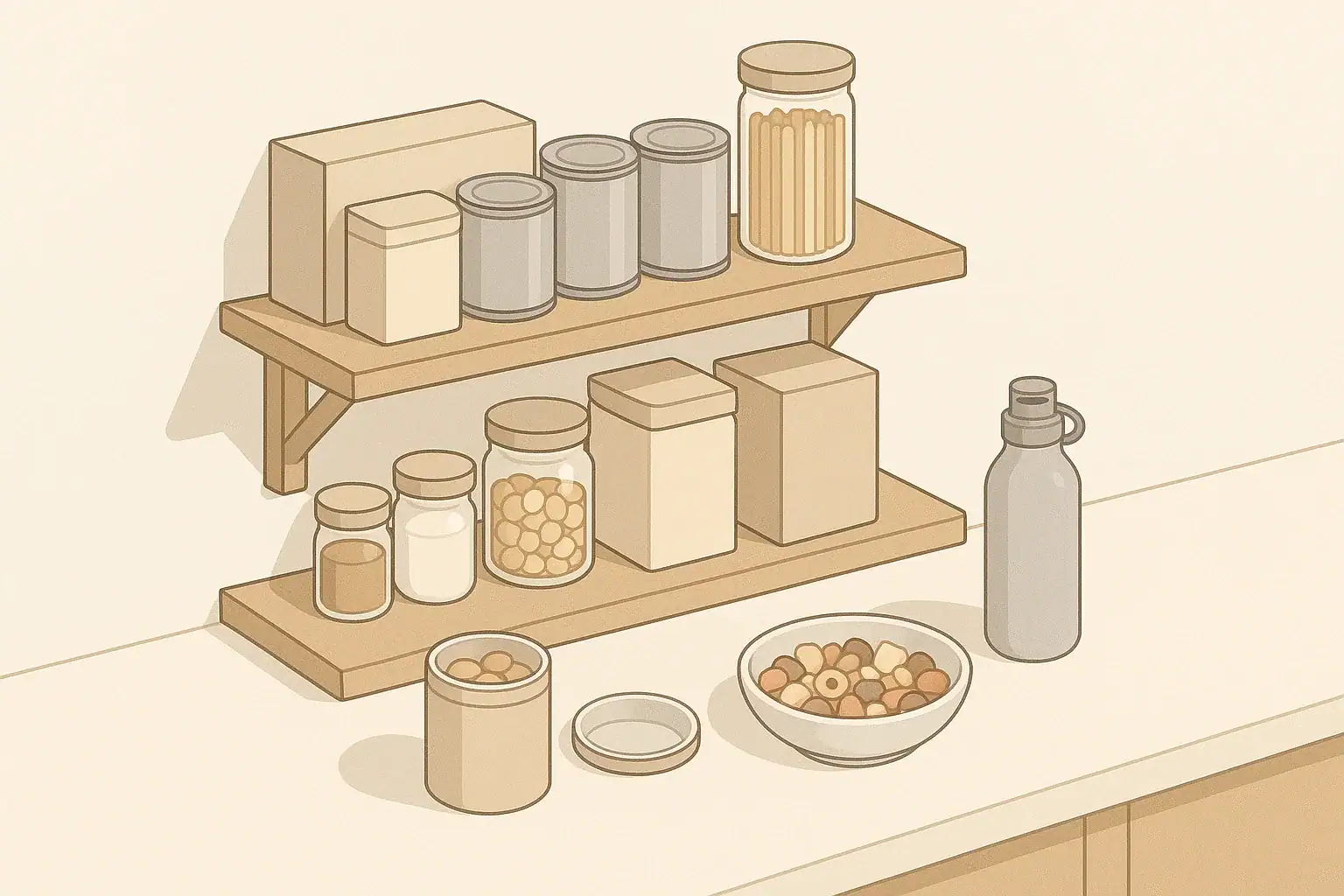
An emergency snack box is a small, ready-to-grab stash of no-prep foods that can carry you through stressful days and minor disruptions. It is not about stockpiling for extreme scenarios. Instead, it focuses on realistic situations when you are tired, short on time, or dealing with a short-term emergency at home.
Examples include:
- Late workdays or caregiving days when cooking feels overwhelming
- Short power outages where you want to avoid opening the fridge often
- Heatwaves or winter storms when you want simple, no-cook options
- Busy family evenings with activities and homework stacked together
Having a designated snack box can lower stress. Everyone in the home knows where to find quick options, and you can see at a glance what you have available. This fits well into practical, calm home readiness: prepared without panic, but not caught off guard.
Why an Emergency Snack Box Helps on Hard Days
An emergency snack box is a small, ready-to-grab stash of no-prep foods that can carry you through stressful days and minor disruptions. It is not about stockpiling for extreme scenarios. Instead, it focuses on realistic situations when you are tired, short on time, or dealing with a short-term emergency at home.
Examples include:
- Late workdays or caregiving days when cooking feels overwhelming
- Short power outages where you want to avoid opening the fridge often
- Heatwaves or winter storms when you want simple, no-cook options
- Busy family evenings with activities and homework stacked together
Having a designated snack box can lower stress. Everyone in the home knows where to find quick options, and you can see at a glance what you have available. This fits well into practical, calm home readiness: prepared without panic, but not caught off guard.
Setting Simple Goals for Your Snack Box
Your emergency snack box does not need to be large or complicated. A small bin, drawer, or reusable bag can be enough. Setting a few clear goals makes it easier to build and maintain.
Think in Time, Not Panic
Instead of planning for months, think in days. For many households, the snack box works best as a 1–3 day buffer. It supplements your regular pantry and fridge, especially when you do not want to cook or when you need to stretch what you have.
Simple planning questions:
- How many people are in the home on a typical day?
- Do you want the box to cover one full day of snacks or several days?
- Do you prefer small, frequent snacks or a few larger, filling options?
Match to Your Space and Lifestyle
Different homes call for different setups:
- Small apartments: A shoebox-sized bin that fits on a shelf or in a cabinet can be enough.
- Families with kids: Consider two containers: one easy-access box for everyday stress days and one “only during outages” box out of children’s reach.
- Shared housing or roommates: Label a box and keep it in a common area so everyone knows its purpose and rules.
Whatever your space, the goal is the same: simple, no-prep foods that stay safe at room temperature and are easy to eat even when power, time, or energy are limited.
Example values for illustration.
| Household situation | If this sounds like you… | Then consider this snack box size |
|---|---|---|
| Single in small apartment | Limited cabinet space, cook most nights | One small shoebox with 1–2 days of snacks |
| Couple with busy schedules | Irregular hours, often too tired to cook | Medium bin with 2–3 days of grab-and-go items |
| Family with young kids | Need quick kid-friendly options during outages | Two bins: one everyday box, one outage-only box |
| Multi-generational household | Different tastes and routines under one roof | Larger bin with variety and some soft or easy-to-chew items |
| Remote worker | At home most days, limited breaks | Desk drawer or shelf box with simple, filling snacks |
| Frequent traveler | Home irregularly, want low-maintenance supplies | Compact box of long-shelf-life items checked a few times a year |
What to Put in an Emergency Snack Box
The best items for an emergency snack box are stable at room temperature, require no cooking, and can be eaten straight from the package or with minimal tools. Aim for variety in texture and flavor so you do not get tired of the options during a stressful period.
No-Prep Pantry Staples
These foods are typically shelf-stable and easy to portion:
- Crackers, rice cakes, or plain snack cakes
- Plain or lightly seasoned nuts and seeds (if safe for your household)
- Nut or seed butters in small packets or jars
- Dry cereal or granola that can be eaten dry
- Shelf-stable snack bars and granola bars
- Pretzels, popcorn kernels that are already popped, or similar dry snacks
When possible, choose items that are easy to divide into small portions so different people can eat what they need without opening everything at once.
Simple Protein and Savory Options
On stressful days, a mix of quick energy and more filling snacks can help you feel steadier. For many people, that includes some protein-rich foods.
- Canned beans that can be eaten straight from the can (with a manual opener nearby)
- Shelf-stable tofu or similar protein products, if you already use them
- Canned meats or fish, for households that already eat them, plus crackers
- Shelf-stable hummus cups or other spreads
- Shelf-stable dairy alternatives such as certain milks or puddings that do not require refrigeration until opened (check labels for storage instructions)
Store a simple utensil kit near the snack box: a manual can opener, a few spoons and forks, and some napkins or paper towels.
Fruits, Veggies, and Comfort Treats
Fresh produce is ideal when available, but it does not always match power outages or hectic days. Shelf-stable options can fill the gap:
- Individually packed fruit cups or applesauce
- Dried fruit such as raisins, apricots, or banana chips
- Canned fruit in juice (store a can opener if needed)
- Canned vegetables that are palatable at room temperature, such as corn or carrots
- Instant oatmeal that can also be eaten as a dry snack if hot water is unavailable
Including a few small comfort items can improve morale during stressful periods:
- Small pieces of chocolate or candy
- Tea bags or instant drink mixes (useful if you have hot water or safe drinking water)
- Snack-size cookies or simple baked goods that store well
Planning for Different Household Needs
Every household is different. Build your emergency snack box around people, not just products. Consider age, mobility, chewing ability, and any instructions from healthcare professionals regarding diet. When in doubt, choose simple, familiar items.
Kids and Teens
For children, snacks can double as distraction and comfort during disruptions like storms or short outages. Consider:
- Items they already eat regularly so there are no surprises
- Individually wrapped portions to avoid spills and make it easier to ration
- Less crumbly items if you expect to eat in bed or on the couch during outages
Agree on basic rules in advance, such as which items are everyday treats and which are reserved for emergencies or very stressful days. This helps avoid conflict when you need the box most.
Older Adults and People With Limited Chewing
If you live with seniors or anyone who has difficulty chewing or swallowing, include softer items such as:
- Applesauce or fruit purees
- Soft cereal bars
- Instant mashed potatoes that can be made with hot water if available
- Soups in cartons or cans that can be eaten at room temperature if necessary
- Shelf-stable smoothies or nutritional drinks if they fit current dietary guidance
Store a simple cup or bowl and spoon with the snack box so no one has to search in the dark or when tired.
Pets
If you have pets, a separate small container of their usual food is helpful. This avoids dipping into everyday supplies during an outage or hectic day when you might not feel up to a full store run.
- Small bags or cans of shelf-stable pet food
- A collapsible or lightweight bowl stored with your snack box
- Treats used sparingly for comfort and distraction during storms or power outages
Keep pet food clearly labeled and separate from human snacks to avoid mix-ups, especially in low light.
Storage, Safety, and Shelf Life
Because an emergency snack box is meant to sit quietly until you need it, good storage habits are important. You do not need to memorize exact shelf-life numbers, but simple guidelines keep food pleasant to eat and easy to manage.
Where to Keep Your Snack Box
Look for a spot that is:
- Cool and dry: Avoid direct sunlight, heaters, and damp areas.
- Easy to reach: A low shelf in a pantry, closet, or cabinet works well.
- Consistent: Choose one location and keep it there so everyone knows where it is.
For renters or small apartments, a sturdy plastic bin or lidded box can slide under a bed or on top of a closet shelf. Just be sure it is not blocked by heavy items.
Reading and Rotating by Dates
Most packaged foods carry best-by or use-by dates. These are helpful for rotation, even though the food may sometimes remain usable longer depending on storage conditions.
Basic rotation approach:
- Write the purchase month and year on packages with a permanent marker.
- Place newer items at the back of the box or bottom of the stack.
- Use older items in regular meals and restock with fresh ones.
Consider setting a calendar reminder once or twice a year to check the box. Scan for damaged packaging, leaks, or anything that looks or smells off and discard as needed.
Example values for illustration.
| Food type | Storage tip | Rotation interval idea | No-cook use |
|---|---|---|---|
| Crackers and dry cereal | Keep in original packaging inside a sealed bin | Check every 3–6 months for staleness | Eat plain or with spreads |
| Canned beans and vegetables | Store upright in a cool cabinet | Rotate into regular meals once or twice a year | Eat from can with simple seasoning |
| Snack bars and granola bars | Avoid high heat; keep away from sunny windows | Use the oldest boxes as daily snacks every few months | Grab-and-go during busy evenings |
| Dried fruit and nuts | Store in airtight bags or containers | Check every 3–6 months for changes in smell or texture | Mix into a simple trail mix |
| Fruit cups and applesauce | Keep upright to minimize leaks | Use older packs in lunchboxes a few times a year | Serve as an easy dessert or snack |
| Shelf-stable drinks and milks | Store in a box or crate so they do not tip | Swap into regular use before date on package | Drink as-is or with dry cereal |
Making Your Snack Box Part of Everyday Life
An emergency snack box works best when it feels like a normal part of your home, not a separate “emergency-only” project that is easy to forget.
Set Simple Household Rules
To keep the box ready without making it off-limits, you can:
- Allow anyone to use the box for very stressful days, outages, or illness.
- Ask that whoever finishes an item adds it to the next shopping list.
- Place a small note inside the lid with the date you last checked it.
For kids, you might describe it as the “backup snack box” and explain that it is there for storms, power outages, and days when grown-ups are very tired.
Connect It to Other Home Readiness Steps
Your snack box can sit alongside other simple home readiness supplies, such as:
- Drinking water stored in clean containers
- A flashlight and spare batteries
- A small battery-powered or hand-crank radio
- Basic hygiene items like wipes and tissues
By keeping these items in the same area, you create a small, calm corner of your home that is ready for common disruptions. You do not need to buy everything at once. Add one or two items each grocery trip until your snack box feels complete for your household.
The goal is simple: on the days when life feels hardest, you should not have to think hard about what to eat. A modest, well-planned emergency snack box can remove one decision from a stressful day and help your home feel more prepared, steady, and comfortable.
Authoritative sources
Safety recommendations can change. Confirm critical details with current official guidance and local authorities.
- US EPA: Emergency Disinfection of Drinking Water
- USDA FSIS: Keep Food Safe During Emergencies
- U.S. CPSC: Battery Safety
Frequently asked questions
How much food should I keep in an emergency snack box for a family of four?
For most families, a 1–3 day buffer of no-prep snacks is sufficient; adjust based on ages, activity level, and whether the box is meant to cover meals or just snacks. Include a mix of filling items and smaller snacks so you can stretch the supply, and plan for individually portioned items to reduce waste. Label and rotate items into regular meals so nothing expires unused.
Can I include refrigerated or frozen items in an emergency snack box?
Preferably choose shelf-stable foods that are safe at room temperature, since refrigerated and frozen items require power to stay safe. If you include chilled items, plan a way to keep them cold (cooler with ice packs) and use them quickly during short outages; otherwise, keep the box limited to nonperishable items. Check labels for storage instructions before adding any dairy or perishable products.
How often should I check and rotate the items in my snack box?
Check the box about twice a year and look for damaged packaging, leaks, or off smells, and rotate older items into regular meals. For some items such as crackers or nuts, a quick check every 3–6 months helps spot staleness; shelf-stable drinks and canned goods can be cycled before their best-by dates. Mark purchase month on packages to make rotation easier.
What are safe protein options for people with limited chewing or swallowing difficulties?
Choose soft, shelf-stable proteins such as applesauce-style fruit purees, shelf-stable smoothies or meal-replacement drinks, soft cereal bars, and easy-to-soften instant mashed potatoes or soups. Avoid hard, crunchy nuts or tough meats unless they are prepared into a softer form; consult any dietary or medical guidance before adding specialized items. Keep utensils and a cup or bowl with the box to make eating easier.
Should I store pet food in the same emergency snack box as human food?
Store pet food separately and clearly labeled to avoid accidental confusion, especially in low light or during stress. Keep a small supply of your pet’s usual food in a separate container with a collapsible bowl so you can feed them without dipping into household stores. Separate storage also reduces the chance of cross-contamination and makes rationing clearer during outages.
- Simple checklists and realistic planning
- Water, power, lighting, and pantry basics
- Family plans (kids, pets, seniors) and seasonal prep
Affiliate disclosure
As an Amazon Associate, we earn from qualifying purchases. Some links on this site may be affiliate links. If you buy through these links, we may earn a small commission at no extra cost to you. This helps support our content. Learn more.