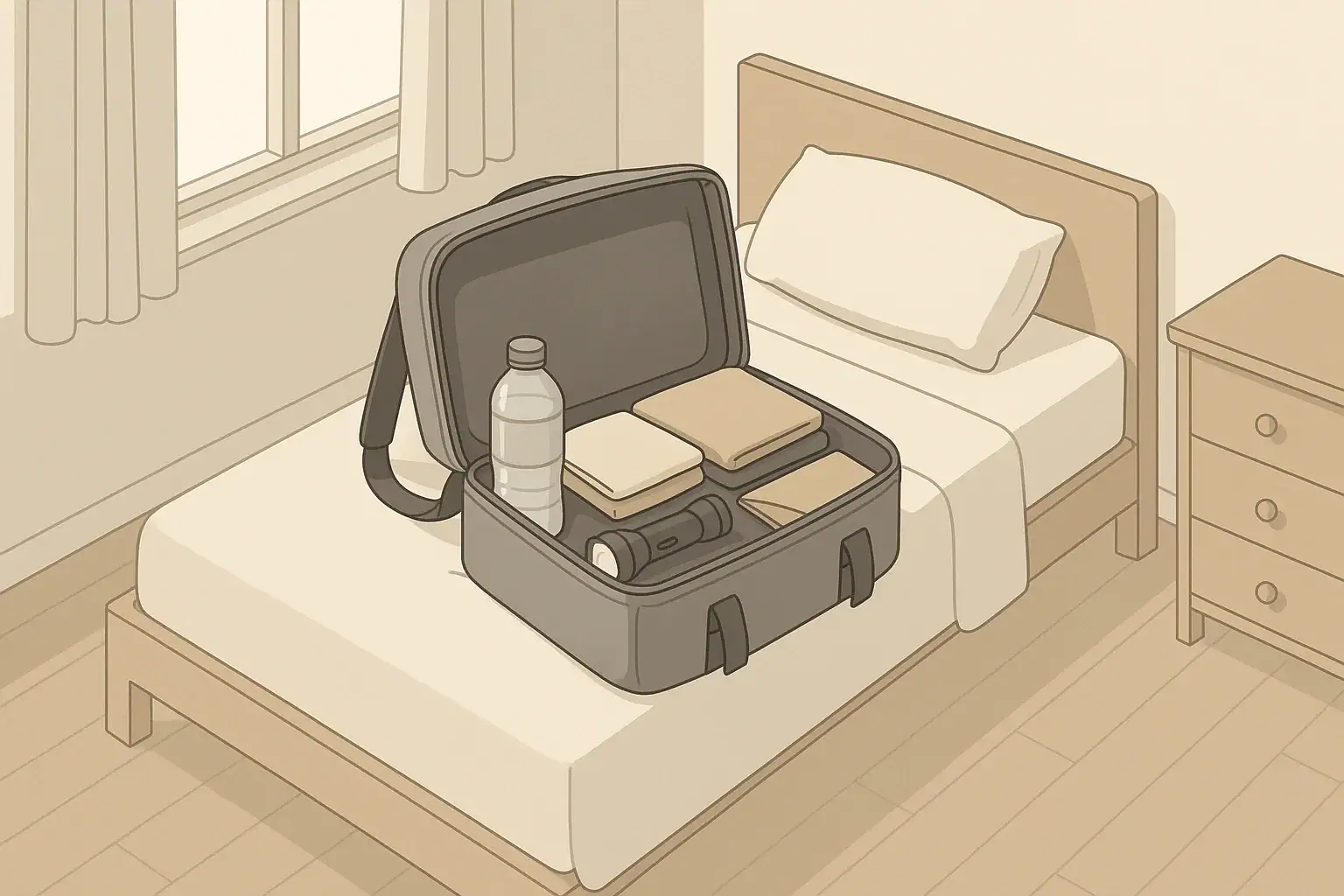
A waterproof document pouch is a simple way to protect vital information from water, humidity, and everyday wear. It can be as basic as a heavy-duty resealable plastic envelope or as sturdy as a purpose-made pouch with a zipper and gasket. The goal is not perfection, but practical protection that fits your life.
In realistic emergencies like winter storms, hurricanes, apartment fires, or sudden evacuations, you may not have time to hunt for papers. Keeping core documents in one waterproof pouch means you can grab them quickly, or know exactly where they are if you must stay home but move to a safer part of your building.
This article focuses on what to pack, how to organize it for different living situations, and simple habits that keep your pouch up to date without turning preparedness into a full-time project.
Why a Waterproof Document Pouch Belongs in Every Home Kit
A waterproof document pouch is a simple way to protect vital information from water, humidity, and everyday wear. It can be as basic as a heavy-duty resealable plastic envelope or as sturdy as a purpose-made pouch with a zipper and gasket. The goal is not perfection, but practical protection that fits your life.
In realistic emergencies like winter storms, hurricanes, apartment fires, or sudden evacuations, you may not have time to hunt for papers. Keeping core documents in one waterproof pouch means you can grab them quickly, or know exactly where they are if you must stay home but move to a safer part of your building.
This article focuses on what to pack, how to organize it for different living situations, and simple habits that keep your pouch up to date without turning preparedness into a full-time project.
Choosing the Right Waterproof Document Pouch
You do not need a complex or expensive solution. The best pouch is the one you will actually use and maintain. Consider how you live, where you will store it, and whether you plan to keep originals, copies, or both.
Key Features to Look For
When evaluating options, focus on practical features rather than marketing terms:
- Water resistance: Thick plastic or coated material that seals well against splashes, leaks, and brief immersion.
- Secure closure: A zipper, roll-top, or double-zip style seal that you can open and close easily.
- Size and format: Large enough for standard documents without folding more than necessary, but small enough to fit in a go-bag or small safe.
- Durability: Materials that resist tearing and repeated handling.
- Transparency or labels: Either a clear front or a place to label the pouch, so you can quickly identify it in a bag or drawer.
Where You Will Store It
Think about where the pouch will live most of the time:
- In a go-bag: Choose a slim, flexible pouch that fits in an outer pocket and opens quickly.
- In a fire-resistant box or safe: A heavier pouch is fine; you may focus more on organization and less on compactness.
- In a small apartment: A flat pouch that slides into a single drawer or closet box, easy to grab on the way out.
- For seniors or anyone with limited mobility: A pouch stored in a predictable, reachable place (like a bedside drawer) may be more important than maximum protection.
| Storage choice | Best for | Why it matters | Notes |
|---|---|---|---|
| Go-bag pocket | Quick evacuation | Keeps documents with other essentials | Check fit so pouch does not bend sharply |
| Fire-resistant box | Staying home during events | Adds heat protection around the pouch | Share location with trusted household member |
| Bedroom nightstand | Seniors, limited mobility | Easy to reach without moving far | Combine with medication list and contact sheet |
| Hall closet shelf | Families with kids | Central and reachable for most people | Store near shoes and jackets for quick exit |
| Work or school copy | Separated households | Backup if you cannot get home | Use copies, not irreplaceable originals |
| Digital-only backup | Supplement to physical pouch | Access if physical pouch is lost | Protect with strong passwords |
Example values for illustration.
What to Pack in a Waterproof Document Pouch
Think of your pouch as a compact, critical information kit. It does not need every paper you own. Focus on items that would be hard to replace quickly or that you might need to prove identity, access funds, or coordinate care if you are away from home.
Core Identity and Access Documents
These items help confirm who you are and give you access to financial and legal resources. Use copies where appropriate if you prefer to keep originals in a safe or safety deposit box.
- Photocopies of government-issued IDs for adults in the household.
- Photocopies of birth certificates for household members.
- Copies of Social Security cards (if you choose to carry these, consider redacting or using partial images where possible).
- Copies of passports or passport cards, if you have them.
- Copies of immigration or residency documents, if relevant.
Home, Insurance, and Financial Records
Whether you rent or own, some documentation makes it easier to file claims, prove where you live, and restart normal life after an interruption.
- Copy of your lease or home deed.
- Recent property tax or utility bill showing your address.
- Summary page of homeowners, renters, or flood insurance policies.
- Insurance company contact numbers and policy numbers.
- List of bank and credit union names and general contact numbers (without full account numbers if you prefer).
- Backup of key financial account logins stored in a secure way, such as a password hint sheet (avoid full passwords in plain text).
Family, Kids, and Pets
Households with children, older adults, or pets may need a few extra items to keep things smooth during temporary disruptions.
- Recent photos of each household member and pet, printed.
- Basic description sheets for kids and pets (age, physical description, any important considerations).
- Copies of custody agreements or guardianship papers, if applicable.
- Vaccination and vet records copies for pets.
- School contact information and student ID numbers for children.
Medical and Personal Information (Non-Clinical)
A pouch is a good place for basic medical and personal information, as long as you are comfortable with who may see it. This is not a substitute for professional medical records, but a simple reference for everyday emergencies.
- List of ongoing prescriptions (names, general dosage instructions, prescriber contact info).
- Known allergies, especially to foods or substances commonly encountered.
- Primary care and specialist contact information.
- Copies of health insurance cards, front and back.
- Summary page of any critical medical instructions or preferences, if you have them documented.
Legal and Planning Documents
Decide how much of this to keep in your pouch versus a more secure location. Copies can be useful, even if originals live in a safe or with an attorney.
- Copies of powers of attorney, if you have them.
- Copies or summary pages of wills or estate documents.
- Any key court orders related to custody, support, or protection.
- Contact information for your attorney or legal aid office, if relevant.
Simple Communication and Reference Sheets
In many events, phones may work but batteries, chargers, or access to online accounts can be limited. A few paper references go a long way.
- Household emergency contact list (family, neighbors, out-of-area contact).
- Work and school phone numbers and addresses.
- Written version of your household meeting spots and basic evacuation plan.
- List of important account numbers or member IDs (health, roadside assistance, etc.), avoiding full sensitive numbers where possible.
Organizing Your Documents for Real-Life Use
Good organization makes your pouch more useful than a stack of papers. The aim is quick access under stress. You should be able to reach in and find what you need in seconds, not minutes.
Sort by Category and Frequency of Use
Group papers by type and how often you might need them:
- Front section: IDs, emergency contact list, medical and allergy sheet.
- Middle section: insurance summaries, lease or deed copies, financial reference list.
- Back section: legal documents, estate-related papers, less frequently accessed items.
Within each group, use thin inner sleeves or simple paper folders to keep things from tangling.
Use Labels and Color Cues
You can use sticky notes, colored paper, or small tabbed dividers. Even in a transparent pouch, labels help under low light or stress.
- Label each inner sleeve (for example, “ID & Contacts,” “Home & Insurance”).
- Use a different color sheet on the front of each category as a visual cue.
- Keep a simple index card at the very front listing what is inside and when it was last updated.
Separate Originals and Copies When Possible
Some people prefer to keep only copies in the pouch and store originals in a safer location. Others store originals in the pouch but keep scans elsewhere. Either approach is workable if it is intentional.
- If you keep originals inside, clearly mark copies versus originals.
- If you keep only copies in the pouch, note where the originals are stored.
- If you scan documents, save them with clear filenames and consider a backup drive stored in a different place.
Consider Different Household Types
Organizing strategies can vary depending on your living situation:
- Apartment renters: Focus on lease, renter’s insurance, and ID copies. Keep the pouch near your go-bag and shoes for fast exits.
- Homeowners: Include home insurance summaries, property details, and simple notes on utilities or shutoff locations.
- Families with kids: Add school contacts, custody paperwork if any, and recent printed photos.
- Shared households or roommates: Decide whether to share one pouch or keep one per person, and label clearly.
- Seniors: Emphasize medical information, contact lists, and documents related to care support.
Where to Keep Your Pouch and Who Should Know About It
Once your waterproof document pouch is packed and organized, the next step is choosing a storage spot and making sure key people know how to find it.
Balancing Security and Accessibility
There is a trade-off between security and quick access.
- A hidden spot offers privacy but can be hard to describe to others.
- A central spot (like a hall closet) is easy to reach but more visible to visitors.
- Combining a pouch with a lockable box can provide a reasonable middle ground.
Choose what feels practical and safe for your household. Consider your neighborhood, the people who regularly enter your home, and who might need these documents if you are not present.
Sharing the Location with Trusted People
Your pouch only helps if someone can reach it when needed.
- Make sure at least one other adult in your household knows exactly where it is.
- Consider telling an out-of-area family member or trusted friend, especially if they are listed in your emergency contacts.
- If you live alone, write the location in your personal files or in a secure digital note.
Backups and Redundancy
No single solution is perfect. A simple backup system increases your chances of having what you need.
- Scan key documents and store them securely in the cloud or on an encrypted drive.
- Keep a second, minimal pouch or envelope with copies at work, with a trusted person, or in another safe location.
- For separated households (co-parenting, college students, etc.), consider one pouch per location with at least basic copies.
Maintenance: Keeping Your Pouch Current and Useful
A well-prepared pouch slowly becomes outdated if you never revisit it. Simple, low-effort routines keep it relevant without constant attention.
Set a Simple Review Schedule
Choose a predictable time once or twice a year to review contents. Many people tie this to other periodic tasks, such as changing smoke alarm batteries or adjusting clocks.
- Check that IDs and insurance cards are current.
- Replace documents with updated addresses or policy numbers.
- Update contact lists for work, school, doctors, and neighbors.
- Remove outdated paperwork to keep the pouch light and focused.
Check the Pouch Itself
Over time, plastic can crack and seals can wear out. During each review:
- Inspect seams, zippers, and seals for signs of stress or damage.
- Look for moisture, condensation, or paper sticking together.
- Replace the pouch if it no longer closes securely.
Integrate with Your Overall Home Readiness
Your waterproof document pouch is one part of basic home readiness. Pair it with other simple steps for short-term disruptions.
- Store it near your go-bag or evacuation kit so they travel together.
- Note its location in your household emergency plan.
- During seasonal checks (before winter storms or hurricane season), confirm that the contents still make sense for your current situation.
| Food type | Storage tip | Rotation interval idea | No-cook use example |
|---|---|---|---|
| Canned beans | Store in a cool, dry cabinet | Use and replace every 6–12 months | Rinse and eat with seasonings |
| Nut butter | Keep tightly sealed after opening | Use within several months of opening | Spread on crackers or bread |
| Ready-to-eat soups | Group by flavor and date | Rotate into regular meals a few times a year | Eat at room temperature if heating is not available |
| Granola or cereal | Seal in airtight containers after opening | Use within a few months | Eat dry as a snack |
| Shelf-stable milk or alternatives | Store upright away from heat sources | Rotate a few cartons every season | Drink directly or mix with cereal |
| Crackers and plain cookies | Keep sealed to prevent staleness | Swap with fresher boxes every few months | Pair with nut butter or canned spreads |
Example values for illustration.
Making the Pouch a Normal Part of Your Home Setup
A waterproof document pouch is a small, practical tool that fits easily into everyday home life. It does not require specialized knowledge, and you can build it gradually by adding one or two documents at a time.
By choosing a simple pouch, packing only what you truly need, and revisiting it once or twice a year, you create a quiet form of readiness that supports you through common disruptions—whether that is a short power outage, a sudden move, or a brief evacuation. The goal is calm, organized access to your most important information when it matters most.
Authoritative sources
Safety recommendations can change. Confirm critical details with current official guidance and local authorities.
- USDA FSIS: Keep Food Safe During Emergencies
- U.S. CPSC: Battery Safety
- CDC: Guidelines for Cleaning Safely After a Disaster
Frequently asked questions
What essential documents should I keep in a waterproof document pouch?
Include photocopies of government IDs and passports, birth certificates, a summary of insurance policies and contact numbers, a lease or deed and recent utility bill, a basic medical summary and prescription list, and recent photos plus emergency contact information. Keep copies of legal documents like powers of attorney or custody papers if relevant, and store digital backups separately.
How should I organize items inside the pouch for quick access?
Group documents by category and frequency of use: put IDs and emergency contacts in the front, insurance and financial references in the middle, and legal or rarely accessed papers in the back. Use thin sleeves or tabbed dividers, color-coded sheets, and a simple index card at the front so you can find items quickly under stress.
Should I store originals in my waterproof document pouch or just copies?
Copies are often the safer choice for a pouch you may carry or keep in an accessible location, while originals are better stored in a locked safe or safety deposit box. If you decide to keep originals in the pouch, clearly label them and maintain encrypted digital scans and off-site backups in case the physical pouch is lost or damaged.
How often should I check and update my waterproof document pouch?
Review the pouch contents at least once or twice a year and any time you have a major life event (move, new insurance, new child, etc.). During reviews, confirm document dates, update contact numbers, and inspect the pouch for wear, moisture, or seal damage.
Can a waterproof document pouch protect my papers from fire or theft?
No; a waterproof document pouch protects primarily against water, humidity, and brief immersion but is not fireproof or theft-proof. For fire protection and theft deterrence, combine the pouch with a fire-resistant box or locked safe and maintain encrypted digital backups or an off-site copy.
- Simple checklists and realistic planning
- Water, power, lighting, and pantry basics
- Family plans (kids, pets, seniors) and seasonal prep
Affiliate disclosure
As an Amazon Associate, we earn from qualifying purchases. Some links on this site may be affiliate links. If you buy through these links, we may earn a small commission at no extra cost to you. This helps support our content. Learn more.