Why a Simple Water Storage Calculator Matters
Short-term water disruptions are common across the United States. A broken water main, a power outage that affects pumps, a winter storm, or a boil-water advisory can all make tap water unreliable for a few days. Having a realistic water plan at home does not require extreme stockpiles. It starts with a simple idea: people × days. A basic water storage calculator helps you estimate how much water to keep on hand for drinking, light cooking, and essential hygiene. You can then layer in a pet add-on and adjust for your home, whether you live in an apartment or a single-family house. This guide walks through a practical approach to sizing your water storage, choosing container types, and fitting a plan into everyday life without clutter or panic.The Core Formula: People × Days
Emergency planning agencies often suggest at least one gallon of water per person per day for short-term events. Some people prefer a bit more, but one gallon per person per day is a useful planning minimum for drinking and basic use. You can think of it as:- Number of people × Number of days = Gallons of water to store (minimum)
- 3 people × 3 days = 9 gallons (minimum
- It is a planning tool, not a rule.
- It helps you turn a vague goal into a clear number.
- You can adjust for your situation and storage space.
| Step | What to Do | Why It Matters | Notes |
|---|---|---|---|
| 1 | Count people in your home | Sets your base water need | Include frequent overnight guests |
| 2 | Choose planning days (e.g., 3–7) | Defines how long you can manage without tap water | Start smaller if space is tight |
| 3 | Multiply people × days | Gives minimum gallons to store | Round up to a whole number |
| 4 | Add a pet water estimate | Pets also depend on stored water | Use a small daily allowance per pet |
| 5 | Match gallons to container sizes | Makes storage practical in your space | Mix larger and smaller containers |
| 6 | Set a rotation reminder | Keeps stored water fresher | Note a date on a calendar or device |
Adding Pets to Your Water Storage Calculator
Pets depend on your water plan as much as people do. The goal is not a perfect measurement but a reasonable allowance so you are not forced to choose between people and animals during a water disruption. A simple way to add pets to your calculator is to assign a small daily amount per pet. The amount can vary by animal size and heat, but for planning purposes, many households find it easier to pick a basic allowance such as a fraction of a gallon per day per pet. To use a pet add-on:- Choose a daily allowance per pet (for example, a small fraction of a gallon per pet per day as a planning estimate).
- Multiply by number of pets.
- Multiply by number of days you are planning for.
- Add this total to your people × days amount.
Step-by-Step: Building Your Household Water Number
You can walk through a basic calculation in four short steps. Use paper, a note in your phone, or a spreadsheet if you prefer.Step 1: Count Everyone Who Relies on Your Home
Start with a list of people:- Adults
- Children
- Seniors living with you
- Roommates or long-term guests
Step 2: Choose a Planning Horizon
The planning horizon is how many days you want to be self-sufficient if the tap water is off or unsafe. Many people aim for:- 3 days as a starting point, or
- 7 days if space and budget allow.
Step 3: Run the People × Days Calculation
Multiply the number of people in your home by your chosen number of days. That gives you your baseline gallons for people. Example (for illustration only):- 4 people × 3 days = 12 gallons (minimum planning amount for people)
Step 4: Add the Pet Component
Next, estimate your pets’ water needs for the same time period. Select a modest daily allowance per pet and keep the math simple so you will actually follow through. Example approach (for illustration):- One pet × 3 days × a small daily allowance = part of a gallon
- Round that number up to a whole gallon, especially in warm climates.
Choosing Container Types for Your Water Plan
Once you know how many gallons you are aiming for, the next step is matching that number to containers you can actually store and manage. The best mix depends on where you live and how much you can lift.Common Home Water Storage Options
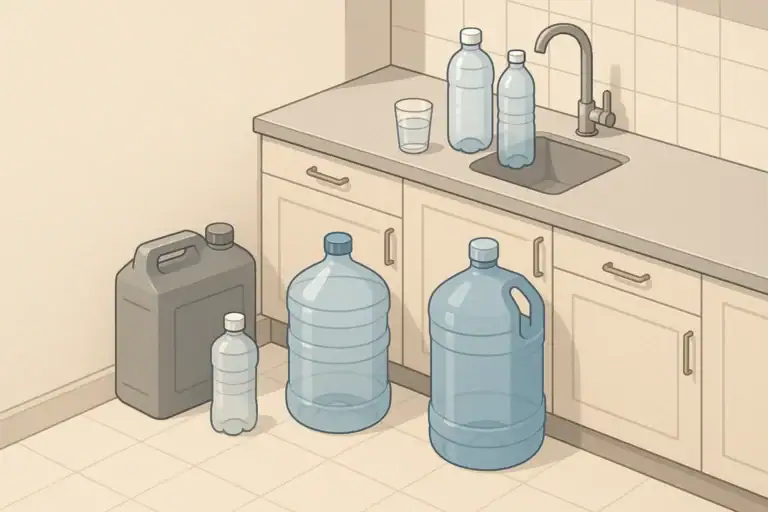
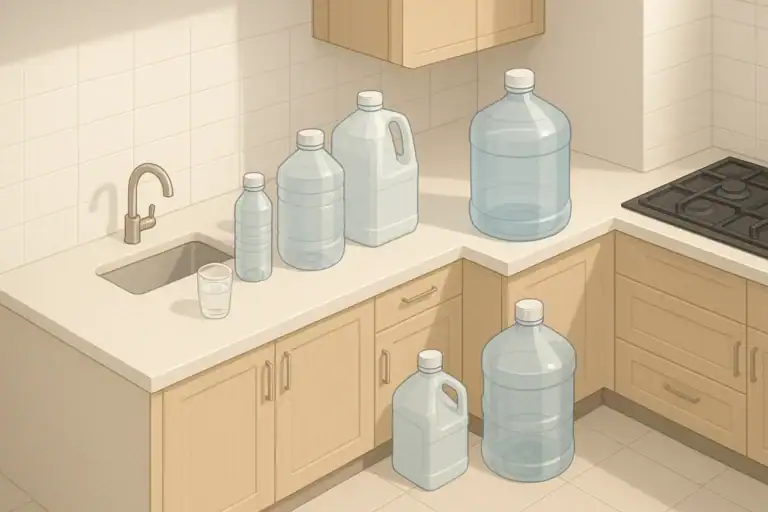
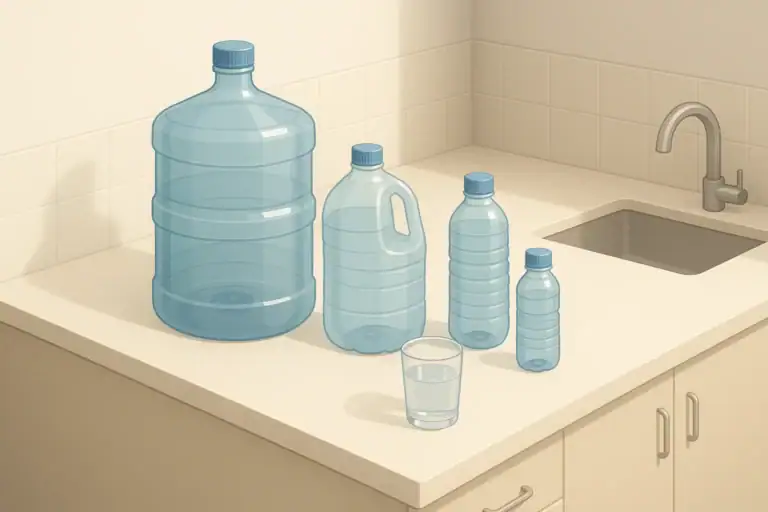
Many households use a mix of container sizes rather than just one type. Common options include:- Small containers: Bottles or small jugs are easy to carry and pour, suitable for drinking and cooking.
- Medium containers: Containers in the few-gallon range balance capacity with manageable weight.
- Larger containers: Bigger tanks or barrels hold more water in less floor space but are heavy and harder to move once full.
- Where you will store them (closet, under a bed, in a garage, or in a utility area).
- Whether you can safely lift and pour them when full.
- Whether you might ever need to move them quickly.
Apartment vs House: Fitting Storage into Real Life
In apartments and small spaces:- Prioritize smaller, stackable containers that fit in closets or under beds.
- Spread weight across different areas rather than concentrating it all in one spot.
- Consider flat or low-profile containers that slide under furniture.
- You may be able to use a mix of medium and larger containers.
- Keep heavier containers on lower floors and away from weak shelving.
- Store some water indoors where temperatures are more stable, if possible.
Storing, Labeling, and Rotating Water
Water itself does not expire, but the cleanliness of containers and exposure to heat or light can affect quality over time. A simple rotation habit helps keep your stored water fresher and gives you practice using it.Where and How to Store Water at Home
For most homes, better storage is:- Cool: Away from heaters, direct sun, or hot attics.
- Dark or shaded: Inside cabinets, closets, or covered to limit light exposure.
- Stable: On solid floors where containers will not tip or be knocked over.
Labeling and Rotation Habits
Simple labeling makes it much easier to rotate water regularly.- Write a fill date on containers you have filled from the tap.
- Group containers by date so you use the older ones first.
- Set a reminder in your calendar or phone to check your water every several months.
Water Use Priorities During a Short Disruption
When you are relying on stored water, it helps to set simple priorities so your supply lasts as long as your plan assumes.- First priority: Drinking water for people and pets.
- Second priority: Minimal water for food preparation, such as rehydrating dry foods or making simple meals.
- Third priority: Basic hygiene, such as handwashing and simple sponge baths if needed.
- Last priority: Cleaning tasks that can be delayed or done with less water.
Planning for Regional and Seasonal Water Disruptions
Different parts of the country face different water-related challenges. You can fine-tune your people × days plan toward the scenarios most likely where you live.Cold Climates and Winter Storms
In areas with freezing winters, ice storms and blizzards can knock out power and affect water systems. If you have advance notice of incoming severe weather, you can:- Fill extra containers, sinks, or clean tubs before the storm arrives.
- Store some water in interior rooms where it will not freeze as quickly.
- Keep drinking water containers away from unheated exterior walls.
Hurricanes, Heavy Rains, and Water Advisories
Coastal and flood-prone areas can see water systems stressed by heavy rain or storms. In these areas, people sometimes experience boil-water notices or temporary shutdowns. Your baseline home storage helps you avoid long lines during advisories. When a storm is forecast:- Confirm your stored water is accessible and clearly labeled.
- Top off containers if there is time, especially smaller ones for drinking.
- Consider filling extra temporary containers for flushing if you expect a power loss.
Heatwaves and Wildfire Smoke
In hot regions or areas affected by wildfire smoke, staying hydrated is important. While this guide does not provide health advice, your water plan can support general comfort:- Keep a portion of your water plan in smaller containers for easier access and carrying.
- Try to store drinking water in the coolest part of your living space.
- If you need to keep windows closed due to outdoor air quality, having water nearby reduces trips in and out of the building.
Water Storage Planner: People, Pets, and Rotation
Once you have a people × days number in mind, it helps to translate that into a simple plan you can actually follow. The goal is not perfection but a routine that fits your space, budget, and lifestyle.| People & Pets | Days Planned | Storage Approach | Rotation Cue |
|---|---|---|---|
| 1–2 people, no pets | 3 days | Several small containers for drinking plus one medium container | Check at the start of each season |
| 2–3 people, 1 small pet | 3–5 days | Mix of small containers and a few medium containers stored under beds | Rotate during major holidays as a reminder |
| Family of 4, pets | 5–7 days | Medium containers in closets plus some larger containers in a garage | Review at back-to-school and mid-winter |
| Multi-generational household | 7 days | Combination of larger floor containers and smaller containers for easy lifting | Add to an annual household safety check |
| Apartment with limited space | 3 days | Flat or stackable containers in closets and under furniture | Rotate when changing clocks or smoke detector batteries |
| Home in storm-prone area | 7+ days | Baseline storage indoors plus extra seasonal containers before storm season | Check before and after local storm season |
Keeping Water Readiness Simple and Sustainable
A water storage calculator based on people × days, with a pet add-on, provides a calm, practical way to prepare for short-term disruptions. You do not need to get every detail perfect at once. Start with a realistic number of gallons for your household, choose containers that fit your space, and add a basic rotation habit. Over time, you can adjust your plan as your household changes, as you move between apartments and houses, or as you experience different seasonal events. The aim is steady, manageable readiness that fits into everyday life.Frequently asked questions
How much water should I store per person when using a water storage calculator?
For short-term disruptions, a common planning minimum is one gallon per person per day to cover drinking and basic hygiene. You can increase that amount for hot weather, extra hygiene needs, children, or medical requirements, and round up to match available container sizes.How do I include pets in my water storage calculator?
Add a modest daily allowance per pet based on size and conditions, then multiply by the number of pets and days. For planning many households use a rough range (for example, about 0.25–1 gallon per pet per day), and it’s wise to round up, especially in warm climates or for larger animals.How often should I rotate stored water and how should I label containers?
Label containers with a fill date and check or rotate stored water at least every 6–12 months so quality stays consistent. When rotating, use older water for non-drinking tasks before refilling and set calendar reminders to keep the habit simple.What container types work best for a water storage calculator plan in an apartment?
In limited spaces, choose small, stackable, flat, or low-profile food-grade containers that fit under beds or in closets, and spread weight across areas. Combining several small drinking bottles with a few medium jugs offers flexibility and makes access and rotation easier.Can I store tap water directly and how should I prepare containers?
Yes—fill food-grade containers with potable tap water after cleaning them with hot, soapy water and rinsing; sanitize containers if desired before filling. Keep containers sealed, label them with the fill date, and store them in a cool, dark, stable place to maintain quality.Recommended next:
About
ReadyHomePlan
ReadyHomePlan publishes practical home readiness guides for outages and short-term emergencies—power, water, food basics, communication, and family planning—without hype.
- Simple checklists and realistic planning
- Water, power, lighting, and pantry basics
- Family plans (kids, pets, seniors) and seasonal prep
How to Transport Water Safely: Car, Stairs, and Heavy Containers
Rainwater for Emergency Use: Practical Limits and Safety Basics
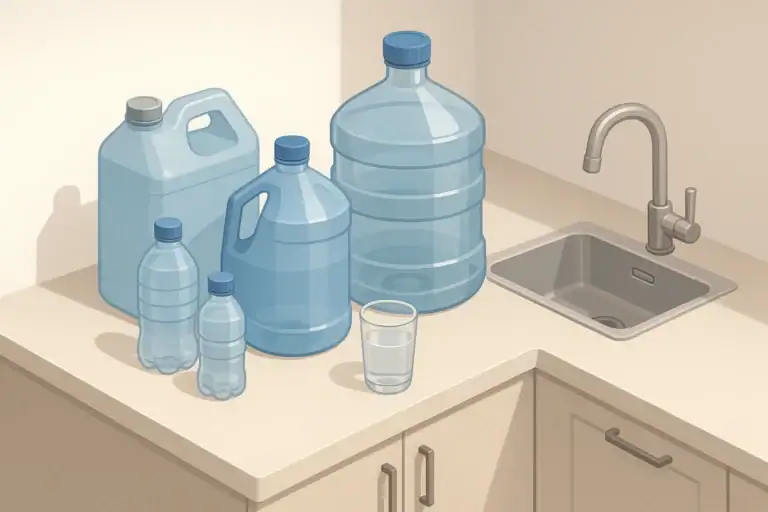
Emergency Household Water Sources: What’s Safe to Use and What’s Not
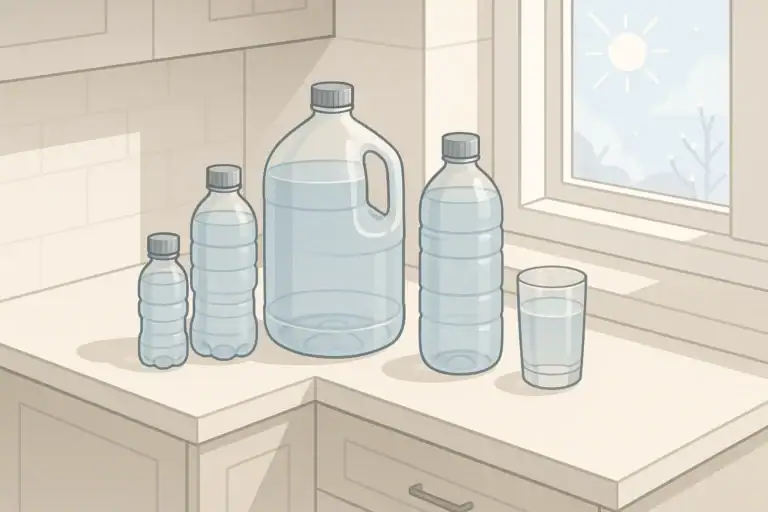
Storing Water in Heat or Freezing Conditions: What Changes
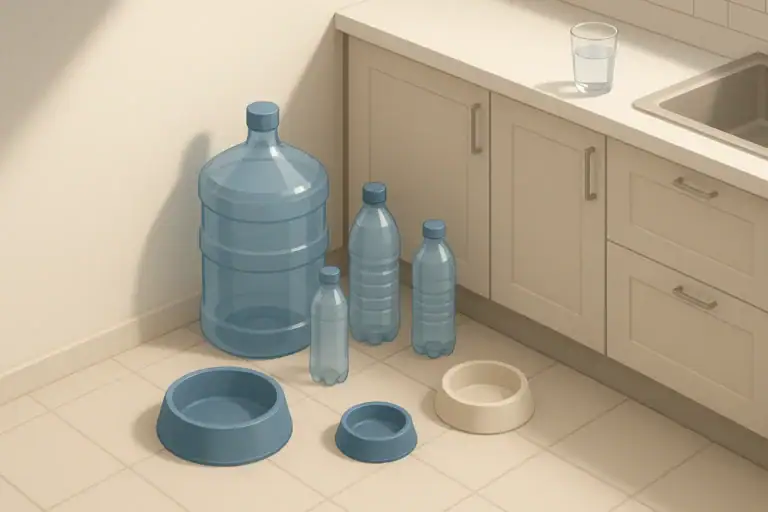
Emergency Water for Pets: How Much to Store and How to Serve It
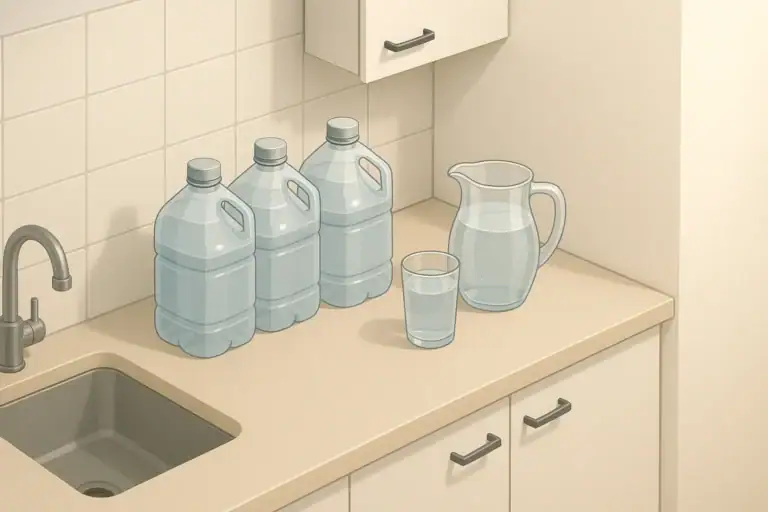
Making Tap Water Taste Better in an Emergency: Easy Steps
Keep reading