Summer power outages can move from inconvenient to risky faster than winter ones. Without air conditioning, indoor temperatures climb, food warms in the fridge, and fans stop working just when you want them most. The goal is not perfection, but staying reasonably cool and safe until power returns.
Most summer outages in the United States last a few hours to a couple of days. Planning for that time frame helps you focus on practical steps instead of expensive or extreme solutions. A few habits and simple supplies can make your home far more tolerable when the grid goes down in hot weather.
This guide focuses on realistic, short-term outages for households in apartments, condos, and single-family homes. It covers staying cooler, making limited power count, and protecting food and comfort for kids, pets, and older adults.
Why Summer Outages Feel So Difficult
Summer power outages can move from inconvenient to risky faster than winter ones. Without air conditioning, indoor temperatures climb, food warms in the fridge, and fans stop working just when you want them most. The goal is not perfection, but staying reasonably cool and safe until power returns.
Most summer outages in the United States last a few hours to a couple of days. Planning for that time frame helps you focus on practical steps instead of expensive or extreme solutions. A few habits and simple supplies can make your home far more tolerable when the grid goes down in hot weather.
This guide focuses on realistic, short-term outages for households in apartments, condos, and single-family homes. It covers staying cooler, making limited power count, and protecting food and comfort for kids, pets, and older adults.
Managing Heat Without Air Conditioning
When the power goes out in summer, your main job is slowing down how quickly your home heats up and helping your body shed heat. You cannot turn a hot house into a refrigerated space, but you can make it noticeably more comfortable.
Close Up Early, Then Ventilate Strategically
If you know a heatwave or planned outage is coming, use the cooler parts of the day wisely.
- Early morning: Open windows to flush the house with cooler air. Use fans if you still have power.
- Before it heats up: Close windows, blinds, and curtains on the sunny side of your home to trap the cooler air inside.
- During peak heat: Keep sun-facing windows covered. Reduce indoor activities that generate heat, like cooking on the stove or using dryers.
- Evening and night: Once outside air is cooler than inside, open windows again to create cross-ventilation.
Use Shade and Airflow to Your Advantage
Even without power, you can improve comfort by blocking direct sun and encouraging movement of air.
- Close curtains or blinds on the sunniest windows.
- Move to naturally cooler areas like lower floors, basements, or shaded rooms.
- For apartments, sit near shaded, open windows to benefit from any breeze.
- Use light, loose clothing and avoid heavy bedding during naps or sleep.
Support Your Body’s Cooling
Staying cooler is partly about your environment and partly about how you manage your body’s heat.
- Drink water regularly; keep a pitcher out so you remember to sip.
- Use cool (not ice-cold) wet washcloths on wrists, neck, and behind knees.
- Take brief, lukewarm sponge baths to rinse off sweat and cool skin.
- Rest during the hottest hours instead of doing chores or exercise.
Children, older adults, and pets can struggle more with heat. Check on them often, keep them in the coolest area of the home, and avoid confining pets in unventilated spaces.
| Task | Why it matters | Simple notes |
|---|---|---|
| Identify coolest room | Designate a main rest area in outages | Often a north-facing or lower-level room |
| Gather window coverings | Limit solar heat gain | Use curtains, blinds, or temporary sheets |
| Store a basic fan plan | Prioritize limited fan use | Decide which room gets backup-powered fan |
| Fill water jugs in advance | Support hydration and simple cooling | Use reusable containers, not overfilled |
| Assemble comfort kit | Reduce movement in peak heat | Include wipes, light blankets, flashlights |
| Note local cooling options | Back-up plan if home gets too hot | Libraries, community centers, or friends |
Using Limited Power Wisely
Many households now have some backup power, from simple battery banks to small power stations or generators. The key is deciding what truly needs electricity during a summer outage and for how long.
Prioritize What You Power
In hot weather, your main priorities usually are:
- Communication (charging phones or a small radio)
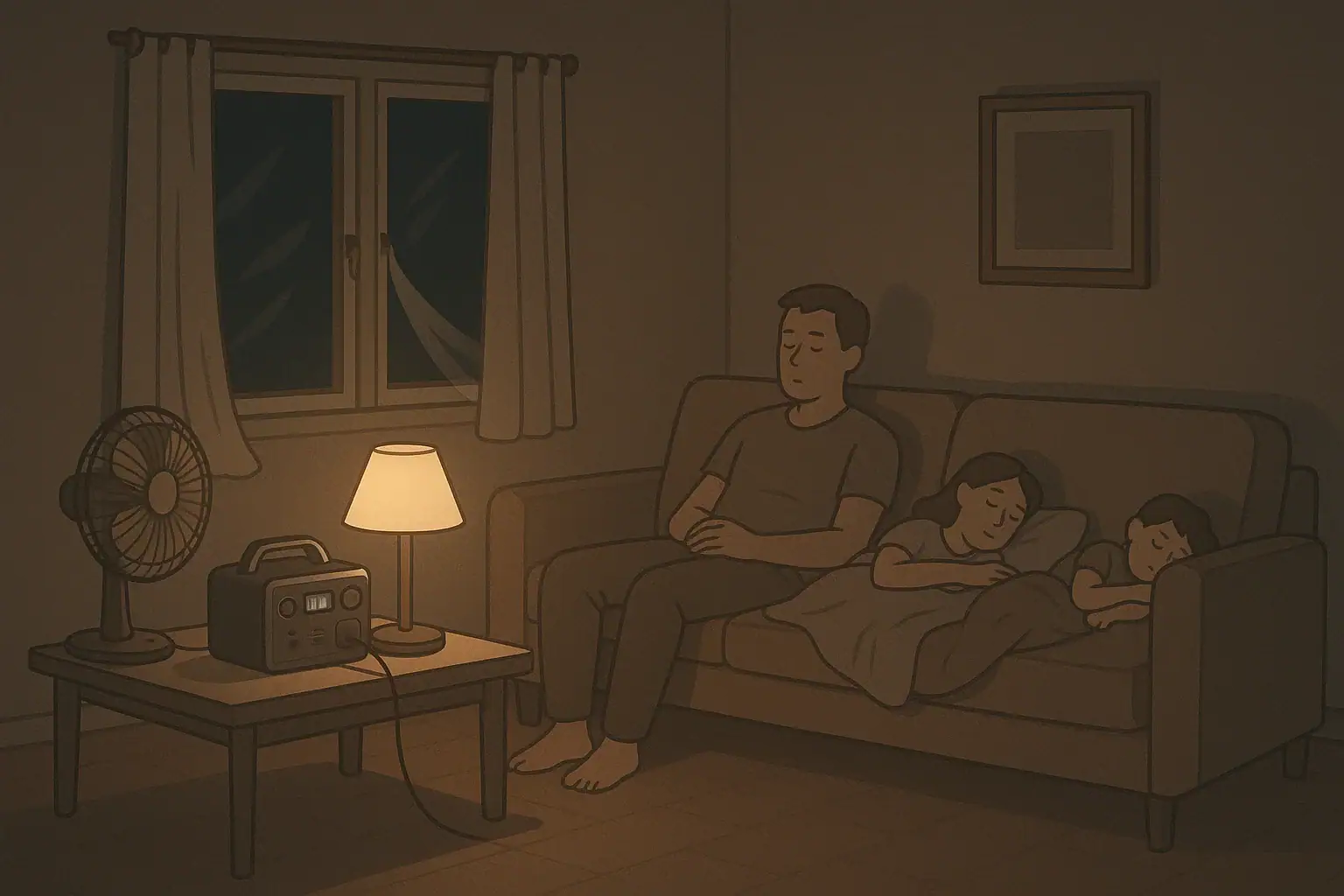
- One or two efficient fans in the coolest room
- Short fridge or freezer boosts, if your setup allows
- Minimal lighting in the evening
Large central air systems and window units often draw more power than small backup systems can handle for long. Instead of trying to run the whole house, focus on making one space reasonably comfortable.
Simple Backup Power Planning
You do not need to be an electrician to think through basic backup power use. A practical approach:
- Make a list of devices you would plug into backup power (for example, a fan, a small light, phone chargers).
- Note which ones are essential during the day versus at night.
- Decide on a schedule, such as running a fan on low in the afternoon and a light at night.
- If you have solar charging, plan to charge your battery during the brightest hours.
Use backup power mainly in your designated coolest room so everyone benefits from each watt you spend.
Safe Use of Generators and Batteries
If you use any type of generator or large battery system, follow safety basics to avoid fire, fumes, and overheating.
- Never run fuel-powered generators indoors or in attached garages.
- Keep generators outside, away from windows and doors.
- Place battery power stations on a hard, stable surface with space around them.
- Do not overload extension cords or power strips.
- Let devices cool before covering or storing them.
Food Safety and Cool Storage Without Power
Summer heat can quickly warm refrigerators and freezers when the power stops. A little planning extends the safe use of your food and reduces waste.
Keep Cold In as Long as Possible
Your refrigerator and freezer act like insulated coolers. The less you open them, the longer they stay cool.
- Decide what you will eat first, then grab everything in one quick open-and-close.
- Keep a written list of fridge contents taped outside during an outage to avoid browsing with the door open.
- Group items so the back of the fridge and the center of the freezer hold the most perishable foods.
Frozen containers of water (if you keep some on hand) can help extend cooling in a freezer or cooler once power is out.
What to Eat First
Plan meals so you use up the most temperature-sensitive items first.
- Early hours: Fresh fruit and vegetables, leftovers, dairy, and cooked meats.
- Next: Frozen foods that are starting to soften but still feel cold.
- Later: Shelf-stable pantry items that do not require refrigeration.
Keep a small stash of no-cook foods that tolerate heat well, such as canned items, dry snacks, and nut butters. This is especially helpful if cooking adds unwanted heat to your home.
Simple Cooler Strategy
If the outage looks like it may last all day or longer and you have coolers:
- Move a few essential items into a cooler with cold packs or frozen water bottles.
- Keep the cooler in the coolest indoor spot you have, away from sun.
- Open the cooler as rarely as you open the fridge.
This approach is practical for medications or specific foods someone in your household needs, while the rest of the fridge stays closed as long as possible.
Staying Comfortable in Small Spaces and Rentals
Many people live in apartments, condos, or rentals where large backup systems or structural changes are not realistic. You can still make meaningful improvements with small, portable steps.
Cooling Strategies for Apartments
For upper-floor units that heat quickly, focus on reducing sun exposure and sharing the coolest room.
- Use temporary window coverings like curtains or sheets on the sunniest windows.
- Sleep on lower bunks or floor-level mattresses where air is often cooler.
- If your building allows, open hall-facing windows or doors briefly to encourage cross-breeze, while still maintaining safety.
- Consider a small, efficient fan that can run from a modest battery pack.
Working with Landlords and Building Managers
Before summer, ask your building management about their outage practices.
- Find out where emergency lighting is and how long it usually stays on.
- Ask if there are designated cooling areas or lobbies that stay cooler.
- Confirm how to use stairs safely if elevators are out.
If someone in your home has limited mobility or is heat-sensitive, note this with building management ahead of time so they understand your needs during disruptions.
Sharing Space During Heat
In both apartments and houses, it is more efficient to keep one room comfortable than many rooms barely tolerable.
- Move sleeping arrangements into the coolest room during an outage.
- Concentrate backup-powered fans there instead of spreading them out.
- Set up quiet activities for kids, like books or games, to encourage resting in that room during peak heat.
Planning for Kids, Older Adults, and Pets
Some household members may have a harder time with summer heat. A few adjustments make outages less stressful for them and for you.
Kids and Heat Comfort
Children can become uncomfortable or irritable in hot rooms. Simple, calm routines help them cope.
- Explain outages in simple, reassuring terms ahead of time.
- Prepare a small box of low-activity toys or books reserved for blackout times.
- Offer frequent sips of water and light snacks that do not require cooking.
- Plan quiet rest or nap times during the hottest part of day.
Older Adults and Limited Mobility
Older adults or those with limited mobility may not adjust as easily to rising temperatures.
- Set up a chair or bed in the coolest available room before an outage if possible.
- Keep water, a flashlight, and a fan (if using backup power) within easy reach.
- Check skin temperature and comfort often, especially during heat peaks.
- If your home becomes too hot, consider relocating temporarily to a cooler place if it is safe to travel.
Pets in Summer Outages
Pets depend on you to manage their environment when it is hot.
- Provide fresh water in more than one bowl, in shaded spots.
- Arrange a cool resting place on tile or bare floor rather than thick bedding.
- Avoid walking dogs on hot pavement during peak heat.
- Never leave pets in vehicles, even for short periods, during outages.
Keep pets in the same cool room as the rest of the family when possible so you can monitor them easily.
Example values for illustration.
| Device type | Typical watt range (example) | Planning notes |
|---|---|---|
| Small USB fan | 5–10 watts | Low draw; can run for hours on modest battery |
| Box or oscillating fan | 40–70 watts | Best used in one shared room on low speed |
| LED lantern or lamp | 5–15 watts | Efficient lighting for evenings and tasks |
| Phone charger | 5–15 watts | Charge during daytime when power is available |
| Small dorm-style fridge | 50–100 watts | Consider short runs to maintain temperature |
| Full-size fridge | 100–300 watts (cycling) | Often used in brief intervals if capacity allows |
Simple Communication and Check-In Plans
Heat-related problems often develop quietly. A basic communication plan helps you stay connected and get help sooner if someone is struggling with the conditions.
Keep Devices Usable Longer
During an outage, treat your phone like an emergency tool rather than entertainment.
- Reduce screen brightness and close unused apps to save battery.
- Turn off background data and limit nonessential calls or streaming.
- Use text messages when possible; they often go through better than calls when networks are strained.
- Charge phones during any brief periods when power returns.
Plan Check-Ins with Friends, Family, and Neighbors
Before summer, set simple expectations with a few key contacts.
- Choose one person outside your area as a primary contact during longer outages.
- Agree on check-in times, such as once in the morning and once in the evening.
- For nearby neighbors, especially those who live alone, consider a quick daily check when temperatures stay high.
Posting a written list of important phone numbers at home ensures anyone can make contact even if a mobile contact list is unavailable.
Know When to Change Locations
Sometimes the safest choice is to find a cooler place temporarily, such as a friend’s home or a community cooling center.
- Before summer, learn where local cooling centers or public buildings typically open in heatwaves.
- Keep a simple bag ready with water, snacks, medications, and basic documents so you can leave quickly if needed.
- Plan how you would travel there without elevators if you live in a high-rise building.
Thinking through these details calmly in advance turns a stressful situation into a set of manageable steps when power is limited in hot weather.
Frequently asked questions
What are the fastest ways to keep one room tolerable during a short summer power outage?
Close windows and blinds on sun-facing sides early to trap cooler morning air, move everyone into the coolest room (lower level or shaded side), and run a low-wattage fan from a battery pack or small power station. Use cool, damp cloths on pulse points and hydrate frequently to help the body shed heat.
How long will food stay safe in my refrigerator and freezer during a summer outage?
If you keep refrigerator and freezer doors closed, a refrigerator can stay safely cold for about four hours and a full freezer for roughly 24–48 hours depending on how full and cold it was before the outage. Summer heat can shorten these windows, so group perishable items, avoid opening doors, and move critical items to a cooler with ice if the outage extends.
Is it safe to run a portable generator to power fans or a fridge during a heatwave?
Fuel-powered generators can be used but only outdoors, well away from windows, doors, and vents to avoid carbon monoxide exposure. Confirm the generator’s wattage supports the intended appliances without overloading, and use a transfer switch or a qualified electrician if you plan to connect it to home circuits.
What simple backup power schedule maximizes comfort with limited battery capacity?
Prioritize running one or two efficient fans in the designated cool room during the hottest afternoon hours, briefly cycle the refrigerator if needed, and reserve lighting or charging for the evening. Charge devices during any available daytime power or solar production and stagger appliance use to avoid spikes.
How can I best protect pets and older adults when air conditioning is unavailable?
Keep pets and older adults in the coolest available room, offer frequent water, and use cool damp towels or gel packs to lower skin temperature. Monitor them often for signs of heat stress and be prepared to relocate to a public cooling center or friend’s home if indoor conditions become unsafe.
Recommended next:
- Blackout Plan (Apartment / House): Step-by-Step Checklist for the First 24 Hours
- Blackout Plan for Apartments: What to Do When the Power Goes Out
- Blackout Plan for Houses: What to Do When the Power Goes Out
- Backup Power Basics: Watts vs Watt-Hours and Why It Matters
- How to Estimate Runtime for Your Devices (Without Guessing)
- Load Priorities: What to Power First in an Outage
- More in Blackouts & Backup Power →
- Simple checklists and realistic planning
- Water, power, lighting, and pantry basics
- Family plans (kids, pets, seniors) and seasonal prep
Backup Power Costs Explained: One-Time Gear vs Ongoing Fuel and Batteries
Backup Power Maintenance: Monthly Checks and Seasonal Prep
Lighting Strategy for Outages: Zone Your Home for Safety and Comfort
Sump Pump Backup Options: Planning for Basement Flood Risk
Water and Power: What Stops Working in Most Homes During Outages
Can You Run a Microwave, Kettle, or Space Heater on Backup Power? Reality Check