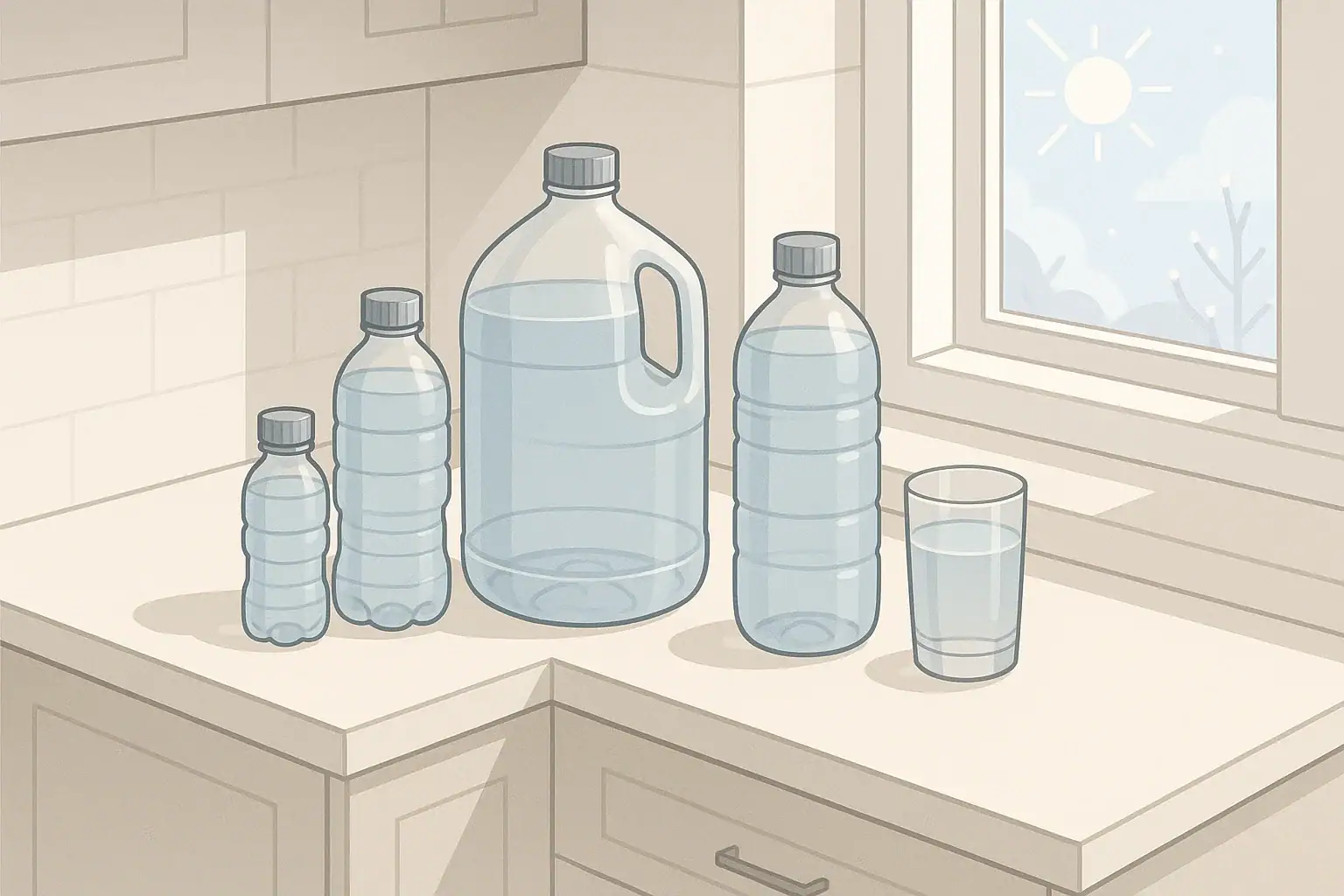
Water itself does not go bad in the way food does, but the conditions you store it in can affect taste, container safety, and how often you should rotate it. Heat and freezing temperatures change how containers behave, how fast plastic ages, and how comfortable or practical your storage setup is to use.
For most homes, the goal is simple: safe, drinkable water that stays reliable through common events like short power outages, winter storms, or heatwaves. That usually means a few days of water stored indoors, with some backup in less ideal spaces like garages or balconies. Understanding what changes in heat and freezing conditions helps you decide where and how to store your water so you do not have to scramble when the tap stops working for a while.
Why Temperature Matters for Stored Water
Water itself does not go bad in the way food does, but the conditions you store it in can affect taste, container safety, and how often you should rotate it. Heat and freezing temperatures change how containers behave, how fast plastic ages, and how comfortable or practical your storage setup is to use.
For most homes, the goal is simple: safe, drinkable water that stays reliable through common events like short power outages, winter storms, or heatwaves. That usually means a few days of water stored indoors, with some backup in less ideal spaces like garages or balconies. Understanding what changes in heat and freezing conditions helps you decide where and how to store your water so you do not have to scramble when the tap stops working for a while.
Basic Principles of Safe Water Storage
Before focusing on temperature extremes, it helps to remember a few basics that apply in any season or climate.
How much water to plan for
Many people use a simple planning target of at least a few gallons of water per person per day for short disruptions. This covers drinking, limited food preparation, and basic hygiene like brushing teeth and quick hand rinsing. Pets, hot weather, and special needs can increase that amount.
In small apartments, you may not be able to store as much as you would like. In that case, aim for what is realistic, such as a few days of higher-quality indoor storage, plus some flexible options like containers you can fill quickly when a storm is forecast.
Container basics that matter in any temperature
Whatever the temperature, safe water storage usually involves:
- Food-grade containers: Containers made for food or beverage use, with tight-fitting lids.
- Clean handling: Washing hands and using clean funnels or pitchers when filling containers.
- Protected openings: Keeping caps closed, and not drinking directly from large storage containers to avoid backflow of germs.
- Light protection: Storing away from direct sunlight to help slow down algae growth and container aging.
Once those basics are in place, temperature becomes the next major factor to consider.
| Home situation | Preferred storage location | When it works | When to rethink |
|---|---|---|---|
| Small apartment, mild climate | Bedroom or hallway closet | Indoor temps are fairly stable year-round | If closet gets very hot due to poor ventilation |
| Apartment, hot summers | Interior closet or under bed | No direct sun, away from windows and heaters | If AC is off for days and indoor temps stay extreme |
| House with garage, mixed seasons | Indoor pantry plus some garage storage | Garage stays above freezing and below extreme heat most of the year | If garage often freezes or becomes very hot in summer |
| House in very cold region | Basement or interior closet | Space stays above freezing in winter | If basement or crawlspace drops below freezing |
| Renter with balcony only | Smaller indoor containers as main supply | Balcony used only for short-term fill & use in mild weather | If balcony area experiences strong sun or freezing temps |
| Family with kids and pets | Low, sturdy shelves indoors | Containers are stable and not easy to tip | If stored where children might climb or trip over them |
Example values for illustration.
Storing Water in Hot Conditions
Many homes in warm regions rely on garages, porches, closets near the ceiling, or even car trunks for extra storage. In hot conditions, the main concerns are container stress, faster aging of plastics, and taste changes.
What heat does to water and containers
Heat does not usually make clean, sealed water unsafe by itself, but it can:
- Soften and weaken some plastics: Higher temperatures can make thin plastic more flexible and more likely to deform, crack, or leak over time.
- Speed up plastic aging: Extended exposure to high heat and direct sun can cause some plastics to discolor, become brittle, or develop an odor.
- Affect taste and smell: Water stored hot for a long time may take on a flat, stale, or slightly plastic-like taste, even if it is still safe to drink.
- Encourage algae or growth in clear containers: If light reaches the water and there are any stray organisms present, they tend to grow faster in warm, bright conditions.
For households that expect regular heatwaves or do not have air conditioning, this mostly points to storing water away from sunny windows, heaters, and hot attics.
Better locations for hot-weather storage
In hot weather, aim for the coolest practical spots inside your living space:
- Interior closets: Closets away from exterior walls and windows usually stay more moderate in temperature.
- Under beds or low shelves: Lower to the floor can be cooler than high shelves, especially if hot air collects near the ceiling.
- Hallways or interior rooms: These often avoid the temperature swings of rooms that face afternoon sun.
If you have to store some water in a garage or carport due to space limits, treat it as secondary supply and rotate it more often than your cooler indoor storage.
Container choices in the heat
For hot conditions, consider:
- Thicker-walled containers: More robust containers are less likely to warp or deform when temperatures rise.
- Opaque or tinted containers: These help block light and slow down algae growth.
- Smaller units: Several medium containers can be easier to move from a hot space to a cooler room if needed.
Labeling containers with the fill date can also remind you to rotate earlier when you know they have been in warm storage.
Rotation timing in warm climates
There is no single rotation schedule that fits every home, but as a practical household habit, many people choose to rotate water stored in hot conditions more frequently than water kept cool and dark. As an example, you might decide that water in an air-conditioned closet can sit longer, while water in a warm garage gets used and replaced more often, such as a few times a year. The right interval for your home depends on how hot the space gets and how picky your household is about taste.
Storing Water in Freezing Conditions
Cold weather brings different challenges. In freezing conditions, the main risks are container damage from ice expansion, loss of usable supply if everything freezes solid, and practical issues like not being able to open lids or pour water when you need it.
What freezing does to water and containers
Water expands when it freezes. In storage containers, that can lead to:
- Cracked or split plastic: If a container is filled completely with no room for expansion, ice can push against the walls and seams until they fail.
- Warped lids and seals: Repeated freeze-thaw cycles can distort caps and gaskets, leading to slow leaks or difficulty closing them.
- Hard-to-use water: Even if containers do not break, fully frozen water is not immediately drinkable, especially during a power outage when you cannot rely on a microwave or kettle to thaw it quickly.
For households in cold regions, the priority is usually keeping at least part of the water supply in spaces that stay above freezing, even when the main living area cools down.
Where to store water in cold climates
Good locations in winter-prone areas include:
- Interior closets and pantries: These often stay warmer than exterior walls and unheated rooms.
- Basements: Many basements stay above freezing, even if they are cool. Still, it is worth knowing how cold yours gets during the worst winter stretches.
- Under beds or furniture: In a heated room, these areas can provide extra insulation from drafts.
Spaces that are risky for winter storage include uninsulated garages, sheds, crawlspaces, and covered porches in colder regions. If a space has a history of frozen pipes, it is a sign that water containers there may freeze too.
If containers might freeze anyway
Sometimes you do not have a perfect indoor space, or you want extra backup stored in a less ideal location like a garage. If freezing is possible:
- Leave expansion room: Do not fill containers all the way to the top. Leaving some empty space below the cap gives ice somewhere to expand.
- Use more flexible containers: Some flexible plastic containers cope better with ice expansion than rigid ones, though they may not be as durable overall.
- Group containers together: Placing containers close together, or surrounding them with insulating materials like blankets or cardboard, can slightly slow freezing.
- Store some smaller containers: Smaller volumes thaw faster if they do freeze.
If an outdoor or unheated area is your only option, treat that water as secondary backup, with your main drinking supply kept in the warmest indoor spot you can manage.
Thawing and using water safely
If your stored water has frozen:
- Inspect containers: After thawing, check for cracks, leaks, and distorted caps before assuming the container is still reliable.
- Open carefully: Ice can create pressure; gently loosen the cap to avoid sudden spills.
- Plan thaw time: In a power outage, thawing may mean bringing containers into the warmest room and giving them hours to melt.
For winter storms, having at least some water you know will not freeze—such as containers inside your living space—reduces the stress of needing water immediately when the heat or power goes out.
Apartment vs House: Adapting to Your Space
Different homes offer different storage options. The best approach is the one that fits your space, is easy to maintain, and feels realistic with your daily routines.
Small apartments and condos
In apartments, climate control is often better than in garages or sheds, but storage space is limited. Options include:
- Under-bed storage: Low containers that slide under beds stay shaded and relatively temperature-stable.
- Closet floor space: The bottom of a hallway or bedroom closet can store several small to medium containers.
- High shelves for lighter containers: Lighter, smaller containers can go on upper shelves, but avoid overloading them.
For balconies or outdoor stairwells, it is usually better to avoid long-term water storage because of heat in summer and risk of freezing in winter. Those areas are more suited to short-term use, such as filling containers right before a storm when you will use them quickly.
Houses with basements, garages, or yards
Houses often have more options, but also more temperature extremes.
- Basements: Often good for large quantities of water because they are cooler in summer and more stable in winter.
- Garages: Useful for overflow storage, but think of them as secondary if temperatures swing from very hot to freezing.
- Indoor pantries: Ideal for your most accessible and frequently rotated supply.
For families, spreading storage between a few locations (for example, some in a pantry, some in the basement) means at least part of your supply remains easy to reach if one area is blocked or too cold or hot to enter comfortably during an event.
Renters and shared spaces
Renters may be limited by lease rules, shared storage rooms, or concerns about weight on balconies or upper floors. Practical approaches include:
- Modest quantities: Instead of a single very large container, use several smaller ones that are easier to move if you change apartments.
- Discrete storage: Using containers that fit into existing furniture or closet layouts to avoid clutter.
- Clear labeling: Marking containers with fill dates and “water” so roommates know what they are and do not discard them.
In shared buildings, indoor climate control often stays more even, which helps reduce both heat and freezing concerns, as long as you are not relying on an outdoor storage unit.
Families, Kids, Seniors, and Pets
Different household members may have different needs in hot or freezing conditions, especially when it comes to how much water they need and how easy it is to access.
Planning for children
For families with kids:
- Easy-access containers: Keep at least some water in sizes children or teens can carry safely.
- Spill-resistant storage: Use sturdy containers on low shelves to reduce tipping risks.
- Temperature comfort: In hot weather, children may need more frequent drinking water breaks, so extra indoor storage can be helpful.
Planning for seniors or people with limited mobility
If you have household members who may not be able to lift heavy containers:
- Smaller units: Several small containers may be better than one large, heavy one.
- Close placement: Store water near areas where people spend most of their time, to avoid long walks or stairs during heatwaves or cold snaps.
- Stable surfaces: Avoid high shelves or top-heavy stacks that could fall.
Accounting for pets
Pets also need water that is accessible and not overheated or frozen.
- Separate pet allowance: Plan some extra water specifically for pets, especially larger animals.
- Reduce temperature shock: In extreme heat or cold, water placed out for pets may need more frequent refreshing to stay comfortable to drink.
- Bowls placement: Keep pet bowls out of direct sun and away from drafty doors that may freeze quickly in winter.
Rotation, Labeling, and Simple Routines
Regardless of temperature, stored water is easiest to manage when you build small habits: label, rotate, and check occasionally. Temperature extremes just change how often you may want to do those checks.
Labeling your containers
Simple labels make seasonal decisions easier:
- Fill date: Write the month and year you filled the container.
- Location note: For water in garages, porches, or sheds, add a reminder like “garage – rotate sooner.”
- Household notes: If you track water separately for kids, seniors, or pets, note that on the container.
Seasonal checks
Once or twice a year, use seasonal changes as a reminder to check your storage:
- Before summer heat: Move some water from hot-prone areas to cooler spots if possible.
- Before winter freezes: Shift containers from unheated spaces into rooms that stay above freezing.
- After major events: If you used your stored water during a storm or outage, refill and relabel when things are calm.
Using and replacing water
To keep water fresher, many households periodically pour older stored water into uses like cleaning or watering non-edible plants, then refill the containers with fresh tap water. This kind of rotation helps limit long stretches of storage in very hot or very cold spaces and keeps your supply aligned with the current season.
| Household | Days to cover | Storage approach | Rotation reminder |
|---|---|---|---|
| 1 adult in studio apartment | 3 days | Several small containers under bed | Check at start of summer and winter |
| 2 adults, 1 child in house | 5 days | Main supply in pantry, backup in basement | Rotate at each daylight saving time change |
| Family with seniors | 3–5 days | Many small, easy-lift containers near living area | Quick check at every utility bill arrival |
| Apartment with pets | 3 days | Extra containers labeled for pets in closet | Rotate when pet food is restocked |
| House in hot climate | 3–7 days | Coolest indoor closets for main supply | Extra summer check before first heatwave |
| House in cold climate | 3–7 days | Basement or interior closet, no unheated sheds | Check before first freeze each year |
Example values for illustration.
Keeping Water Reliable Through Everyday Extremes
Heat and freezing conditions mainly change where water is comfortable to store and how much attention containers need over time. By placing most of your supply in the most temperature-stable areas you have, keeping a simpler backup in less ideal spaces, and building a few small rotation habits around the seasons, stored water can quietly support you through common power outages, storms, and short disruptions without taking over your home.
Frequently asked questions
How long can I store tap water in hot conditions before it becomes unpalatable or risky?
Water itself does not become unsafe simply from heat, but higher temperatures speed plastic aging and can change taste. Store your main supply in the coolest, darkest indoor spot and rotate water kept in warm or sunny areas more often—many households replace warm-stored water every 3–6 months while cool indoor storage can last longer.
Will freezing stored water make it unsafe to drink?
Freezing does not make water unsafe to drink, but ice expansion can crack or warp containers and compromise seals. After thawing, inspect containers for damage and, if you suspect contamination, boil or purify the water before drinking.
What types of containers are best when storing water in heat or freezing conditions?
Choose food-grade containers with tight-fitting lids; in hot conditions prefer thicker-walled, opaque or tinted containers to reduce light exposure and warping. For areas that may freeze, more flexible plastics and smaller containers reduce the chance of rupture and make thawing faster.
How should I fill containers if they might freeze?
Leave some headspace so ice can expand without stressing the container, and group or insulate containers to slow freezing. Also keep a portion of your supply in warmer indoor locations so you have immediately usable water.
What’s the safest way to thaw and use frozen stored water during an outage?
Move frozen containers to the warmest indoor spot and allow them to thaw naturally, opening lids carefully to relieve any pressure. Inspect for cracks or leaks and, if contamination is possible, boil the water or use an appropriate purification method before drinking.
Recommended next:
- Water Storage Guide: How Much You Need, Where to Put It, and How to Rotate
- Water Storage Calculator: People × Days (Plus a Pet Add-On)
- Best Water Containers for Home Storage: Materials, Sizes, and Caps
- Storing Water in Small Spaces: Apartment and Closet-Friendly Options
- Water Rotation Schedule: A Simple FIFO System Anyone Can Follow
- How to Clean and Sanitize Water Containers Safely
- More in Water Readiness →
- Simple checklists and realistic planning
- Water, power, lighting, and pantry basics
- Family plans (kids, pets, seniors) and seasonal prep
How to Transport Water Safely: Car, Stairs, and Heavy Containers
Rainwater for Emergency Use: Practical Limits and Safety Basics
Emergency Household Water Sources: What’s Safe to Use and What’s Not
Emergency Water for Pets: How Much to Store and How to Serve It
Making Tap Water Taste Better in an Emergency: Easy Steps
Boil Water Advisories: What to Do at Home (Simple Guide)