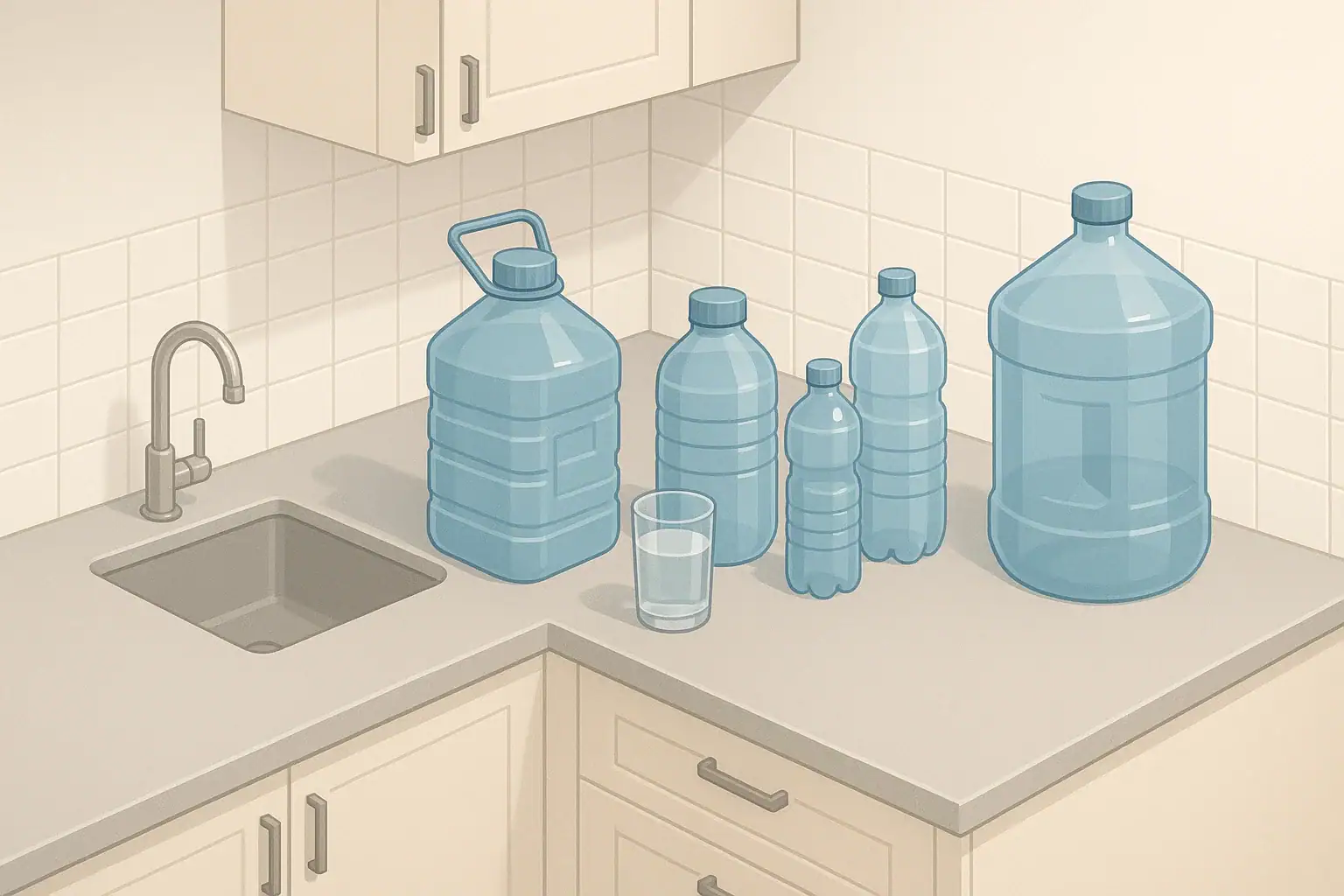
Stored water is one of the simplest ways to be ready for short-term emergencies, from a burst pipe to a winter storm. But once water is tucked away in a closet or under a bed, it is easy to forget about it. Over time, containers can degrade, seals can fail, and the water itself can pick up off-flavors or contaminants from its surroundings.
Most people do not need complex systems. A few sturdy containers, a clear labeling habit, and a simple rotation schedule are usually enough. Still, it helps to know the warning signs that your stored water may no longer be a good backup option, and what you can do to keep it in better condition for when you need it.
This guide focuses on practical home situations in the United States: apartments and houses, renters and owners, people with limited space, kids, pets, and older adults in the household.
Why Stored Water Needs Attention Over Time
Common Signs Your Stored Water Should Be Replaced
When in doubt, it is usually safer and simpler to replace stored water. But there are several practical signs that your backup water is past its best and should be swapped out.
1. Your Storage Date Is Unknown or Very Old
Plain tap water stored at home does not stay in perfect condition forever. Labels often fade or fall off, and memories can be unreliable. If you cannot confidently say when you filled or purchased the water, it is a good candidate for replacement.
- No date on the container: Assume it is old and replace it.
- Visible date older than about one year for home-filled water: Many households find it easier to replace and refresh rather than risk using it as drinking water.
- Commercially packaged water past the printed date: The date is usually about packaging quality, not a precise safety cutoff. Still, if it is well past that date, consider using for cleaning and replacing it for drinking.
2. Changes in Smell, Taste, or Appearance
Stored water should look clear, smell neutral, and taste like your usual tap or filtered water. Any noticeable change is a sign to replace it.
- Cloudiness or particles: Sediment, floating bits, or a hazy look are reasons to avoid using it for drinking without proper treatment.
- Off or musty odor: A sour, earthy, or chemical smell suggests contamination from microbes or contact with container materials.
- Unusual taste: If you sip a small amount and it tastes off, bitter, or metallic, it is better to discard and replace the water.
If you see obvious discoloration or growth (like slimy surfaces inside the container), treat that container as not suitable for drinking water storage until it has been thoroughly cleaned and sanitized.
3. Damaged or Compromised Containers
Containers are as important as the water itself. Even if the water looks fine, damaged packaging can allow in dust, insects, and other contaminants.
- Cracks, dents, or warping: Plastic that is brittle or deformed can fail without warning.
- Leaking seals or lids: If you see seepage, dried water streaks, or crust around caps, replace the water and fix or replace the container.
- Soft bottles that stay indented: Thin plastic bottles can lose their shape and strength over time, especially in warm areas.
- Rusty metal parts: If a cap or spigot is rusting, the water may no longer be ideal for drinking.
4. Exposure to Heat, Sunlight, or Strong Odors
Where you store water matters. Harsh conditions can affect both the container and the water inside.
- Stored in hot areas: Attics, garages, or car trunks can get very hot. Extended high temperatures can speed up plastic breakdown and encourage microbial growth if any got inside.
- Direct sunlight: Sunlight can promote algae growth if there is any nutrient source and can weaken some plastics.
- Near chemicals or strong odors: Some plastics can absorb odors from paint, gasoline, cleaning products, or other chemicals stored nearby.
If you know water has been sitting for months in a hot car or next to strong-smelling products, it is safest to replace it for drinking purposes and store the new supply in a more stable environment.
5. Signs of Contamination or Questionable Filling Practices
How you filled the container matters. If you are not sure the container and water source were clean when you filled it, treat the water with caution.
- Reused food containers: Containers that once held juice, milk, or other drinks can be hard to clean completely and may encourage microbial growth.
- No cleaning before filling: If a container was filled straight from the tap without washing and sanitizing first, consider replacing that water.
- Dirt or residue on the outside: Visible grime on the outside can be a reminder that handling practices were not careful.
Example values for illustration.
| Sign | What to Do | Notes |
|---|---|---|
| No date or very old date | Replace and label fresh water | Simple “month + year” is usually enough |
| Cloudy, colored, or particles | Do not drink; discard or use for non-critical cleaning | Consider container cleaning before refilling |
| Off smell or taste | Replace with fresh water | Store away from strong odors next time |
| Cracked, leaking, or warped container | Replace container and water | Check storage area for heat or pressure |
| Stored in hot car, attic, or in sun | Replace for drinking use | Move future storage to a cooler spot |
| Questionable filling or reused food bottle | Discard and start with a clean container | Wash and sanitize before refilling |
How Often to Rotate Stored Water
There is no single perfect rotation schedule for every household, but having any plan is better than none. The goal is to keep water reasonably fresh and to catch container issues before an emergency.
General Rotation Ideas for Home-Filled Water
For water you fill from your tap into clean containers, many households choose a replacement interval around every 6–12 months. This is not a strict safety rule, but a simple routine that keeps water from sitting for years.
- Every 6 months: Good for small or critical supplies that are easy to refresh, like jugs stored in a closet.
- Every 12 months: A practical minimum rotation point for most home-filled containers.
Linking rotation to something you already do can help you remember. Some people refresh water when they change clocks, test smoke alarms, or review their emergency plans once a year.
Commercially Packaged Water
Factory-sealed drinking water stored in a cool, dark place often remains usable for a long time. The printed date usually reflects packaging quality rather than a sharp safety cutoff.
- Consider rotating commercially packaged water when it approaches or passes the printed date by a comfortable margin.
- Use older bottles for everyday drinking or cooking, and replace them with newer ones in your storage spot.
- If bottles are deformed, discolored, or have off smells or flavors, replace them regardless of the date.
Short-Term vs. Long-Term Storage Goals
Think about what you are planning for:
- Short disruptions (1–3 days): A few gallons per person that you rotate annually may be enough for drinking and basic hygiene.
- Moderate disruptions (up to 2 weeks): You may store more water in larger containers or add treatment options, such as filters or disinfectants, to use if you need to collect water from less reliable sources.
In both cases, rotation helps keep the system simple. You avoid having very old water and are more likely to notice any container problems during routine checks.
Good Storage Habits to Keep Water Fresher
Prevention is easier than dealing with large amounts of questionable water later. A few straightforward habits can greatly reduce how often you need to discard and replace stored water.
Choose Appropriate Containers
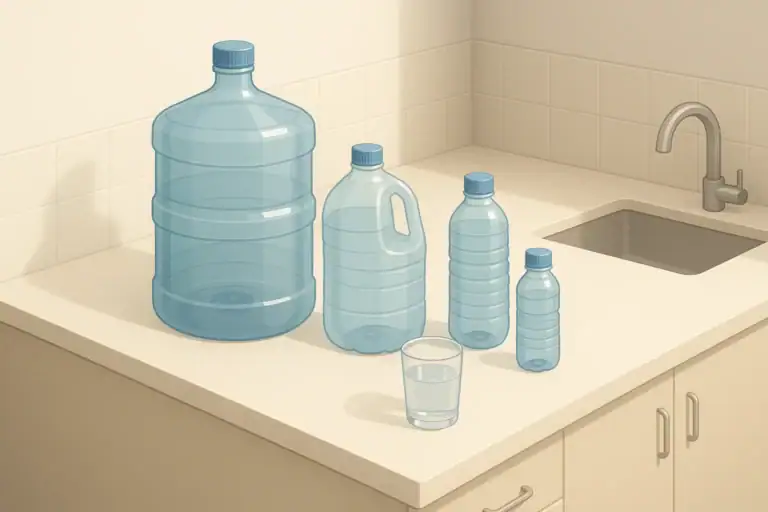
Use containers designed to hold water or liquids, rather than random leftover bottles. Depending on your space and needs, you may mix types:
- Smaller portable bottles or jugs: Easier to move, share, and store under beds or in closets.
- Larger stationary containers: More efficient for storing higher volumes in one spot, such as a corner of a utility room.
Avoid reusing containers that previously held sugary drinks, dairy, or other foods that are hard to clean completely. If you do reuse containers, wash and sanitize them thoroughly before filling.
Clean and Sanitize Before Filling
Before filling any container with tap water for long-term storage:
- Wash with warm water and dish soap, including the cap and any valves.
- Rinse thoroughly so no soap remains.
- Sanitize the interior with a mild household bleach solution following the product label directions, then rinse with clean water.
- Allow to air dry briefly if possible, then fill with tap water and close tightly.
Always use safe, potable tap water as your starting point. If your water supply is under a boil advisory or similar notice, follow local guidance before using it for storage.
Store in a Cool, Dark, Stable Place
Temperature swings, light, and nearby chemicals are the main enemies of stored water quality. When choosing a location, look for:
- Cool temperatures: Interior closets, under beds, or a shaded part of the home are usually better than garages or attics.
- Darkness: Keep containers out of direct sunlight to reduce container wear and potential growth of algae.
- Away from harsh chemicals: Do not store drinking water next to gasoline, solvents, strong cleaners, or pesticides.
- Stable surfaces: Shelves and floors that will not tip or collapse under the weight of water.
Remember that water is heavy. One gallon weighs a little over 8 pounds, so distribute containers so they do not overload shelves or small furniture.
Label Clearly and Consistently
Labels are your memory aid months or years later. At a minimum, write:
- The month and year you filled the container or placed it into storage.
- Optional: the location or purpose (for example, kitchen, bedroom, pet water) if you spread containers around the home.
Use a waterproof marker and place the label where it is easy to see. If labels tend to smudge, you can cover them with clear tape.
What to Do With Old or Questionable Stored Water
When you decide to replace stored water, you do not always have to pour it down the drain immediately. Depending on its condition, it may still be useful for non-drinking purposes.
Use for Non-Drinking Tasks When Reasonable
If the water looks clear, has no odor, and you are replacing it mainly because of age or rotation schedule, you may be able to use it for:
- Flushing toilets during a short water outage
- Mopping floors or cleaning outdoor areas
- Watering certain outdoor plants (if it has not been stored near chemicals)
These uses can reduce waste, especially if you are regularly rotating a large volume of water. Use your judgment and avoid using water that looks or smells questionable even for cleaning, particularly indoors.
When to Discard Completely
It is usually best to discard stored water if:
- It is discolored, cloudy, or has visible growth or particles.
- It smells strongly musty, sour, or chemical-like.
- It has been stored near hazardous materials.
- The container itself is degrading or breaking apart.
Pouring old water down a sink, bathtub, or onto outdoor soil away from foundations is usually sufficient. Empty and clean the container thoroughly before deciding whether to reuse or recycle it.
Can Old Water Be Treated and Saved?
Some households keep basic water treatment options, such as filters or disinfectants, for situations where they may need to collect water from less reliable sources. In theory, similar methods could be used on older stored water.
However, for everyday home readiness, it is often simpler to treat older stored water as a backup for cleaning and rely on fresher water for drinking. Treating heavily aged or clearly contaminated water can be time-consuming and still may not result in water you are comfortable drinking.
Planning How Much Water to Store and Rotate
Deciding how much water to store depends on your household size, space, and realistic emergency scenarios where you live.
Basic Planning Guidelines
A commonly used planning figure is at least a few gallons of water per person per day to cover drinking, basic food preparation, and simple hygiene. This is a general example, not a precise rule. You may adjust based on:
- Local climate (hotter areas may need more for drinking).
- Whether you have pets and their needs.
- Whether anyone in the household has extra washing needs, such as for baby items.
Rather than aiming for a very large supply all at once, many people gradually build up a modest reserve and then maintain it with regular rotation.
Storage Approaches for Different Homes
Space and layout influence how you store water:
- Apartments and small spaces: Use smaller containers that fit under beds, in closets, or behind furniture. Stack carefully and avoid blocking exits.
- Houses with more storage: Combine smaller containers for portability with a few larger ones in cooler storage areas, such as interior closets or utility rooms.
- Families with children or seniors: Keep some containers easy to lift and carry, and place at least part of the supply where everyone can access it without climbing or bending too far.
Example values for illustration.
| People and Pets | Days to Plan For | Storage Approach | Rotation Cue |
|---|---|---|---|
| 1 adult in small apartment | 3–5 days | Several small jugs under bed or in closet | Replace every 6–12 months |
| 2 adults + 1 child | 5–7 days | Mix of portable bottles and medium containers | Rotate during yearly home safety check |
| Family with pets | 5–7 days | Separate clearly labeled pet water containers | Refresh when buying pet supplies |
| Multi-story home | 3–7 days | Split storage between floors for easy access | Check each floor on a set calendar date |
| Older adult living alone | 3–5 days | More smaller, easy-to-lift containers | Coordinate checks with regular visits |
| Shared house with roommates | 3–7 days | Central storage plus personal bottles | Rotate when doing seasonal cleaning |
Keeping Stored Water Simple and Reliable
Backup water does not need to be complicated or expensive to be effective. The most important steps are:
- Use containers suited for holding water, cleaned and sanitized before filling.
- Label with dates so you know when to rotate.
- Store in a cool, dark place away from strong chemicals or sunlight.
- Check periodically for damage, leaks, or changes in appearance or smell.
By watching for the signs that stored water should be replaced and building a simple rotation routine that fits your home, you give yourself one less thing to worry about when everyday disruptions happen.
Frequently asked questions
How long can I safely store tap water in home-filled containers?
For home-filled containers, many households rotate their supply every 6–12 months as a practical routine. Replace water sooner if the storage date is unknown, the container is damaged, or the water has an off smell, taste, or appearance.
Is commercially bottled water safe to drink after the printed date?
Factory-sealed bottled water stored in a cool, dark place is often still usable after the printed date because the date mainly reflects packaging quality. However, discard or use for non-drinking tasks if bottles are deformed, discolored, or have an off smell or taste.
What visual or sensory signs mean stored water might be contaminated?
Look for cloudiness, floating particles, visible growth or slime, strong musty or chemical odors, and unusual tastes. Any of these signs mean you should not drink the water without proper treatment and should consider replacing the supply.
Can I reuse food or beverage bottles for long-term water storage?
Reuse of containers that previously held sugary drinks, milk, or other foods is not recommended unless you clean and sanitize them thoroughly, because residues can encourage microbial growth. It’s safer to use containers designed for long-term water storage when possible.
Where is the best place in my home to store emergency water?
Store water in cool, dark, stable locations such as interior closets, utility rooms, or under beds; avoid attics, garages, car trunks, direct sunlight, and areas near chemicals. Also distribute weight so shelves or furniture are not overloaded and make some containers easy to access.
Recommended next:
- Water Storage Guide: How Much You Need, Where to Put It, and How to Rotate
- Water Storage Calculator: People × Days (Plus a Pet Add-On)
- Best Water Containers for Home Storage: Materials, Sizes, and Caps
- Storing Water in Small Spaces: Apartment and Closet-Friendly Options
- Water Rotation Schedule: A Simple FIFO System Anyone Can Follow
- How to Clean and Sanitize Water Containers Safely
- More in Water Readiness →
- Simple checklists and realistic planning
- Water, power, lighting, and pantry basics
- Family plans (kids, pets, seniors) and seasonal prep
Water Plan for 14 Days: Storage Targets and Space-Saving Options
Water Plan for 7 Days: Storage Targets and Rotation Tips
Water for a 72-Hour Kit: Simple Packing and Storage Tips
How to Transport Water Safely: Car, Stairs, and Heavy Containers
Rainwater for Emergency Use: Practical Limits and Safety Basics
Emergency Household Water Sources: What’s Safe to Use and What’s Not