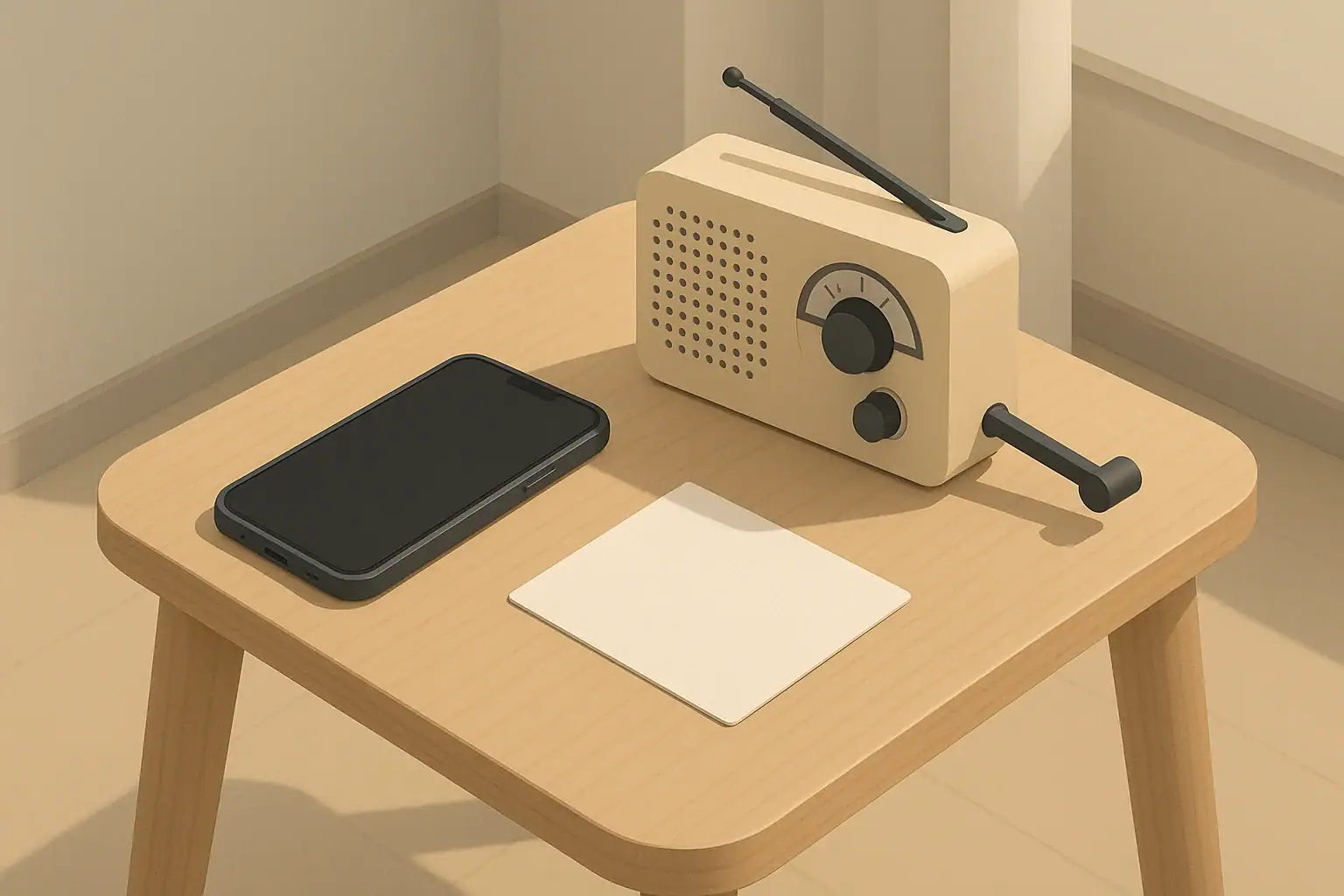
Most people rely on their phones for every kind of communication. In everyday life, that works well. But during storms, wildfires, heatwaves, or local outages, phone networks and internet can slow down, fail, or be overwhelmed. That is when a simple printed neighborhood contact sheet becomes useful.
A neighborhood contact sheet is a one- or two-page list of people and places you might need to reach quickly. It focuses on your immediate area: neighbors, building management, local services, and key personal contacts. Because it is printed, you can use it when:
- Cell service is spotty or calls are dropping
- Power is out and devices are low on battery
- Your phone is lost, broken, or not available
- Someone else in your home needs to make calls or ask for help
This is not about expecting a major disaster. It is about having a calm, simple backup for everyday disruptions: a winter storm, a strong thunderstorm, a localized power outage, or a heatwave that stresses the grid.
Why a Printed Neighborhood Contact Sheet Still Matters
The goal is to keep the contact sheet short enough that you will actually use it, but complete enough that you are not searching for missing information during a stressful moment. Think about the people you would reasonably call in a power outage, water interruption, building issue, or short-term emergency.
Who to Include on Your Neighborhood Contact Sheet
The goal is to keep the contact sheet short enough that you will actually use it, but complete enough that you are not searching for missing information during a stressful moment. Think about the people you would reasonably call in a power outage, water interruption, building issue, or short-term emergency.
Essential Household and Family Contacts
Start with the people connected to your household. These are the contacts you may need to reach if your phone is unavailable, or if someone else in your home is making the calls.
- Household members (each adult and older child)
- Close family or friends who live nearby
- Primary out-of-area contact (a relative or friend in another region)
- Work numbers for adults (main office and manager or supervisor)
- School or daycare contacts for children
Include both mobile and any useful landline numbers. If someone has a landline that usually works when the power is out, that may be a particularly helpful backup contact.
Neighbors and Building Contacts
Neighbors are often the fastest source of help or information. A printed neighborhood list makes it easier to coordinate, especially if you live in an apartment building or close-knit block.
- Immediate neighbors on each side (and above/below in apartments)
- Trusted neighbors who are often home
- Neighbors with mobility challenges or medical devices that need power (for checking in, not for medical decisions)
- Neighbors with pets who may need help if they are away
- Informal neighborhood lead or block captain, if your area has one
For apartments and condos, add building or property-related contacts:
- Property manager or landlord
- Building superintendent or maintenance line
- Front desk or security, if available
- Homeowners’ association or building association line, if relevant
Local Services and Practical Help
Next, include local contacts that are directly useful in common disruptions. Focus on non-emergency numbers and practical services.
- Local non-emergency police line
- Local non-emergency fire department line
- City or county information line, if your area has one
- Electric utility outage and reporting line
- Water utility customer service and outage line
- Property insurance agent or claims line
- Veterinarian and 24-hour animal emergency clinic for pets
Emergency numbers should be obvious and easy to find. Many people choose to print them at the top of the sheet in large text. Even though most people know the national emergency number, having it written clearly helps guests, children, and seniors in your home.
| Item | Why it matters | Notes |
|---|---|---|
| Household member numbers | Allows anyone in the home to reach each other | Include work and school numbers if useful |
| Out-of-area contact | Alternate relay point if local phones are busy | Choose someone unlikely to be affected by local outages |
| Immediate neighbors | Quick help for checks, information, or sharing resources | Note apartment numbers or unit locations |
| Building or landlord contact | Handles issues like plumbing, power to common areas | List both regular hours and after-hours numbers |
| Utility outage lines | Report problems and get estimated restoration updates | Include electricity, gas if applicable, and water services |
| Pet-related contacts | Helps manage care if you are delayed or away | List vet, pet sitter, and emergency animal clinic |
| Meeting point description | Gives everyone a shared place to regroup offline | Use a simple, nearby, and familiar location |
Designing a Contact Sheet You Will Actually Use
A good contact sheet is easy to read at a glance, clear enough for kids and guests, and compact enough to tape on a wall or fridge. You do not need special software. A simple document or handwritten list works fine.
Prioritize Readability Over Detail
In stressful moments, smaller details are less important than clear, obvious information. Design with that in mind.
- Use large, plain fonts or clear handwriting.
- Group numbers into sections: household, neighbors, building, services.
- Highlight the most critical contacts at the top.
- Avoid clutter and long notes; keep explanations brief.
If you like, you can create two levels of detail:
- A one-page quick reference with only the most important numbers.
- A second page with more detailed notes and secondary contacts.
Make It Easy for Kids, Guests, and Seniors
Design the sheet so that anyone in your home can follow it without your help.
- Use simple language for labels like “neighbor across hall” or “grandparent.”
- Put the home address on the sheet so anyone can read it aloud if needed.
- For children old enough to call, mark which numbers they should use first.
- For seniors, avoid small print and low-contrast colors.
Some families use color or symbols to distinguish types of contacts. If you do, keep the system simple and consistent. For example, one color for family and one for local services.
Paper, Lamination, and Backups
The printed sheet should handle a little wear and tear. You can keep it simple or slightly more durable, depending on your home.
- Print on regular paper and use a plastic sleeve or page protector.
- Lamination is a good option if the sheet is near a sink or entryway.
- Use pencil or erasable ink for numbers you expect to change often.
Make a few copies and place them where they are most likely to be used:
- On the refrigerator or a kitchen wall
- Near your main landline, if you have one
- Inside a small home emergency folder with key documents
- In your stay-at-home kit or go-bag, if you maintain one
How to Keep Contact Information Current
A contact sheet is only as useful as it is accurate. People move, change numbers, or shift jobs. A simple habit of updating your sheet keeps it reliable when you need it.
Set a Simple Update Schedule
Instead of trying to remember continuously, tie updates to other routine tasks. For example, review your contact sheet when you:
- Change clocks for daylight saving time, if your area observes it
- Pay yearly insurance or renew a lease
- Do seasonal checks for heating or cooling systems
During each review, quickly verify that the major numbers still work. You do not need to call every contact. Checking a few key lines and adjusting obvious changes is enough for most homes.
Coordinate With Neighbors Without Pressure
Not everyone wants to share phone numbers or personal details, and that is fine. Approach neighbors with a low-pressure, practical focus: coordinating for simple situations like power outages or package deliveries.
- Offer your number first and explain your purpose briefly.
- Accept that some neighbors may only want to share a first name and one number.
- Respect privacy; do not publish other people’s information widely.
- If someone prefers not to share, you can still note “friendly neighbor” without a number as a reminder to check in in person.
If your building or neighborhood already has a group chat or notice board, you can use that to ask who would like to be on a simple printed list for emergencies. Participation should always be optional.
Using a Contact Sheet When Phones Are Busy
In many regional events, such as winter storms, hurricanes, or large public gatherings, phone networks can be congested. Calls may not go through, or messages may be delayed. Your printed sheet helps you follow a calm plan instead of trying numbers at random.
Establish a Calling Order
Before you ever need it, decide the rough order of whom to contact and how. That way, you conserve time and battery during an outage or disruption.
- First: household members and nearby family to confirm safety and plans.
- Second: an out-of-area contact to share brief updates.
- Third: key neighbors to coordinate basic needs or share information.
- Fourth: utilities or building contacts for outage or damage reports.
Make a note on the sheet: keep calls short, share only essential information, and agree on when to check back in. This reduces network strain and helps everyone stay reachable.
Combine Phone, Text, and In-Person Contact
If networks are overloaded, some methods may work better than others. Your sheet supports multiple approaches.
- Try text messages if calls are failing; they may go through when voice does not.
- Use landlines if available; they can behave differently than mobile networks.
- If it is safe, check on immediate neighbors in person to share information.
- Post brief written notes on a community board or at a neighbor’s door if needed.
Your contact sheet can include a short reminder of your primary meeting point if communication fails, such as a nearby park, community center, or well-known corner. Keep this location realistic and easy to reach on foot.
Apartment, House, and Special Situations
The basic idea of a neighborhood contact sheet is the same for every type of home, but the details can vary based on where and how you live.
If You Live in an Apartment or Condo
In multi-unit buildings, you share systems and spaces with many other residents. Your sheet should emphasize building-specific contacts and close neighbors.
- List the exact building address, floor, and unit number.
- Include building entry instructions you are comfortable sharing, if relevant.
- List neighbors on your floor and those directly above and below you.
- Add your building’s preferred maintenance request method if it is by phone.
In taller buildings, elevators, shared stairwells, and fire alarms can be affected by local incidents. Knowing whom to call about building systems can reduce confusion when many people are unsure what is happening.
If You Live in a House
In a single-family home, you are more directly responsible for your property’s systems. Your sheet should emphasize utility contacts and nearby households.
- List neighbors on each side and across the street.
- Note any neighbors with tools or practical skills they are comfortable sharing, such as snow removal or basic plumbing.
- Include your preferred local contractor or handyman number if you rely on one.
- Add regional information numbers for weather, road conditions, or local alerts if available.
For neighborhoods with seasonal issues (such as winter storms, flooding, or wildfire smoke), you can also note which neighbors plan to stay or leave in particular scenarios, if they choose to share that information. This can help coordinate check-ins and pet or home care.
Households With Kids, Pets, or Seniors
Some households have additional needs during outages or disruptions. A contact sheet can make support easier to organize.
- Kids: Include backup pick-up contacts authorized at school or daycare, and note who can watch children briefly if you are delayed.
- Pets: List neighbors or local friends who can feed or walk pets if you cannot get home, along with your vet and any pet boarding options you trust.
- Seniors: Add nearby friends, relatives, or neighbors who have agreed to check in, especially if someone uses powered mobility aids or home medical equipment.
Rather than focusing on rare events, tailor the sheet to everyday possibilities: traffic delays, short-term power loss, or weather that makes travel slower and more difficult.
Storing and Sharing Your Contact Sheet Safely
Because your sheet includes personal information, think about both accessibility and privacy. You want it available in a hurry, but not widely exposed.
Where to Keep Copies at Home
Most people keep one visible copy and one stored copy.
- Visible copy: Fridge, kitchen wall, or near a main phone.
- Stored copy: Home readiness folder, fire-resistant document box, or a stay-at-home kit.
If you maintain a go-bag for potential evacuation, consider including a folded copy there as well. A simplified version with only the most critical numbers is usually enough.
Balancing Privacy and Usefulness
Only include as much detail as you are comfortable having in plain view. You can keep some information on a second, less visible page if needed.
- Use first names and simple labels (“Neighbor across hall”) instead of full names, if you prefer.
- Avoid writing sensitive details, such as schedules or when people are usually away.
- If you share the sheet with neighbors, remove any information that is not yours to share.
Some people choose to keep any sensitive numbers only in their phones and reserve the printed sheet for essentials. You can adjust the balance depending on your home and comfort level.
Linking Contacts to a Simple Communication Plan
A contact sheet works best when it is part of a basic communication plan. This does not need to be complicated. A few written notes can help everyone in your home know what to do if phones are unreliable or if you are not together.
Define an Out-of-Area Contact
An out-of-area contact lives far enough away that local outages are unlikely to affect them at the same time. In many situations, it can be easier for each household member to send a short update to that person, rather than trying to call each other directly when networks are busy.
- Ask the person if they are comfortable being your relay contact.
- Write their number near the top of the sheet.
- Agree on simple message formats, such as “Safe at home, power out, will check in again in 2 hours.”
Choose Meeting Points and Check-In Times
Phones make it easy to coordinate on the fly, but if they are not working well, a few pre-decided habits help.
- Identify one primary meeting point near home (such as a specific corner or landmark).
- Choose a backup point slightly farther away in case the first is not accessible.
- Write a brief reminder on the contact sheet.
- Agree on rough check-in times during outages, such as every few hours.
These notes help reduce uncertainty and repeated calls during events like winter storms, strong winds that cause power lines to fail, or localized flooding that disrupts travel.
| Who to contact | Primary method | Fallback method | Meeting point note |
|---|---|---|---|
| Household members | Text message if available | Short phone call or landline if possible | “If not reachable, go home or primary meeting spot.” |
| Out-of-area contact | Single brief call or text | Ask another relative to pass along the same update | “They share updates between family if local phones are busy.” |
| Immediate neighbors | In-person knock if safe | Phone or text when network calms down | “Agree on checking in at a hallway or courtyard spot.” |
| Building or landlord | Call maintenance or office line | Leave a short voicemail or send a brief text if allowed | “Follow posted instructions for building lobby or office.” |
| Utilities | Use outage reporting line | Call back later instead of repeatedly | “Share estimated restoration time with neighbors.” |
| Child’s school or daycare | Main office phone | Check official notices when available | “Follow school’s stated reunification or pick-up plan.” |
Keeping It Simple and Sustainable
A printed neighborhood contact sheet is a small, practical step that fits into everyday life. It does not require special equipment or a large time investment. Once created, it asks only for the occasional update and a quick explanation to household members.
By focusing on clarity, realistic scenarios, and calm communication, your sheet can help you and your neighbors stay connected during common disruptions like power outages, winter storms, or local infrastructure issues. Over time, it can also support stronger neighborhood ties, making it easier to share information and look out for one another when routine is briefly interrupted.
Authoritative sources
Safety recommendations can change. Confirm critical details with current official guidance and local authorities.
- USDA FSIS: Keep Food Safe During Emergencies
- U.S. CPSC: Battery Safety
- CDC: Guidelines for Cleaning Safely After a Disaster
Frequently asked questions
What essential details should a printed neighborhood contact sheet include?
A practical printed neighborhood contact sheet should list household member names and both mobile and landline numbers, your full home address, an out-of-area contact, key neighbors or building contacts, and utility outage lines. Include emergency numbers and a simple meeting point. Keep the top of the sheet for the most critical numbers so they are easy to find at a glance.
How should I format the sheet so it’s quick to use during an outage?
Format the sheet with clear section headings (household, neighbors, building, utilities), use large plain fonts or legible handwriting, and highlight emergency contacts at the top. A single-page quick reference for critical numbers and an optional second page with more details work well. Grouping similar contacts together reduces time spent searching when networks are busy.
How can I share a printed neighborhood contact sheet without violating neighbors’ privacy?
Ask neighbors for consent before including their details, and only publish the information they agree to share. Use first names or simple labels (for example, “neighbor across hall”) and avoid posting sensitive schedules or personal notes. If you distribute copies, remove or omit any contact information that others did not authorize you to share.
How often should I update my printed neighborhood contact sheet?
Review and update the sheet at predictable times, such as when you change clocks for daylight saving time, renew insurance or a lease, or perform seasonal home checks. During each review, verify a few key lines rather than calling every contact. Replace or reprint the sheet when several entries have changed to keep it reliable.
Where are the best places to keep copies of a printed neighborhood contact sheet?
Keep one visible copy on the refrigerator or a kitchen wall and a stored copy in a home readiness folder, fire-resistant box, or go-bag. Consider laminating or using a plastic sleeve for durability and placing a copy near any main landline. A simplified folded version in a go-bag is useful for evacuations or when you leave home quickly.
- Simple checklists and realistic planning
- Water, power, lighting, and pantry basics
- Family plans (kids, pets, seniors) and seasonal prep
Affiliate disclosure
As an Amazon Associate, we earn from qualifying purchases. Some links on this site may be affiliate links. If you buy through these links, we may earn a small commission at no extra cost to you. This helps support our content. Learn more.