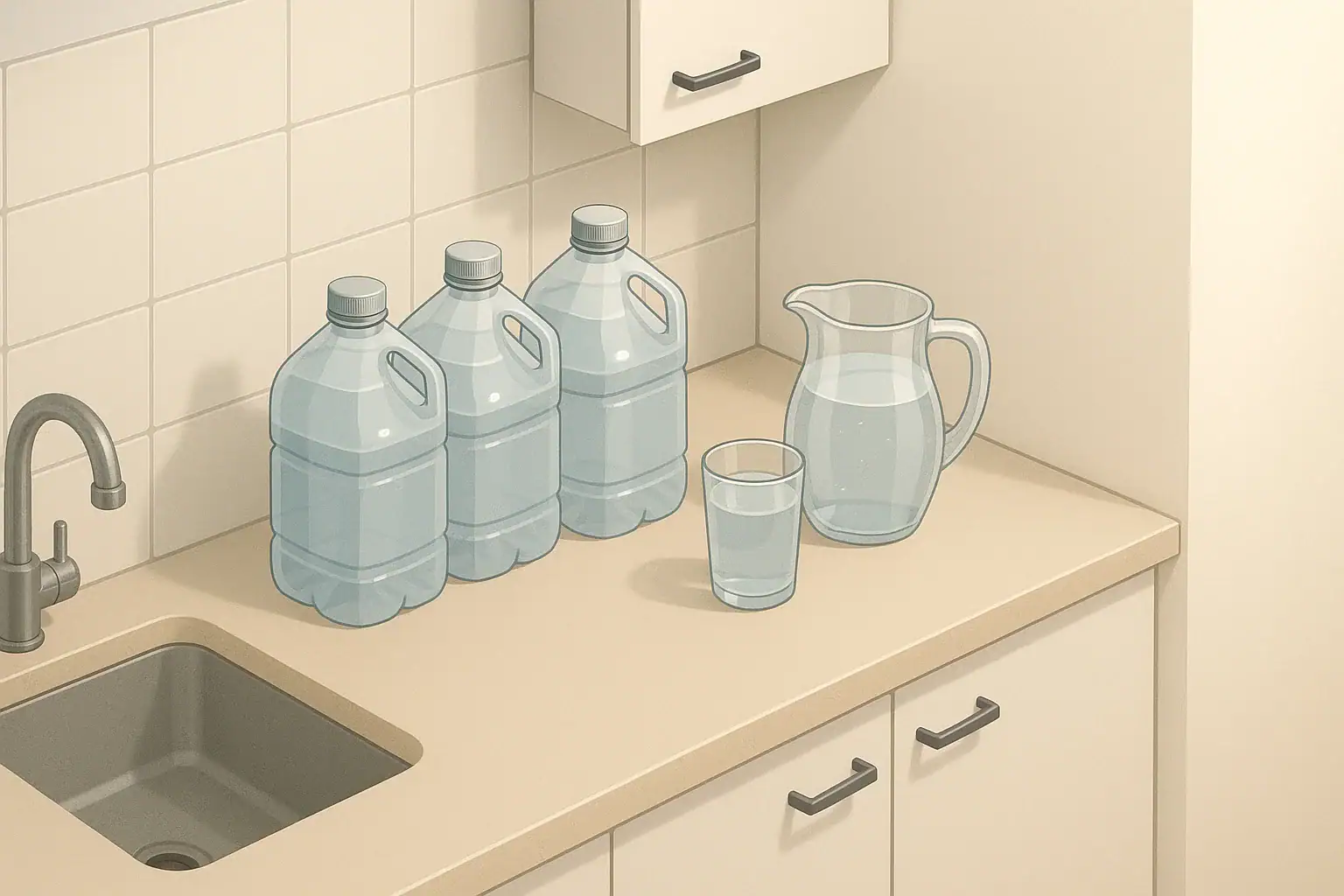
Why Tap Water Can Taste Worse During Emergencies
During a short-term emergency, you may still have running tap water, but it can smell or taste different than usual. This is common during power outages, heavy storms, or brief treatment disruptions.
Some reasons emergency tap water can taste or smell off include:
- Higher chlorine smell: Utilities may adjust disinfection levels during disturbances.
- Stale or low-flow pipes: Water sitting in pipes can pick up metallic or musty flavors.
- Temperature changes: Very cold or warm water can highlight existing tastes.
- Mineral content: Natural minerals can become more noticeable when you are stressed or drinking more water than usual.
This article focuses on making treated tap water taste better in realistic, short-term emergencies. If you are ever told your tap water is not safe to drink unless boiled or treated, follow official guidance first. Improving taste comes after safety.
First Priority: Make Sure Water Is Safe Enough to Drink
Before you focus on flavor, consider basic safety. Taste, smell, or appearance alone cannot tell you if water is safe, but they can help you decide when to be cautious.
Simple safety checks before improving taste
- Check local alerts: Listen to local news, radio, or emergency alerts for boil water advisories or other notices.
- Look and smell: If water is unusually cloudy, colored, oily, or has a strong chemical odor, avoid drinking it until you have more information.
- Use stored water if available: If you have clean stored water, use that first for drinking and cooking.
Basic emergency treatment steps
If officials advise treating your tap water and you cannot use a home filter that is designed for that situation, common emergency steps include:
- Boiling: Bring water to a rolling boil for at least one minute (longer at high elevations is commonly recommended) and let it cool.
- Disinfection tablets or drops: Use according to the package directions, if you have them in a kit.
- Simple straining: If water has visible particles, let it settle and pour off the clearer water, or strain it through a clean cloth before any other treatment.
Once water is as safe as you can reasonably make it under the circumstances, then it makes sense to work on taste so everyone in your home will actually drink enough.
Example values for illustration.
| Step | Why it matters | Notes |
|---|---|---|
| Check local advisories | Avoid drinking unsafe tap water | Radio or phone alerts if available |
| Inspect water appearance | Notice major changes quickly | Look for cloudiness or unusual color |
| Use stored water first | Relies on known clean supply | Rotate stored water regularly |
| Boil if advised | Common emergency treatment method | Let cool in a covered container |
| Disinfect if needed | Backup if boiling is not practical | Follow product directions carefully |
| Improve taste last | Safety first, then comfort | Use simple kitchen methods |
Simple Ways to Make Tap Water Taste Better
Once water is safe to drink, small changes can make it more pleasant, especially for kids, seniors, and anyone already under stress. Most methods use everyday items you may already have in your kitchen.
1. Let water sit so chlorine taste can fade
A common complaint in emergencies is strong chlorine smell or taste. Often, this is just the disinfectant doing its job.
You can reduce this taste by:
- Filling a clean, uncovered container with tap water.
- Letting it sit for several hours in the refrigerator or on a clean counter.
- Covering it once the smell has faded to keep it clean.
Cooler water generally tastes better, so refrigeration helps both flavor and smell.
2. Improve temperature for better flavor
Temperature makes a big difference in how water tastes. In many emergencies, your tap water might be lukewarm or much colder than usual. You can:
- Chill water: Store treated tap water in the refrigerator in covered pitchers or bottles.
- Avoid ice if quality is uncertain: If you are unsure about the water used to make your ice, use chilled water without ice cubes.
- Warm water gently: Some people prefer slightly warm or room-temperature water, which can feel easier to drink when stressed.
3. Use simple flavor add-ins you already have
Basic kitchen items can make emergency drinking water more appealing without depending on special products.
Possible flavor additions include:
- Plain citrus slices: Thin slices of lemon, lime, or orange (fresh or frozen) can soften strong tap flavors.
- Cucumber slices: A few slices in a pitcher can add a mild, refreshing taste.
- Herbs: A small amount of clean mint, basil, or similar herbs can provide a light flavor in warm weather.
- Very diluted juice: A splash of shelf-stable juice in a glass of water can encourage kids and reluctant drinkers to stay hydrated.
In an emergency, use perishable items wisely. If your refrigerator power is out, use fruit and fresh herbs early, before pantry foods.
4. Stir or shake to mix and aerate
Water that has been sitting in pipes or containers can taste flat. Adding air back in can improve the taste.
- Pour water back and forth between two clean containers a few times.
- Stir vigorously with a clean spoon.
- Close a bottle tightly and shake gently, then let any bubbles settle.
This simple aeration can make water taste fresher, especially after boiling.
5. Use simple sweet or savory mixes (if appropriate)
Some households like lightly flavored drinks during stressful times. If you already use powdered drink mixes or broths, they can help mask flavor changes in your water.
- Powdered drink mixes: Use them lightly so they do not add too much sugar.
- Light broths: Warm water with a small amount of bouillon or broth powder can be comforting in cold-weather outages.
These options are not necessary for everyone, but they can make it easier to drink enough fluids, especially for picky drinkers.
Kitchen Tools That Help With Water Taste
You may already have tools that improve taste in everyday life. During an emergency, they can still be helpful if you have access to tap water.
Pitchers and basic strainers
Even without specialized filters, simple kitchen tools can improve water appearance and feel:
- Pitchers with lids: Help water chill, protect it from dust, and allow chlorine smell to fade before covering.
- Fine-mesh strainers or clean cloths: Can remove visible particles if you see small bits in your water.
- Wide-mouth jars: Make it easy to see and smell the water before serving.
Home filters you may already use
Many households use faucet-mounted filters, water filter pitchers, or under-sink units. In a short-term emergency, some of these can still help with taste, as long as:
- The manufacturer’s guidance says they are suitable for your tap water conditions.
- You have replacement cartridges stored in advance.
- You do not use them on water that is cloudy, contaminated, or under a “do not use” order unless allowed by official instructions.
If in doubt, treat the water for safety first (such as boiling if advised), then run cooled water through your usual taste-improving filter, if recommended by the product directions.
Containers for apartments and small spaces
If you live in an apartment or small home, storage space is limited. A few compact options can help make tap water taste better and stay appealing:
- Stackable pitchers or bottles: Allow you to cool several liters at once in the refrigerator.
- Reusable bottles with lids: Help each family member keep track of their drinking water.
- Collapsible containers: When not in use, they fold away but can hold extra tap water if outages are possible.
Making Water More Appealing for Different Household Members
Not everyone in a household has the same needs. A few simple adjustments can make tap water more acceptable for kids, seniors, and pets, while keeping things practical during a disruption.
Kids and teens
Children may be wary of water that tastes or smells different. To make it more appealing:
- Serve water in familiar cups or bottles they already like.
- Add a very small amount of juice or flavoring to encourage drinking.
- Offer chilled water when possible, which many kids prefer.
- Let older kids help prepare “special” water with safe add-ins like citrus slices.
Seniors and people with sensitive taste
Taste and smell changes can be stronger for older adults or anyone with a sensitive palate. In emergencies, they may drink less if water tastes off.
- Try different temperatures: some may prefer slightly warm or room-temperature water.
- Test mild flavor additions like cucumber or diluted juice.
- Use small cups and encourage frequent sips instead of large glasses.
- Label containers with the day and time filled to help track freshness.
Pets
Pets also notice changes in water taste and smell. For most short-term emergencies:
- Offer pets the same treated tap water you drink, without flavorings.
- Use clean bowls and refresh water regularly, especially in hot weather.
- If your pet refuses water with a strong smell, try letting it sit uncovered for a while so odors can fade, then cover the bowl.
If you have concerns about a pet drinking less than usual, consider contacting a veterinarian when possible for guidance.
Planning Ahead: Store Better-Tasting Water Before You Need It
The easiest way to avoid poor-tasting tap water in an emergency is to store some water in advance under normal conditions. That way, you can blend stored water with tap water or rely on stored supplies for drinking and use tap water for washing and cleaning.
Simple home water storage habits
You do not need a lot of space or specialized gear to build a small water buffer.
- Reuse safe containers: Thoroughly clean food-safe bottles and containers before filling with tap water.
- Label and date: Mark containers with the fill date so you know when to use or rotate them.
- Store in cool, dark places: Keep water away from direct sunlight and household chemicals.
- Rotate periodically: Use stored water for cooking or plants, then refill with fresh tap water.
Balancing stored water and tap water during an event
In many real-world situations, you will have some running water plus a small supply of stored water. You can use both strategically:
- Reserve the best-tasting stored water for direct drinking.
- Use tap water (treated if needed) for cooking, dishwashing, and handwashing.
- If tap water tastes unpleasant but is considered safe, mix it with stored water to dilute flavors.
Example values for illustration.
| People and pets | Days | Storage approach | Rotation reminder idea |
|---|---|---|---|
| 1 adult in apartment | 3 | Several reusable bottles in cupboard | Rotate at start of each season |
| 2 adults, 1 child | 3 | Mix of jugs and pitchers in closet | Rotate on daylight saving time change |
| Family with pets | 3–5 | Stackable containers in cool corner | Rotate on birthdays or holidays |
| Shared apartment household | 3 | Each person keeps a labeled bottle set | Rotate on rent payment day |
| Senior living alone | 3 | Lightweight smaller containers | Rotate during routine appointments |
| Home with limited space | 2–3 | Under-bed or closet bin storage | Rotate when changing linens |
Keeping Your Water Routine Calm and Practical
Making tap water taste better in an emergency does not require specialized gear or complicated steps. With a few simple habits—chilling, aerating, lightly flavoring, and storing a modest amount in advance—you can help your household stay more comfortable and more likely to drink enough, even when the situation is not ideal.
By planning small, realistic steps for your living space, whether it is an apartment or a house, you can keep your water routine steady and manageable during short-term disruptions.
Frequently asked questions
How long should I let tap water sit to reduce the chlorine taste?
Let clean tap water sit uncovered for several hours—often 4 to 24 hours—so chlorine and other volatile odors can dissipate. Storing the container in the refrigerator speeds this process and helps the water taste better; cover it once the smell has faded to keep it clean.
Can I use my home water filter during an emergency to improve taste and safety?
Some home filters improve taste but are not designed to make seriously contaminated water safe. Always follow official advisories first (for example, boiling or using approved disinfection). After treating water for safety as recommended, you can use a taste-improving filter if the manufacturer permits it for treated or clarified water.
Is it safe to add citrus slices or juice to tap water during a boil-water advisory?
Only use citrus, juice, or other flavorings if the water has already been made safe (for example, boiled or treated according to guidance) or if you are using stored safe water. Adding flavorings does not disinfect water and should not be used as a substitute for official treatment instructions.
What is the easiest way to aerate water that tastes flat after boiling?
A simple method is to pour water back and forth between two clean containers several times, stir vigorously with a clean spoon, or shake it briefly in a closed bottle and let bubbles settle. Aeration releases dissolved gases and can restore a fresher taste, especially after boiling.
How should I store water ahead of time so it tastes better in an emergency?
Use thoroughly cleaned food-safe containers, label them with the fill date, and store them in a cool, dark place away from chemicals and direct sunlight. Rotate stored water periodically and refrigerate some if you want chilled, better-tasting drinking water during an event.
Recommended next:
- Water Storage Guide: How Much You Need, Where to Put It, and How to Rotate
- Water Storage Calculator: People × Days (Plus a Pet Add-On)
- Best Water Containers for Home Storage: Materials, Sizes, and Caps
- Storing Water in Small Spaces: Apartment and Closet-Friendly Options
- Water Rotation Schedule: A Simple FIFO System Anyone Can Follow
- How to Clean and Sanitize Water Containers Safely
- More in Water Readiness →
- Simple checklists and realistic planning
- Water, power, lighting, and pantry basics
- Family plans (kids, pets, seniors) and seasonal prep
How to Transport Water Safely: Car, Stairs, and Heavy Containers
Rainwater for Emergency Use: Practical Limits and Safety Basics
Emergency Household Water Sources: What’s Safe to Use and What’s Not
Storing Water in Heat or Freezing Conditions: What Changes
Emergency Water for Pets: How Much to Store and How to Serve It
Boil Water Advisories: What to Do at Home (Simple Guide)