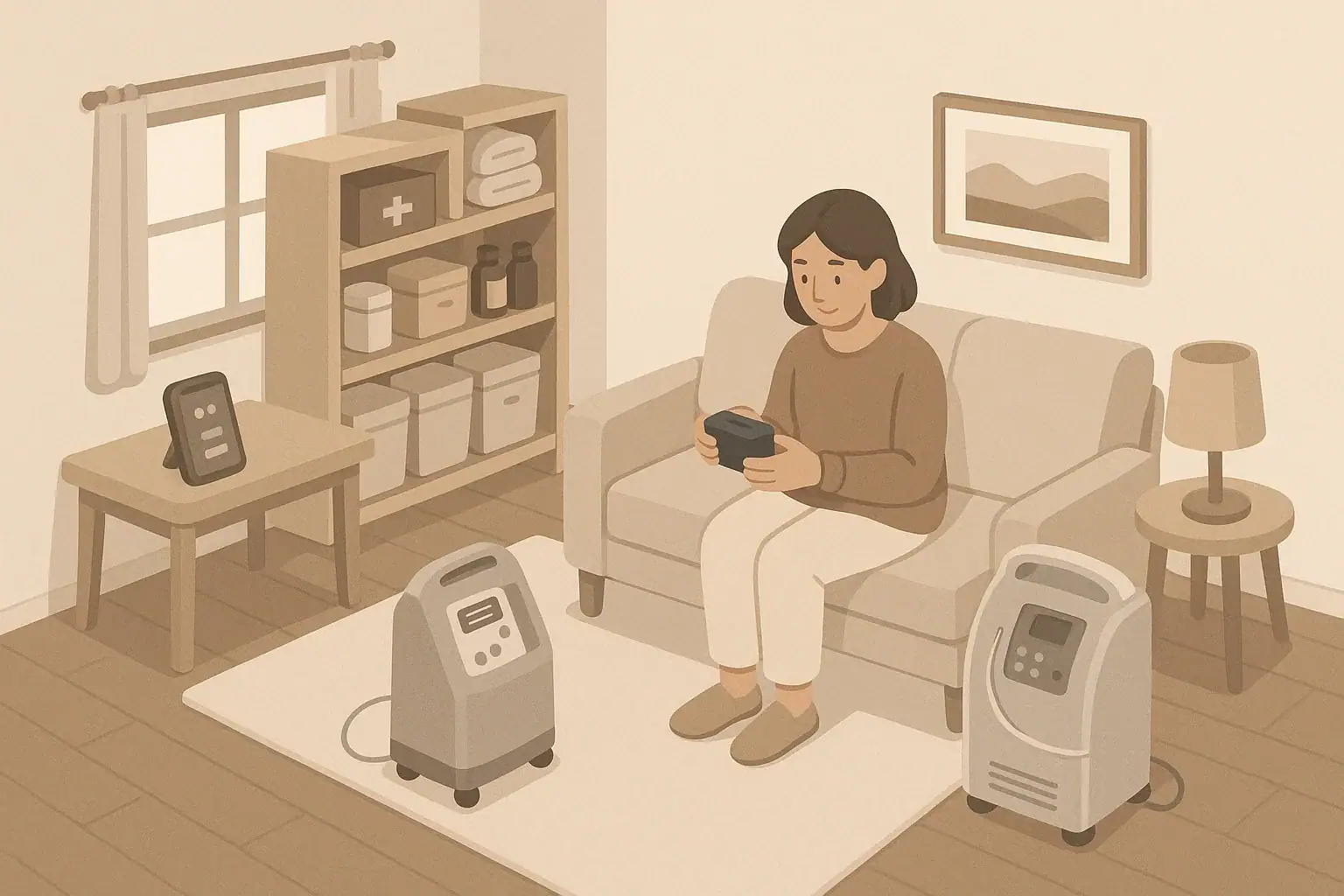
Why you need a home backup plan for medical devices
If you or someone in your home relies on medical equipment, a short power outage or supply delay can quickly become serious. A simple backup plan helps you keep devices running, know who to call, and stretch supplies safely until normal service returns.
This guide walks through three main pieces of a home backup plan:
- Power options for medical devices during an outage
- Emergency contacts and information you should keep handy
- Extra supplies and medications to keep on hand
Always follow the instructions from your device manufacturer and your healthcare team first. If their guidance conflicts with anything here, their directions take priority.
Step 1: List your medical devices and what they need
Start by making a simple list of every device and supply you depend on at home. This helps you decide what to back up and for how long.
Make a device and supply inventory
- Life-sustaining devices: oxygen concentrators, ventilators, feeding pumps, dialysis equipment, insulin pumps, powered wheelchairs, suction machines, etc.
- Monitoring devices: blood glucose meters, blood pressure cuffs, pulse oximeters, thermometers, etc.
- Support equipment: nebulizers, CPAP/BiPAP machines, lift chairs, hospital beds, refrigeration for medications, etc.
- Critical supplies: medications, oxygen tanks, tubing, dressings, catheters, incontinence supplies, syringes, batteries, and cleaning supplies.
For each device, write down:
- Device name and model
- Whether it is life-sustaining or supportive
- How it is powered (wall outlet, internal battery, disposable batteries, oxygen tank, etc.)
- How long it can safely run without power or refills
- Any backup options the manufacturer recommends
Keep this list with your emergency documents and share it with family or caregivers.
Step 2: Plan for power during outages
Power planning starts with your most critical devices. The goal is not to run your whole home, but to safely keep essential equipment going long enough to get help or move to a safer location.
Know your device’s built-in backup options
Check the user manual or talk with your equipment provider about:
- Internal batteries: how long a full charge usually lasts and how to check the battery level
- External battery packs: whether they are available and how to use them safely
- Alternative versions: for example, oxygen tanks instead of a concentrator, or manual options your clinician approves
Ask your healthcare provider or durable medical equipment company what they recommend for outages and how long it is safe to be without power for each device.
Use safe backup power sources
Some households use backup power for medical devices, such as:
- Portable power stations or battery packs designed for home use
- Uninterruptible power supplies (UPS) for short-term bridging during brief outages
- Home generators installed and maintained by qualified professionals
Backup power options have important safety limits. Follow the manufacturer’s instructions for both the medical device and the power source. For general generator safety, see the U.S. Consumer Product Safety Commission guidance on portable generator safety and carbon monoxide risks.
If you use any fuel-powered generator:
- Never run it inside your home, garage, or enclosed space, even with doors or windows open.
- Place it outdoors, far from windows, doors, and vents.
- Use battery-operated or hardwired carbon monoxide alarms as recommended by local codes.
If you are unsure whether a backup power option is appropriate for your device, ask your healthcare provider or equipment supplier before buying or using it.
Plan for refrigerated medications
Some medications, such as certain insulins or biologic drugs, need refrigeration. Ask your pharmacist or prescriber:
- How long the medication can safely stay at room temperature
- Whether temporary storage in a cooler with ice packs is acceptable
- What signs mean the medication should not be used
For general medication storage and emergency guidance, you can review the U.S. Food and Drug Administration’s information on safe handling and disposal of medicines, and ask your own clinician for advice specific to your prescriptions.
Know when to leave home
Your plan should include a clear point at which staying home is no longer safe. For example:
- Your device batteries are nearly empty and you have no safe way to recharge them
- Your oxygen tanks or other life-sustaining supplies are running low
- Your home is too hot or cold for your medical condition
Ask your healthcare provider what signs mean you should go to a hospital, dialysis center, or other facility. Follow any evacuation or shelter guidance from local emergency management.
Step 3: Build a medical contact and information sheet
In an emergency, you may not be the one speaking for yourself. A simple one-page sheet can help first responders, family, or shelter staff understand what you need.
What to include
Create a document (printed and digital) with:
- Your name, date of birth, and address
- Primary diagnosis and key medical conditions
- List of critical devices and what they do (for example, “oxygen concentrator – continuous use”)
- Current medications, doses, and schedules
- Allergies and important warnings (for example, “allergic to penicillin”)
- Primary care provider and specialists with phone numbers
- Home health agency or medical equipment supplier with 24-hour number
- Emergency contacts (family, neighbors, caregivers) and how they can help
- Preferred hospital or clinic, if applicable
Keep copies:
- On the refrigerator or another obvious spot for first responders
- In your go-bag or near the front door
- On your phone and shared with a trusted contact
The U.S. Federal Emergency Management Agency offers general planning tips for people with disabilities and medical needs in its guidance on emergency planning for people with disabilities. Use that as a starting point and adapt it to your situation.
Step 4: Stock extra medical supplies safely
Supply interruptions can happen during storms, shipping delays, or local emergencies. Having a modest buffer of critical items can reduce stress and risk.
Work with your healthcare team
Before building up extra supplies, talk with your doctor, pharmacist, or home health nurse about:
- Which medications and supplies are truly critical
- How much extra is reasonable and allowed by your insurance or local rules
- How to store each item safely (temperature, light, moisture, expiration dates)
Do not change medication doses or schedules to “stretch” your supply unless your prescriber specifically tells you to.
Types of supplies to consider
- Prescription medications you cannot safely miss
- Over-the-counter items your clinician recommends you keep (for example, pain relievers, rehydration solutions, or wound care supplies)
- Device-specific items: tubing, filters, masks, batteries, test strips, lancets, dressings, syringes, catheters, ostomy supplies
- Cleaning and disinfection supplies approved for your equipment
Store supplies in a cool, dry place away from children and pets. Check expiration dates regularly and rotate older items to the front so you use them first.
Step 5: Coordinate with utilities and local services
Some utility companies and local agencies keep lists of customers who rely on life-sustaining medical equipment at home. These programs vary by area, but may offer:
- Priority notifications about planned outages
- Information about local charging stations or cooling/warming centers during emergencies
- Guidance on how to prepare for seasonal hazards in your region
Contact your electric company and local emergency management office to ask whether they have a medical needs registry or similar program. Registration usually does not guarantee power restoration, but it can help them understand community needs.
Step 6: Practice and review your plan
A plan works best when everyone in the home understands it and it stays up to date.
- Walk through what you would do in a short outage (for example, 2–4 hours) and a longer one (for example, 24 hours or more).
- Show family or caregivers how to safely turn devices on and off, change batteries, and connect to backup power if appropriate.
- Review your plan at least once a year, or whenever your medical needs or equipment change.
- Update your contact sheet and supply list after hospital stays, new diagnoses, or medication changes.
If you feel overwhelmed, ask your healthcare provider, social worker, or home health agency whether they can help you organize or review your plan.
Frequently asked questions
How much backup power time should I plan for my medical devices?
The right amount of backup time depends on your device and your local risks. Some people plan for a few hours; others aim for a day or more. Ask your healthcare provider and equipment supplier what is realistic and safe for your specific device, and how often extended outages happen in your area. They can help you decide whether to focus on short-term battery backup, a plan to relocate, or both.
Can I use a car inverter to power my medical device during an outage?
Some devices may technically run from a car inverter, but this is not always safe or recommended. Inverters can provide unstable power, and running a car in an enclosed space is dangerous because of carbon monoxide. Before using an inverter, ask your device manufacturer or equipment supplier if your specific model is approved for that type of power. If they do not clearly approve it, do not rely on it as your main backup.
What if my insurance limits how many extra supplies I can get?
Insurance rules can make it hard to build a large backup supply. Focus first on a small buffer of your most critical items. Ask your prescriber or social worker whether they can help with prior authorizations, exceptions, or patient assistance programs. In some declared emergencies, insurers and pharmacies may temporarily relax refill limits; follow announcements from your local authorities and health department.
Who should I call first if my medical device stops working during an outage?
If you are in immediate distress or feel unsafe, call emergency services right away. If you are stable but your device is not working, contact your medical equipment supplier’s emergency line and your healthcare provider for instructions. They can help you decide whether to go to a hospital, use backup equipment, or adjust your care temporarily. Follow any directions from local emergency management and first responders.
- Simple checklists and realistic planning
- Water, power, lighting, and pantry basics
- Family plans (kids, pets, seniors) and seasonal prep
Affiliate disclosure
As an Amazon Associate, we earn from qualifying purchases. Some links on this site may be affiliate links. If you buy through these links, we may earn a small commission at no extra cost to you. This helps support our content. Learn more.