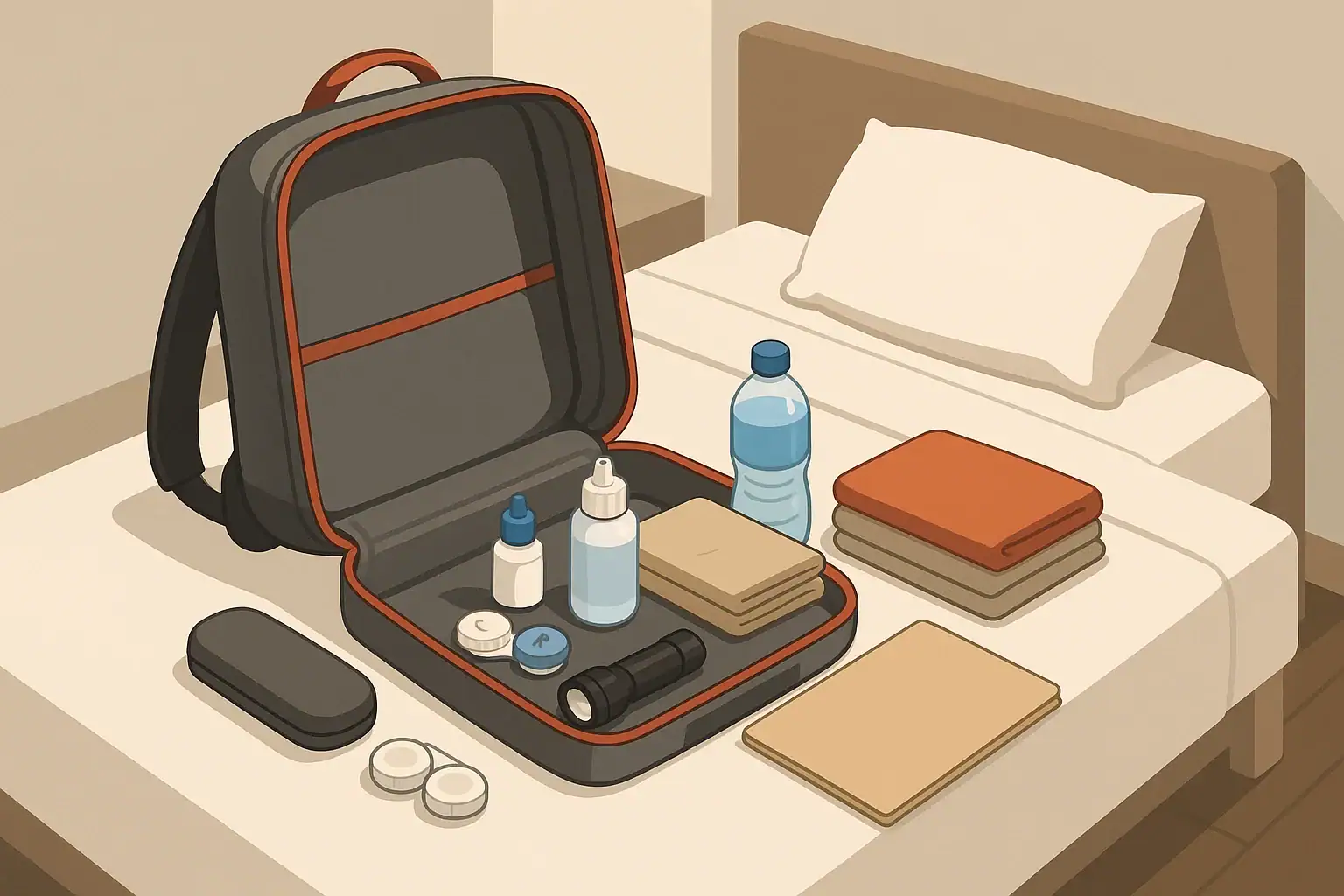
Clear vision is easy to take for granted until glasses break or contact lenses become uncomfortable at the same time you need to move quickly. In a short-term emergency or evacuation, small vision problems can turn basic tasks into real challenges, especially in low light or unfamiliar places.
This guide walks through what to pack in a go-bag if you wear glasses, contact lenses, or both. The goal is practical, realistic planning that fits small apartments, shared housing, and family situations without turning preparedness into a full-time hobby.
Instead of building a separate vision kit, most people can tuck a compact set of supplies into their main go-bag, work bag, or car bag. Focus on what helps you see safely for a few days away from home: backups, simple cleaning options, and a plan if you cannot use contacts.
Why Vision Planning Belongs in Every Go-Bag
Core Vision Priorities for Short-Term Emergencies
When you think about a go-bag for glasses and contact lenses, it helps to break the problem into a few basic priorities:
- Backup vision: What if your glasses are lost, broken, or inaccessible?
- Safe, low-effort contact lens use: What if water and hygiene are limited?
- Low light visibility: What if power is out or you are in a new place at night?
- Comfort and eye strain: How do you keep eyes comfortable when routines are disrupted?
A compact vision kit can support all four priorities without taking much space. Many items are small, light, and inexpensive, which makes them easy to duplicate across multiple bags if needed.
Example values for illustration.
| If this describes you | Then consider packing | Notes |
|---|---|---|
| You can function safely without correction for short periods | One backup pair of glasses and simple cleaning supplies | Prioritize protection over multiple backups |
| You rely on glasses all day for basic tasks | Primary glasses case, backup pair, small repair kit | A sturdy case and backup frame reduce stress |
| You wear daily contact lenses most days | Several days of daily lenses plus backup glasses | Plan to switch to glasses if hygiene is limited |
| You wear monthly or longer-wear lenses | Lens case, solution, backup glasses, hand cleaning supplies | Safe cleaning is as important as the lenses themselves |
| You have very different prescriptions in each eye | Clearly labeled spares for each eye in a small pouch | Separate pockets can reduce mix-ups when stressed |
| You care for a child or older adult with vision needs | Labeled bag with their glasses, backups, and comfort items | Keep it simple enough that others can use it too |
Glasses: Protection, Backups, and Simple Repairs
For many people, glasses are the most reliable vision option during a disruption. They do not depend on water, solution, or clean surfaces the way contact lenses do. A go-bag is a good place to think about what happens if your only pair breaks or goes missing.
Everyday Glasses and a Hard Case
If you wear glasses daily, the most important step is simply making it a habit to keep them in a sturdy case whenever they are not on your face. In an evacuation or power outage, it is easy to knock unprotected glasses off a nightstand or bathroom counter.
Consider:
- A rigid, crush-resistant case that lives beside your bed or on your main bag
- A soft cloth or sleeve inside the case to reduce scratches
- A simple routine: glasses either on your face or in the same case, every time
Backup Glasses for Your Go-Bag
If your budget allows, a basic backup pair of glasses can be one of the most useful items in a go-bag. They do not need to be stylish; they just need to let you move safely, read essential information, and manage tasks like cooking or caring for others.
When planning a backup pair:
- Use an older prescription if needed. Many people keep a previous pair as a backup. Even if the prescription is not perfect, it may be better than nothing.
- Label the case clearly at home. This makes it easier for someone else to hand you the right pair if you are stressed or half awake.
- Store in your main go-bag. Keep it in a pocket that will not be crushed by heavier items like water bottles.
Simple Glasses Repair and Care Items
A small repair kit can help keep glasses usable if screws loosen or frames take minor damage. You do not need a full toolkit; just a few basics:
- Tiny screwdriver suitable for your frame screws
- A few extra nose pads or small screws (if you already have them at home)
- Microfiber cleaning cloth
- Small resealable bag or mini case to hold these items
These items are small enough that you can keep a set in more than one place: your go-bag, a desk drawer, or a car compartment.
Contact Lenses: Balancing Convenience and Hygiene
Contact lenses can be convenient, but they ask more of you during an emergency. Clean water, handwashing, and a consistent place to handle lenses may not always be available. For many people, an evacuation or power outage is a time to switch from contacts to glasses until routines stabilize.
Daily Lenses: Easy to Pack, Easy to Discard
Daily contact lenses can be a simple option to include in a go-bag because each pair is sealed and disposable. If you normally wear this type of lens, consider:
- Packing several days of lenses per eye in a small, labeled pouch
- Keeping them in their original sealed packaging to protect sterility
- Planning for extra pairs in case a lens is dropped or torn
Even with daily lenses, your go-bag should still include functional glasses. In any situation where you cannot wash your hands reliably, it may be safer and easier to rely on glasses until you are in a more stable environment.
Monthly or Longer-Wear Lenses: Extra Care Required
If you use monthly or longer-wear lenses, safe lens care becomes more complicated away from home. You will need a clean case, appropriate solution, and enough supplies to remove and store lenses as needed.
For a go-bag, many people choose to:
- Pack at least one clean lens case
- Include a small, well-sealed bottle of lens solution
- Pack glasses and be prepared to switch out of contacts if water and hygiene are limited
Avoid using untreated tap water on lenses or in cases. If you do not have proper solution available, it is often simpler to remove contacts and rely on glasses instead.
Hand Cleaning and Handling Lenses Safely
Clean hands are especially important when handling contact lenses. In an emergency, sinks and soap may not be easy to access, but you can still improve cleanliness with a few portable items:
- Travel-size soap in a leak-resistant container
- Small pack of unscented wipes for general hand cleaning
- Quick-dry towel or small clean cloth reserved for hand-drying
These items also help with other hygiene tasks, so they serve more than one purpose in your go-bag.
Vision Supplies Checklist for Your Go-Bag
Once you understand your own needs and preferences, you can build a simple checklist. The aim is not to carry every possible item, but to cover the basics that help you see clearly and care for your eyes in a range of everyday disruptions.
Essentials for People Who Wear Glasses
For glasses wearers, consider including:
- Primary glasses in a sturdy, protective case
- Backup pair of glasses in a separate case, if available
- Microfiber cleaning cloth (or two)
- Small bottle or wipes for lens cleaning (optional but helpful)
- Compact repair kit (screwdriver, small screws, nose pads)
Essentials for Contact Lens Wearers
If you wear contacts, add:
- Several days of your usual contact lenses (daily or longer-wear)
- Lens case with secure caps
- Travel-size lens solution in a leak-resistant container
- Hand cleaning supplies (soap, wipes, or both)
- Glasses as a backup (even if you rarely use them)
It can help to pack these items in a small, separate pouch inside your go-bag so you can reach them easily without emptying the entire bag in low light.
Lighting and Eye Comfort in Low-Visibility Conditions
Vision is not just about lenses and frames. Low light, glare, and eye strain can all make it harder to see clearly in an unfamiliar environment. A few simple lighting and comfort items can make a big difference during a power outage or shelter stay.
Portable Lighting That Works with Your Vision
In low light, people with nearsightedness, farsightedness, or astigmatism may find tasks like reading labels, navigating stairs, or helping children more stressful. A small, reliable light source in your go-bag helps you use whatever vision correction you have more effectively.
Common options include:
- Compact flashlight with an easy-to-find switch
- Headlamp that allows hands-free tasks like inserting contacts or adjusting frames
- Small, steady light for shared spaces so others are not left in total darkness
Store spare batteries in a separate, clearly labeled bag or container to protect them from moisture and accidental discharge.
Eye Strain and Screen Use During Outages
During disruptions, people often rely more on phones and tablets for information and connection. Long periods staring at bright screens in dim rooms can lead to eye fatigue. You can reduce strain by:
- Using lower screen brightness in dark environments
- Taking short breaks from near work when possible
- Using your most comfortable glasses for screen use
If you use different glasses for reading or screen activities, consider packing the pair that feels most versatile for both close work and general movement.
Planning for Families, Kids, and Older Adults
When building go-bags for a household, it is easy to overlook the specific vision needs of each person. Children might misplace glasses more easily, and older adults may rely on reading glasses for medication labels or forms.
Kids and Teens with Vision Needs
For children and teens who wear glasses or contacts, keep their kits simple and clearly labeled. Consider:
- Sturdy glasses case in a bright color that is easy to spot at home
- Backup glasses stored in the family go-bag or a shared emergency bin
- Minimal contact lens supplies if they are experienced users, plus clear instructions
- A note in the bag listing their prescription details for reference
If a child has trouble keeping track of glasses during normal life, focus on a strong routine and sturdy case first before adding more items.
Older Adults and Reading-Dependent Tasks
Many older adults depend on reading glasses for detailed tasks, even if they do not wear glasses all day. In an emergency, this can matter for:
- Reading medication labels or dosage instructions
- Completing basic forms
- Operating small devices or controls
It can be useful to pack:
- At least one pair of reading glasses in a rigid case
- Backups if misplacing glasses is common
- Larger-print copies of any essential personal information, if available
Example values for illustration.
| Food type | Storage tip | Rotation interval idea | No-cook use |
|---|---|---|---|
| Canned beans | Store in a cool cabinet with manual opener nearby | Use and replace every few months | Rinse and eat with simple seasonings |
| Nut or seed butters | Keep sealed jars in a dark, stable-temperature spot | Rotate into regular snacks a few times a year | Spread on crackers or bread |
| Crackers and plain cereals | Seal in containers or bags to limit moisture | Use older boxes first during normal snacking | Eat dry or with shelf-stable spreads |
| Boxed shelf-stable milk alternatives | Store upright; avoid direct sunlight | Incorporate into recipes before printed date | Drink plain or with cereal |
| Canned fruits | Group by type and date for easier rotation | Use regularly as desserts or snacks | Eat straight from the can with clean utensil |
| Ready-to-eat soups or stews | Place where labels are easy to read in low light | Plan to use older cans in cooler months | Eat at room temperature if heating is not available |
Keeping Your Vision Kit Current and Accessible
A go-bag works best when the contents match your current prescription and daily habits. Vision needs change over time, and so do storage conditions in your home. A simple, recurring check can keep your glasses and contact lens supplies ready when you need them.
Set a Regular Review Routine
Consider linking your go-bag review to something you already do a few times a year, such as the start of a new season or changing clocks. During this quick check you can:
- Confirm your backup glasses still match your current or recent prescription
- Inspect cases, pouches, and bottles for cracks or leaks
- Replace any contact lenses or solutions that are nearing their printed dates
- Check that batteries for lights are stored safely and have not corroded
Make Vision Supplies Easy to Grab
Vision supplies are most useful when you can reach them quickly, whether you are leaving home or staying put during a short-term disruption. To keep them accessible:
- Use a small, distinct pouch for all eye-related items inside your go-bag
- Store your main glasses case in the same spot near your bed each night
- Let household members know where your backup glasses are kept
- Consider a second, smaller kit for work or school if you spend long hours away from home
A calm, simple approach to vision readiness can make many different situations more manageable, from brief power outages to short-notice overnight stays away from home.
Authoritative sources
Safety recommendations can change. Confirm critical details with current official guidance and local authorities.
- USDA FSIS: Keep Food Safe During Emergencies
- U.S. CPSC: Battery Safety
- CDC: Guidelines for Cleaning Safely After a Disaster
Frequently asked questions
How many days of contact lenses should I pack in a go-bag?
Pack at least several days’ worth of lenses per eye, with 3–7 days being a practical target for short-term disruptions. Consider adding a couple of extra pairs to allow for loss or damage, and always include glasses as a backup in case hygiene or supplies are limited.
Can I clean contact lenses with tap water in an emergency?
No; untreated tap water can contain microbes that risk serious eye infections and should not be used to clean lenses or lens cases. If you lack proper solution, it is safer to remove lenses and rely on glasses until you have sterile products available.
What is the best way to protect spare glasses in a go-bag?
Store spare glasses in a rigid, crush-resistant case and place the case in a separate, lightly padded pocket away from heavy items. Add a microfiber cloth inside the case, label the case if you have multiple prescriptions, and avoid storing glasses loose with items that could scratch them.
Are daily disposable lenses better for emergencies than monthly lenses?
Daily disposable lenses are often easier to manage in emergencies because each pair is sterile and disposable, removing the need for a lens case and solution. Monthly or longer-wear lenses require a clean case and appropriate solution, which adds more supplies and hygiene concerns.
How should I store backups for different household members or different prescriptions?
Label each glasses case with the owner’s name and prescription or include a short prescription note in the pouch to reduce mix-ups. Keep individual kits in separate, clearly marked pouches inside the family go-bag and review the contents periodically to ensure they remain current.
- Simple checklists and realistic planning
- Water, power, lighting, and pantry basics
- Family plans (kids, pets, seniors) and seasonal prep
Affiliate disclosure
As an Amazon Associate, we earn from qualifying purchases. Some links on this site may be affiliate links. If you buy through these links, we may earn a small commission at no extra cost to you. This helps support our content. Learn more.