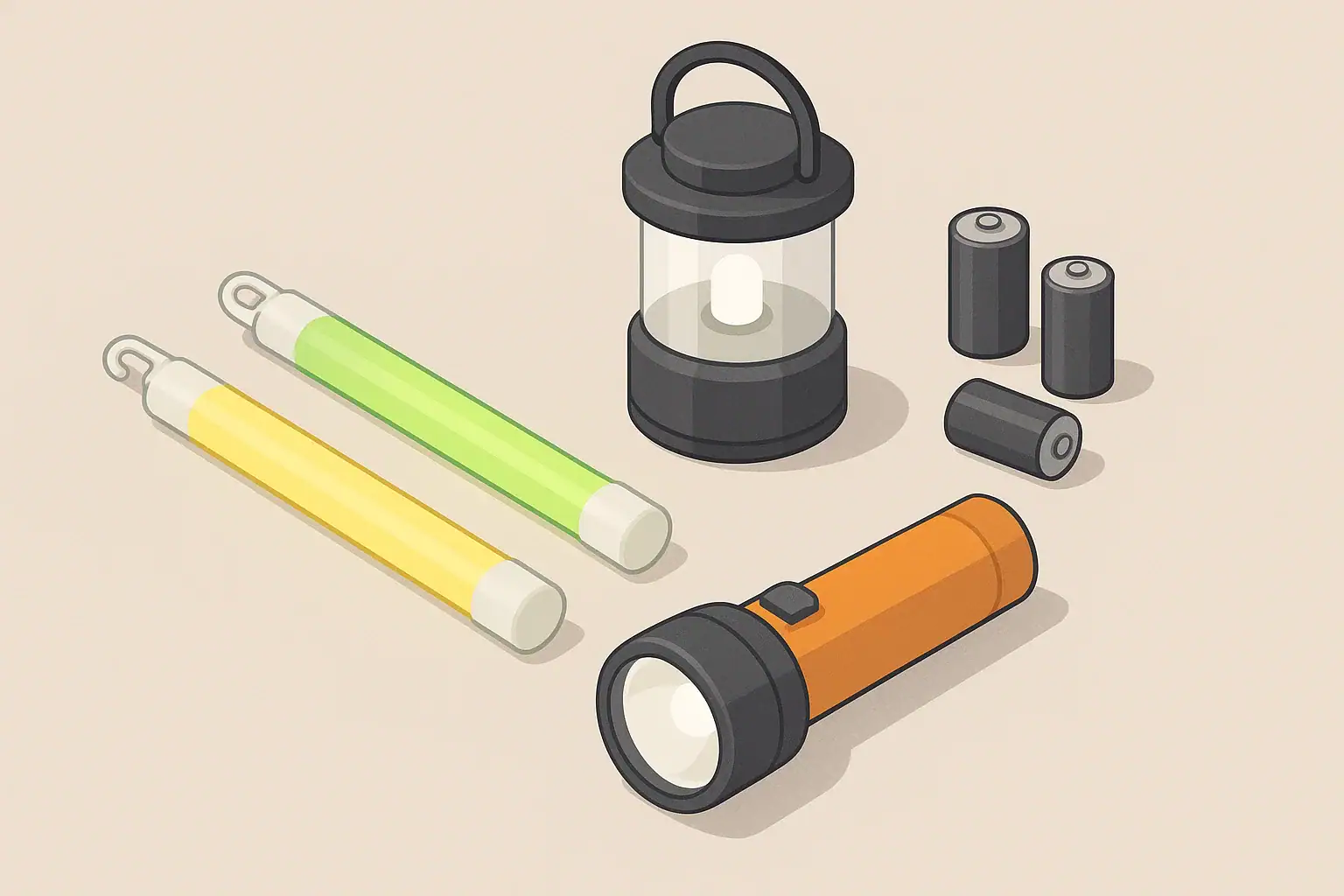
Glow sticks show up in many household emergency kits because they are simple, affordable, and familiar. They do not rely on electricity, produce no sparks or open flame, and are easy for children to use under adult supervision. In short-term power outages or nighttime situations, they can provide basic visibility without the fire risk of candles.
For typical home readiness in the United States, glow sticks can play a useful supporting role. They are not a replacement for flashlights or lanterns, but they can help with specific tasks like marking pathways, identifying people, or providing a gentle nightlight in unfamiliar or stressful conditions.
This article looks at when glow sticks help, when they fall short, and how to use them safely as part of calm, practical preparedness for apartments, houses, renters, families, and people in small spaces.
Why People Add Glow Sticks to Emergency Kits
Glow sticks show up in many household emergency kits because they are simple, affordable, and familiar. They do not rely on electricity, produce no sparks or open flame, and are easy for children to use under adult supervision. In short-term power outages or nighttime situations, they can provide basic visibility without the fire risk of candles.
For typical home readiness in the United States, glow sticks can play a useful supporting role. They are not a replacement for flashlights or lanterns, but they can help with specific tasks like marking pathways, identifying people, or providing a gentle nightlight in unfamiliar or stressful conditions.
This article looks at when glow sticks help, when they fall short, and how to use them safely as part of calm, practical preparedness for apartments, houses, renters, families, and people in small spaces.
How Glow Sticks Work and Their Basic Limits
Glow sticks use a chemical reaction called chemiluminescence. When you bend and snap the inner tube, two liquids mix and begin to glow. Once activated, they cannot be turned off or reused. They gradually fade over several hours.
Understanding their basic limits helps you decide where they fit in your emergency plan:
- Light level: Glow sticks provide dim, diffuse light. They are better for close-up visibility and marking locations than for lighting a whole room.
- Run time: Many household glow sticks are labeled to glow for several hours. In practice, the bright period is shorter, with a long, fading afterglow that may be too dim for useful tasks.
- Single use: You cannot recharge or turn off a glow stick. Once used, it is disposable.
- Storage life: Unopened glow sticks can often be stored for several years, but they gradually lose brightness over time, especially if exposed to heat.
- No beam: Unlike a flashlight, glow sticks do not project a focused beam, which limits their usefulness for navigation or detailed work.
Because of these limitations, glow sticks are best thought of as low-risk backup lighting and markers, not as your primary light source during blackouts or evacuations.
| Situation | If this is true… | Then consider using… |
|---|---|---|
| Short indoor power outage | You need to safely move around a room and see details | Flashlight or battery lantern as primary; glow sticks only as backup markers |
| Children at night in a blackout | You want a soft light with no fire or heat risk | Glow sticks near beds plus a brighter flashlight for adults |
| Marking hazards or exits | You need a visible marker for several hours | Glow sticks attached to doorknobs, stair rails, or bags |
| Reading or detailed tasks | You must read labels, maps, or instructions | Focused flashlight beam or bright lantern; glow sticks are not sufficient |
| Outdoor nighttime activity | You want to be more visible to others nearby | Glow sticks clipped to clothing or backpacks plus a headlamp for seeing the path |
| Long power outage | You need reliable light for many nights | Rechargeable or battery lanterns with spare batteries; use glow sticks sparingly |
Example values for illustration.
When Glow Sticks Are Genuinely Helpful
Glow sticks are not a cure-all, but they can be worth the small space they take in many home kits. Their strengths show up in specific, realistic scenarios.
Low-Risk Light Around Kids and Pets
For households with children or curious pets, glow sticks can reduce some common lighting risks during power outages. They do not get hot, create sparks, or drip wax. When placed out of reach of very young children and supervised appropriately, they can help in situations like:
- Providing a soft comfort light in a child’s room during a nighttime outage
- Marking the edge of a crib, doorway, or hallway so adults can move more safely
- Giving older kids a simple light source they can handle carefully without worrying about buttons or batteries
Adults still need brighter, controllable lighting, but glow sticks can supplement that in family spaces.
Marking Pathways, Exits, and Hazards
Glow sticks work well as visual markers when you do not need strong illumination. During a blackout or low-visibility situation at home, you can:
- Hang a glow stick on bathroom and bedroom doors so people can find them quickly
- Place glow sticks at the top and bottom of stairs to remind everyone of the step change
- Attach one to your main exit door or balcony door to make it easy to identify in the dark
- Clip a glow stick to each go-bag to quickly locate them if the lights go out
This can be helpful in apartments and small homes where several doors look alike in the dark.
Simple Light During Short Power Outages
In brief outages of a few hours, glow sticks can provide just enough light for basic tasks while conserving flashlight batteries. For example, you might:
- Activate a couple of glow sticks in the main living area as background light
- Use flashlights only when moving through darker parts of the home or reading labels
- Keep one glow stick in the bathroom to avoid turning on brighter lights for every visit
In these situations, glow sticks help reduce strain on your primary lighting, especially if you have limited batteries.
Visibility for Group Members
Glow sticks can make it easier to keep track of people in low light, particularly in larger households. In some scenarios, adults may choose to:
- Clip a glow stick to young children’s clothing or backpacks during nighttime movement
- Attach different colors to bags or mobility aids to distinguish them in a dark hallway
- Place one near older adults’ bedside tables so they can find essentials more easily
This can be helpful in multi-story homes, shared housing, or any layout where it is easy to lose visual contact.
Where Glow Sticks Fall Short
Even though glow sticks have their place, they should not be your main plan for emergency lighting. Understanding their weaknesses helps prevent overreliance.
Not Bright Enough for Many Tasks
Glow sticks simply do not produce enough light for common emergency tasks, such as:
- Reading medication labels or instructions
- Inspecting circuit breakers, plumbing, or appliances
- Preparing food safely during extended outages
- Walking on uneven or cluttered stairs
For these tasks, flashlights and lanterns with focused or adjustable beams are much more practical.
No On/Off Control or Reuse
Once you bend and snap a glow stick, the clock starts and cannot be paused. If you crack several at the beginning of a long outage, you may end up with a pile of dim, used sticks before the situation is over.
This lack of control makes glow sticks less efficient than battery-powered lighting, where you can turn devices off between uses to conserve power.
Not a Standalone Plan for Long Outages
For hurricanes, winter storms, or other events that commonly cause multi-day outages in some U.S. regions, glow sticks alone are not realistic. You would need a large number of them to sustain any useful level of light, and you would still be missing a bright, directed beam for important tasks.
Instead, think of glow sticks as a small accessory within a larger lighting plan that includes flashlights, lanterns, and possibly limited backup power options.
Waste and Disposal Considerations
Used glow sticks are non-reusable plastic tubes containing spent chemicals. Unless a local program says otherwise, they usually end up in regular household trash. Overusing them creates more waste than necessary.
If one leaks or cracks open, avoid contact with the liquid and follow common-sense cleanup: wear disposable gloves if available, wipe up the liquid carefully, and double-bag the remains for disposal. Keep glow sticks away from food preparation surfaces and out of reach of children and pets both before and after use.
Choosing Glow Sticks for a Home Emergency Kit
You do not need specialized or high-end glow sticks for basic preparedness. A modest, well-stored supply is usually enough.
How Many Glow Sticks Do You Really Need?
The right number depends on your home size, number of people, and how you plan to use them. Many households can cover typical needs with a small bundle set aside for emergencies. Consider:
- Studio or one-bedroom apartment: A handful of glow sticks can mark exits and provide soft light in the main room.
- Two- to three-bedroom home: A slightly larger set may allow you to mark stairs, key doors, and sleeping areas.
- Families with kids: Add a few extras if you plan to use them as comfort lights or identifiers.
Because they are single-use, it is helpful to keep them for situations where their specific strengths matter, not for routine lighting.
Color and Size Considerations
Colors and sizes mainly affect visibility, not safety, in typical home use.
- Bright colors: Some colors may appear more visible in the dark, especially when used as markers on doors or bags.
- Larger sticks: Longer or thicker glow sticks can be easier to see across a room, which may help for stair markers or exits.
- Bracelet-style sticks: Small, flexible versions can be attached to zippers, keyrings, or clothing for identification.
For a basic kit, a mix of standard-size sticks and a few smaller ones can offer flexibility without taking much space.
Storage Tips for Reliability
To keep glow sticks ready for use:
- Store them in a cool, dry place away from direct sunlight and heat sources.
- Keep them in their original packaging or in a sealed bag to protect from moisture.
- Note the date of purchase and plan to replace them after several years, especially in hot climates or unconditioned storage spaces.
- Keep them where you can reach them in the dark, such as near flashlights, not buried under heavy items.
Integrating Glow Sticks into an Overall Lighting Plan
Glow sticks are most useful when they are part of a layered lighting strategy. Instead of treating them as a main solution, combine them with other tools to cover different needs during an outage or evacuation.
Primary vs Backup vs Comfort Lighting
You can think about household emergency lighting in three layers:
- Primary lighting: Flashlights and lanterns strong enough for walking, reading, and doing basic tasks.
- Backup lighting: Additional flashlights, headlamps, and batteries if your main devices fail or run out.
- Comfort and marker lighting: Glow sticks and small nightlights for orientation, reassurance, and marking paths.
In this structure, glow sticks occupy the comfort and marker category. They support, but do not replace, the tools that let you see clearly.
Room-by-Room Uses in Apartments and Houses
In practical planning, you can assign specific roles to glow sticks in different parts of the home:
- Entryway: A glow stick near the main door to mark the exit and locate keys or go-bags.
- Hallways and stairs: Glow sticks at each end of a hallway or stairway to signal a change in level.
- Bedrooms: One glow stick per bedroom to provide soft light if a child or adult wakes up during an outage.
- Bathroom: A glow stick hanging from the doorknob to make it easy to find.
Renters and people in small apartments can adjust this idea in smaller quantities, using glow sticks mainly for orientation and comfort while relying on compact battery lanterns and flashlights for bright light.
Combining Glow Sticks with Other Essentials
Glow sticks connect naturally with other parts of a simple home readiness kit:
- Go-bags: Attach one glow stick per bag so they can be quickly activated if you leave home after dark.
- Communication plan: Use glow sticks to mark a pre-agreed indoor meeting spot during a blackout.
- Water and pantry readiness: Keep glow sticks near stored water and pantry shelves so you can quickly find them without turning on brighter lights every time.
This integrated approach helps glow sticks serve clear roles without overlapping with what flashlights and backup power already do better.
| Lighting type | Battery type or power source | Pros and cons (example ideas) | Simple storage tip |
|---|---|---|---|
| Small flashlight | Common disposable batteries | Pros: bright beam, compact. Cons: needs spare batteries. | Store near main entry with one unopened pack of matching batteries. |
| Lantern-style light | Disposable or rechargeable batteries | Pros: lights a room. Cons: uses more power than a small flashlight. | Keep in central room so everyone knows where it is. |
| Headlamp | Small batteries | Pros: hands-free. Cons: easy to misplace, may be uncomfortable for some. | Store in a labeled pouch or hanging on a hook near tools. |
| Rechargeable light | Built-in battery, charged from wall or power bank | Pros: saves on disposables. Cons: must be kept charged. | Plug in to top off charge before forecast storms or heatwaves. |
| Glow sticks | Chemical (single use) | Pros: no flame, simple, low risk. Cons: dim, not reusable. | Store in a cool, visible spot; replace after several years. |
| Battery candles | Small disposable batteries | Pros: gentle light. Cons: not very bright for tasks. | Keep with other comfort items to reduce reliance on real candles. |
Example values for illustration.
Simple Checklist: Using Glow Sticks Wisely
Glow sticks can be a modest but useful part of home emergency readiness when used with intention. A brief checklist can help keep them in the right role:
- Decide their main purpose in your home: markers, comfort lights, or backup.
- Buy a reasonable quantity based on household size, not an excessive stockpile.
- Store them where you can reach them quickly in the dark.
- Use flashlights or lanterns for any task that requires clear, bright light.
- Reserve glow sticks for times when their unique advantages matter, such as around children or for marking exits.
- Replace older stock periodically if stored in warm or variable temperatures.
By treating glow sticks as one small piece of a broader lighting and safety plan, you can make power outages and short-term disruptions more manageable without overcomplicating your home preparations.
Authoritative sources
Safety recommendations can change. Confirm critical details with current official guidance and local authorities.
- USDA FSIS: Keep Food Safe During Emergencies
- U.S. CPSC: Battery Safety
- CDC: Guidelines for Cleaning Safely After a Disaster
Frequently asked questions
How long do glow sticks in emergency kits typically stay bright after activation?
Most consumer glow sticks provide a useful, bright glow for a few hours after activation, with a longer low-level afterglow that can last several more hours. Exact run time depends on the product and temperature—cold conditions reduce brightness while warmth increases reaction speed but can shorten the duration. Treat them as short-term lighting rather than a multi-day solution.
Are glow sticks safe for children and pets when included in emergency kits?
Glow sticks are generally low-risk because they produce no heat, flame, or sparks, which makes them safer than candles in many situations. However, the internal chemicals can irritate skin or be harmful if ingested, so keep unopened sticks out of reach of very young children and supervise use. If a stick leaks or is chewed open, avoid contact with the liquid, clean up with gloves, and seek medical advice if ingestion or significant exposure occurs.
Can glow sticks be turned off or reused in subsequent outages?
No, glow sticks rely on a one-time chemical reaction and cannot be turned off, paused, or recharged once activated. Because of that single-use nature, plan to use them selectively for marking and comfort rather than as a primary or repeatedly used light source. Store unused sticks until needed and replace older stock periodically.
How should I store glow sticks in an emergency kit to keep them reliable?
Store glow sticks in a cool, dry place away from direct sunlight and heat to preserve their shelf life and brightness. Keep them in their original packaging or a sealed bag and note the purchase date so you can rotate them every few years, especially if stored in hot or unconditioned spaces. Also keep them accessible—near flashlights or go-bags—so you can find them easily in the dark.
How many glow sticks should I include in a home emergency kit?
The number depends on your household size and how you plan to use them: a small apartment might be fine with 4–8 sticks for marking exits and one per bedroom, while a larger home or family could keep 12–24 to mark stairs, doors, and sleeping areas. Focus on using glow sticks for markers and comfort, and prioritize having adequate flashlights or lanterns for tasks that need brighter, directed light.
- Simple checklists and realistic planning
- Water, power, lighting, and pantry basics
- Family plans (kids, pets, seniors) and seasonal prep
Affiliate disclosure
As an Amazon Associate, we earn from qualifying purchases. Some links on this site may be affiliate links. If you buy through these links, we may earn a small commission at no extra cost to you. This helps support our content. Learn more.