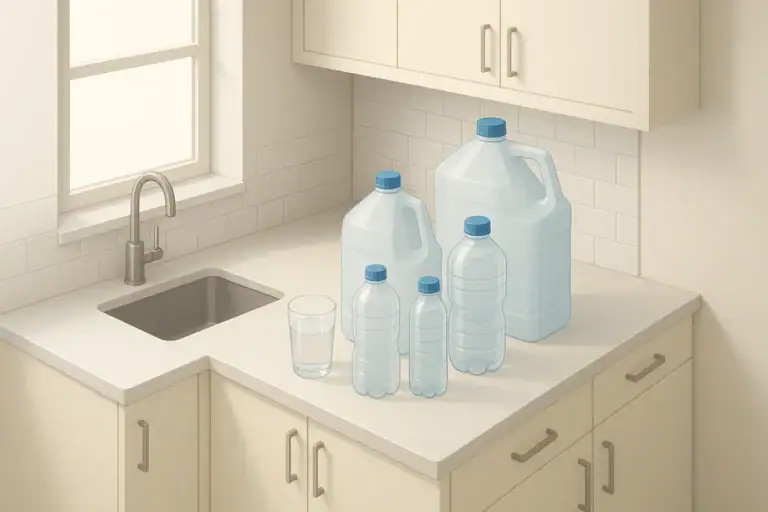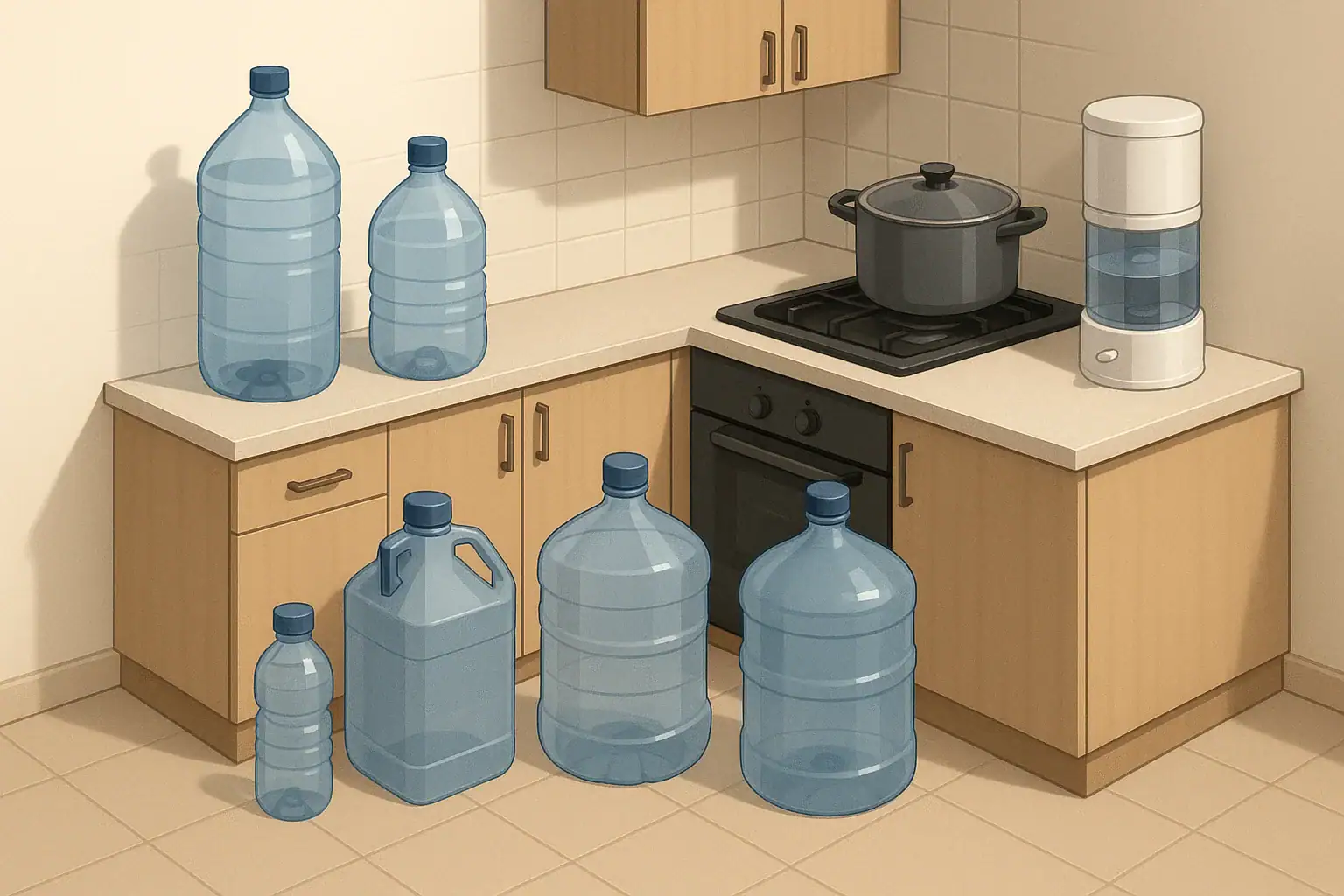
Most homes in the United States rely on treated municipal water or well systems that work without much thought. During power outages, main breaks, heavy storms, or short-term emergencies, that system can be interrupted or contaminated. Having simple, reliable ways to treat water helps you keep drinking, cooking, and basic hygiene safe without panic.
This guide focuses on three practical methods you can use at home or in an apartment:
- Boiling
- Household chlorine (unscented liquid bleach)
- Portable and countertop filters
The goal is not to turn your home into a full-time off-grid setup, but to give you basic tools for a few days to a couple of weeks of disruption. The methods below assume you may have limited space, limited gear, and a mix of adults, kids, and possibly pets in the home.
Why Emergency Water Treatment Matters at Home
Most homes in the United States rely on treated municipal water or well systems that work without much thought. During power outages, main breaks, heavy storms, or short-term emergencies, that system can be interrupted or contaminated. Having simple, reliable ways to treat water helps you keep drinking, cooking, and basic hygiene safe without panic.
This guide focuses on three practical methods you can use at home or in an apartment:
- Boiling
- Household chlorine (unscented liquid bleach)
- Portable and countertop filters
The goal is not to turn your home into a full-time off-grid setup, but to give you basic tools for a few days to a couple of weeks of disruption. The methods below assume you may have limited space, limited gear, and a mix of adults, kids, and possibly pets in the home.
First Steps Before You Treat Any Water
Before you jump into boiling or adding chlorine, it helps to follow a simple decision process. Not every disruption means your tap water is unsafe, and not every cloudy bucket of water can be fixed with the same method.
1. Check Official Guidance if Possible
If phones or data still work, check for local advisories from your city, county, or water utility. Common notices include:
- Boil-water notice: Tap water should be boiled before use.
- Do-not-drink notice: Tap water may be contaminated; use packaged or alternate water.
- Do-not-use notice: Tap water should not be used for drinking, cooking, or hygiene.
If your area has issued clear instructions, follow them first. The methods in this article are a backup for when information is limited or when you need to treat alternate water sources.
2. Decide If You Need to Treat Water at All
In many short-term disruption scenarios, you may already have safe water stored. Consider:
- Bottled or pre-filled jugs in your home.
- Water stored in clean containers before the outage.
- Water drawn from the tap immediately after a notice of possible disruption (if advised as safe at that moment).
If you have enough stored clean water for drinking and essential cooking, you may only need to treat small amounts of additional water for dishwashing or hand rinsing.
3. Pre-Filter Cloudy or Dirty Water
All disinfection methods work better on clear water. If your water is cloudy, sandy, or has visible particles:
- Let it sit so heavier particles settle, then gently pour off the clear layer.
- Pour through a clean cloth, paper towel, or coffee filter into another clean container.
- Avoid using fabric that has soap or detergent residue.
Pre-filtering does not make water safe by itself, but it helps boiling, chlorine, and filters work more effectively.
Example values for illustration.
| Situation | Better method | Why |
|---|---|---|
| Short power outage but gas stove works | Boiling | Uses existing stove; simple and familiar |
| No stove, but you have unscented bleach | Chlorine | Works without heat when dosed correctly |
| Water is clear but has off taste or odor | Filter (plus boiling or chlorine if needed) | Improves taste; can be combined with disinfection |
| Cloudy water from questionable outdoor source | Pre-filter + boiling | Removes particles, then high-heat treatment |
| Need to save fuel and treat larger batches | Chlorine | Can treat several gallons with small amounts |
| Apartment with limited storage space | Compact filter + small bleach bottle | Flexible options for different water sources |
Boiling Water: Simple and Reliable
Boiling is one of the most straightforward ways to make water safer to drink. If you can generate heat—using a gas stove, electric stove on backup power, portable stove used safely outdoors, or even a grill in a well-ventilated outdoor area—you can usually boil water.
How to Boil Water for Emergency Use
For most household situations, a simple approach works:
- Pour clear water into a clean pot or kettle.
- Heat until you see a full, rolling boil (continuous bubbling across the surface).
- Keep at a rolling boil for at least one full minute.
- Turn off the heat and let the water cool naturally.
- Pour the cooled water into clean, covered containers for storage.
At higher elevations, some people extend the boiling time as an added margin. If you live well above sea level and want to be cautious, you can simply boil for several minutes instead of just one, as long as you manage your fuel supply.
Practical Tips for Apartments and Small Spaces
- Use smaller batches if space is tight. Even boiling a couple of quarts at a time adds up over the day.
- Cool with lids on. This reduces the chance of recontamination from dust or splashes.
- Store in food-safe containers. Clean glass jars, pitchers with lids, or thoroughly washed plastic containers can all work.
- Label or mentally track batches. Use older boiled water first to avoid forgetting what was treated when.
Pros and Limitations of Boiling
Boiling is strong at reducing many biological contaminants, but it does not remove everything that could affect water quality.
- Advantages:
- Uses common kitchen tools you already have.
- Clear visual cue (rolling boil) that treatment occurred.
- No added chemicals or aftertaste from disinfectants.
- Limitations:
- Requires fuel or electricity.
- Can be slow for large volumes.
- Does not remove some non-biological contaminants that might be present.
Using Household Chlorine (Bleach) to Treat Water
When boiling is not practical, or when you need to treat larger amounts of water with limited fuel, unscented household chlorine (plain liquid bleach) can be a useful tool. This section covers basic, widely used practices for short-term emergency use at home.
What Kind of Bleach to Use
Look for these characteristics when selecting bleach for possible emergency water treatment:
- Unscented: No added perfumes or dyes.
- Regular household strength: Often labeled around a standard percentage on the bottle; exact numbers vary by product and change over time.
- Plain ingredients: The active ingredient is usually a form of sodium hypochlorite; avoid products combined with cleaners or additives.
Bleach weakens over time, especially when stored in warm places. As it gets older, it may be less effective at the same dose. For emergency planning, many households choose to keep a small, recently purchased bottle on hand and replace it periodically.
Example Dosing Approach
Different official sources list slightly different chlorine doses based on assumptions about bleach strength and water quality. For home emergencies, many people use small, carefully measured drops per quart or liter of clear water as an example approach.
One commonly referenced example for relatively clear water is:
- A small number of bleach drops per quart (or liter) of water, or
- A slightly larger number of drops per gallon of water.
The exact number of drops depends on the strength of the bleach and the condition of the water. When possible, follow the dosing guidance provided by your local public health or emergency management authorities, or by widely recognized national-level guidance, and adjust if your bleach is older or your water is cloudy.
Basic Steps for Chlorine Treatment
Once you have a dosing guideline that matches your bleach strength, the process is straightforward:
- Use clear water if possible (pre-filter first if cloudy).
- Add the counted drops of bleach to the water container.
- Stir or shake gently to mix thoroughly.
- Let the water stand, covered, for at least 30 minutes before use.
- Check for a slight chlorine smell; if it is absent and you are unsure, you may repeat the dose and wait again.
Some households keep a small printed dosing chart or a note with their emergency kit so they do not have to calculate under stress.
Safety Considerations
- Store bleach away from children and pets.
- Do not mix bleach with other cleaners or chemicals.
- Use only in well-ventilated areas to avoid strong fumes.
- Do not use scented or splashless products for water treatment unless specific instructions clearly allow it.
Pros and Limitations of Chlorine Treatment
- Advantages:
- Does not require heat or fuel.
- Lightweight and compact for apartments and go-bags.
- Can treat larger volumes of water at once.
- Limitations:
- Some people dislike the taste or smell.
- Less effective in very cloudy or murky water without pre-filtration.
- May not address all types of contaminants in every situation.
Filters and Simple Treatment Devices
Water filters range from small, portable units to larger countertop systems. For short-term emergencies in homes and apartments, simpler, gravity-fed or manually operated filters are often more practical than complex, permanently plumbed systems.
Common Types of Household Emergency Filters
- Pitcher filters: Familiar household units that use gravity to pull water through a replaceable cartridge. Often focused on taste and some common tap water concerns.
- Gravity bucket or countertop filters: Larger units where water drips from an upper container through filter elements into a lower container.
- Squeeze or straw filters: Compact units often used for camping or as part of go-bags; can be adapted for limited home use.
Each type is designed for certain uses. Many are optimized for already treated tap water and may not be intended as a stand-alone solution for heavily contaminated sources. For emergencies, it is useful to know what your filter is rated for according to its documentation.
How Filters Fit with Boiling and ChlorINE
Filters can improve the clarity and taste of water, and some can reduce certain contaminants. In a short-term household emergency plan, many people combine methods:
- Filter then boil: Use the filter to clarify and improve taste, then boil as a disinfection backup.
- Filter then chlorinate: Run water through a filter, then use a small amount of chlorine if water quality is in doubt.
- Chlorinate then filter: Treat first, then filter after the contact time to reduce chlorine taste.
The order can depend on your filter type and what you are worried about. Some filters may be sensitive to high chlorine levels; if in doubt, check the general care instructions for your device.
Practical Filter Tips for Small Homes
- Keep extra cartridges: Store at least one spare filter element in its original packaging.
- Protect from freezing: Some filter elements can be damaged by freezing; store in a temperature-stable area if possible.
- Use a dedicated “raw” container: In tight spaces, designate one pitcher or bottle for untreated water and another for treated water to avoid mix-ups.
- Label with tape: Simple masking tape labels can help guests, kids, or exhausted adults know which container holds safe water.
Planning Water Treatment for Different Living Situations
Your best mix of boiling, chlorine, and filters depends on your household size, pets, available storage, and heat sources. Thinking through a simple plan now can make an outage or short-term emergency feel more manageable.
Apartments and Condos
In multi-unit buildings, space is limited and open-flame appliances may be restricted. Practical options include:
- A small stock of stored drinking water in sturdy containers.
- A compact electric kettle or pot that can run on limited backup power, if available.
- A small bottle of unscented bleach with a printed dosing chart.
- A pitcher or compact gravity filter that fits in the fridge or on a counter.
For apartments reliant on electric stoves, consider how you would boil water if the power is out. Some households plan to use shared outdoor grills, camping stoves outdoors, or rely more on chlorine and filters instead.
Single-Family Homes
Homes often have more flexibility for storage and equipment:
- Larger covered pots or canning kettles for boiling bigger batches.
- Room for a gravity-fed filter system that can sit on a counter or table.
- Space for several gallons of stored water in jugs or purpose-made containers.
- Safer options for outdoor cooking devices that can also boil water.
If you have a well that depends on an electric pump, note that your water supply can be affected by outages even if the water itself is normally safe. In that case, storing water and planning emergency treatment is especially useful.
Households with Kids, Seniors, or Pets
Some family members may be more sensitive to changes in water taste or minor contamination. While specific health questions belong with healthcare providers, you can still plan generally:
- Favor methods that are easier to explain and repeat, such as boiling or using a clearly marked dosing chart.
- Involve older kids in simple tasks like timing the boil or labeling containers.
- Set aside a portion of treated water as a dedicated supply for making formula, rinsing baby items, or other special needs.
- Plan extra water for pets, especially in hot weather or if usual outdoor sources are questionable.
Example values for illustration.
| People & pets | Days to cover | Storage approach idea | Treatment & rotation cue |
|---|---|---|---|
| 1 adult | 3 days | Several gallon jugs in closet | Replace every few months; boil or chlorinate tap refills |
| 2 adults | 5 days | Stackable containers under bed | Rotate when seasons change; note date on tape label |
| 2 adults + 2 kids | 7 days | Mix of jugs and larger bin in garage | Use for cooking every few months and refill with treated tap water |
| Family + small pets | 5 days | Extra small bottles specifically for pet dishes | Rotate pet water when opening new food bag as reminder |
| Older adult living alone | 7 days | Lightweight smaller bottles for easier lifting | Check dates during regular household safety reviews |
| Roommates in apartment | 3–5 days | Each person keeps small supply in their own room | Set shared reminder to refresh supplies a couple of times per year |
Simple Routine to Stay Ready
Emergency water treatment feels less intimidating when it is part of ordinary home routines. A few small habits can keep you ready without turning preparedness into a project:
- Keep at least a few days of drinking water stored where it will not be forgotten.
- Store a small, recent bottle of unscented bleach and a printed dosing note.
- Make sure your pots, kettle, or filter are easy to reach during an outage.
- Review your plan briefly when seasons change or when you test smoke alarms.
By understanding the basics of boiling, chlorine, and filters, you can adapt to many short-term water disruptions calmly, whether you live in a studio apartment or a larger home with a yard.
Frequently asked questions
How long do I need to boil water to make it safe during an emergency?
Bring water to a full, rolling boil and maintain that boil for at least one minute to inactivate most disease-causing organisms. At higher elevations (about 2,000 meters / 6,500 feet and above), increase the boil time to three minutes as a precaution. Boiling does not remove chemical pollutants, so if you suspect chemical contamination, use stored bottled water or a suitable filter if available.
What are the safe steps for using household bleach to disinfect water?
Use unscented liquid bleach with plain sodium hypochlorite as the active ingredient, pre-filter cloudy water, add a carefully measured dose based on guidance for the bleach strength you have, mix, and let the water stand covered for at least 30 minutes before use. Check for a slight chlorine odor; if none is detected and you remain uncertain, follow local public health dosing recommendations or boil instead. Always store bleach safely away from children and do not mix it with other chemicals.
Can common household filters remove viruses and bacteria from emergency water?
Many mechanical filters with fine pore sizes (for example, around 0.1–0.2 microns) will remove most bacteria and protozoan parasites but may not reliably remove all viruses because viruses are much smaller. Some filter systems include additional treatment stages (chemical media or adsorptive elements) that improve virus reduction; check the product specifications for what contaminants the filter is rated to remove. When virus risk is a concern, combine a rated filter with boiling or chemical disinfection if recommended.
Which emergency water treatment methods are most practical for apartments with limited space?
Compact solutions work best in small homes: keep a few days of stored drinking water, a small bottle of unscented bleach with a simple dosing note, and a countertop or pitcher-style filter. If you lose power and cannot boil, rely on bleach and filters as described, and consider safe outdoor options for boiling if allowed by building rules. Planning ahead and labeling treated versus untreated containers reduces confusion under stress.
How should I pre-filter cloudy water before disinfecting it?
Let heavy particles settle if possible, then carefully pour off the clearer water or pass it through a clean cloth, paper towel, or coffee filter into a clean container. Avoid using fabric that has soap or detergent residue. Pre-filtering improves the effectiveness of boiling, chlorine, and many filters but does not replace disinfection.
Recommended next:
- Water Storage Guide: How Much You Need, Where to Put It, and How to Rotate
- Water Storage Calculator: People × Days (Plus a Pet Add-On)
- Best Water Containers for Home Storage: Materials, Sizes, and Caps
- Storing Water in Small Spaces: Apartment and Closet-Friendly Options
- Water Rotation Schedule: A Simple FIFO System Anyone Can Follow
- How to Clean and Sanitize Water Containers Safely
- More in Water Readiness →
- Simple checklists and realistic planning
- Water, power, lighting, and pantry basics
- Family plans (kids, pets, seniors) and seasonal prep
How to Transport Water Safely: Car, Stairs, and Heavy Containers
Rainwater for Emergency Use: Practical Limits and Safety Basics
Emergency Household Water Sources: What’s Safe to Use and What’s Not
Storing Water in Heat or Freezing Conditions: What Changes
Emergency Water for Pets: How Much to Store and How to Serve It
Making Tap Water Taste Better in an Emergency: Easy Steps