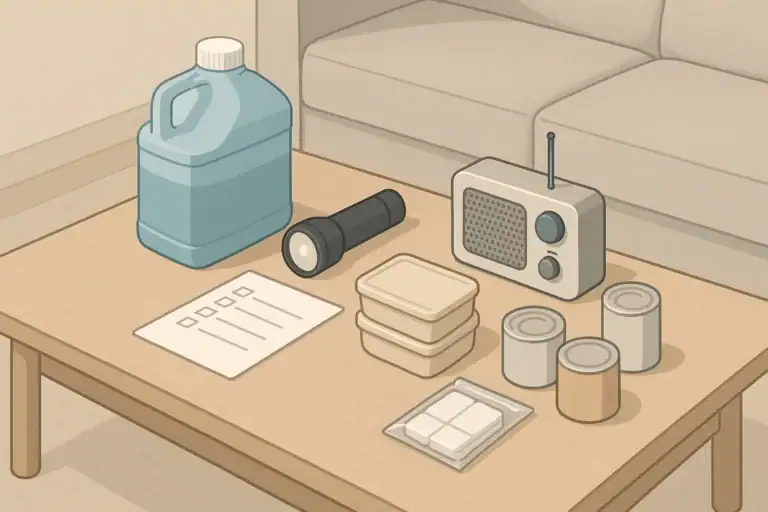
Why a One-Page Emergency Plan Works for Everyday Homes
A simple, one-page emergency plan checklist is often more useful than a thick binder or complicated system. In real situations like short power outages, boil-water notices, or severe weather, people reach for what is quick, clear, and easy to follow. This guide walks you through what to put on that single page so you can:- Keep key information in one consistent place
- Help everyone in the home know what to do
- Support both “stay home” and “need to leave” situations
- Adapt the plan for apartments, houses, and shared spaces
Core Sections for Your One-Page Emergency Plan
Your one-page emergency plan works best when it is organized into a few short sections. You can handwrite or type it, but try to keep it all on a single side of paper.1. Household Snapshot
This section captures who lives in your home and any special considerations. Keep it brief.- Names of everyone in the household
- Pets and basic notes (size, special needs)
- Any mobility, sensory, or access needs to keep in mind
2. Fast Contact List
Phones sometimes lose power or networks may be busy. Having key numbers written down helps if devices die or need to be shared.- One out-of-area contact (relative or friend)
- Local contact (neighbor, coworker, nearby friend)
- Property manager or landlord (for renters)
- Building superintendent or maintenance line (for apartments)
- Veterinarian or pet boarding option (if you have animals)
3. Power and Lighting Basics
Power outages are one of the most common short-term disruptions. Your plan should include a few quick reminders:- Where the main breaker panel is located
- Where flashlights and safe battery-powered lights are stored
- Where spare batteries are kept and what sizes you use
- Any small backup power source locations (if you have them)
4. Water and Food Notes
Short-term emergencies often affect water quality, access to cooking, or grocery trips. Your one-page list can include:- Minimum water goal per person per day (for example, a couple of large bottles)
- Where you store extra water at home
- Where no-cook foods are stored (shelf-stable, easy to eat)
- Any basic water treatment method you keep on hand, if applicable
| Checklist Item | Why It Matters | Notes |
|---|---|---|
| Household names and special needs | Helps others support you in a disruption | Include pets, mobility, and access notes |
| Out-of-area contact | May be easier to reach if local lines are busy | One reliable person is often enough |
| Local neighbor or friend | Enables quick check-ins and mutual help | Note building unit or floor if relevant |
| Location of flashlights and batteries | Reduces fumbling in the dark during outages | Keep in consistent, easy-to-reach spots |
| Water storage spot | Makes it simple to find extra water fast | Under bed, closet, or pantry corner |
| No-cook food bin | Supports eating when cooking is not practical | Label shelf or container clearly |
| Pet supplies note | Prevents running out of food or litter | Keep a small backup portion set aside |
Quick Steps: What to Do in Common Scenarios
Your one-page list becomes more useful when it includes short “if this, then that” steps for likely situations. These do not have to cover every detail; they simply point people in the right direction.Power Outage Plan
For short outages, focus on safety, comfort, and communication.- Turn on one flashlight or lantern and keep others off to save batteries.
- Unplug sensitive electronics to protect them from surges.
- Keep refrigerator and freezer doors closed as much as possible.
- Use battery-powered lights instead of candles where possible.
- Note where to find extra blankets or layers if heating is affected.
Water Service Disruption or Boil Notice
When water is disrupted or advised to be boiled, your checklist should remind you how to stretch what you have and keep things hygienic.- Use stored drinking water first.
- If boiling is advised and safe to do, focus on drinking and basic food prep water.
- Use hand sanitizer or wipes when water is limited, if appropriate.
- Set aside a small amount of water for essential pet needs.
- Use disposable plates or simple meals to reduce dishwashing needs.
Stay-at-Home Severe Weather
For winter storms, heatwaves, strong storms, or poor air quality days, your plan can outline comfort and safety basics.- Move everyone to the safest interior area away from windows if winds are strong.
- In winter, close off unused rooms to stay warmer.
- In heatwaves, identify the coolest room and rest there during peak heat.
- Limit use of devices that heat the space during hot conditions.
- Use simple air quality improvements like keeping windows closed during smoke events and using any available fan and filter combinations safely.
Go-Bag vs Stay-at-Home: One List, Two Directions
Your emergency plan checklist should support both staying home and leaving quickly if advised by local authorities or building management. You do not need two different plans; you can use the same one with a clearly marked “If we have to leave” section.Stay-at-Home Essentials
On your one-page list, include a short bullet list of items you aim to keep at home for common, short-term disruptions. These can be stored throughout your home but listed together for easy review.- Water: Containers or bottles set aside and labeled.
- Food: No-cook and easy-to-heat foods for a few days.
- Lighting: Battery-powered lights and extra batteries.
- Power basics: Small backup options if available, and charging cables.
- Comfort: Extra blankets, simple indoor activities for kids.
- Hygiene: Basic wipes, soap, trash bags, and household cleaners.
Go-Bag Highlights
If you need to leave quickly due to a building issue or local guidance, having a partially prepared bag saves time. On your one-page plan, list the pieces that matter most:- Copies of important documents (stored in a simple folder)
- Basic clothing and any needed daily medications
- Simple snacks and water for travel
- Small flashlight and spare batteries
- Pet leash, carrier, and a small amount of food for animals
Adapting the Checklist for Different Homes and Households
The same one-page structure can work in a studio apartment, a large house, or a shared space with roommates. The key is writing what matches your reality, not someone else’s ideal setup.Renters and Apartment Dwellers
For apartments, you may have limited space and building-specific rules.- Include the building name, unit number, and main entrance location on your plan.
- Note stairwells, elevator use guidance, and where emergency exits are.
- Keep small, stackable bins for water, food, and lighting in closets or under beds.
- Coordinate with neighbors on simple check-ins if comfortable.
Families with Kids
Children often feel more at ease when they know what to expect. Your checklist can include a simplified version for them.- Explain which adult is the main contact in different situations.
- Teach them where flashlights are and when to use them.
- List one or two neighbors or relatives they can call if separated.
- Add a small comfort item to any go-bag, like a toy or game.
Households with Seniors or Mobility Needs
If anyone in the home has mobility, hearing, vision, or other access needs, include simple reminders on the checklist.- Where mobility aids or extra supplies are stored.
- Preferred routes for getting in and out of the building.
- Any equipment that relies on power and what to do during outages, according to guidance from the equipment provider.
- Notes on who can help with stairs or transport if needed.
Pets in Small and Large Spaces
Pets rely completely on you during disruptions. Your plan should clearly list what they need.- Where pet carriers, leashes, and bowls are stored.
- Where backup pet food is kept and how much you aim to have.
- Any special instructions (diet, behavior, or medication).
- Preferred boarding options if you cannot keep pets with you.
Keeping the Plan Updated and Easy to Use
An emergency plan checklist only helps if it is current and visible. Fortunately, a one-page format makes maintenance simple.Where to Store Your Checklist
Choose a place that is easy for everyone in the home to find.- On the refrigerator door, inside a clear sleeve
- On the inside of a kitchen cabinet or hallway closet door
- In a shared digital folder, plus one printed copy
Simple Review Schedule
You do not need to check your plan constantly. A short, regular routine is enough.- Look over the list about twice a year, such as at time changes.
- Update phone numbers when someone changes theirs.
- Glance at your water, food, and battery supplies during reviews.
- Adjust for new household members, pets, or health needs.
Practicing the Basics
A quick practice can help your plan feel familiar, not scary.- Show everyone where flashlights, water, and the plan itself are.
- Walk through how to safely move to your chosen interior room.
- Talk about who calls the out-of-area contact and when.
- Review how to safely use any backup lighting or power sources.
| Food Type | Storage Tip | Rotation Interval Idea | No-Cook Use |
|---|---|---|---|
| Canned beans | Store in a cool, dry cabinet | Check dates about twice a year | Eat straight from can after safe opening |
| Canned vegetables or fruit | Group by type for easy use | Rotate into regular meals regularly | Simple side dish or snack |
| Nut butters | Keep tightly sealed after opening | Use older jars first when buying new | Spread on crackers or bread |
| Crackers or dry snacks | Seal bags inside containers | Replace if stale or approaching date | Quick, no-prep energy source |
| Ready-to-eat soups | Organize so older cans are in front | Use in normal meals before date | Can be eaten at room temperature |
| Instant oatmeal packets | Keep dry and off the floor | Use as regular breakfast items | Mix with safe water if warm water unavailable |
Putting Your One-Page Checklist Into Action
Once your emergency plan checklist is written, share it with everyone in the household. Walk through each section, point out where items are stored, and invite questions or suggestions. Over time, you can adjust the list as seasons change, people move in or out, or you notice better ways to store supplies. The most important part is that your plan feels realistic for your home. A single, clear page that everyone understands can make common disruptions less disruptive, whether you live in a small apartment, a shared rental, or a larger house.Frequently asked questions
How long should an emergency plan checklist be for home readiness?
Keep the checklist to a single page (one side of paper) so it is quick to scan in an emergency. Include the core sections: household snapshot, fast contacts, power and lighting basics, water and food notes, and a short go-bag reminder. A concise page is easier to store where everyone can see it and to update regularly.What is the minimum water and food I should note on my emergency plan checklist?
Common guidance for home readiness is about 1 gallon (≈3.8 liters) of water per person per day to cover drinking and basic hygiene, planned for at least a few days. For short disruptions, listing a few large bottled containers and the location of no-cook foods is usually sufficient. Label storage spots so anyone can find what you have quickly.How often should I review and update my one-page emergency plan checklist?
A simple twice-yearly review is practical—many households check at clock changes in spring and fall. Also update the checklist after major life changes (new phone numbers, new household members, new medications, or after practice drills). During reviews, glance at supplies and expiration dates and make small corrections.Can a one-page emergency plan checklist work for renters and apartment dwellers?
Yes. For renters, include building-specific info such as the building name, unit number, nearest exits, and a designated meeting spot outside the building. Note where compact supplies are stored (under bed, closet) and consider coordinating simple check-ins with neighbors when appropriate.What should I include on an emergency plan checklist for household members with medical or mobility needs?
List locations of medications, mobility aids, and any equipment that depends on power, along with instructions or provider contact information for that equipment. Add notes about preferred evacuation routes, who will assist, and emergency contacts familiar with the person’s needs. Keeping these items highlighted on the single-page checklist helps ensure they get attention quickly.Recommended next:
- Start Here: A Calm Home Emergency Readiness Plan
- Emergency Readiness Calculators: Water, Power, and Pantry Planning
- 72-Hour Kit: What to Pack, Where to Store It, and How to Maintain It
- 72-Hour Kit vs 7-Day Plan vs 14-Day Plan: What to Add at Each Step
- Apartment vs House Readiness: The Key Differences in Your Plan
- The 30-Minute Home Readiness Audit: What to Check Today
- More in Start Here →
About
ReadyHomePlan
ReadyHomePlan publishes practical home readiness guides for outages and short-term emergencies—power, water, food basics, communication, and family planning—without hype.
- Simple checklists and realistic planning
- Water, power, lighting, and pantry basics
- Family plans (kids, pets, seniors) and seasonal prep
How to Practice Your Plan: Simple Drills You Can Do in 15 Minutes
How to Create a Two-Week Home Readiness Plan Without Overbuying
Emergency Preparedness for Small Spaces: Storage Ideas That Work
Readiness for Renters: No-Drill, Low-Cost Upgrades That Matter
Shelter-in-Place vs Evacuation: How to Decide Quickly
Emergency Documents: What to Copy, Print, and Store Safely
Keep reading