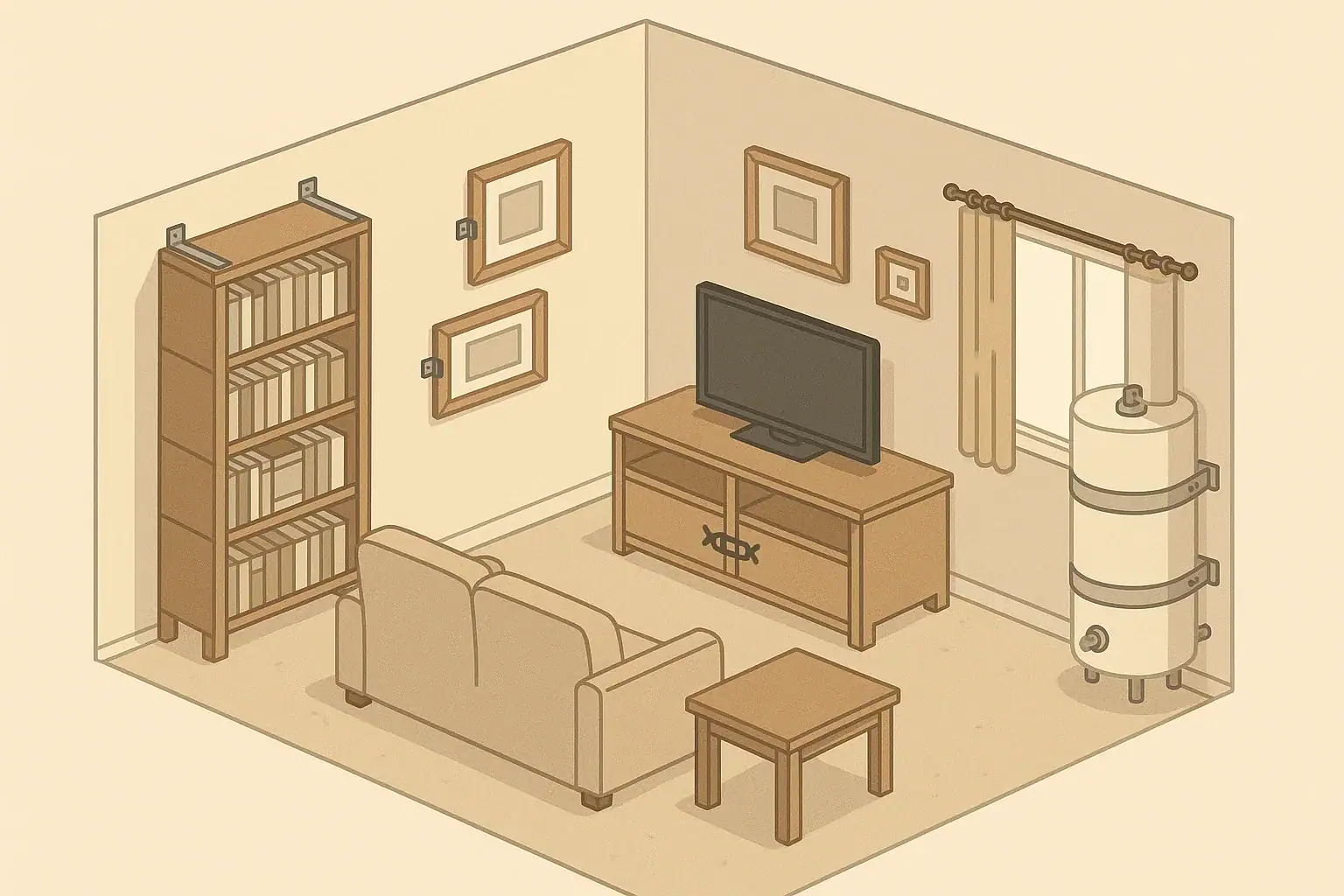
Why an earthquake home hazard checklist matters
During an earthquake, most injuries at home come from falling objects, broken glass, and people trying to move through cluttered, damaged rooms. You cannot control the shaking, but you can reduce what falls, breaks, or blocks your way.
This checklist focuses on three big risk areas inside a typical home:
- Furniture and heavy objects that can tip or fly
- Glass and breakable items that can shatter
- Basic utilities that can leak, spark, or fail
Walk through your home one room at a time. You do not have to fix everything in one day. Start with the rooms you use most and the items that could hurt someone if they fell.
Secure tall and heavy furniture
Anything tall, heavy, or top-heavy can tip in strong shaking. Focus first on bedrooms, living rooms, and kids’ spaces.
What to check
- Bookcases, shelving units, and storage cabinets
- Dressers and wardrobes/armoires
- TV stands and entertainment centers
- China cabinets, hutches, and curio cabinets
- Garage shelving with tools, paint, or heavy bins
How to secure furniture
For each tall or heavy piece, check:
- Is it attached to a wall stud? Use furniture straps, brackets, or L-brackets designed for this purpose. Fasten into wall studs, not just drywall.
- Is the weight low and centered? Store heavier items on lower shelves or drawers. Keep lighter items up high.
- Are drawers and doors likely to fly open? Add simple latches or catches so they stay closed during shaking.
- Is the path to exits clear? Move tall or unstable pieces away from doors and main walkways.
If you rent, ask your landlord what is allowed for wall anchors. In some cases, removable or lower-impact fasteners may be acceptable. When in doubt, ask a qualified contractor or building professional for options that fit your walls.
Make TVs, appliances, and heavy decor safer
Large electronics and appliances can slide, fall, or block doors. Heavy decor can become dangerous projectiles.
Televisions and electronics
- Use anti-tip straps or a secure wall mount rated for your TV size and weight.
- Place TVs on low, sturdy stands if they are not wall-mounted.
- Bundle and shorten cords so they do not snag or pull devices down.
Kitchen and laundry appliances
- Check that refrigerators, freezers, washers, and dryers are on level surfaces and cannot easily roll or walk.
- Use appliance straps or brackets where recommended by the manufacturer.
- Store heavy items (like large pots or bulk food) in lower cabinets or on lower pantry shelves.
Wall decor and other heavy items
- Use closed hooks or earthquake-rated picture hooks for framed art and mirrors.
- Avoid hanging heavy objects over beds, cribs, sofas, or frequently used chairs.
- Secure large decorative items (vases, sculptures, speakers) with museum putty or similar non-damaging stabilizers, especially on high shelves.
Reduce glass and breakable hazards
Broken glass can make it hard and painful to move around after an earthquake. Focus on windows, glass doors, mirrors, and fragile items.
Windows and glass doors
- Keep beds and cribs away from windows and large glass doors when possible.
- Use curtains or blinds that can help catch small shards if glass breaks.
- Consider safety film on large windows or glass doors in high-risk areas, following manufacturer instructions or professional installation guidance.
Mirrors and framed glass
- Secure mirrors and glass frames with closed hooks or brackets, not just nails.
- Avoid placing large mirrors directly above beds, couches, or play areas.
Dishes, glassware, and collectibles
- Use cabinet latches on cupboards with glassware or heavy dishes.
- Place heavier or more fragile items on lower shelves.
- Use non-slip liners or museum putty for items on open shelves.
- Keep a sturdy pair of shoes and a flashlight near each bed in case you need to walk through broken glass at night.
Check gas, water, and electrical utilities
Earthquakes can damage gas lines, water pipes, and electrical systems. You may not be able to prevent all damage, but you can prepare to respond more safely.
Always follow local building codes, utility company rules, and manufacturer instructions. If you are unsure, contact a licensed professional.
Gas safety basics
- Know where your main gas shutoff valve is and how to turn it off safely with a wrench or built-in handle.
- Store a suitable wrench or shutoff tool near the valve, but not attached to it.
- Do not practice turning off gas unless your gas company or a qualified professional says it is safe to do so.
- After an earthquake, leave the gas on unless you smell gas, hear hissing, or see other clear signs of a leak. If you suspect a leak, get everyone out, move away from the building, and contact your gas company or emergency services from a safe location.
For more detailed guidance, see the gas safety information from the U.S. Consumer Product Safety Commission and your local gas utility.
Water heater and water lines
- Strap your water heater securely to wall studs using a kit or method that meets local code.
- Make sure flexible water and gas connectors are in good condition and installed according to code.
- Know where your main water shutoff is and how to turn it off if a pipe breaks.
The earthquake guidance from Ready.gov includes general advice on securing water heaters and utilities.
Electrical panel and cords
- Know where your main electrical panel is and how to switch off individual circuits and the main breaker.
- Do not overload outlets or power strips. Overloaded circuits can be more dangerous if damaged.
- Keep cords out of walkways so they do not trip you if items shift or fall.
- If you see damaged wiring, sparks, or smell burning after an earthquake, turn off power at the main breaker if it is safe to reach, then contact a licensed electrician.
For general household electrical safety, you can review information from the National Fire Protection Association on home electrical safety.
Make bedrooms and living areas safer to move through
Plan for what it will feel like to move through your home in the dark, possibly barefoot, with items on the floor.
- Move heavy objects away from beds, cribs, and favorite sitting spots.
- Keep nightstands and side tables stable and uncluttered.
- Store a flashlight or headlamp and sturdy shoes near each bed.
- Keep main walkways and exit routes free of clutter and unstable furniture.
- Secure hanging lights and ceiling fans according to manufacturer instructions.
Room-by-room quick checklist
Use this as a simple pass-through list. Mark each item as done, not needed, or to-do later.
Bedroom
- Bed and crib away from windows and heavy wall decor
- Dressers and wardrobes strapped to wall studs
- TVs and monitors secured or placed low
- Shoes and flashlight within easy reach
Living room
- Bookcases and media centers anchored
- Large frames and mirrors on closed hooks
- Heavy decor secured or placed low
- Clear path from seating areas to exits
Kitchen
- Cabinet latches on dishes and glassware
- Heavy items stored low in cabinets or pantry
- Refrigerator and tall cabinets secured
- Know where fire extinguisher is and how to use it, following local guidance
Bathroom
- Medicine cabinet items stored so they will not spill easily
- Mirror secured with appropriate hardware
- Non-slip mats to reduce falls on wet floors
Garage or storage areas
- Heavy shelving anchored to walls
- Heavy bins and tools stored low
- Chemicals and paints in stable, closed cabinets
- Clear path to exits and utility shutoffs
When to call a professional or local officials
Some earthquake safety work is simple do-it-yourself. Other tasks should be handled by a qualified professional or your local utility. In particular:
- Gas line changes, new gas appliances, or suspected gas leaks
- Electrical panel work, damaged wiring, or new circuits
- Major structural changes, such as bracing walls or foundations
- Water heater installation or relocation that affects plumbing or gas lines
Local building departments, emergency management offices, and utility companies can tell you what is required in your area and what help is available. In an emergency, follow the instructions of local authorities first, even if they differ from general guidance.
Frequently asked questions
What should I secure first for earthquake safety at home?
Start with anything that could seriously injure someone if it fell: tall bookcases, dressers, TVs, and heavy items near beds or main seating areas. Then move to glass cabinets, kitchen cupboards with heavy dishes, and your water heater. After that, work on clearing and protecting main exit routes.
Is it safe to turn off my own gas after an earthquake?
You should only turn off your gas if you suspect a leak, such as smelling gas, hearing hissing, or seeing obvious damage to gas lines. If you do turn it off, do not turn it back on yourself; contact your gas company or a qualified professional. If you are unsure how to operate your shutoff valve safely, ask your gas utility for instructions before an emergency.
Do I need special hardware to anchor furniture for earthquakes?
Use hardware designed to secure furniture to walls, and install it according to the product instructions and your wall type. Fasten into wall studs whenever possible. If you are unsure what your walls can support, or you have masonry or other non-standard walls, ask a contractor or building professional for advice.
How often should I review my earthquake home hazard checklist?
Review your home at least once a year, and also after major changes such as moving furniture, buying new appliances, or adding shelving. A quick check before and after major home projects can help you keep hazards from creeping back in.
- Simple checklists and realistic planning
- Water, power, lighting, and pantry basics
- Family plans (kids, pets, seniors) and seasonal prep
Affiliate disclosure
As an Amazon Associate, we earn from qualifying purchases. Some links on this site may be affiliate links. If you buy through these links, we may earn a small commission at no extra cost to you. This helps support our content. Learn more.