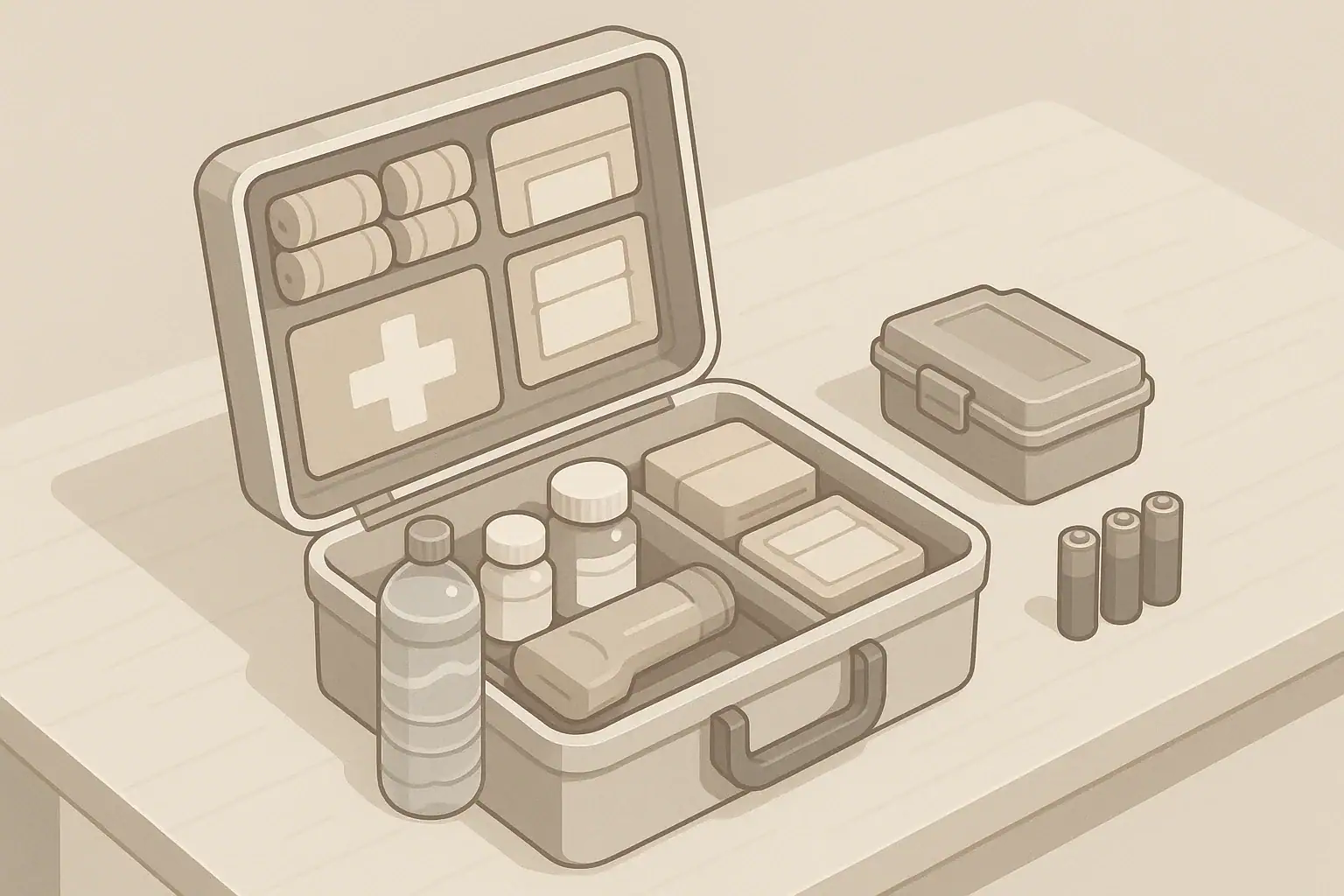
Why button battery safety matters in emergency kits
Button batteries are useful in emergency gear for small flashlights, headlamps, keychain lights, thermometers, and some medical devices. But they also pose a serious risk if swallowed or inserted into the nose or ears, especially for young children.
In an emergency, your home may be crowded, dark, and stressful. That can make it easier for a loose battery to be dropped, lost, or picked up by a child. Safe storage and packaging help you keep batteries ready to use while lowering the chance of a medical emergency.
This guide focuses on three things: how to store button batteries in your emergency kit, how to package them so they do not come loose, and how to childproof your kit as much as possible.
Know the risks of button batteries
Button batteries can cause harm quickly if swallowed or placed in the nose or ears. According to the U.S. Consumer Product Safety Commission (CPSC), they can cause internal burns and other serious injuries. You can read more on the CPSC button battery safety page.
Key points to keep in mind:
- Very small, shiny batteries are attractive to young children.
- Damage can begin in a short time if a battery is stuck in the throat.
- Even “used” button batteries can still cause injury.
- In an emergency, it may be harder to notice that a battery is missing or that a child has swallowed one.
Because of this, the safest approach is to treat every loose button battery as if it could cause serious harm and to plan your emergency kit around preventing access.
Decide if you really need button batteries in your kit
Before adding button batteries to your emergency supplies, decide whether they are truly necessary.
- Check your devices. Some flashlights, lanterns, and radios use AA or AAA batteries instead. These are easier to handle and usually safer to store.
- Identify essential devices that require button batteries. Examples may include certain medical devices, hearing aids, or small specialty lights.
- Limit the number of spare button batteries. Store only what you reasonably expect to use for those specific devices.
If you can choose between two devices and one uses standard batteries, that option is usually simpler and safer for a family emergency kit, especially with young children in the home.
Safe storage: where to keep button batteries
Once you know which button batteries you must keep, plan where they will live inside your emergency supplies.
- Keep them high and out of sight. Store the emergency kit itself in a place that young children cannot reach easily, such as a high shelf or locked closet.
- Use a dedicated battery container. Place button batteries in a small, hard-sided container that closes securely. Avoid tossing them loosely into pouches or pockets.
- Separate from snacks and toys. Do not store batteries in the same compartment as food, treats, or comfort items for children.
- Label the container. Use clear wording such as “Batteries – Keep Away from Children.” This helps adults remember to handle it carefully during a stressful moment.
- Keep away from metal objects. Store batteries so they do not touch coins, keys, or other metal items that could cause short circuits.
If you maintain more than one emergency kit (for example, a home kit and a car kit), apply the same storage rules to each one.
Safer packaging for button batteries
Packaging is your second line of defense after good storage. The goal is to prevent batteries from becoming loose, even if the kit is dropped or rummaged through in the dark.
Keep original child-resistant packaging when possible
- Leave batteries sealed. If your button batteries come in child-resistant packaging, keep them in that packaging until you actually need to use one.
- Do not cut them apart loosely. Avoid cutting open the entire package just to take out one battery. Open only what you need and keep the rest sealed.
- Store opened cards inside another container. If you must open a multi-pack, place the remaining batteries (still in their blisters if possible) into a small, secure container.
Use a secure secondary container
If you do not have original packaging, or it is not child-resistant, add a second layer of protection.
- Choose a rigid container with a tight closure. A small screw-top or snap-lid container that is difficult for a child to open is better than a simple plastic bag.
- Avoid easy-open bags. Thin resealable bags can tear and are easy for children to open; use them only inside a harder container.
- Do not tape batteries directly together. Taping can help prevent short circuits, but it is not a childproof method and can leave sticky residue. If you tape terminals for safety, still keep batteries inside a secure container.
Keep used batteries just as secure
Used button batteries can still be dangerous. Plan for them in your kit:
- Have a separate “used battery” container. Label it clearly and keep it closed.
- Do not throw used batteries loose into the trash. In an emergency, trash may be accessible to children or pets.
- Dispose of used batteries properly when conditions allow. Follow local guidance for household hazardous waste or battery recycling.
Childproofing your emergency kit
Childproofing is about slowing access and adding reminders for adults, especially when everyone is stressed or tired.
Basic childproofing steps
- Use a kit with a secure closure. A latch, zipper, or buckle that requires some hand strength can slow a curious child.
- Place batteries in an inner compartment. Keep the battery container inside a zippered pocket or inner pouch, not loose at the top of the kit.
- Add visual reminders. A simple label such as “Batteries – Adult Use Only” on the inner pocket can help adults stay alert.
- Keep tools separate. If a device needs a screwdriver or coin to open the battery compartment, store that tool separately so a child cannot easily open the device.
Plan for different ages and abilities
- Toddlers and preschoolers. Focus on keeping the entire kit out of reach and using containers that are hard to open.
- School-age children. Teach them that batteries are not toys and should never go in the mouth, nose, or ears.
- Children with developmental or sensory differences. You may need extra layers of protection, such as locked storage or placing button-battery devices in a separate, supervised area.
If you have questions about how to adapt safety steps for your child’s specific needs, consider talking with your pediatrician or another qualified health professional.
Device safety: keeping batteries secure inside equipment
Button batteries are not only a risk when stored; they can also fall out of devices or be removed by children.
- Choose devices with secured battery compartments. Look for compartments that require a tool (such as a screwdriver) or at least a firm latch to open.
- Inspect devices regularly. Check for loose covers, cracked cases, or tape that is peeling away.
- Do not leave small devices unattended. In an emergency shelter area or during a power outage, keep small battery-powered items where adults can see them.
- Remove batteries from nonessential devices. If you have small gadgets that are not critical for safety or health, consider removing their button batteries before storing them in the kit. Keep the batteries in your secure container instead.
For devices that are medically necessary, follow the manufacturer’s instructions and any guidance from your healthcare provider.
What to do if a button battery may have been swallowed
Even with careful planning, accidents can happen. It is important to know in advance what to do if you suspect a child has swallowed a button battery or placed one in the nose or ears.
The National Capital Poison Center’s button battery page provides detailed guidance on what to do and what not to do. You can also contact Poison Help at 1-800-222-1222 in the United States for immediate advice.
General points to keep in mind:
- Treat it as an emergency. Seek medical care right away if you suspect a battery has been swallowed or inserted in the nose or ears.
- Do not wait for symptoms. Harm can begin before symptoms are obvious.
- Follow poison control or emergency instructions exactly. They may give specific steps based on the child’s age and situation.
- Bring the battery packaging or a matching battery if you can. This can help medical staff identify the battery type, but do not delay care to look for it.
Local emergency services and healthcare professionals are the best source of guidance in an actual incident. Their instructions should always take priority over general information.
Simple checklist for your kit
Use this quick list when you update or build your emergency kit:
- Identify which devices in the kit use button batteries.
- Remove nonessential button-battery devices if possible.
- Store only the number and type of button batteries you truly need.
- Keep batteries in original child-resistant packaging when available.
- Place all button batteries (new and used) in a rigid, secure container.
- Label the container clearly and store it in an inner compartment.
- Keep the entire kit out of reach of young children.
- Review button battery emergency steps and keep Poison Help contact information handy.
Review your emergency kit at least once a year, or after any major use, to confirm that batteries are still secure, devices are in good condition, and everyone in the household understands the basic safety rules.
Frequently asked questions
Should I avoid button batteries completely in my emergency kit?
If you can choose devices that use standard batteries instead of button batteries, that usually simplifies safety. However, some important devices, including certain medical equipment, only work with button batteries. In those cases, focus on secure storage, child-resistant packaging, and careful supervision rather than avoiding them entirely.
How often should I check button batteries in my kit?
Checking once or twice a year works for many households, such as when you test smoke alarms or review other emergency supplies. Also check after any time the kit is used, moved, or reorganized. Confirm that batteries are not expired, packaging is intact, and containers still close securely.
Is it safe to keep button batteries in my car emergency kit?
Button batteries can be stored in a car kit if they are kept in a secure, closed container and the kit is out of reach of children. Be aware that temperature extremes may affect battery performance over time. Check them regularly and replace them according to manufacturer guidance, especially in very hot or cold climates.
Where can I find official guidance on button battery safety?
For U.S. households, the U.S. Consumer Product Safety Commission button battery safety center and the National Capital Poison Center button battery information page provide detailed, up-to-date safety information and emergency steps.
- Simple checklists and realistic planning
- Water, power, lighting, and pantry basics
- Family plans (kids, pets, seniors) and seasonal prep
Affiliate disclosure
As an Amazon Associate, we earn from qualifying purchases. Some links on this site may be affiliate links. If you buy through these links, we may earn a small commission at no extra cost to you. This helps support our content. Learn more.