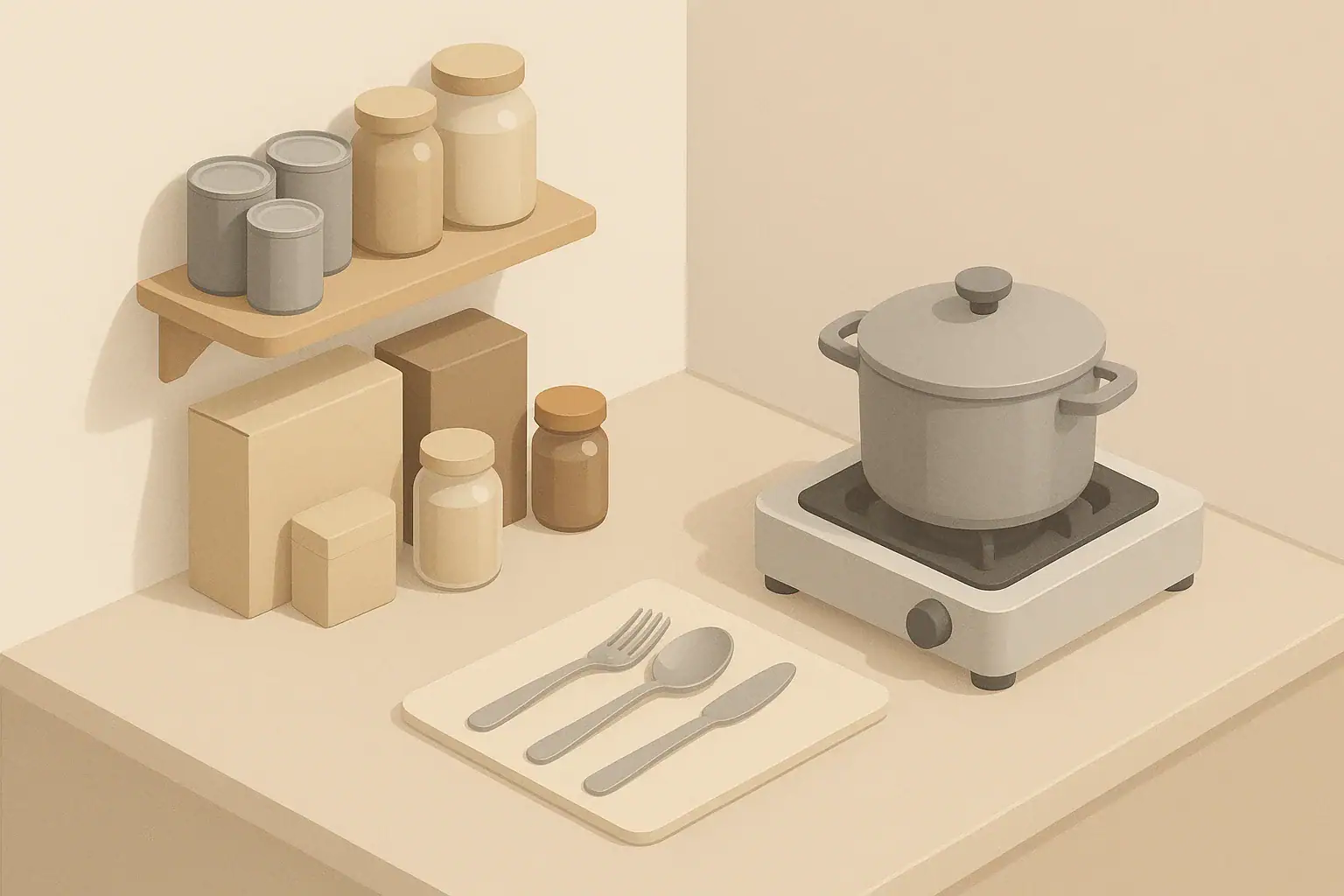
Why Butane Stoves Are Common for Emergency Cooking
A small tabletop butane stove is a practical backup for short-term power outages and simple emergency cooking at home. It runs on disposable butane canisters and is designed for portability and quick setup.
People often choose butane stoves for emergencies because they are:
- Compact: Easy to store in apartments, small homes, and limited kitchens.
- Simple to operate: Usually one control knob and a built-in ignition.
- Quick to deploy: Can be set up and running in a few minutes.
- Good for basic meals: Boiling water, heating canned foods, or cooking simple one-pot dishes.
At the same time, butane stoves produce open flame and combustion gases, so they must be used with attention to ventilation, fuel handling, and placement. The goal is calm, practical readiness: a stove that works when you need it, used in a way that fits family life, rentals, and small spaces.
Ventilation Basics: Where and How to Use a Butane Stove
Any open-flame burner uses oxygen and produces combustion byproducts, including carbon monoxide and water vapor. Good ventilation helps dilute these gases and move them out of your living space.
Best locations for emergency butane cooking
The safest place to use a portable butane stove is generally outdoors or in a semi-outdoor area, as long as the stove is protected from wind and rain and is on a stable, nonflammable surface.
Safer options typically include:
- Covered patio, porch, or balcony: Open to the outside on at least one side.
- Garage with the main door fully open: Stove placed near the open side, away from stored fuel and clutter.
- Outdoor table or sturdy surface: With overhead protection if possible, and clear space around the burner.
Many people live in apartments or condos without private outdoor space. In those situations, it may be better to focus on no-cook or low-cook food options, or to plan for cooking in a well-ventilated shared outdoor space where it is allowed and safe.
Indoor use: why caution matters
Using a butane stove indoors involves added risk because combustion gases can build up in enclosed spaces. If you are considering indoor use in a power outage, think through:
- Room size: Larger, higher-ceiling rooms disperse gases better than small, enclosed spaces.
- Ventilation options: Ability to open windows on opposite sides of the room and create cross-breeze.
- Duration of use: Short, intermittent use (such as boiling water) is less demanding than hours of continuous cooking.
- Local codes and landlord rules: Some buildings prohibit open-flame appliances indoors.
If you ever use a butane stove indoors, prioritize:
- Opening multiple windows and, if possible, a door to the outside.
- Keeping cook times as short as practical.
- Staying alert to any unusual smells, headaches, or discomfort and stopping use if anything feels off.
Many households choose to keep a battery-powered or plug-in carbon monoxide alarm in the home as a general safety practice, regardless of stove type.
Example values for illustration.
| Home situation | Preferred cooking spot | If that is not possible | Extra precautions to consider |
|---|---|---|---|
| House with yard and covered patio | Patio table, away from walls and overhangs | Garage with wide-open door | Keep flammables and fuel away from burner area |
| House without patio but with driveway | Sturdy table in driveway, sheltered from wind if possible | Open garage entry with stove near the opening | Use windbreaks that are nonflammable and stable |
| Apartment with balcony | Balcony on stable surface, with clear overhead space | Shared outdoor area if building allows it | Check building rules and avoid railing edges |
| Apartment without balcony | Common outdoor area, if permitted | Short, ventilated indoor use only if necessary | Open windows, limit cook time, stay present at stove |
| Mobile home or small cottage | Outdoor picnic table or similar surface | Covered entry area with open sides | Secure stove against tipping and wind gusts |
| High-rise with strict open flame rules | No-flame, no-cook food plan | Community shelter or designated cooking area | Coordinate with building management in advance |
Safe Setup: Surfaces, Clearance, and Burner Basics
Safe setup is as important as where you cook. A butane stove is small but produces a concentrated flame and hot metal surfaces.
Stable, nonflammable surfaces
Place the stove on a sturdy, level surface that will not easily tip, shift, or burn. Examples include:
- Stone, tile, or metal tables.
- Thick wood tables with a metal tray or tile under the stove as a heat barrier.
- Concrete steps or blocks, with the stove leveled and centered.
Avoid using the stove directly on soft plastic, thin tablecloths, or unstable camp-style tables that can wobble if bumped.
Clearance from walls and overhead items
Allow generous space around and above the burner so heat does not build up where it should not. As a simple rule of thumb:
- Keep open flame several hand-widths away from curtains, cabinets, and other combustibles.
- Do not use under low shelves or overhanging plants or decorations.
- Keep paper towels, dishcloths, and packaging well away from the stove.
Make sure children and pets cannot easily bump into the stove, pull a pot handle, or tug on a tablecloth. If necessary, designate a “cooking zone” on the floor with tape or an obvious boundary and ask kids to stay outside it.
Basic operating habits
Good habits make emergency cooking calmer and safer:
- Read the instructions in advance: Do this once when you first purchase the stove, not by flashlight during an outage.
- Always supervise the flame: Do not walk away with something simmering.
- Match pot size to burner: Use pots that fully cover the flame but do not massively overhang the stove body.
- Turn off and cool before moving: Let the stove and pot cool before relocation or storage.
Fuel: Sizing Your Butane Canister Supply
Butane stoves typically use small metal canisters that lock into a side compartment. Each canister contains enough fuel for a limited period of cooking, depending on flame setting and how long the burner runs.
Estimating how much butane you might use
Actual fuel use depends on your stove and cooking style, but for simple planning, many households assume that a single canister can handle several short cooking sessions. You might plan around examples like:
- Boiling water for hot drinks or simple dehydrated meals once or twice a day.
- Heating canned soup or stew for a small family.
- Cooking quick items such as scrambled eggs or pasta.
A common approach is to estimate how many hot meals you would like to be able to prepare in a 3–7 day outage and stock enough canisters to cover that number, plus a small margin.
Factors that increase fuel use
To stretch butane during an emergency, be aware of what uses more fuel:
- Running at maximum flame: Higher heat uses more fuel per minute.
- Long cook times: Slow-simmer dishes or large pots of beans take more fuel.
- Cooking uncovered: Without lids, heat escapes and cook times increase.
- Cold or windy conditions: More energy is needed to bring and keep food hot.
You can conserve fuel by choosing simple recipes, pre-chopping ingredients, and using lids on pots whenever possible.
Fuel Storage and Handling in Homes and Apartments
Butane canisters are pressurized containers. Storing them correctly helps reduce risk and keeps them ready for emergencies.
Where to store spare canisters
General storage practices for small butane canisters include:
- Cool, dry, and shaded: Avoid direct sun exposure and hot spots such as near ovens or heaters.
- Away from open flame: Do not store right next to the stove, grills, or fireplaces.
- Ventilated area: A place that does not trap fumes if a canister slowly leaks.
Many people choose a garage, utility closet, or other out-of-the-kitchen storage location, placed in a plastic bin or container that keeps them organized but not sealed airtight.
Apartment and small-space considerations
If you live in a small apartment without a garage or storage room, consider:
- Storing a modest number of canisters in a cool interior closet.
- Keeping canisters upright and away from items that might puncture or crush them.
- Checking local building or fire codes for any relevant limits or recommendations.
It can be helpful to label a small bin “fuel” for your own awareness, even if you do not write on the canisters themselves.
Checking canisters periodically
It is useful to look over your butane canisters once or twice a year when you review other emergency supplies. Simple checks include:
- Wiping off dust or moisture.
- Checking for obvious rust, dents, or corrosion.
- Rotating older canisters to be used first during practice cooking.
Never use canisters that look significantly damaged or have been exposed to extreme heat.
Lighting, Ignition, and Backup Options
Most modern butane stoves include a built-in ignition mechanism, but it is wise to have backup ways to light the burner.
Practicing ignition before an emergency
Try the following once you first get the stove:
- Attach a canister following the instructions.
- Test the ignition while the room is well ventilated.
- Practice turning the flame up and down and fully off.
By doing a short trial run, you confirm the stove works and you understand its controls before relying on it during an outage.
Backup lighting methods
Because igniters can fail, keep at least one other way to light the stove safely, such as:
- Long-stem matches.
- Long-handled lighter.
Turn the knob to allow gas flow only when your backup flame is ready, and keep your hands and sleeves clear of the burner area.
Simple Emergency Menus That Work Well with Butane Stoves
Simple meals ahead of time helps you use less fuel and reduce stress during an emergency. A butane stove excels at quick, straightforward cooking tasks.
Meal ideas that cook quickly
Consider stocking foods that:
- Heat in one pot, like canned soups, stews, and chili.
- Rehydrate with boiling water, such as instant oats or simple dehydrated meals.
- Cook in a few minutes, like eggs or thin pasta.
Pair these with shelf-stable sides like crackers, nuts, or canned vegetables that can be eaten without cooking if needed.
One-pot cooking to save fuel
Combining ingredients into a single pot reduces cook time and cleanup. Examples include:
- Rice or pasta cooked with canned beans and vegetables.
- Oats cooked with canned fruit.
- Simple broth-based soups with added canned protein and grains.
Using lids, pre-measuring ingredients, and avoiding frequent stirring also help shorten cooking time.
Example values for illustration.
| Food type | Storage tip | Rotation interval idea | No-cook or low-cook use |
|---|---|---|---|
| Canned soups and stews | Group by flavor and date on a pantry shelf | Use older cans every 6–12 months | Eat warmed on stove or at room temperature if necessary |
| Canned beans | Store near rice or grains for easy meal planning | Incorporate into weekly meals year-round | Rinse and add to salads or eat straight from can |
| Instant oats and cereals | Keep in sealed containers to protect from moisture | Cycle through every few months at breakfast | Prepare with cold milk or water if hot water is limited |
| Pasta and rice | Store in clear bins with measuring cup nearby | Use from the front of the bin, restock at back | Parboiled varieties need shorter cooking on the stove |
| Canned vegetables and fruit | Group vegetables on one shelf, fruit on another | Use a few cans each month in regular recipes | Serve chilled or at room temperature without cooking |
| Nut butters and shelf-stable spreads | Store in cool cupboard away from heat sources | Rotate into lunches every few weeks | Spread on crackers or bread for no-cook meals |
| Shelf-stable milk or plant drinks | Keep upright in a box or bin to prevent damage | Use oldest cartons first, replenish occasionally | Drink as-is or mix with cereal and oats |
Cleanup, Storage After Use, and Practicing Your Plan
Thoughtful cleanup and storage keep your butane stove ready for the next event and help prevent mess or damage.
After-cooking checklist
Once you are done cooking:
- Turn the burner fully off and confirm the flame is out.
- Let the stove and pot cool completely before moving.
- Wipe off food spills and grease with a damp cloth.
- Detach the fuel canister if the instructions direct you to do so between uses.
Store the stove in a dry place, ideally in its box or a dedicated bin with a small towel to prevent scratches and rattling.
Practice before you need it
A brief practice session turns emergency cooking into a familiar routine:
- Once or twice a year, cook a simple meal on the butane stove.
- Time how long typical dishes take so you can better estimate fuel needs.
- Involve family members so more than one person knows how to operate the stove safely.
This low-key practice supports the broader goal of practical home readiness: calm, workable plans for short-term disruptions, whether you live in a large house or a small apartment.
Authoritative sources
Safety recommendations can change. Confirm critical details with current official guidance and local authorities.
- CDC: Carbon Monoxide Poisoning Basics
- USDA FSIS: Keep Food Safe During Emergencies
- U.S. CPSC: Battery Safety
Frequently asked questions
Can I safely use a butane stove indoors during a power outage?
You can use a butane stove indoors only if the space is well ventilated and you keep cook times short; otherwise combustion gases like carbon monoxide can build up. Open windows and doors to create cross-ventilation, stay in the room while cooking, and use a battery-powered carbon monoxide alarm. Check local codes and landlord rules before using an open-flame appliance indoors.
How much butane should I store for a 3–7 day outage?
Estimate based on how many hot meals you plan to cook and each canister’s runtime on your stove; many households assume one canister covers several short cooking sessions. For light use, planning one to three canisters per person for a three-day outage is a common starting point, with more reserved for longer or heavier cooking. Practice runs help you refine this estimate for your specific stove and menu choices.
What can I do to reduce carbon monoxide risk when using a butane stove?
Wherever possible, use the stove outdoors or in a semi-outdoor area and avoid prolonged indoor cooking. When used inside, open multiple windows or doors to provide fresh air, limit continuous cook time, and keep a carbon monoxide alarm nearby. Stop use immediately if you or others notice headaches, dizziness, or unusual smells.
How should I store spare butane canisters in an apartment?
Store canisters in a cool, dry, shaded, and ventilated location away from heat sources and open flames, keeping them upright and protected from crushing. Avoid leaving them in direct sunlight, hot attics, or near ovens and heaters, and check local regulations for any storage limits. Use a labeled bin to keep them organized without sealing them in an airtight container.
What is the safest way to light a butane stove if the built-in igniter fails?
Use a long-stem match or a long-handled lighter as a backup, and only turn the gas on when your lighting source is already ready at the burner. Keep sleeves and loose clothing clear of the flame, and perform the lighting in a well-ventilated space to avoid gas buildup. Practice this procedure during non-emergency conditions so you are familiar with the steps.
- Simple checklists and realistic planning
- Water, power, lighting, and pantry basics
- Family plans (kids, pets, seniors) and seasonal prep
Affiliate disclosure
As an Amazon Associate, we earn from qualifying purchases. Some links on this site may be affiliate links. If you buy through these links, we may earn a small commission at no extra cost to you. This helps support our content. Learn more.