Most households rely completely on tap water. A broken water main, short-term contamination notice, winter storm, or hurricane can interrupt that supply with little warning. Having some water stored at home gives you a simple buffer so routine life can continue more easily during a disruption.
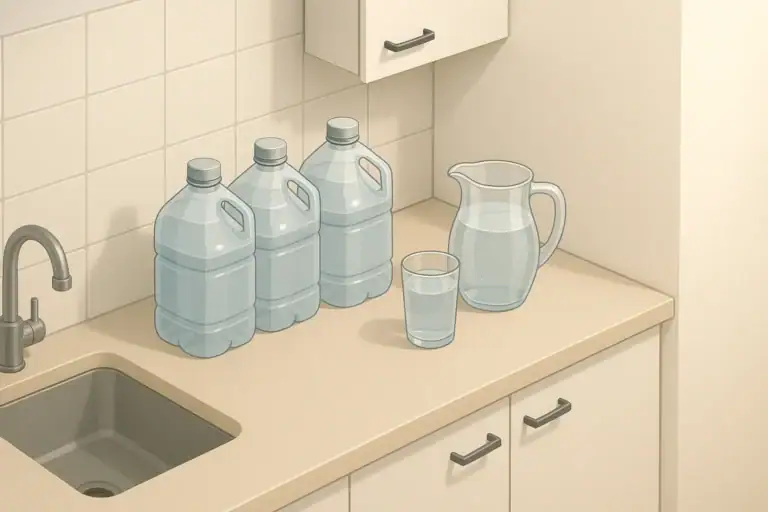
Home water storage does not need to be extreme or space-consuming. For many people, aiming for a few days of basic water needs is a realistic, helpful goal. Thoughtful container choices make it easier to store water safely in apartments, rented homes, or small spaces.
This guide focuses on how to choose the best water containers for home storage—materials, sizes, and caps—so you can build a calm, practical plan that fits your living situation, family, pets, and budget.
Why Home Water Storage Matters for Everyday Readiness
Most households rely completely on tap water. A broken water main, short-term contamination notice, winter storm, or hurricane can interrupt that supply with little warning. Having some water stored at home gives you a simple buffer so routine life can continue more easily during a disruption.
Home water storage does not need to be extreme or space-consuming. For many people, aiming for a few days of basic water needs is a realistic, helpful goal. Thoughtful container choices make it easier to store water safely in apartments, rented homes, or small spaces.
This guide focuses on how to choose the best water containers for home storage—materials, sizes, and caps—so you can build a calm, practical plan that fits your living situation, family, pets, and budget.
Key Principles for Safe Water Storage at Home
Before looking at specific container types, it helps to understand a few basic principles. These apply whether you live in a studio apartment or a large house.
How Much Water to Plan For
Water use varies a lot by person and household, but common planning ideas include:
- Drinking and basic food prep: Often planned at around 1 gallon per person per day for drinking and simple meal preparation.
- Extra for hygiene, cleaning, and pets: Many people add an additional amount per person per day for minimal washing, toilet flushing (if needed), and pets.
- Short-term focus: Even storing enough for 2–3 days can make common disruptions, like a boil-water advisory or short outage, much easier.
Families with infants, seniors, health needs, or multiple pets may want a larger buffer. Think about what is realistic for your space and how you actually use water in a normal day.
Safe Storage Basics
Regardless of container type, these guidelines support safer storage:
- Use food-grade containers: Look for containers intended for food or beverage use, not general-purpose buckets or industrial drums that may have held chemicals.
- Protect from heat and light: Store water in a cool, dark area away from direct sunlight and heat sources to help maintain taste and container integrity.
- Seal tightly: Use containers with secure caps or lids to reduce the chance of contamination, spills, and evaporation.
- Label and rotate: Note the filling date and rotate water periodically so what you have stored remains reasonably fresh.
Example values for illustration.
| Living situation | Primary container type | Typical total volume idea | Key advantage | Main tradeoff |
|---|---|---|---|---|
| Small apartment, single person | 1–3 gallon jugs | 6–12 gallons | Easy to lift and store in closets | More containers to manage and rotate |
| Apartment, couple or small family | Stackable 3–5 gallon containers | 15–30 gallons | Good balance of capacity and portability | Heavier to move when full |
| House with some storage space | Mix of 5 gallon & large barrel | 30–50+ gallons | Higher total storage for short outages | Requires garage or utility area |
| Family with pets | Multiple mid-size jugs | 3–7 gallons per day planned | Separate jugs for pets and cleaning | Needs more labeling and organization |
| Senior households | 1–2 gallon containers | Based on lifting comfort | Easier handling and pouring | More floor or shelf space per gallon |
| Storm-prone regions | Larger stationary containers | Several days of basic needs | Less refilling before each season | Harder to relocate if needed |
Container Materials: Pros and Cons
The material your container is made from affects durability, weight, and how easy it is to keep water tasting acceptable. The most common options are plastic and stainless steel, along with limited use of glass and ceramic for very short-term storage indoors.
Food-Grade Plastic Containers
Home water storage in food-grade plastic is the most widely used choice for home water storage.
Advantages:
- Very light when empty, easier to move and fill.
- Resistant to shattering if bumped or dropped.
- Available in many sizes, from small jugs to larger barrels.
Considerations:
- Can pick up odors from strong-smelling surroundings over time.
- Can warp or degrade if left in hot spaces, such as sun-exposed car trunks.
- May stain or hold flavors if frequently reused for different beverages.
Look for containers that are explicitly intended for food or beverage use. General storage totes and unknown plastic barrels may not be appropriate for drinking water.
Stainless Steel Containers
Stainless steel containers can be useful for certain situations, especially in the kitchen or for portable use.
Advantages:
- Very durable and resistant to impacts.
- Often easier to clean thoroughly.
- Less likely to pick up odors when used with plain water.
Considerations:
- Heavier than plastic, especially at larger sizes.
- Unsuitable for use with some water treatment chemicals that may react with metal; follow treatment instructions carefully.
- Generally more expensive per gallon of storage.
Stainless steel is often best as a supplement to larger plastic storage—such as a few durable jugs kept in the kitchen for daily rotation and easy access.
Glass and Ceramic Containers
Glass pitchers, jars, and ceramic jugs are mostly useful for short-term indoor storage and serving, rather than long-term bulk storage.
Advantages:
- Non-reactive with water and many beverages.
- Do not retain flavors as easily.
Considerations:
- Breakable if dropped or during earthquakes or moves.
- Generally heavy and less space-efficient for larger amounts.
- Often come with lids that are not fully leak-proof.
These containers work best for a day or two of water kept cold in the refrigerator or accessible on the counter while your main storage is elsewhere.
Choosing Sizes: Balancing Capacity, Space, and Lifting Limits
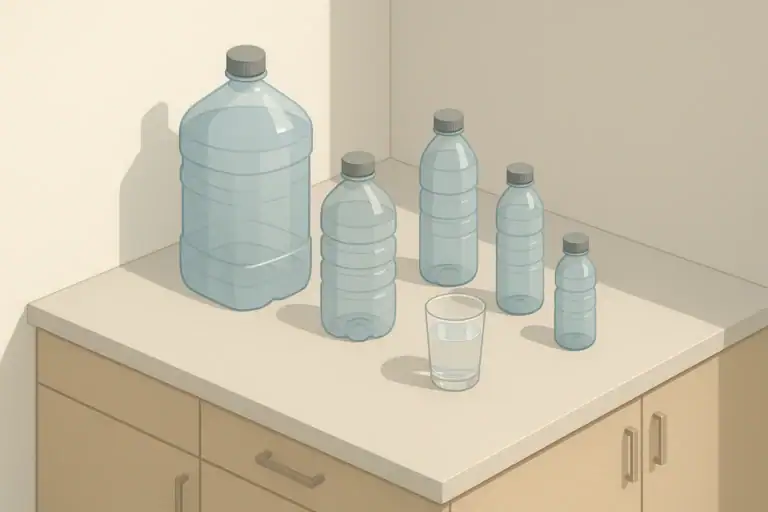
Size is one of the most important and personal decisions. Larger containers store more water but are harder to move, while smaller containers are flexible but require more containers and tracking.
Small Containers (Up to About 2 Gallons)
Small containers include 1–2 gallon jugs, pitchers, and reusable bottles.
Good for:
- People who cannot comfortably lift heavy containers.
- Households with limited storage space where containers need to tuck into cabinets or under beds.
- Daily rotation, such as refilling from the tap every week.
Tradeoffs:
- More containers are needed to reach a multi-day supply.
- More caps and surfaces to sanitize and maintain.
Mid-Size Containers (3–7 Gallons)
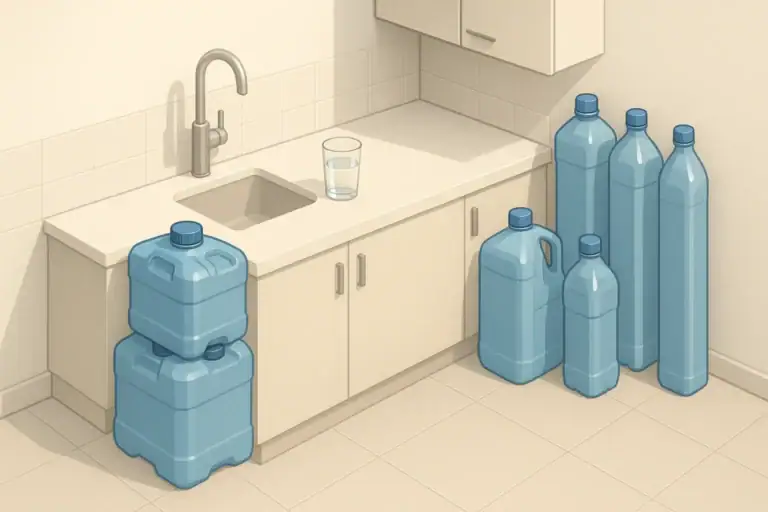
These include many common water jugs and stackable containers in the 3–7 gallon range.
Good for:
- Balancing portability and storage capacity.
- Stacking or lining up along a wall, in a closet, or in a utility area.
- Households that want enough water for several days without very large drums.
Tradeoffs:
- Heavier when full; some people may need help lifting.
- Require a bit more planning for where to place them safely.
Large Containers and Barrels (10+ Gallons)
These are stationary containers that stay where you fill them, such as large drums or rectangular storage tanks.
Good for:
- Homes with garages, basements, or utility rooms.
- Regions with frequent hurricanes or winter storms where longer outages are possible.
- Those who prefer to fill and maintain a larger supply in one place.
Tradeoffs:
- Very heavy when full; difficult or impossible to move without pumping water out.
- Need careful placement away from sources of contamination or potential leaks onto delicate flooring.
- Access often requires a spigot, pump, or siphon hose.
Many households choose a mix—larger stationary storage for overall capacity, plus smaller containers that are easy for all family members to use.
Caps, Lids, and Spigots: Keeping Water Clean and Accessible
The cap or lid system can make the difference between water that stays clear and easy to pour, and water that becomes hard to use or spills easily. Considering caps early can save frustration later.
Secure Screw Caps
Simple screw caps remain one of the most reliable options.
Benefits:
- Provide a tight seal to help keep out dust and insects.
- Reduce spills if containers are knocked or slightly tipped.
- Familiar and simple to use for most people, including older children.
Things to watch:
- Do not overtighten to the point of cracking plastic threads.
- Inspect caps periodically for damage, especially if containers are stacked.
Vented Caps and Pour Spouts
Some caps include built-in spouts or vents for easier pouring, especially on mid-size containers.
Benefits:
- Reduce glugging and sudden surges that cause spills.
- Helpful for filling smaller bottles or cooking pots.
- Can be easier for children or people with limited strength to control.
Things to watch:
- More moving parts mean more surfaces to clean.
- Ensure vents close fully when not in use to limit contamination.
Spigots and Taps for Larger Containers
Stationary barrels and some mid-size containers can be fitted with spigots or taps near the bottom.
Benefits:
- Allow filling cups and pots without lifting heavy containers.
- Useful for children or anyone who cannot tip a large jug safely.
Things to watch:
- Spigots may drip if not installed tightly or if washers wear out.
- Exterior parts are exposed to dust and hands; clean regularly.
- Plan a way to keep a small collection basin or tray under the spigot if stored indoors.
Child and Pet Considerations
In homes with young children or curious pets, it can be helpful to:
- Use containers with caps that do not open accidentally if bumped or nudged.
- Keep the primary drinking water containers off the floor or behind a simple barrier.
- Label separate containers for pet water if needed, so you can monitor how quickly it is used.
Space-Smart Storage Strategies for Different Homes
Every home has different constraints. The best water containers for one family may be impractical for another. Matching container choices to your space makes it more likely that you will maintain your water storage over time.
Apartments and Condos
In smaller homes, water containers often need to share space with everyday items. For targeted tips on storage ideas that fit compact living, see smaller homes.
- Under-bed storage: Low, rectangular containers or sturdy jugs can slide under beds, especially in bedrooms where temperatures are more stable.
- Closets and entry areas: A short stack of mid-size containers can fit behind coats or shoes.
- Balcony caution: Avoid storing drinking water containers where they will be exposed to high heat or direct sun for long periods.
Rental Homes
Renters may be limited in what they can bolt to walls or store in shared spaces.
- Choose containers that do not risk leaking onto flooring; consider shallow trays beneath them.
- A mix of several mid-size containers can be easier to relocate during a move.
- Store containers where they are unlikely to be mistaken for cleaning buckets or used for other purposes.
Houses with Basements or Garages
Homes with more storage space have more options, but location still matters.
- Basements: Usually cooler and darker, but consider elevating containers slightly off the ground to avoid contact with any minor flooding.
- Garages: Convenient, but temperatures can become very hot or very cold depending on climate; try to choose the most temperature-stable corner.
- Near entrances: Keeping at least one container near an exit can be useful if you ever need to leave quickly with some water.
Accessibility for Seniors and People with Limited Mobility
Households that include seniors or anyone with limited mobility may want to prioritize:
- More numerous but smaller containers that can be moved a short distance.
- Raised storage locations (such as sturdy shelves at waist height) to reduce bending or reaching.
- Spigots or pumps on larger containers so lifting is not required.
Labeling, Rotation, and Simple Maintenance
Containers are only part of the picture. A simple routine keeps your stored water usable and easier to manage over time.
Labeling Your Containers
Clear labeling can prevent confusion later, especially in stressful situations.
- Use waterproof markers or labels to note the filling date on each container.
- Optionally, note the source (tap, filtered, or other) and any routine treatment method you used.
- Separate containers for drinking, general cleaning, and pet use if that helps with planning.
Rotation Schedules
Rotating stored water helps maintain taste and confidence in your supply.
- Some people choose to rotate every few months; others rotate less often but at least once a year.
- Align rotation with existing routines, such as seasonal home checks or changing smoke alarm batteries.
- When rotating, use the stored water for non-critical tasks if you prefer, such as watering plants or cleaning, then refill containers from your preferred source.
Some people choose to rotate every few months; others rotate less often but at least once a year.
Cleaning and Inspecting Containers
Basic cleaning and inspection steps support long-term use:
- Rinse containers thoroughly before first use and between refills.
- Periodically check for cracks, deformed areas, or damaged caps.
- Ensure that spigots and seals remain in good condition and can be closed securely.
Example values for illustration.
| People & pets | Days you want to cover | Storage approach idea | Rotation cue idea |
|---|---|---|---|
| 1 adult | 3 days | Four 1–2 gallon jugs on closet floor | Rotate at each season change |
| 2 adults | 3–5 days | Six 3–5 gallon stackable containers | Rotate at daylight saving time change |
| Family of 4 | 3 days | One mid-size barrel plus 2–3 small jugs | Rotate during annual home safety check |
| Family of 4 + dog | 3–5 days | Several 5 gallon jugs, one labeled for pet use | Rotate before seasonal storms in your area |
| Senior couple | 3 days | Multiple 1–2 gallon containers at waist height | Rotate on birthdays or anniversaries |
| Shared house (5+ people) | 2–3 days | Combination of barrel in garage and small indoor jugs | Rotate at start of each school term |
Putting It All Together: A Calm, Practical Water Plan
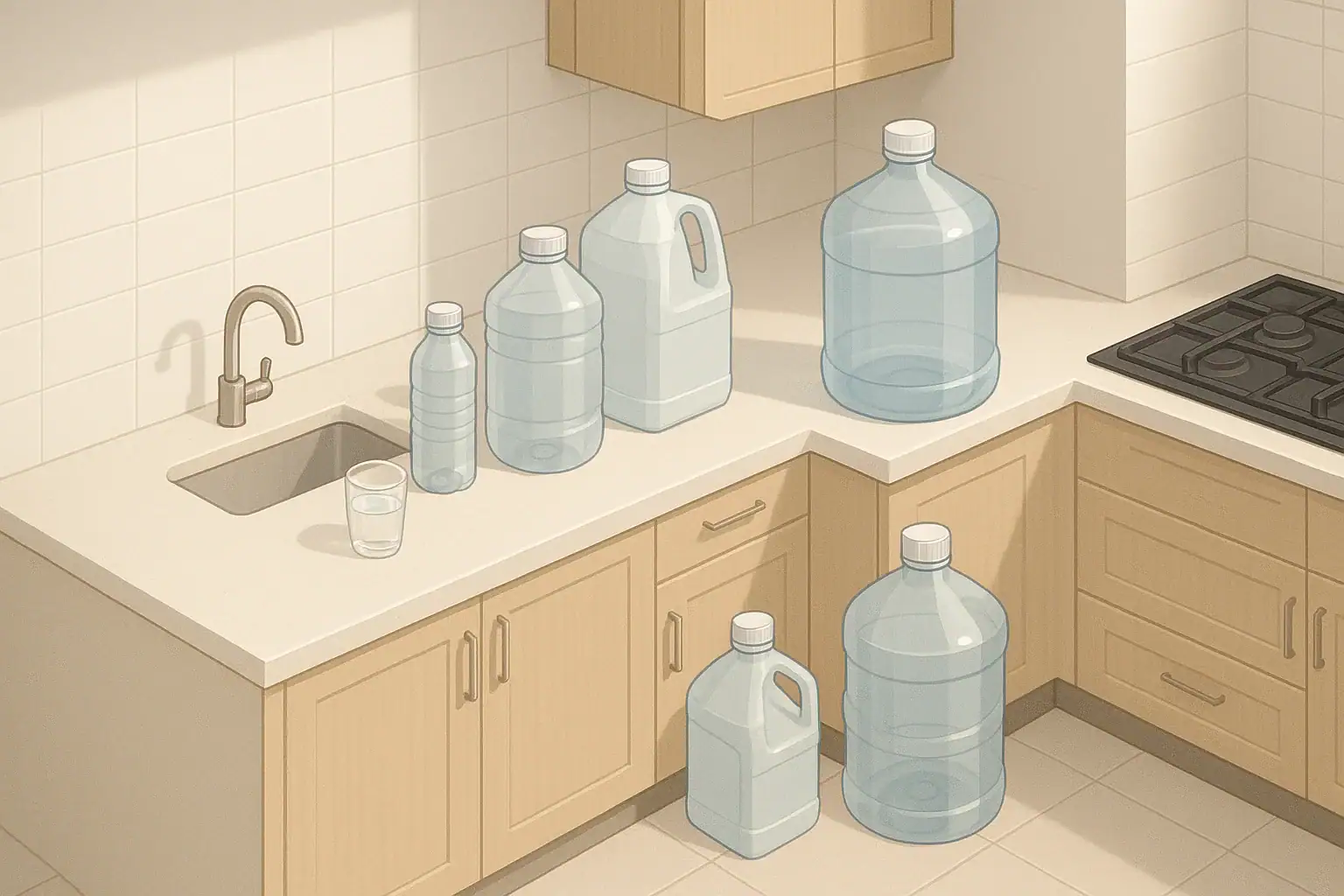
Choosing the best water containers for home storage is mostly about matching your real-life needs to practical options. Consider your space, lifting ability, climate, and household size. Many people find that a mix of container sizes works best: larger containers for overall capacity, and smaller ones for everyday use and easy access.
Once you have a basic setup that fits your home, a simple habit of labeling, rotating, and occasionally inspecting your containers can keep your water storage reliable. That way, when a short-term disruption happens—a broken pipe, a heavy storm, or a temporary advisory—you already have a calm, ready supply of water on hand.
Frequently asked questions
How long can water be safely stored in food-grade plastic containers?
When filled with potable tap water and stored in a cool, dark place with a tight cap, water does not typically become unsafe quickly, but taste and container condition may change over time. For practical purposes, rotate stored water every 6–12 months and inspect containers for cracks, cloudiness, or odors before refilling. Rinse and sanitize containers between refills.
Is it safe to store water in stainless steel containers long-term?
Stainless steel is durable and non-porous, making it a good option for short- to medium-term storage and everyday access, and it tends not to retain odors. However, it is heavier and can react with certain water treatment chemicals, so avoid using incompatible sanitizers and follow treatment instructions; many households use stainless steel as a supplement to larger plastic supplies.
What size container is best for an apartment with limited lifting ability?
For limited strength and tight spaces, 1–3 gallon containers (with 1–2 gallons preferred if lifting is difficult) offer an easy balance of portability and usable volume. Plan how many you need to cover your chosen number of days, and store them where temperatures are stable to reduce taste and container degradation.
How do I prevent caps, spigots, and vents from contaminating stored water?
Clean and sanitize caps, spigots, and any pouring or vent parts before initial use and inspect them regularly for wear or buildup. Keep vents and spigots closed when not in use, store containers off the floor if possible, and rotate water periodically to limit contamination risks.
Can I use glass or ceramic containers for long-term water storage?
Glass and ceramic are non-reactive and good for short-term indoor use, but they are heavy, breakable, and often lack fully leak-proof lids, so they are not ideal for long-term bulk storage. Use them for a day or two of accessible drinking water rather than as your primary reserve.
Recommended next:
- Simple checklists and realistic planning
- Water, power, lighting, and pantry basics
- Family plans (kids, pets, seniors) and seasonal prep
How to Transport Water Safely: Car, Stairs, and Heavy Containers
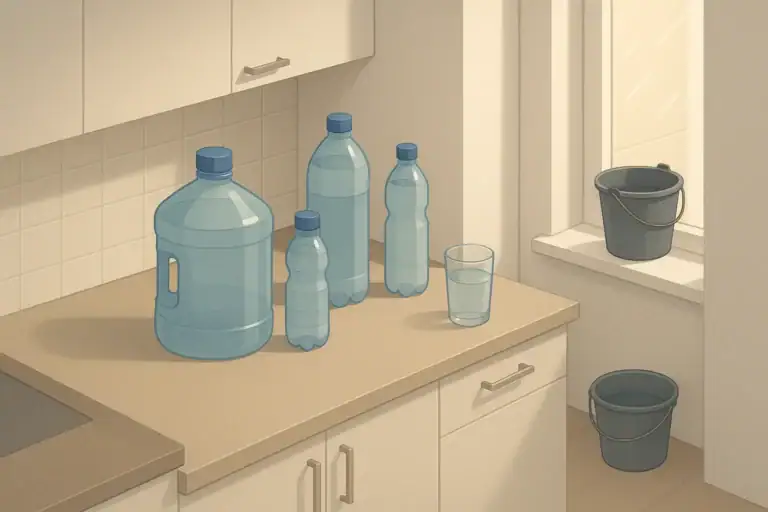
Rainwater for Emergency Use: Practical Limits and Safety Basics
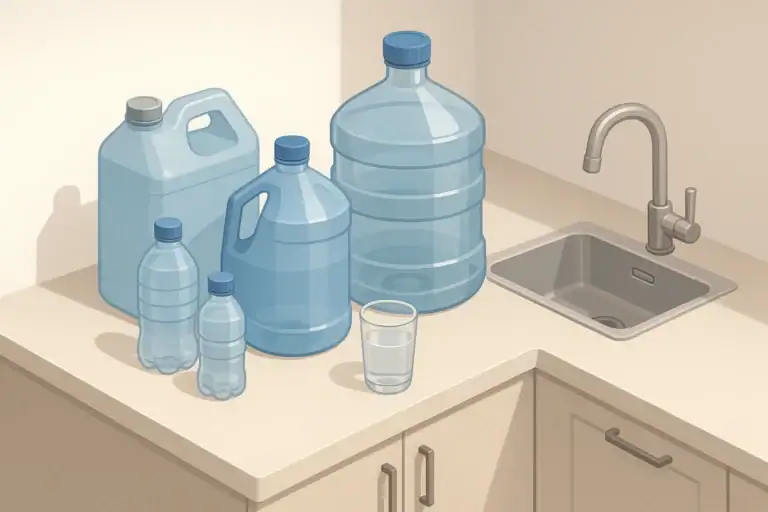
Emergency Household Water Sources: What’s Safe to Use and What’s Not
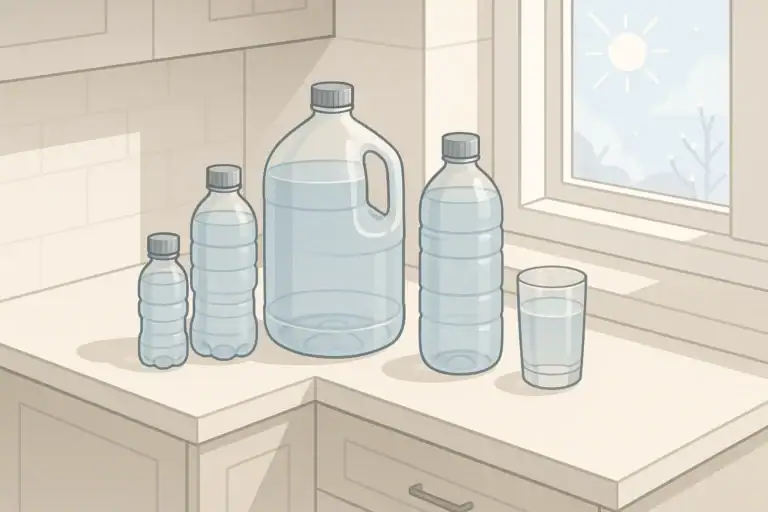
Storing Water in Heat or Freezing Conditions: What Changes
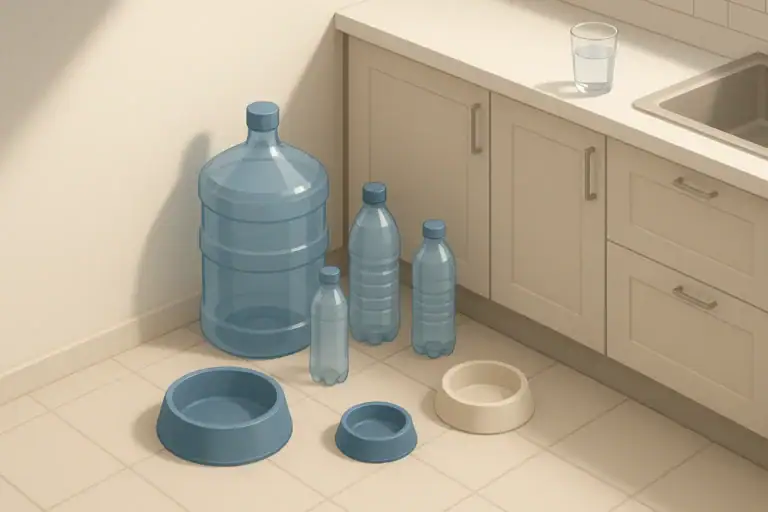
Emergency Water for Pets: How Much to Store and How to Serve It
Making Tap Water Taste Better in an Emergency: Easy Steps