During a power outage, most people reach for whatever light source is closest. But the color of that light can make a real difference in how well you see, how safely you move around, and how easily you fall back asleep afterward.
Two common options are red light and white light. Both have a place in home readiness plans, especially if you want to:
- Move safely through a dark home without tripping
- Check on kids, pets, or older family members at night
- Keep your eyes adjusted to low light outdoors
- Avoid fully waking up when the power goes out at night
This guide explains how red and white light affect night vision and sleep, and how to use each one in practical, low-stress ways at home.
Why Light Color Matters During Power Outages
During a power outage, most people reach for whatever light source is closest. But the color of that light can make a real difference in how well you see, how safely you move around, and how easily you fall back asleep afterward.
Two common options are red light and white light. Both have a place in home readiness plans, especially if you want to:
- Move safely through a dark home without tripping
- Check on kids, pets, or older family members at night
- Keep your eyes adjusted to low light outdoors
- Avoid fully waking up when the power goes out at night
This guide explains how red and white light affect night vision and sleep, and how to use each one in practical, low-stress ways at home.
Basics of Night Vision and Light Color
When lights go out, your eyes do not instantly adjust. It can take several minutes for your vision to adapt to the dark. The type and brightness of light you use can speed up or undo that adjustment.
How Your Eyes Handle Darkness
In low light, your eyes gradually become more sensitive so you can see shapes, obstacles, and basic movement. Strong or bright light can reset this process, making it harder to see when the light turns off again.
Key points about dark adaptation:
- It can take around 20–30 minutes for eyes to fully adapt to darkness.
- Even a brief burst of bright white light can reduce your night vision.
- Dim, focused light helps you see tasks without fully ruining dark adaptation.
Red Light vs White Light in the Dark
Red light and white light affect your vision differently:
- White light is closer to daylight. It gives better color and detail, which helps for tasks like reading, first aid, or finding specific items.
- Red light is often easier on dark-adjusted eyes. It can let you see enough to move safely without resetting your night vision as much as bright white light would.
Neither color is “right” for every situation. A balanced plan uses both depending on what you are doing and who is in your home.
| Situation | Better choice | Reason | Notes |
|---|---|---|---|
| Quick trip to bathroom at night | Dim red | Limits sleep disruption and glare | Use lowest brightness that is still safe |
| Checking on sleeping kids | Red or very warm, dim white | Reduces chance of fully waking them | Aim light at floor or wall, not faces |
| Cooking or detailed tasks | White | Better detail and color visibility | Use diffused light to cut harsh shadows |
| Walking through cluttered hallway | Soft white or brighter red | Safer footing where tripping is a risk | Keep light level just high enough to see hazards |
| Stepping outside to check weather | Red | Helps preserve outside night vision | Good for looking at the sky or distant lights |
| Reading outage updates | White | Improves text clarity | Use limited duration to avoid waking fully |
Red Light: Pros, Cons, and Best Uses
Red lighting is popular in blackout kits because it is generally gentle on eyes that are already used to the dark. Many headlamps and lanterns now include a red mode for this reason.
Advantages of Red Light During Outages
- Less harsh on dark-adjusted eyes: Red light is often perceived as less glaring in a dark room than bright white light.
- Helps you move without fully waking up: For brief nighttime tasks, red light can let you see enough to avoid obstacles while staying closer to a “sleepy” state.
- Useful for outdoor night vision: If you need to look out windows, walk outside, or check on a yard or balcony, red light can help preserve your ability to see in natural darkness.
- Less disruptive for others: Soft red light is less likely to wake a sleeping child or partner than a bright white beam.
Limitations of Red Light
- Poor color accuracy: Objects can look washed out or strange under red light, which is not ideal for tasks where you must distinguish colors or subtle details.
- Not ideal for safety checks: For first aid, checking food, or reading labels, red light can hide important details.
- May feel unfamiliar: Some people find red lighting harder to get used to or slightly disorienting at first. Practice using it before you need it.
Practical Ways to Use Red Light at Home
You do not need to overhaul your whole lighting setup to benefit from red light. Instead, think of it as a specialized tool for specific moments:
- Bedside or hallway use: Keep one light with a red mode near each bedroom for bathroom trips or quick checks at night.
- Outdoor checks: Use red mode on a flashlight or headlamp when stepping outside briefly to look at weather conditions, streets, or shared spaces.
- Shared sleeping spaces: In apartments or small homes where people sleep in the same room, red light can provide just enough brightness to move safely without fully lighting the space.
In any case, keep brightness as low as is safely practical. High-intensity red light can still feel glaring and reduce dark adaptation.
White Light: Pros, Cons, and Best Uses
White light remains the main workhorse for most blackout situations. It more closely resembles typical indoor lighting, which makes tasks easier and safer, especially for families and older adults.
Advantages of White Light During Outages
- Better detail and clarity: White light makes it easier to see small print, steps, cords, and spills.
- More natural for most people: It feels familiar and can reduce confusion or stress in a dark home.
- Safer for high-risk activities: For cooking, using stairs, or moving in cluttered areas, white light can lower the risk of falls or mistakes.
- Helpful for assisting others: If you are helping a child, older adult, or someone with low vision, white light usually supports them better.
Limitations of White Light
- Can be overly bright at night: Intense white beams in a fully dark room can feel blinding and uncomfortable.
- Can interrupt dark adaptation: After using bright white light, you may struggle to see when you switch it off again.
- May make it harder to return to sleep: Strong, cool-toned white light can feel more like daytime, which may make it more difficult for some people to feel sleepy again.
Making White Light More Sleep-Friendly
You can make white light less disruptive during nighttime outages with a few simple habits:
- Choose lower brightness levels: Use the dimmest setting that allows safe movement.
- Diffuse the light: Point flashlights at ceilings or walls to create softer, reflected light instead of harsh beams.
- Prefer warmer tones where possible: If you have options, choose warmer-looking white light for bedrooms and cool white for task areas like kitchens.
- Limit duration at night: Use brighter white light for short, necessary tasks, then switch back to darkness or very dim light.
Sleep-Friendly Lighting Strategies During Nighttime Outages
Power failures often happen during storms or heatwaves, when sleep is already harder. Good lighting choices can make nighttime outages calmer and less disruptive, especially for kids and light sleepers.
Setting Up a Nighttime Lighting Plan
Before an outage happens, decide how you want nighttime lighting to work in your home:
- Pick a primary “night mode” light: For each bedroom, choose one small lantern, flashlight, or headlamp with a dim setting (red or warm white).
- Pre-position lights: Keep them in the same place so everyone knows where to reach in the dark.
- Explain the plan: Tell family members, “At night, use this dim mode first, then brighter light only if needed.”
Using Red and White Light Together
You can combine both light colors in a simple, practical way:
- Red (or very dim warm white) for:
- Getting out of bed
- Checking baby monitors (if battery-powered)
- Moving quietly through bedrooms
- White light for:
- Using stairs or uneven outdoor steps
- Finding medication, first-aid supplies, or specific tools
- Cooking, boiling water, or handling anything hot or sharp
Think of red light as your “soft navigation” option and white light as your “task” option.
Helping Kids and Sensitive Sleepers
Some people are more disturbed by bright light at night than others. For them, planning ahead can make outages less stressful.
- Use gentle light in kids’ rooms: A small, low red or warm white light can be enough for reassurance without fully waking them.
- Keep beams away from faces: Aim light at the floor or walls, not at eyes.
- Practice once: Do a brief “lights out” practice so kids know what to expect and how to find their own light if needed.
- Consider shared hallway lighting: A single dim lantern in a hallway can serve multiple rooms without brightening bedrooms too much.
Safety and Navigation: Different Homes, Different Needs
The best lighting plan depends on your living space and who lives there. A small apartment has different needs than a multi-story house.
Apartments and Small Spaces
In apartments, light spills easily from one room to another. You may not need many separate lights:
- Central lantern: One small lantern in the main room on low to medium brightness can light nearby spaces.
- Doorway positioning: Placing a light near a bedroom door can softly light the hallway without shining directly into sleeping areas.
- Red for late-night trips: A small red-mode light in the bathroom can be enough to move safely without flooding the whole apartment with bright light.
Houses and Multi-Level Homes
Larger homes may need more deliberate planning:
- Stair safety first: Use white light to clearly see steps, railings, and landings.
- Dedicated path lighting: Consider a light for each key path: bedroom to bathroom, kitchen to main exit, and stairs.
- Mix of colors: Red or dim warm white for bedrooms and halls, brighter white for kitchens, garages, and entrances.
Considerations for Seniors and Mobility Limits
For older adults, anyone with low vision, or family members with mobility challenges, prioritize clear visibility over night vision preservation.
- Use white light for key areas: Bathrooms, hallways, and stairways should be well-lit when in use.
- Stable light sources: Prefer lanterns or fixed lights over hand-held options if balance or grip is a concern.
- Minimize shadows: Diffused white light placed higher or pointing at ceilings is easier to interpret than sharp beams.
Battery Use and Runtime Planning for Lights
During longer outages, preserving battery power for your lights becomes important. Light color, brightness, and how you use each light all affect how long your batteries last.
How Light Color and Brightness Affect Battery Life
In many household lights, brightness level has a bigger effect on runtime than color. Some devices also use slightly less power in red mode, but this varies.
- Lower brightness = longer runtime: Running on a low setting can stretch battery life many times compared with the highest mode.
- Targeted use: Use bright white only where necessary and switch back to dim modes as soon as you can.
- Shared lights: In families, designate a few shared lights for frequent use and keep the rest in reserve.
Prioritizing Lights During Extended Blackouts
If you expect a longer outage, focus on how you will use light over 24 hours, not just the first evening.
- Daytime: Use natural light as much as possible. Open curtains during the day and close them at dusk to keep heat in or out, depending on season.
- Evening: Use white light where you are preparing food, caring for others, or doing essential tasks.
- Night: Switch to red or very dim warm white for navigation only.
It can help to assign roles: one person manages lighting, another manages charging or battery replacement, and so on.
| Lighting type | Common battery type | Pros and cons | Storage tip |
|---|---|---|---|
| Handheld flashlight | AA or AAA cells | Easy to share, good beam; small cells may drain faster on high settings | Store batteries nearby but not installed for long-term storage |
| Headlamp | AAA or small rechargeable pack | Hands-free, often includes red mode; tiny buttons can be hard for some users | Keep in a labeled pouch near the bed or door |
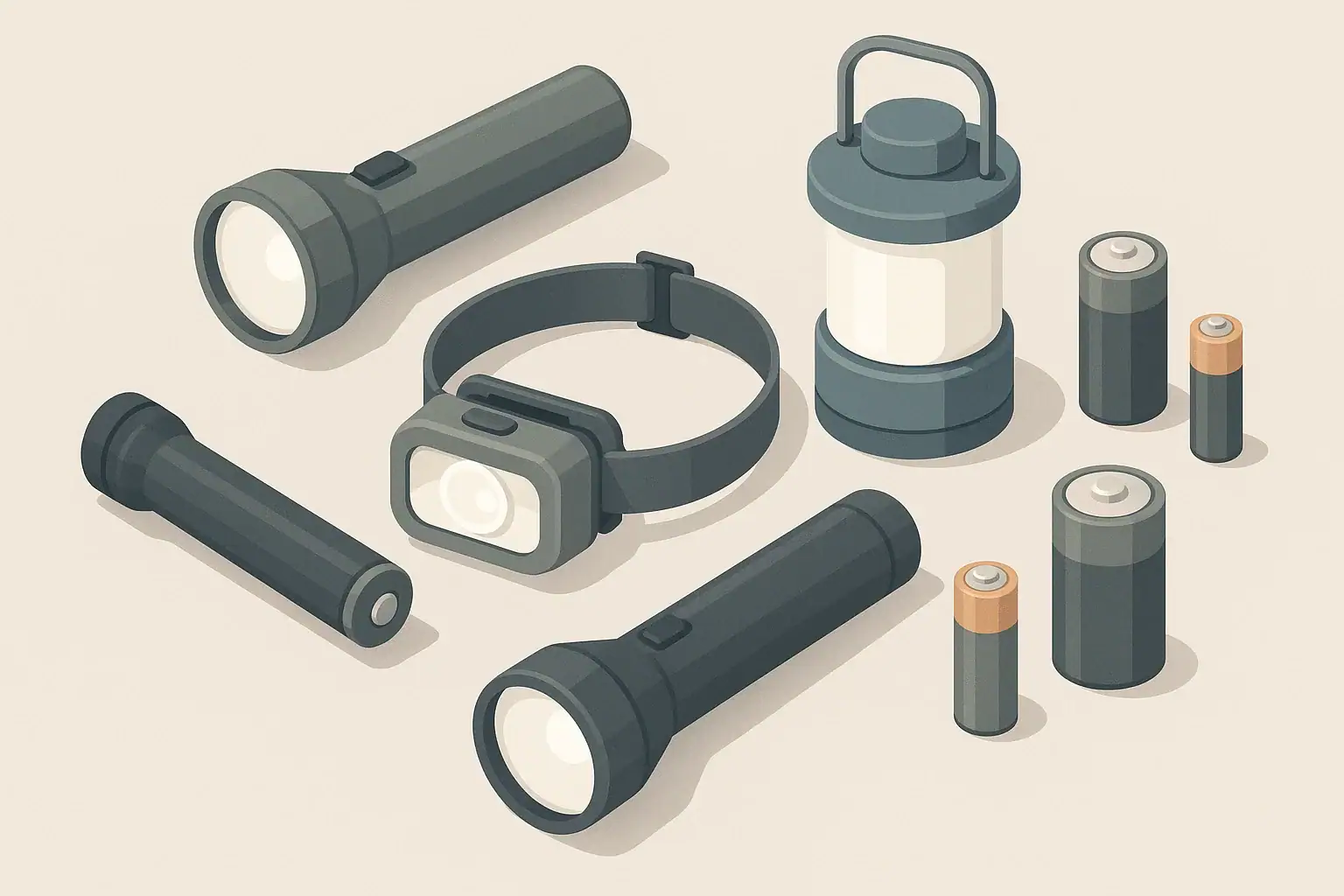
| Tabletop lantern | AA, D cells, or built-in rechargeable | Good area light, helps in shared rooms; bulkier to store | Test once or twice a year and note which batteries it uses |
| Clip-on or book light | AAA or small coin cell | Low power, good for reading; narrow coverage area | Keep as a backup in a drawer or go-bag |
| Battery string lights | AA or AAA cells | Soft, wide glow; not good for detailed tasks | Use for ambient light in one room to save brighter lights |
| Rechargeable emergency light | Built-in battery pack | Reusable between outages; depends on being kept charged | Top up charge at least every few months |
Example values for illustration.
Simple Checklist to Get Your Home Ready
A few small steps now can make future outages calmer and safer for everyone in your home.
Quick Lighting Readiness Steps
- Identify at least one light near each bed, with a dim mode if possible.
- Decide where white light is essential (stairs, kitchen, bathroom).
- Practice a short lights-out walk from bedrooms to bathroom and exit.
- Label or group spare batteries by size in one known drawer or box.
- Set a reminder a couple of times per year to test all lights.
By knowing when to use red light and when to rely on white light, you can move more safely, sleep more easily, and stretch your lighting supplies through any short-term outage.
Authoritative sources
Safety recommendations can change. Confirm critical details with current official guidance and local authorities.
- U.S. CPSC: Battery Safety
- CDC: Guidelines for Cleaning Safely After a Disaster
- Ready.gov: Preparedness Tips for People with Disabilities
Frequently asked questions
When should I use red light instead of white light during a nighttime power outage?
Use red light for short, low-demand tasks like bathroom trips, hallway navigation, or quick outdoor checks when you want to preserve dark adaptation and avoid fully waking others. Choose white light for detailed or higher-risk tasks such as cooking, first aid, reading medication labels, or navigating stairs.
Will using red light really preserve my night vision compared to white light?
Yes—red light stimulates the eye’s cone and rod systems less than broad-spectrum white light, so it tends to preserve scotopic (low-light) vision better. However, very bright red light can still impair dark adaptation, so keep it dim when preserving night vision is the goal.
How bright should red or white lights be to avoid disturbing sleep during an outage?
Use the lowest brightness that still allows safe movement: dim red or warm white settings are best for brief nighttime navigation. For white light, prefer warmer tones, diffuse the beam off a wall or ceiling, and limit duration to reduce sleep disruption.
Does red light use less battery power than white light?
Battery use depends mainly on device efficiency and brightness setting rather than color alone; some devices are slightly more efficient in red mode, but runtime is usually determined by lumen output. Dimming any light saves far more battery than switching color, so use lower settings to extend runtime.
What lighting setup is best for homes with seniors or people with mobility issues during outages?
Prioritize clear, stable illumination for key areas like bathrooms, hallways, and stairs using diffused white light to reduce shadows and fall risk. Keep hands-free or fixed lights near beds and exits, and balance visibility needs with night-mode options for bedrooms to limit sleep disruption when possible.
- Simple checklists and realistic planning
- Water, power, lighting, and pantry basics
- Family plans (kids, pets, seniors) and seasonal prep
Affiliate disclosure
As an Amazon Associate, we earn from qualifying purchases. Some links on this site may be affiliate links. If you buy through these links, we may earn a small commission at no extra cost to you. This helps support our content. Learn more.