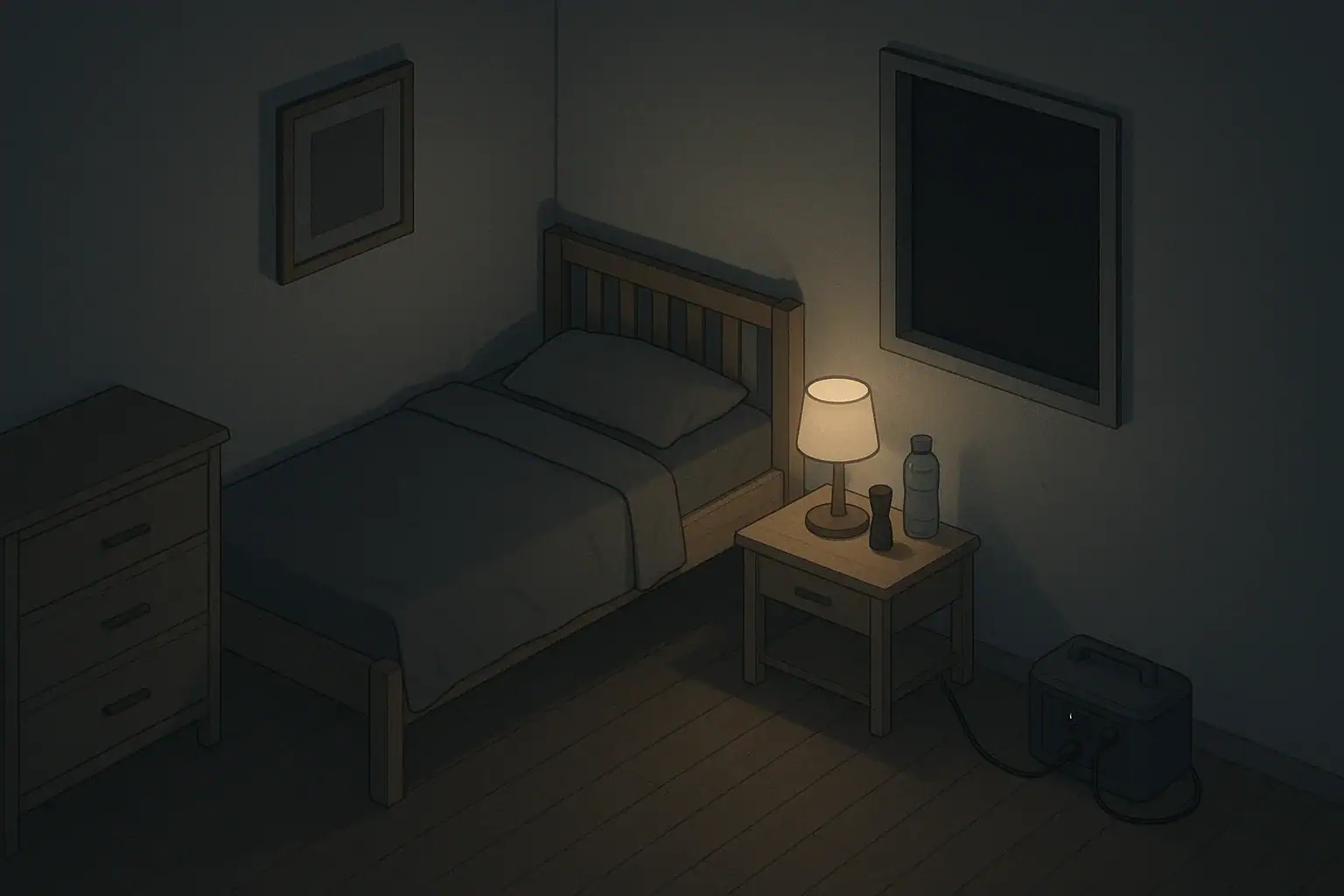
Most power outages are short and manageable, but losing lights and climate control at night can be surprisingly stressful. A simple bedroom blackout setup helps you stay calm, sleep better, and move safely in the dark, whether you live in a small apartment or a larger home.
This approach is about practical comfort, not panic. By planning for a few basic needs in your bedroom, you reduce late-night scrambling and make outages—whether from storms, heatwaves, or grid issues—much easier to handle.
Key goals of a bedroom blackout setup include:
- Safe movement in the dark without tripping hazards
- Enough light for essential tasks without ruining sleep
- Reasonable comfort in hot or cold conditions
- Keeping phones and basic communication available
- Quick access to essentials if you need to get up or leave
Why a Bedroom Blackout Setup Matters
Most power outages are short and manageable, but losing lights and climate control at night can be surprisingly stressful. A simple bedroom blackout setup helps you stay calm, sleep better, and move safely in the dark, whether you live in a small apartment or a larger home.
This approach is about practical comfort, not panic. By planning for a few basic needs in your bedroom, you reduce late-night scrambling and make outages—whether from storms, heatwaves, or grid issues—much easier to handle.
Key goals of a bedroom blackout setup include:
- Safe movement in the dark without tripping hazards
- Enough light for essential tasks without ruining sleep
- Reasonable comfort in hot or cold conditions
- Keeping phones and basic communication available
- Quick access to essentials if you need to get up or leave
Core Principles: Sleep, Safety, and Nighttime Comfort
Designing a blackout-ready bedroom starts with three simple priorities: sleep, safety, and comfort. The goal is not to recreate full daytime power, but to make night outages uneventful.
Sleep: Darkness, Quiet, and Routine
Power outages can disrupt usual sleep cues. Sudden silence from fans, different street sounds, and unusual light from outside can all feel unsettling. A few small adjustments can help you stay on a normal schedule.
Helpful ideas:
- Maintain darkness: Use blackout curtains or thick shades to block streetlights, car headlights, and nearby buildings if they become your main light sources with power out.
- Use low, warm backup light: Keep a dim, warm-colored light source by the bed so you can see without fully waking up or disturbing others.
- Anchor a simple routine: Store a small light, water, and any nighttime essentials in the same spot so you can find them in the dark by feel.
Safety: Moving Around in the Dark
The most common blackout risk in bedrooms is minor injury from stumbling in the dark. A safe layout limits how far you need to move and keeps hazards away from common paths.
Consider:
- Clear floor paths: Keep the route from bed to door and bed to bathroom free of shoes, cords, and bags.
- Bedside reach zone: Make sure you can reach a light, glasses, and any mobility aids without getting out of bed.
- Door familiarity: Practice reaching your door and hallway without turning on lights so you know the route by feel.
- Children and seniors: Use simple, easy-to-operate lights (like push-lanterns or large-switch flashlights) for anyone who may wake disoriented.
Comfort: Temperature, Air, and Noise
Without power, temperature and ventilation can change quickly, especially during heatwaves or winter storms. You cannot perfectly control the room, but you can prepare small adjustments.
- Layers for temperature: Keep an extra blanket, socks, and a light layer near the bed so you can adjust quickly.
- Simple airflow options: If safe, opening windows or interior doors can help. Battery-powered fans can offer short-term relief in hot weather.
- Background sound: If you rely on fans or white noise, know that silence can feel loud. A small battery-powered sound source can help, but is optional.
Example values for illustration.
| Task | Why it matters | Notes |
|---|---|---|
| Clear path from bed to door | Reduces trips and falls in dark | Move shoes, bags, cords |
| Place flashlight within arm’s reach | Immediate safe light if power fails | Test monthly; store facing away from eyes |
| Store water near bed | Avoid navigating kitchen in dark | Use sealed container; refresh regularly |
| Keep extra blanket at foot of bed | Adjust for temperature swings | Especially useful in winter outages |
| Pre-position phone charger near bed | Allows quick connection to backup power | Use short, easily identified cable |
| Label a small “night kit” container | Keeps essentials grouped and easy to find | Include light, batteries, basic meds |
| Agree on family nighttime plan | Reduces confusion if kids wake up | Decide who checks on whom |
Lighting Choices for a Sleep-Friendly Blackout Room
Bedroom blackout lighting should prioritize safety and sleep, not brightness. You want enough light to move around, but not so much that waking up feels like daytime.
Layered Lighting: From Bed to Hallway
Think of bedroom lighting in layers so each person can use the minimum light they need:
- Personal bedside light: A small flashlight or lantern that can be used without standing up.
- Room-level light: A brighter lantern or light in the corner that can safely illuminate the room if needed.
- Hallway/bathroom light: Separate battery lights placed near common nighttime destinations.
This layered approach prevents one very bright light from waking everyone when a quieter option would do.
Color and Brightness Considerations
During an outage at night, bright, cool-white lighting can feel harsh and make it harder to relax. For bedrooms, softer light usually works better.
- Warm, low-intensity light: Use dimmable or low-output modes when you only need to navigate.
- Indirect placement: Point lanterns at a wall or ceiling to reduce glare.
- Dedicated “night mode” light: A small light set aside only for quick bathroom trips or checking on children.
Placement for Families, Kids, and Roommates
Different households need different setups:
- Kids’ rooms: Store lights where adults can find them quickly, but where kids can also reach them safely if they wake first.
- Shared rooms: Choose lights with directional beams or adjustable brightness so one person can use light without fully waking another.
- Pets: Ensure animal beds are not in walkways you may use in the dark.
Safe Nighttime Power: What to Use and What to Avoid
Many people want some power in the bedroom at night during an outage—for phones, a small fan, or a reading light. A thoughtful approach keeps things simple and safer.
Safer Options for Bedroom Power
Small, portable power sources can be helpful if used correctly and sparingly.
- Battery banks: Useful for charging phones, small lights, or e-readers. Store on a stable surface away from pillows and bedding.
- Small indoor power stations: Can run a low-wattage fan or lamp for a limited time. Place in a spot with good airflow and easy access to on/off controls.
- Rechargeable lights: Many lanterns and flashlights charge via USB and can run for many hours on low settings.
Plan for modest use. Instead of expecting overnight power for everything, decide which comfort items matter most, such as one small fan or one lamp.
What to Keep Out of the Bedroom
Certain power sources belong outside sleeping spaces.
- Fuel-burning generators: These must stay outdoors and far from windows and doors due to serious safety risks from exhaust.
- Gas or liquid-fuel heaters: These can create fire and air quality hazards if used improperly or in small, enclosed spaces.
- Improvised wiring: Avoid running long cords under rugs, through doorways, or in a way that creates trip hazards in the dark.
Simple Power Use Planning
During a nighttime outage, it helps to have rough expectations for how long your backup power might last. Rather than aiming for exact numbers, think in terms of general tradeoffs:
- Decide which single device is most important (often a phone or small fan).
- Use the lowest brightness or speed that still feels comfortable.
- Turn devices off when not in active use.
Ventilation, Temperature, and Air Quality in a Dark Room
Without power, a bedroom can warm up or cool down, and ventilation can change. These shifts vary by season and region, but simple steps can improve comfort.
Hot Weather and Heatwaves
In warm climates or during heatwaves, a nighttime outage can make bedrooms feel stuffy.
- Cross-ventilation: If conditions are safe, opening windows on opposite sides of the home can encourage airflow.
- Interior doors: Keeping bedroom doors open can help share cooler air from other parts of the home.
- Battery-powered fans: A small fan on low speed can provide noticeable comfort for limited hours.
- Light bedding: Keep lighter sheets or blankets available so you can adjust quickly.
Cold Weather and Winter Storms
In colder regions, maintaining warmth becomes the priority.
- Layer clothing, not just blankets: Socks, hats, and lightweight layers help you feel warmer without needing as many covers.
- Shared sleeping spaces: In very cold conditions, families sometimes sleep in one room to share warmth. If you choose this, prepare floor spaces ahead of time to avoid crowding and tripping hazards.
- Seal drafts: Thick curtains, rolled towels at the base of doors, and closed blinds can reduce cold drafts.
Air Quality and Outdoor Conditions
Blackouts can coincide with outdoor air issues, such as wildfire smoke or poor air days. In those cases, you may need to prioritize keeping outdoor air out rather than opening windows.
- Know your local risks: In areas affected by wildfire smoke or heavy pollution events, plan for days when windows should stay closed.
- Interior room choice: A bedroom away from street-facing windows may have fewer drafts and dust.
- Dust control: Keeping surfaces clean and uncluttered makes it easier to wipe away any dust that settles during prolonged outages.
Setting Up for Different Living Situations
Your ideal bedroom blackout setup depends on your home type, space, and who lives with you. The core ideas stay the same, but the details shift.
Renters and Small Apartments
In apartments, you may have limited storage and less control over building systems, but you can still prepare effectively.
- Compact storage: Use a small bin or drawer as your bedroom blackout kit, including light, spare batteries, water, and basic comfort items.
- No-attachment solutions: Freestanding lanterns and clip-on lights avoid the need to drill or modify walls.
- Shared buildings: Expect hallway lighting and elevators to be affected. Keep shoes near the bed in case you need to use stairs.
Houses and Multi-Level Homes
Larger homes introduce distance and stairs, which matter more in the dark.
- Stair safety: Store a dedicated flashlight at both the top and bottom of staircases.
- Zone lighting: Place small battery lights in hallways so you do not rely solely on bedroom lights to move around.
- Family coordination: Decide in advance whether family members gather in a single room during longer outages at night.
Families with Kids
Children may wake more easily during outages and can be alarmed by sudden darkness or unfamiliar sounds.
- Practice “lights out” drills: Briefly turn off lights in the evening and practice finding the bedside light together.
- Reassurance items: For younger children, set aside comfort items in a consistent spot they can find in low light.
- Door policy: Decide whether kids should stay in bed and call for an adult, or come to your room, and practice that route.
Older Adults and Mobility Needs
Seniors and anyone with mobility limitations benefit from extra planning.
- Stable lighting: Use lights that stand on their own or mount securely, reducing the need to hold a flashlight while moving.
- Path support: If walkers, canes, or other aids are used, keep them in the same spot each night and verify paths are wide and clear.
- Medication access: Keep essential medications and a small light together in a labeled container within easy reach.
Keeping a Simple Bedroom Blackout Kit
A small, dedicated kit in the bedroom can make nighttime outages straightforward instead of stressful. The goal is a compact set of items you can find easily in the dark.
Suggested Items for a Bedroom Kit
Adapt this list to your space, climate, and household:
- Two light sources (for example, a handheld flashlight and a small lantern)
- Spare batteries or a charged power bank for rechargeable lights
- Sealed drinking water and a cup
- Light, shelf-stable snacks if you or children often wake hungry
- Basic hygiene items (tissues, hand sanitizer, wipes)
- Extra blanket and socks
- Copy of important phone numbers written on paper
- Any nighttime medications or medical supplies you need regularly
Storing and Maintaining the Kit
Placement is as important as contents.
- Accessible location: A nightstand drawer, under-bed bin, or small box near the head of the bed works well.
- Consistent spot: Always return items to the same place to build habit and muscle memory.
- Quick checks: Set a reminder a few times a year to test lights, recharge power banks, rotate water, and confirm medications are in date.
Example values for illustration.
| Lighting type | Battery type | Pros / cons | Storage tip |
|---|---|---|---|
| Handheld flashlight | Common disposable batteries | Reliable and bright; needs spare batteries | Store with batteries removed if long-term unused |
| Small lantern | Rechargeable internal battery | Good room glow; must remember to recharge | Top off charge every few months |
| Clip-on or book light | Button cell or small rechargeable | Low light for reading; shorter runtime | Keep as a backup, not main light |
| Battery-powered night light | Small alkaline batteries | Gentle glow; limited brightness | Use near pathways, not for tasks |
| Headlamp | Rechargeable or small disposables | Hands-free; beam can disturb others | Angle downward when others are sleeping |
| Multi-function emergency light | Rechargeable with USB | Versatile; depends on charged power source | Pair with a labeled charging cable |
Practicing and Updating Your Bedroom Blackout Plan
Short, calm practice goes a long way.
- Occasional run-through: Once or twice a year, turn off bedroom lights at night and pretend the power is out. Find your kit, lights, and paths.
- Family review: Talk through where to meet in the home at night if someone feels unsafe or confused.
- Seasonal check-ins: Before winter and summer peaks, adjust blankets, fans, and window coverings for likely conditions.
- Adapt to changes: Update your setup when you move, add a roommate, welcome a new baby, or if someone’s mobility or needs change.
With a few thoughtful adjustments, your bedroom can stay familiar and comfortable even when the lights go out, turning overnight outages into manageable inconveniences instead of emergencies.
Authoritative sources
Safety recommendations can change. Confirm critical details with current official guidance and local authorities.
- CDC: Carbon Monoxide Poisoning Basics
- US EPA: Emergency Disinfection of Drinking Water
- USDA FSIS: Keep Food Safe During Emergencies
Frequently asked questions
How do I choose the best bedside light for a bedroom blackout setup?
Choose a warm-colored, dimmable light or one with a low “night” mode so it provides just enough illumination without fully waking you or others. Lanterns or small lamps placed for indirect lighting reduce glare and make it easier to navigate safely.
Is it safe to keep a power bank or small power station in the bedroom during an outage?
Small battery banks and indoor power stations are safe when used according to the manufacturer’s instructions and placed on a stable, hard surface away from bedding. Use them for modest loads only and ensure they have adequate ventilation and are not covered by blankets or clothing.
How often should I check and maintain my bedroom blackout kit?
Perform a quick check every few months to test lights, recharge batteries or power banks, rotate sealed water, and confirm medications are in date. Additionally, run a brief practice drill once or twice a year so everyone knows where items are and that the setup still works.
What are the simplest steps to improve safety for older adults during a nighttime blackout?
Clear and widen common paths, keep mobility aids and a stable light within arm’s reach of the bed, and use hands-free or securely mounted lights to reduce the need to hold a flashlight while moving. Practicing routes and keeping medications and essentials in a labeled, reachable spot helps reduce confusion.
Can I leave windows open at night for ventilation during a blackout?
Opening windows can improve airflow in mild, secure conditions, but avoid doing so when outdoor air quality is poor, smoky, or when there are security concerns. If outdoor air should be avoided, focus on sealing drafts, using lighter bedding, and conserving cool indoor air where possible.
- Simple checklists and realistic planning
- Water, power, lighting, and pantry basics
- Family plans (kids, pets, seniors) and seasonal prep
Affiliate disclosure
As an Amazon Associate, we earn from qualifying purchases. Some links on this site may be affiliate links. If you buy through these links, we may earn a small commission at no extra cost to you. This helps support our content. Learn more.