Why a 14-Day Water Plan Matters
Many emergency guidelines suggest having at least several days of water stored at home. For real-world disruptions like boil-water advisories, winter storms, hurricanes, or local pipe breaks, 14 days is a practical planning target that gives households a buffer without extreme stockpiling.
A 14-day water plan is not about fear or doomsday scenarios. It is about:
- Riding out short-term disruptions without rushing to crowded stores
- Making sure everyone in the household, including pets, can drink safely
- Having enough for basic hygiene and cleaning to stay reasonably comfortable
- Creating habits that work for apartments, small homes, renters, and families
This guide focuses on realistic numbers, space-saving approaches, and simple routines that most households can adapt over time.
How Much Water for 14 Days? Setting Realistic Targets
Water needs vary by person, climate, activity level, and health status. For planning, it helps to work with round numbers and then adjust for your situation.
Basic planning numbers for drinking and cooking
A common rule of thumb is about 1 gallon of water per person per day for drinking and basic food preparation. For a 14-day plan, that looks like:
- 1 person: about 14 gallons
- 2 people: about 28 gallons
- 4 people: about 56 gallons
These are planning numbers, not strict requirements. Some households may use a bit less by stretching beverages and using low-water cooking methods. Others may need more in hot weather or for higher activity levels.
Adding water for hygiene and cleaning
Beyond drinking and cooking, you will want some water for quick hand washing, minimal dish rinsing, and basic cleaning. You do not need to store full bath or laundry quantities for 14 days. Many households aim for an extra half to one gallon per person per day for these tasks, depending on space.
For example, a 2-person household might plan:
- About 28 gallons for 14 days of drinking and cooking (1 gallon per person per day)
- Plus 14–28 gallons for simple hygiene and light cleaning
If you live in a very small space, you can prioritize drinking and cooking first, then add hygiene water as space allows.
Considering pets and special needs
Pets and some household members may need extra water. As a starting point:
- Small pets: add at least a few extra cups per day total
- Medium to large dogs: plan roughly an extra half to one gallon per day
- Infants using formula: plan extra safe water for mixing and cleaning bottles
These are only planning examples. Watch how much water your household normally uses for drinking and pet bowls over a few days, then multiply and round up for a 14-day target.
Example values for illustration.
| Household situation | Suggested focus | Example planning target |
|---|---|---|
| Studio or small apartment, 1 person | Prioritize drinking and cooking first | About 14–18 gallons total |
| Apartment, 2 adults | Drinking, cooking, limited hygiene | About 30–40 gallons total |
| House, 2 adults, 2 kids | Drinking, cooking, more hygiene flexibility | About 55–75 gallons total |
| Household with large dog | Include separate pet water portion | Add about 7–15 gallons for 14 days |
| Home with limited storage space | Meet half the 14-day goal plus water treatment | Store what fits, plan to treat tap or other sources |
| Home in hot climate | Increase drinking allowance | Add several extra gallons per person for 14 days |
Space-Saving Water Storage Options
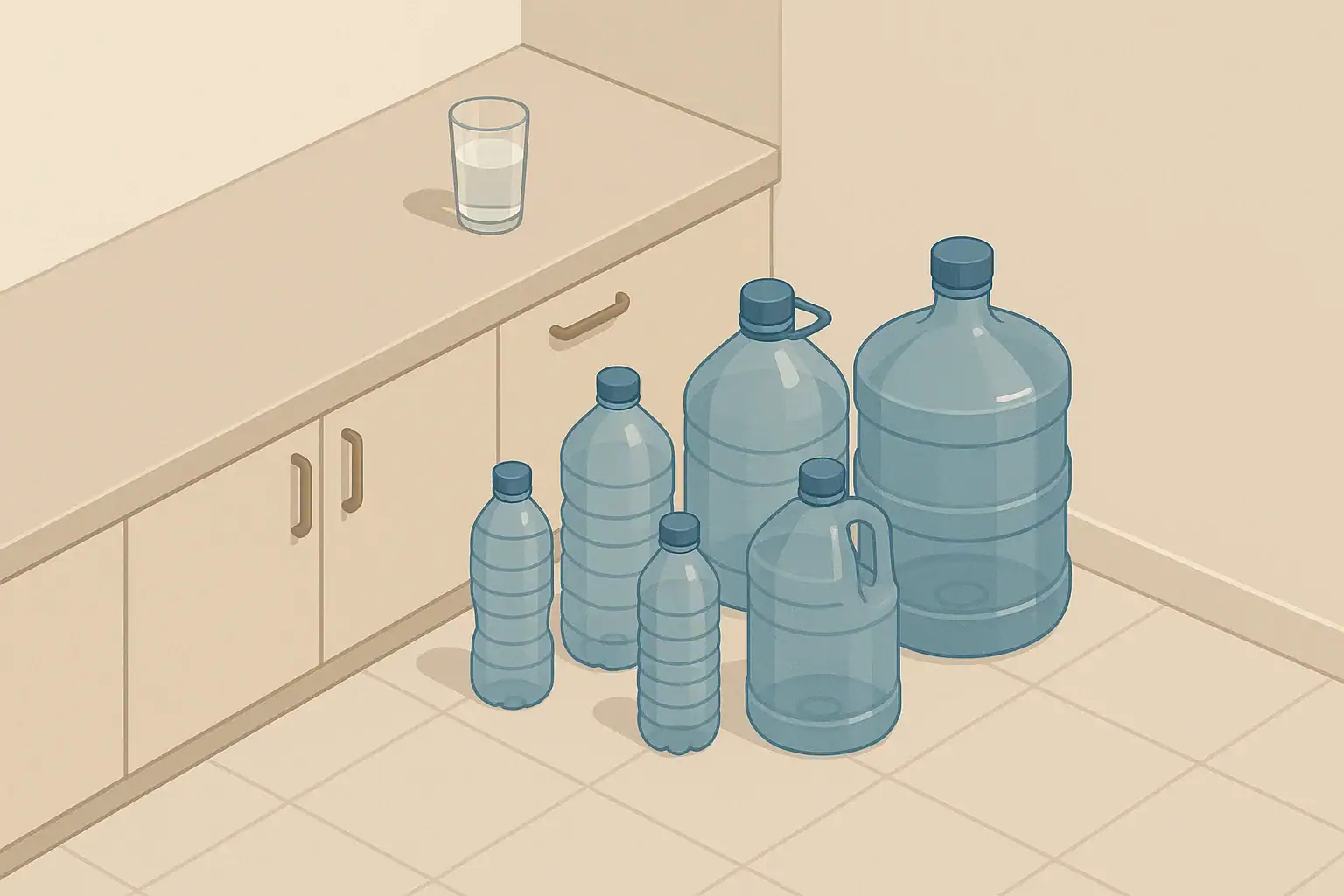
Once you know your target, the next challenge is finding storage methods that fit your living space. Using a mix of container sizes often works better than relying on a single large container type.
Small containers: flexible and easy to move
Smaller containers, such as single-serving bottles or small jugs, are convenient for:
- Short power outages or boil-water advisories
- Households that may need to relocate temporarily
- People who cannot lift heavy containers
Benefits include easier rotation, simple portioning for each person, and water that is already in portable form for a go-bag. The tradeoff is that many small containers can take up more total space and generate more plastic waste.
Medium containers: good balance for apartments
Medium-sized jugs or stackable containers often strike a balance between portability and space efficiency. They can be:
- Stored under beds, in closets, or along low shelves
- Carried one at a time without straining
- Used as your regular drinking water rotation system
Look for shapes that stack or nest well and fit the nooks and corners you already have, such as behind a couch or along a hallway wall.
Large containers: efficient but less portable
Larger water containers or barrels can hold many days of water in one place. They work best when:
- You have a garage, utility room, or covered outdoor space
- You can leave the container in place and use a spigot or pump
- You are comfortable maintaining and rotating a large volume at once
Because they are heavy when full, think ahead about where you place them. Keep them where floors can support the weight and where leaks would be manageable.
Collapsible and modular options
Collapsible containers and modular systems are useful for people who cannot dedicate permanent space to water storage. Some approaches include:
- Compact, foldable jugs stored flat until needed
- Stackable containers that fit into closets like building blocks
- Containers designed to slide under furniture
These can be filled ahead of an expected event, such as a severe storm warning. In everyday times, they stay folded or stacked and take up less room.
Where to Put 14 Days of Water in Small and Large Homes
Many households discover they have more usable storage space than they first thought. The key is to break the total volume into smaller units and spread them around safely.
Apartment-friendly storage spots
In an apartment, look first for low-traffic, shaded, and temperature-stable areas. Examples include:
- Under-bed storage bins with sealed water containers inside
- Bottom shelves of closets or wardrobes
- Behind or underneath furniture where containers can lie flat
- On the floor of a pantry, linen closet, or coat closet
A combination of smaller bottles and a few medium jugs often fits more easily than one bulky barrel.
Houses, basements, and garages
In houses, you may have broader options, but it still helps to think about weight and temperature:
- Basements or interior utility rooms for large containers or barrels
- Cool sections of a garage (away from direct sun and chemicals)
- Under stairwells or in low cabinets near the kitchen
- Along interior walls rather than in very hot attic spaces
Avoid locations that get very hot, freeze solid, or are exposed to direct sunlight for long periods. Extreme temperatures can affect container materials and water quality over time.
Spreading storage for flexibility
Instead of putting all your water in a single spot, consider spreading it:
- Some in the kitchen or pantry for daily use and rotation
- Some in a bedroom or hallway for easy access at night
- Some in a garage, closet, or storage area as a backup reserve
This way, if part of your home becomes harder to reach during an emergency, you still have water in other areas.
Safe Storage, Rotation, and Basic Treatment
Even simple water storage benefits from a few basic habits. These focus on cleanliness, rotation, and having ways to handle uncertain water quality.
Preparing containers and filling them
If you are using reusable containers:
- Wash them with dish soap and water, then rinse thoroughly
- If recommended for the container, you may sanitize with a mild bleach-and-water solution, then rinse
- Fill with safe drinking water from your tap or another trusted source
- Seal tightly and label with the fill date
Follow any instructions provided with the container about cleaning and safe use. Do not reuse containers that previously held non-food or hazardous products.
Rotation: keeping stored water fresh
Stored water for emergencies does not need to be rotated every week, but it should not sit forgotten for many years either. A simple rotation approach might include:
- Choosing a regular month (for example, every 6 or 12 months) to check water supplies
- Using older stored water for cleaning, flushing, or watering plants if taste is less than ideal
- Refilling and relabeling containers during this check-in
Commercially packaged drinking water often has a “best by” date. Use those dates as a reminder to rotate stock.
Basic treatment options as a backup
Having at least one simple treatment method is helpful if you ever need to make questionable water safer to drink. Common options include:
- Boiling water when power or fuel is available
- Using basic household disinfectants according to reputable instructions
- Using widely available portable filters designed for drinking water
Because treatment methods have specific instructions and limitations, it is best to review guidance from reliable public sources and keep those instructions with your supplies. Even with treatment tools, stored clean water is usually the simplest and most reliable option.
Balancing Water Storage With Other Home Readiness Needs
Your 14-day water plan works best when it is integrated with other simple home readiness steps, such as having shelf-stable food, safe lighting for power outages, and basic hygiene supplies. This does not have to be done all at once. Many households build up supplies gradually.
Layering storage and daily use
Instead of a separate “emergency pile” that never gets touched, consider a layered approach:
- Keep some of your emergency water in the regular kitchen rotation, using and replacing it
- Maintain a separate reserve that is only for disruptions and gets checked on a schedule
- Refill collapsible containers when you receive storm or outage warnings
This approach helps prevent waste and keeps your supplies more aligned with what your household actually uses.
Adapting plans for children, seniors, and mobility needs
Different household members may need different container types and placement:
- Children: Smaller bottles they can safely carry and open
- Seniors: Containers that do not require heavy lifting; spigots instead of lifting and pouring
- People with limited mobility: Water stored close to where they spend most of their time
When possible, involve everyone in simple tasks such as counting containers or helping mark rotation dates. This can make the plan easier to remember and maintain.
Regional and seasonal considerations
Your climate and local risks can shape your plan:
- Winter storms: Focus on indoor storage that will not freeze and keep a few containers near sleeping areas.
- Hurricanes or severe storms: Keep some containers empty and ready to fill when forecasts show high risk.
- Heatwaves: Increase your drinking water allowance and store some in cooler interior spots.
- Wildfire smoke events: Having stored water reduces trips outside if air quality is poor.
Because these events are usually temporary, a solid 14-day supply can cover most interruptions you are likely to see in everyday life.
Example values for illustration.
| People and pets | Days | Storage approach | Rotation cue idea |
|---|---|---|---|
| 1 person | 14 | Mix of small bottles and 1–2 medium jugs | Check every 6 months, on the same date |
| 2 adults | 14 | Several medium jugs under beds and in a closet | Rotate with seasonal clothing change |
| 2 adults, 2 kids | 14 | Larger container in garage plus kid-friendly bottles | Review at the start of each school year |
| 1 adult, 1 large dog | 14 | Separate container labeled for pet use | Refresh at annual vet visit time |
| Multi-generational household | 14 | Combination of barrels, jugs, and bedside bottles | Check during a yearly family gathering |
| Apartment roommates | 14 | Each person keeps their own small set plus shared reserve | Rotate at lease renewal or move-out planning |
Putting Your 14-Day Water Plan Into Practice
A 14-day water plan does not have to appear overnight. Many people build it in stages:
- Start with a few extra gallons during your normal shopping trips
- Identify one or two storage spots that work in your home
- Add containers gradually until you reach your target volume
- Set a reminder to inspect and rotate your supplies on a steady schedule
Over time, these small steps add up to a calm, practical cushion against routine disruptions. Your future self—and everyone in your household—benefits from the foresight of having safe water ready when the tap is not as reliable as usual.
Related guides: Large Family Water Storage Plan: Space-Saving Quantities and Rotation · Rainwater for Emergency Use: Practical Limits and Safety Basics.
Authoritative sources
Safety recommendations can change. Confirm critical details with current official guidance and local authorities.
- US EPA: Emergency Disinfection of Drinking Water
- USDA FSIS: Keep Food Safe During Emergencies
- CDC: Guidelines for Cleaning Safely After a Disaster
Frequently asked questions
How much water should I store per person for a 14-day water plan?
Plan for about 1 gallon per person per day for drinking and basic food preparation, which equals roughly 14 gallons per person for a 14-day water plan. If space allows, add about 0.5 to 1 gallon per person per day for basic hygiene and cleaning, and increase amounts for hot weather or high activity levels.
What container mix works best for a 14-day water plan in a small apartment?
A mix of small bottles, medium stackable jugs, and a few collapsible containers usually fits apartment nooks like under beds, closets, and low shelves while balancing portability and space efficiency. Store containers in shaded, temperature-stable spots, label them with fill dates, and rotate them into regular use to keep supplies fresh.
How often should I check or rotate water stored for a 14-day plan?
Check and rotate stored water every 6 to 12 months as a practical schedule, using older supplies for cleaning or other non-drinking needs if taste declines. Commercial bottled water dates can guide rotation, and setting a calendar reminder helps ensure the plan stays active.
Can I use tap water to fill containers for my 14-day water plan?
Yes — treated tap water is commonly used to fill emergency containers; just wash and, if recommended, sanitize reusable containers before filling and label with the fill date. Keep at least one backup treatment method (boiling, household disinfectants per guidance, or a certified filter) in case tap water quality becomes uncertain after an event.
How should I account for pets and infants in a 14-day water plan?
Add extra water for pets (small pets need a few cups daily; medium to large dogs may need about 0.5–1 gallon per day) and store a separate labeled container for pet use near where you keep other supplies. For infants who use formula, set aside additional safe water for mixing and cleaning bottles and keep it easy to access.
- Simple checklists and realistic planning
- Water, power, lighting, and pantry basics
- Family plans (kids, pets, seniors) and seasonal prep
Affiliate disclosure
As an Amazon Associate, we earn from qualifying purchases. Some links on this site may be affiliate links. If you buy through these links, we may earn a small commission at no extra cost to you. This helps support our content. Learn more.