Why Sump Pump Backups Matter for Everyday Households
For many homes with basements, a sump pump is the main line of defense against water seepage and flooding. It quietly moves groundwater or stormwater away from your foundation and into a drain or discharge pipe. The problem is that the times you most need a sump pump to work—heavy rain, rapid snowmelt, or strong storms—are also when power outages are most likely.
Without power or a working pump, water can rise quickly in the sump pit and spill onto the basement floor. Even a small amount of water can damage flooring, stored belongings, appliances, and finished walls. A few inches of water can mean days of cleanup, potential mold growth, and expensive repairs.
Planning for sump pump backup options is not about expecting worst-case disasters. It is about recognizing a realistic risk—especially if you live in an area with frequent storms, a high water table, or a history of basement dampness—and putting simple layers of protection in place. This fits into practical home readiness alongside backup lighting, water storage, and basic power plans.
Understanding Your Basement Flood Risk
Before choosing a backup system, it helps to understand how likely your basement is to take on water and how quickly that could happen. Not every home needs the same level of backup.
Common Factors That Increase Flood Risk
Your basement may have higher flood risk if one or more of these apply:
- High water table: The soil below your home often feels damp or you see water in the sump pit even during dry weather.
- Past water issues: You have seen water on the floor, damp walls, efflorescence (white mineral deposits), or musty smells.
- Poor drainage outside: Downspouts end near the foundation, gutters overflow, or the yard slopes toward the house.
- Severe weather patterns: You live in a region with heavy thunderstorms, rapid snowmelt, or hurricanes.
- Older foundation or waterproofing: Older homes may have more cracks or less effective drainage systems.
How Fast Can Water Accumulate?
Water does not enter every basement at the same rate. During a storm, some pits fill slowly, while others can fill in minutes. As a general idea, you may see:
- Low inflow: Pump runs occasionally during storms; the pit rises slowly when the pump is off.
- Moderate inflow: Pump cycles frequently while it rains; the pit rises steadily when the pump is off.
- High inflow: Pump runs almost constantly during heavy rain; the pit rises quickly if the pump stops.
You can estimate your home’s pattern by carefully turning off the pump for a short, supervised test during mild wet weather (never leave it unattended) and seeing how fast the water rises in the pit. This can help you size and choose backup options later.
Example values for illustration.
| Home situation | Flood risk notes | Backup option to consider |
|---|---|---|
| Finished basement with flooring and furniture | Even small leaks cause costly damage | Battery backup plus secondary pump or generator support |
| Unfinished basement mainly used for storage | Damage more manageable but still inconvenient | Battery backup pump or water-powered backup if available |
| High water table; pump runs often | Water rises quickly during outages | High-capacity battery system and/or generator planning |
| Occasional storm-related seepage only | Risk mainly during rare heavy storms | Simple battery backup or portable pump and manual plan |
| Townhome or duplex with shared drainage patterns | Neighboring issues may affect you | Battery backup plus monitoring (alarms or checks) |
| Frequent power outages in storm season | Pump likely to stop during heavy rain | Battery backup plus small generator or power station |
Primary Sump Pumps vs. Backup Systems
Your primary sump pump is the main pump installed in the pit. Backup systems are separate layers of protection that help when the primary pump cannot do its job.
Common Types of Primary Sump Pumps
Most homes use one of two main pump styles:
- Submersible pumps: Sit inside the pit under water; generally quieter and out of sight.
- Pedestal pumps: Motor sits above the pit, with a pipe down into the water; easier to access.
Either style usually runs on standard household electricity and is controlled by a float switch that turns the pump on when the water level rises.
What a Backup System Should Cover
A good backup plan addresses three main failure points:
- Power loss: Outages, tripped breakers, or unplugged cords.
- Pump failure: Motor burnout, stuck impeller, failed float switch, or clogged intake.
- Extreme inflow: Storms that exceed the capacity of your primary pump alone.
Most households combine one or more backup approaches to cover these areas without overspending or overcomplicating their system.
Battery Backup Sump Pumps
Battery backup systems are one of the most common ways to keep pumping during a power outage. They typically include a separate pump powered by a battery and a controller that senses when the water is rising or when the main pump fails.
How Battery Backup Systems Work
In a typical setup:
- A secondary pump is installed in the pit alongside the main pump.
- A deep-cycle style battery (often in a vented box) powers the backup pump.
- A control unit monitors water level and sometimes the main pump’s status.
- When the water rises above a set point or the main pump stops, the battery pump kicks on.
Some systems also include audible alarms to let you know the battery is low or the backup pump is running.
Runtime and Capacity Considerations
How long a battery backup can run depends on several variables:
- Pump power draw (higher horsepower usually uses more energy).
- Battery size and condition.
- How often and how long the pump runs during a storm.
As a general example, a moderate-sized battery might power a backup pump for several hours to part of a day of intermittent use. In heavy inflow situations, runtime can be much shorter. In lighter rain, the same battery may last through an entire overnight outage.
Pros and Cons of Battery Backup Pumps
Advantages:
- Automatic operation during outages.
- Can protect even if the main pump fails, not just during power loss.
- Does not rely on municipal water pressure.
- Relatively compact; can be installed in most basements.
Limitations:
- Battery maintenance is required (checking fluid if applicable and replacing after several years).
- Limited runtime during long outages or severe storms.
- Upfront cost for pump, battery, and controller.
Maintenance Tips for Battery Systems
To keep a battery backup ready to work:
- Test the system every few months by lifting the float or using the test button.
- Inspect terminals for corrosion and clean if needed.
- Keep the battery in a ventilated location off the coldest floor spots if possible.
- Replace the battery at the interval recommended by the manufacturer, or sooner if testing shows weak performance.
Water-Powered Backup Sump Pumps
Water-powered backup pumps use household water pressure to move water out of the sump pit. This can be appealing for homes with reliable municipal water service, especially where long power outages are possible and battery runtime is a concern.
How Water-Powered Pumps Work
These units connect to the home’s water supply line. When the backup pump activates, water flowing through a venturi-style device creates a suction effect that pulls sump water and discharges it along with the supply water.
The key points:
- No electricity is needed; they work during power outages as long as water pressure remains.
- They typically use several gallons of municipal water for each gallon of sump water removed.
- They need correct installation to meet plumbing codes and protect drinking water from backflow.
Pros and Cons of Water-Powered Backups
Advantages:
- Operate without electricity or batteries.
- Can run as long as water pressure is available.
- Less concern about battery condition or replacement.
Limitations:
- Require municipal water with sufficient pressure; not suited to private wells that also lose power.
- Can significantly increase water usage during operation.
- Installation is more complex and often requires a licensed plumber.
Is a Water-Powered Backup Right for Your Home?
This type of system is more practical if:
- You are on municipal water, not a private well.
- Your area has reliable water pressure even during storms.
- You are comfortable with the extra water usage during emergencies.
- You prefer a low-maintenance, non-battery solution.
Using Generators and Portable Power for Sump Pumps
Another way to keep your pump running during outages is to provide your own power with a generator or portable power station. This can be especially useful if:
- You already have or are considering backup power for other needs such as refrigeration and basic lighting.
- Your sump pump has higher power demands than typical battery backups comfortably support.
- You face multi-day outages where battery-only solutions may not last.
Small Generators for Sump Pumps
A small portable generator, placed outdoors and used with safe practices, can power a sump pump along with a few other essential loads. Planning steps include:
- Checking the pump’s approximate running wattage and startup surge (often higher).
- Choosing a generator with enough capacity for the pump plus any other devices you plan to power.
- Using outdoor-rated extension cords and keeping all connections dry and off the ground.
- Running the generator outside, away from windows and doors, to avoid carbon monoxide hazards.
Many households use a generator to power the existing primary pump rather than installing a separate backup pump for generator use. This approach still benefits from having a battery or water-powered backup if the main pump itself fails.
Portable Power Stations
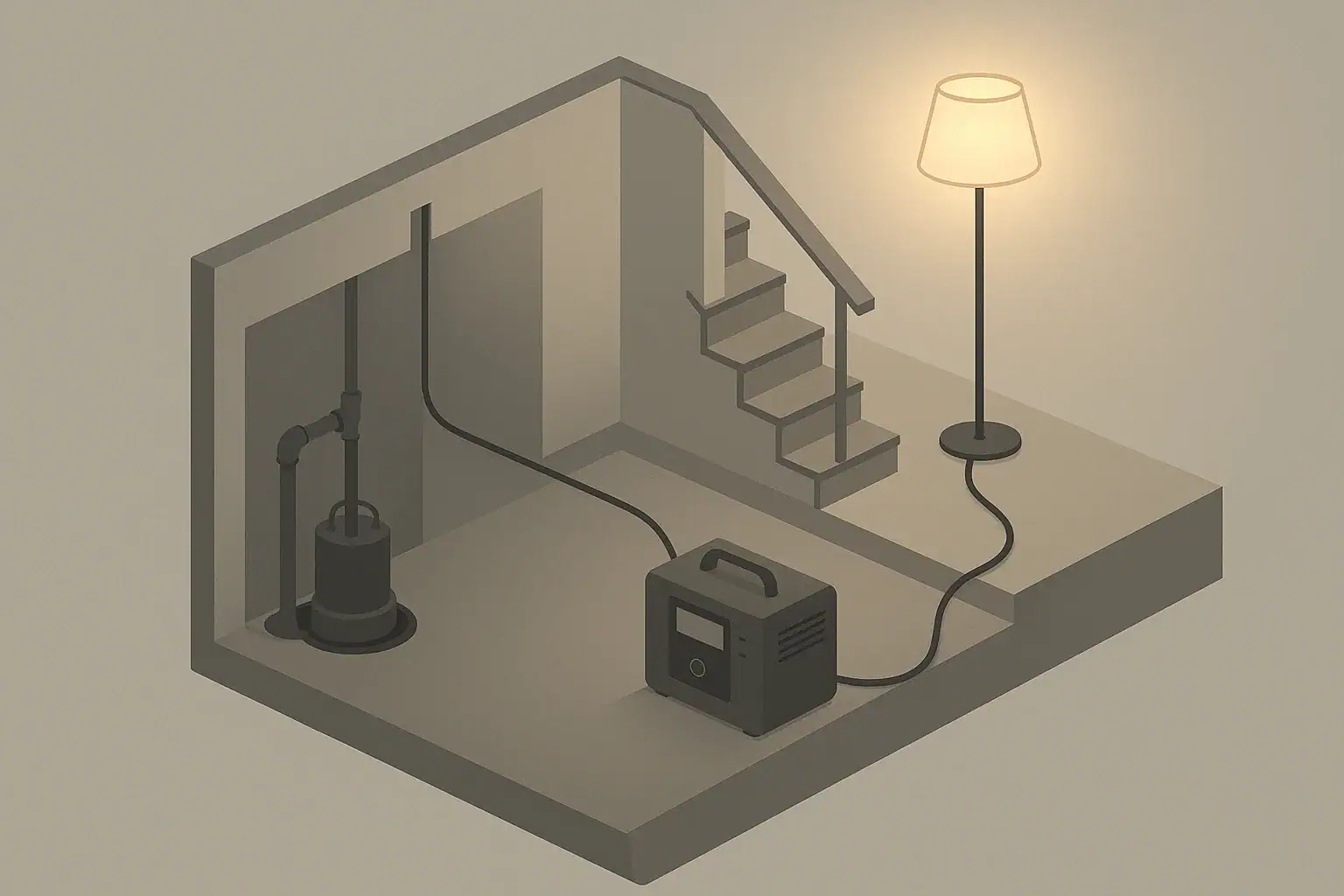
Portable power stations with built-in inverters can sometimes run sump pumps for short periods, depending on pump size and power station capacity. This approach may suit homes with:
- Lower-power pumps.
- Shorter expected outages.
- Limited ability to store fuel for a generator.
To use this method safely and effectively, match the pump’s approximate wattage and startup needs to the power station’s rating and plan for how long the station can run the pump under typical conditions. Because pump loads are intermittent, charging the station from grid power or solar between storms can extend usefulness.
Safety and Fuel Considerations
When using combustion-based generators:
- Only operate them outdoors in well-ventilated areas.
- Store fuel in approved containers away from living areas.
- Let engines cool before refueling.
- Test the generator and cords in good weather so you know how everything works before a storm.
Alarm Systems, Smart Alerts, and Manual Backup Plans
Not every homeowner is ready to invest in a full backup pump system. Even then, there are lower-cost ways to reduce the impact of sump failures and respond more quickly when something goes wrong.
Water Level and Pump Failure Alarms
Simple water alarms can sit in the pit or on the floor near the sump and sound an alert when water reaches a certain level. More advanced systems can send notifications to your phone through a home network connection.
These alarms do not move water, but they give you time to act, such as:
- Starting a generator and reconnecting the pump.
- Setting up a portable pump and hoses.
- Moving belongings off the floor.
- Checking breakers, outlets, or pump connections.
Manual Backup Options
Manual measures can be a useful last layer of defense, especially for renters or those in smaller spaces:
- Portable utility pump: A small electric pump you can drop into the pit and connect with a hose, powered by a generator or power station.
- Wet/dry vacuum: Limited use for small seepage, especially if you do not have a sump pit.
- Buckets and mops: Labor-intensive but can keep small amounts of water from spreading while waiting for service or power restoration.
These approaches work best when paired with an alarm so you know to act quickly.
Practical Planning for Different Homes and Households
Your sump pump backup choices should fit your living situation, not the other way around. Consider how much space you have, who lives in the home, and what you are realistically able to maintain.
Homeowners with Finished Basements
If your basement has finished flooring, drywall, and furniture, the cost of even a minor flood can be high. In these cases, many homeowners combine:
- A reliable primary pump sized correctly for the home.
- A dedicated battery backup pump or water-powered pump.
- Water alarm or smart monitor for early warning.
- Optional generator or power station for extended outages.
Unfinished Basements and Storage Areas
For basements mostly used for storage, you might prioritize:
- A well-maintained primary pump.
- A simpler backup option (battery or water-powered) sized for moderate inflow.
- Raised shelving and watertight containers for belongings.
This keeps readiness balanced with the level of risk and the value of what is stored in the space.
Renters and Townhome Residents
Renters often have less control over major plumbing or electrical work but can still take meaningful steps:
- Ask the property owner about the sump system and what backups, if any, are installed.
- Use shelving and plastic bins to keep belongings off the floor.
- Consider placing a basic water alarm near the sump or on the basement floor if allowed.
- Have a simple plan for moving items or using a wet/dry vacuum if water appears.
If multiple households share a basement or drainage, talking together about backup options can help spread costs and responsibilities.
Households with Kids, Seniors, and Pets
Some families may find sudden basement flooding especially disruptive. To reduce stress:
- Store critical items like important documents, medications, and children’s comfort items well above floor level.
- Keep clear walking paths free of cords and hoses used during cleanup.
- Plan where pets can safely stay if part of the home is temporarily unusable.
- Assign simple roles during storms, such as who checks the sump area and who moves items if needed.
Example values for illustration.
| Food type | Storage tip | Rotation interval idea | No-cook use |
|---|---|---|---|
| Canned beans | Store in a cool, dry spot off the floor | Use oldest cans within a couple of years | Eat cold with seasoning from pantry |
| Canned vegetables and fruit | Group by type so you see what you have | Rotate into meals a few times each month | Serve straight from can as side dish |
| Nut butters | Keep tightly closed after opening | Use regularly and replace as you go | Spread on crackers or bread |
| Crackers and dry snacks | Seal in containers to reduce staleness | Rotate every few months | Quick no-cook carbohydrates |
| Shelf-stable milk or milk alternatives | Store upright in a low-light cabinet | Use older cartons in everyday cooking | Drink as-is or with cereal |
| Ready-to-eat soups and stews | Keep a small variety for taste options | Incorporate into meals every few months | Eat at room temperature if needed |
Simple Inspection and Testing Routine
A backup system is most useful when it actually works during a storm. A short inspection routine a few times a year can make a big difference.
Seasonal Sump Pump Checklist
At least before your region’s wettest season and again mid-season:
- Clear debris from the pit and make sure the float moves freely.
- Pour a bucket of water into the pit to confirm the primary pump turns on and discharges properly.
- Test the backup pump using its float or test button.
- Listen for unusual noises from either pump or the check valve.
- Verify that discharge lines are not blocked and point away from the foundation.
- Check battery terminals or backup water lines for signs of wear.
- Confirm alarms or smart alerts still work, including sound volume and notifications.
Recording the date of each check in a simple log can help you notice changes over time and remind you when batteries or parts may be nearing the end of their useful life.
Balancing Cost, Complexity, and Peace of Mind
There is no single right answer for every home. Some households will be well served by a basic battery backup and water alarm, while others may choose layered solutions that include generators and extensive monitoring. The goal is to match your sump pump backup options to your actual flood risk, your budget, and the level of disruption a flooded basement would cause your family.
By taking a calm, step-by-step approach, you can reduce the chance that a storm or power outage turns into a major basement problem—and fit sump pump planning into your broader home readiness efforts.
Related guides: Well Pump Power Outage Plan: Water, Toilets, and Backup Options · Freezer Alarm and Thermometer Setup: Catch Food Safety Problems Early.
Authoritative sources
Safety recommendations can change. Confirm critical details with current official guidance and local authorities.
- CDC: Carbon Monoxide Poisoning Basics
- US EPA: Emergency Disinfection of Drinking Water
- USDA FSIS: Keep Food Safe During Emergencies
Frequently asked questions
How long will a battery backup sump pump run during a typical power outage?
Runtime depends on the pump’s power draw, battery capacity, and how often the pump cycles. A moderate deep-cycle battery commonly powers a backup pump for several hours to part of a day under intermittent use, while heavy inflow can reduce runtime substantially. For multi-day outages consider a larger battery bank or generator support.
Can a water-powered backup sump pump work if my home is served by a private well?
Generally no—water-powered backups rely on steady municipal water pressure and will not function correctly if the well pump loses power or pressure. They also require proper backflow prevention and plumbing to meet code. If you are on a well, battery or generator options are typically more reliable.
Is it better to run my primary pump from a portable generator or install a dedicated backup pump?
Running the primary pump from a generator can keep normal equipment operating and supply other essential loads, but it does not protect against mechanical failure of the primary pump. A dedicated backup pump (battery or water-powered) provides redundancy if the main pump fails. Many homeowners combine a generator for extended outages with a separate backup pump for pump-failure protection.
How often should I test and maintain sump pump backup systems?
Test your backup system at least every few months and before the wet season by using the test button or lifting the float, and pour water into the pit to confirm operation. Inspect battery terminals, clean corrosion, check hoses and discharge lines, and replace batteries per manufacturer recommendations or sooner if tests show weak performance. Also test alarms and exercise generators under safe, controlled conditions.
Are water alarms or smart alerts enough protection instead of a backup pump?
Alarms and smart alerts are valuable for early warning but do not remove water; they should be considered part of a layered plan rather than a sole solution. They give time to start a manual pump, run a generator, or take other actions, which may be adequate for low-risk basements. For finished basements or high-inflow situations, pair alarms with an automatic backup pump for better protection.
- Simple checklists and realistic planning
- Water, power, lighting, and pantry basics
- Family plans (kids, pets, seniors) and seasonal prep
Affiliate disclosure
As an Amazon Associate, we earn from qualifying purchases. Some links on this site may be affiliate links. If you buy through these links, we may earn a small commission at no extra cost to you. This helps support our content. Learn more.