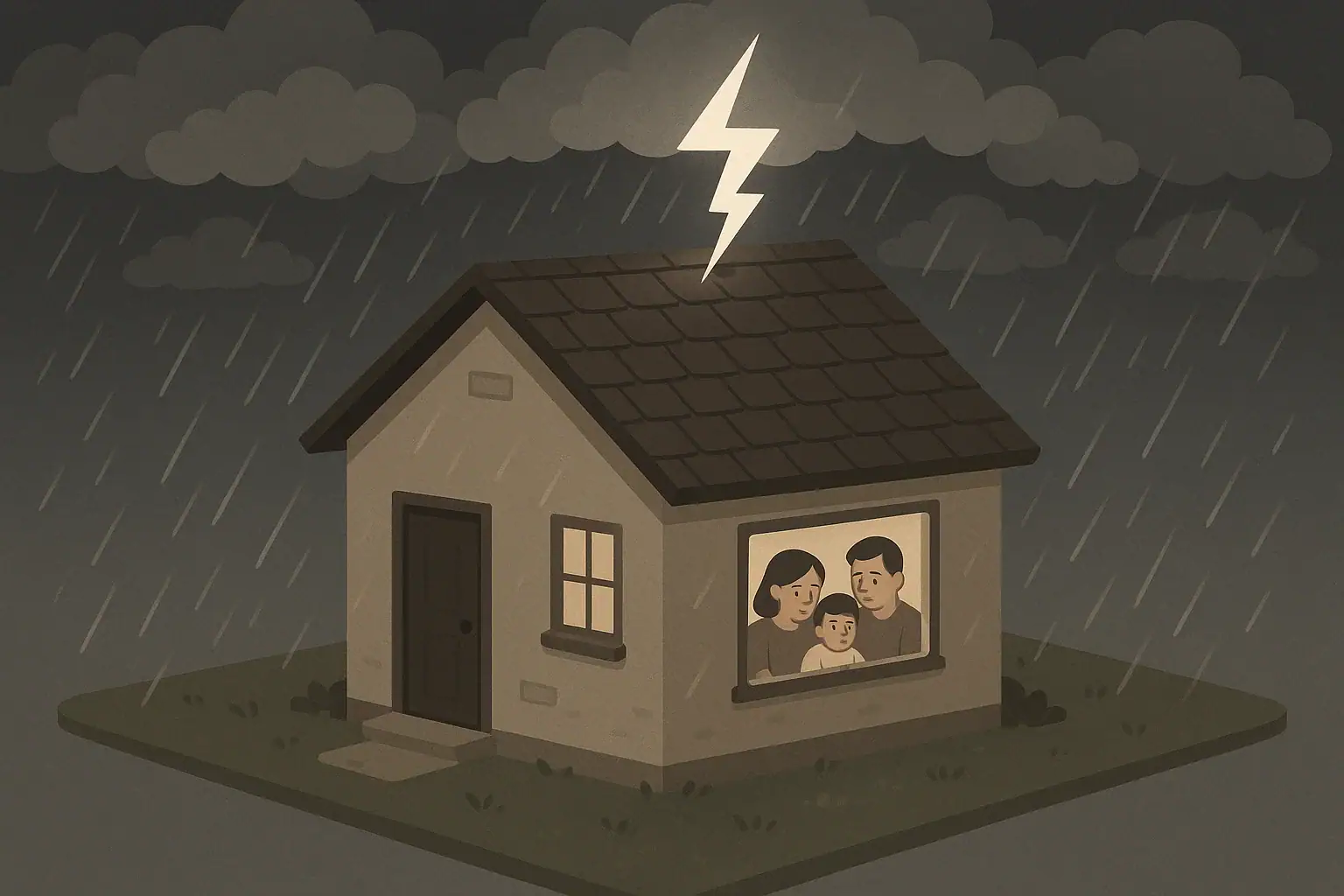
Quick guide: what to avoid during a lightning storm at home
When lightning is nearby, the safest place is inside a fully enclosed building with wiring and plumbing. But being indoors does not remove all risk. Certain activities and locations in your home can still expose you to a lightning strike.
During a lightning storm, avoid:
- Using corded phones
- Touching plumbing (sinks, tubs, showers, faucets)
- Standing near windows, doors, and concrete walls
- Using wired electronics and appliances
- Leaning on metal surfaces or using metal-framed doors
- Doing laundry with corded or hard-wired machines
- Being on balconies, porches, or in open structures like carports
Stay inside until at least 30 minutes after the last thunder. If you can hear thunder, lightning is close enough to be dangerous.
Why indoor lightning safety matters
Lightning can travel through a home’s wiring, plumbing, metal framing, and some building materials. Even if the house itself takes most of the energy, you can still be injured if you are in contact with those pathways.
According to guidance from the National Weather Service and emergency agencies, a typical safe building has:
- Complete roof and walls
- Standard electrical wiring
- Plumbing and metal pipes grounded into the earth
This setup helps direct lightning into the ground. Your goal indoors is to avoid becoming part of that path.
What to avoid touching or using indoors
Avoid phones and electronics connected by wires
- Corded landline phones: Do not use them during a storm. Lightning can travel through phone lines.
- Wired computers and game consoles: Avoid using devices that are plugged into the wall or wired to the internet or cable.
- Large appliances: Avoid touching refrigerators, stoves, dishwashers, washing machines, and dryers while lightning is active.
Battery-powered devices (like a fully charged laptop not plugged in, tablets, or phones on battery) are generally safer to use, especially away from windows and doors.
Avoid plumbing and water use
Lightning can travel through metal pipes and water. During an active storm, avoid:
- Showering or bathing
- Washing dishes by hand
- Running water at sinks
- Doing laundry with water in use
Delay these tasks until at least 30 minutes after the last thunder.
Avoid windows, doors, and concrete
Lightning can travel through window and door frames, especially if they contain metal. It can also travel through some concrete walls and floors that contain metal reinforcing bars (rebar).
During a storm, try to:
- Stay several feet away from windows and exterior doors
- Avoid sitting on concrete floors or leaning against concrete walls
- Close blinds or curtains to reduce injury from broken glass if a strike occurs nearby
Where to be in the house during a storm
Choose a spot that keeps you away from wiring, plumbing, and large metal surfaces.
Safer places usually include:
- Interior rooms without plumbing, such as a hallway or interior bedroom
- Living areas away from exterior walls and windows
- Upper or main floors in flood-prone areas (if heavy rain is also a concern)
Less safe places include:
- Porches, balconies, and open decks
- Carports, sheds, and gazebos
- Detached, small metal buildings without full wiring and plumbing
- Garages with large open doors during active lightning
Protecting your home’s systems and electronics
No home setup can remove all lightning risk, but you can reduce damage from surges.
- Use surge protection: Consider point-of-use surge protectors for sensitive electronics. Follow the manufacturer’s instructions.
- Unplug when storms are expected: If safe to do so before the storm arrives, you can unplug nonessential electronics.
- Know your main breaker: Learn where your main electrical panel is and how to shut off power, but do not touch the panel during an active lightning storm unless directed by emergency personnel.
- Backup power: If you use a generator for outages, follow the manufacturer’s safety instructions and guidance from the U.S. Consumer Product Safety Commission on carbon monoxide and electrical hazards. The CPSC provides generator safety information at the page titled Portable Generator Safety.
For broader disaster and lightning planning, you can review the federal guidance at the page titled Thunderstorms and Lightning on Ready.gov.
Outdoor areas at home: what to avoid
If thunder starts while you are outside at home, go inside a substantial building as quickly as possible. Until you are safely indoors, avoid:
- Open yards, fields, and rooftops
- Standing under isolated trees or tall objects
- Metal fences, railings, and poles
- Pools, hot tubs, lakes, and other bodies of water
- Using corded power tools or lawn equipment
A fully enclosed metal vehicle with the windows closed can offer some protection if a building is not immediately available, but move into a proper building as soon as you can.
Simple family lightning plan
A short plan helps everyone know what to do when a storm rolls in.
- Pick your safe room: Choose an interior room away from windows and plumbing where everyone can wait out the storm.
- Set device habits: Keep at least one flashlight or battery lantern in that area. Charge phones before severe weather if you have advance notice.
- Agree on rules: Teach children that during thunder and lightning they should not use corded phones, run water, or stand at windows.
- Watch the clock: Use the “30–30” rule: go inside when thunder is within 30 seconds of lightning, and stay inside for 30 minutes after the last thunder.
When to call for help
- If someone is struck or injured: Call 911 right away. Lightning victims do not carry an electrical charge and are safe to touch while you provide first aid if you are not in immediate danger.
- If you smell smoke, see fire, or notice sparking outlets: Leave the home if it is unsafe and call 911 from outside or from a neighbor’s home.
- If you suspect damage to wiring, roof, or structure: Contact a licensed electrician or qualified contractor before using affected areas or circuits.
Local emergency services and building professionals are the best source of advice if your home takes a direct or nearby strike.
Frequently asked questions
Is it safe to use Wi‑Fi during a lightning storm?
Using a battery-powered device connected to Wi‑Fi is generally safer than using corded devices, especially if the device is not plugged into the wall. Try to stay away from windows, exterior doors, and wired equipment like routers and desktop computers while lightning is active.
Can lightning come through a window?
Lightning does not usually pass straight through intact glass, but it can travel through window frames and nearby wiring or metal. A close strike can also shatter glass. It is safer to stay several feet away from windows and to close curtains or blinds during intense storms.
Is taking a bath during a storm really dangerous?
Using showers, tubs, or sinks during a lightning storm is not recommended because lightning can travel through plumbing and water. Waiting until at least 30 minutes after the last thunder to bathe or shower reduces that risk.
Are surge protectors enough to protect my electronics from lightning?
Surge protectors can help reduce damage from some electrical surges, but they may not fully protect against a close or direct lightning strike. For added protection, many people unplug nonessential electronics before storms when there is time and it is safe to do so. For specific protection levels and limits, follow the instructions and ratings provided by the surge protector’s manufacturer.
- Simple checklists and realistic planning
- Water, power, lighting, and pantry basics
- Family plans (kids, pets, seniors) and seasonal prep
Affiliate disclosure
As an Amazon Associate, we earn from qualifying purchases. Some links on this site may be affiliate links. If you buy through these links, we may earn a small commission at no extra cost to you. This helps support our content. Learn more.