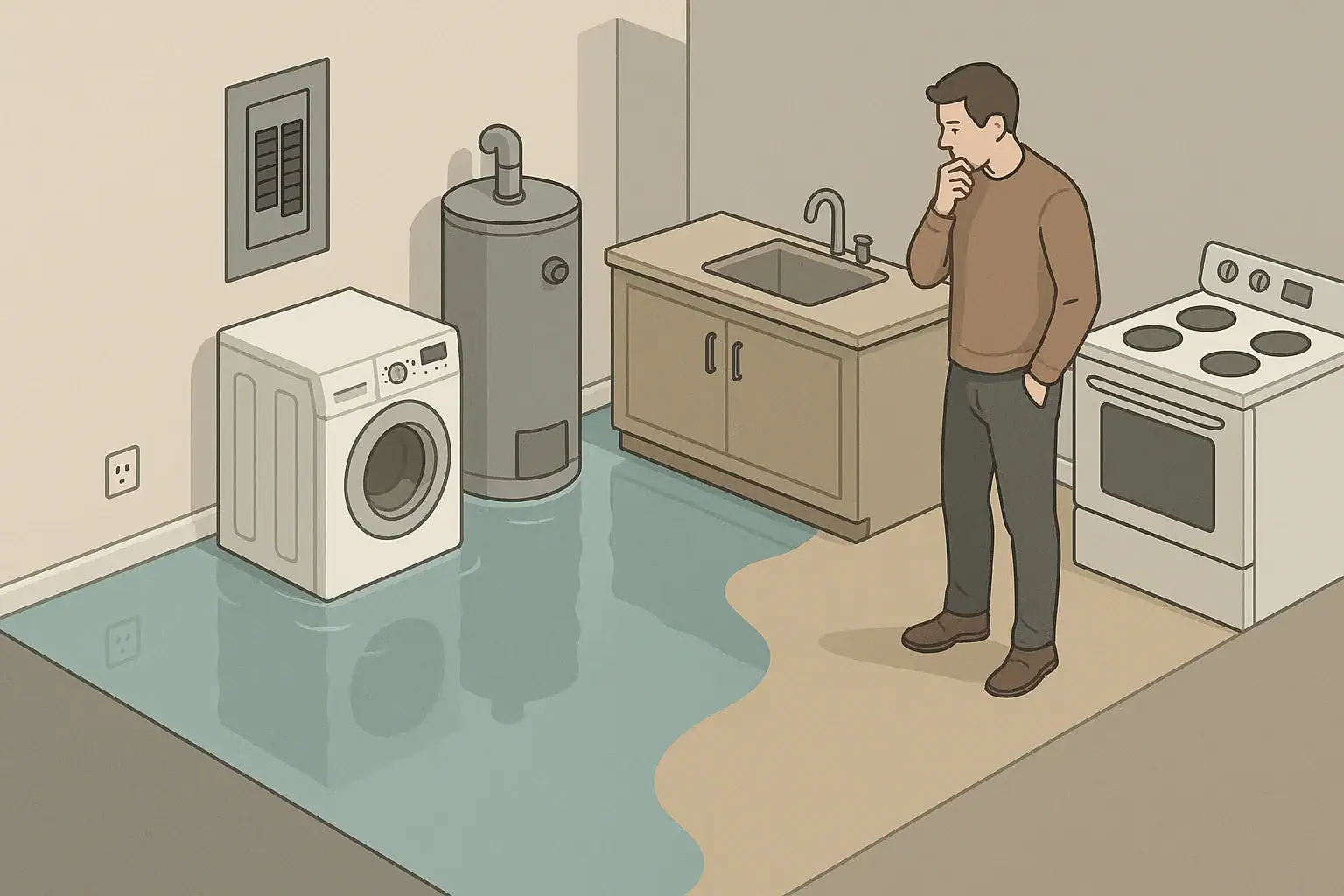
After a flood, anything electrical in or near the water can be dangerous, even if the power seems to be off. Until a qualified electrician or inspector says it is safe, you should not touch wet electrical equipment, outlets, or wiring, and you should not step into standing water that might be energized.
Your main goal when reentering a flooded home is to avoid becoming a path for electricity to reach the ground. That means staying away from water, metal, and damaged electrical systems until they are professionally checked.
Before you go inside: basic safety checks
Do not rush back into a flooded building. Electrical hazards can exist even when water levels look low.
- Follow local officials first. Only return when emergency services or local authorities say it is allowed.
- Assume power lines may be live. Stay away from downed or sagging lines and anything touching them (fences, trees, water, vehicles). Report them to your utility or 911.
- Ask the utility to disconnect power at the meter or street if your service drop, meter, or main panel has been under water or physically damaged.
- Do not enter if water is above the outlets or if you see obvious structural damage, heavy leaning walls, or a risk of collapse. Wait for professional clearance.
For general post-flood safety, the U.S. Federal Emergency Management Agency (FEMA) provides guidance on its page on flood safety and recovery.
What not to touch outside the home
Electrical danger often starts before you reach the front door.
- Downed power lines. Never touch or approach them. Keep others away and call your utility or 911.
- Service mast, meter, and exterior panel. Do not touch if they are damaged, pulled away, or were under water. Leave inspection and shutoff to the utility or a licensed electrician.
- Metal fences, railings, and gutters near power lines. They can carry electricity if a line is touching them.
- Standing water near electrical equipment. Avoid puddles around outdoor outlets, heat pumps, air conditioners, or pool equipment.
- Portable generators in wet areas. Do not touch a generator or its cords if you are standing on wet ground or in water. Follow the manufacturer’s instructions and the guidance from the U.S. Consumer Product Safety Commission (CPSC) on portable generator safety.
What not to touch when you first step inside
If you decide it is safe to open the door, move slowly and be ready to back out immediately.
- Do not step into standing water inside the home if the electricity has not been confirmed off at the main service by a qualified person.
- Do not touch light switches or dimmers. Leave them as they are until an electrician inspects the circuits.
- Do not touch outlets or cover plates, especially if they are wet, cracked, loose, or buzzing.
- Do not touch the breaker panel (circuit breakers or fuses) if it was exposed to water, mud, or obvious damage. A wet panel can arc or shock.
- Do not plug in or unplug anything. Leave cords and plugs alone until the system is inspected and power is restored safely.
- Do not use extension cords to “test” outlets or appliances. This can bypass safety devices and create hidden hazards.
If you hear crackling, buzzing, or smell burning plastic, leave the building and contact your utility or fire department from a safe location.
High-risk electrical items to avoid after a flood
Many household electrical items can hold water or moisture and may not be safe to use again without professional evaluation.
Wiring, outlets, and panels
- Interior wiring in flooded walls. Do not remove covers or try to dry wiring yourself. Water and silt can stay inside boxes and cables.
- Ground-fault circuit interrupter (GFCI) outlets and breakers. These are safety devices, but if they were submerged or soaked, they may fail and should be checked or replaced by an electrician.
- Surge protectors and power strips. If they got wet, do not use them again. Unplug them only when the power is confirmed off and the area is dry.
Appliances and equipment
- Large appliances: refrigerators, freezers, ranges, ovens, washers, dryers, dishwashers, furnaces, boilers, and water heaters that were in floodwater should not be turned on or plugged in until inspected.
- Small appliances and tools: microwaves, coffee makers, toasters, fans, dehumidifiers, power tools, and similar items that got wet should stay unplugged and unused until a qualified repair technician evaluates them.
- Heating and cooling systems: central air units, heat pumps, and duct heaters exposed to water should be inspected by licensed HVAC and electrical professionals before use.
- Well pumps and sump pumps: do not restart them if controls, wiring, or motors were underwater. Have them checked first.
Electronics
- Televisions, computers, game consoles, routers, and modems that were splashed or submerged should remain unplugged.
- Chargers and power adapters that got wet should not be used again unless a qualified technician says they are safe.
When and how to shut off power safely
Shutting off power can reduce risk, but doing it the wrong way can be dangerous.
- If you can reach the main breaker or fuse box on dry ground and it is not wet or damaged, you may be able to switch off the main breaker before entering flooded areas.
- If the panel is wet, rusted, or in standing water, do not touch it. Ask the utility to disconnect power at the meter or pole.
- Never stand in water while touching the panel, meter, or any electrical switch.
- Label and photograph the condition of the panel and nearby damage for your electrician and insurance, without touching anything.
The U.S. Occupational Safety and Health Administration (OSHA) offers guidance on electrical safety after floods, including when to have systems de-energized.
Waiting for inspection: what you can safely focus on
While you wait for a licensed electrician or inspector, keep your distance from anything electrical and focus on tasks that do not disturb wiring or equipment.
- Stay in dry, well-lit areas away from damaged walls, ceilings, and floors.
- Open doors and windows for ventilation if it is safe to do so without touching wet switches or powered fans.
- Take photos and notes of damage from a safe distance for insurance and repair planning.
- Keep children and pets out of the building or confined to a clearly safe, dry area.
Do not start tearing out walls, removing outlets, or moving large appliances until an electrician confirms that circuits are off and safe to work around.
After inspection: what usually needs repair or replacement
A licensed electrician can test circuits and equipment and tell you what can be dried and repaired and what must be replaced. In many flood situations, you should be prepared for recommendations such as:
- Replacing outlets, switches, and wiring that were underwater.
- Replacing or professionally rebuilding main panels and subpanels that were flooded.
- Replacing certain appliances and electronics that cannot be safely restored.
- Installing or upgrading GFCI and arc-fault protection where required by current electrical codes.
Local building codes and inspection requirements vary. Follow the guidance of your local building department and licensed professionals, even if it means delaying your return to normal use of the home.
Frequently asked questions
Can I use a battery-powered flashlight in a flooded home?
Yes, a handheld battery-powered flashlight is generally safe to use, as long as you keep the light and your hands dry and do not open it while standing in water. Avoid plug-in work lights, corded tools, or anything that connects to the home’s electrical system until it has been inspected.
Is it safe to reset a tripped breaker after a flood?
Do not reset breakers that tripped during or after a flood until a licensed electrician has inspected the panel and circuits. Resetting a breaker on a wet or damaged circuit can cause arcing, fire, or shock.
What if only part of my basement flooded near some outlets?
Even if water reached only a few outlets, the wiring behind the walls may have been affected. Avoid using any outlets or switches in the flooded area and have an electrician evaluate the entire affected circuit, not just the visibly wet devices.
Who should I call first about electrical issues after a flood?
If there is immediate danger, such as sparking, smoke, or a downed line, call 911. For damaged service lines, meters, or questions about disconnecting power, contact your electric utility. For interior wiring, panels, and appliances, contact a licensed electrician familiar with post-flood repairs.
- Simple checklists and realistic planning
- Water, power, lighting, and pantry basics
- Family plans (kids, pets, seniors) and seasonal prep
Affiliate disclosure
As an Amazon Associate, we earn from qualifying purchases. Some links on this site may be affiliate links. If you buy through these links, we may earn a small commission at no extra cost to you. This helps support our content. Learn more.