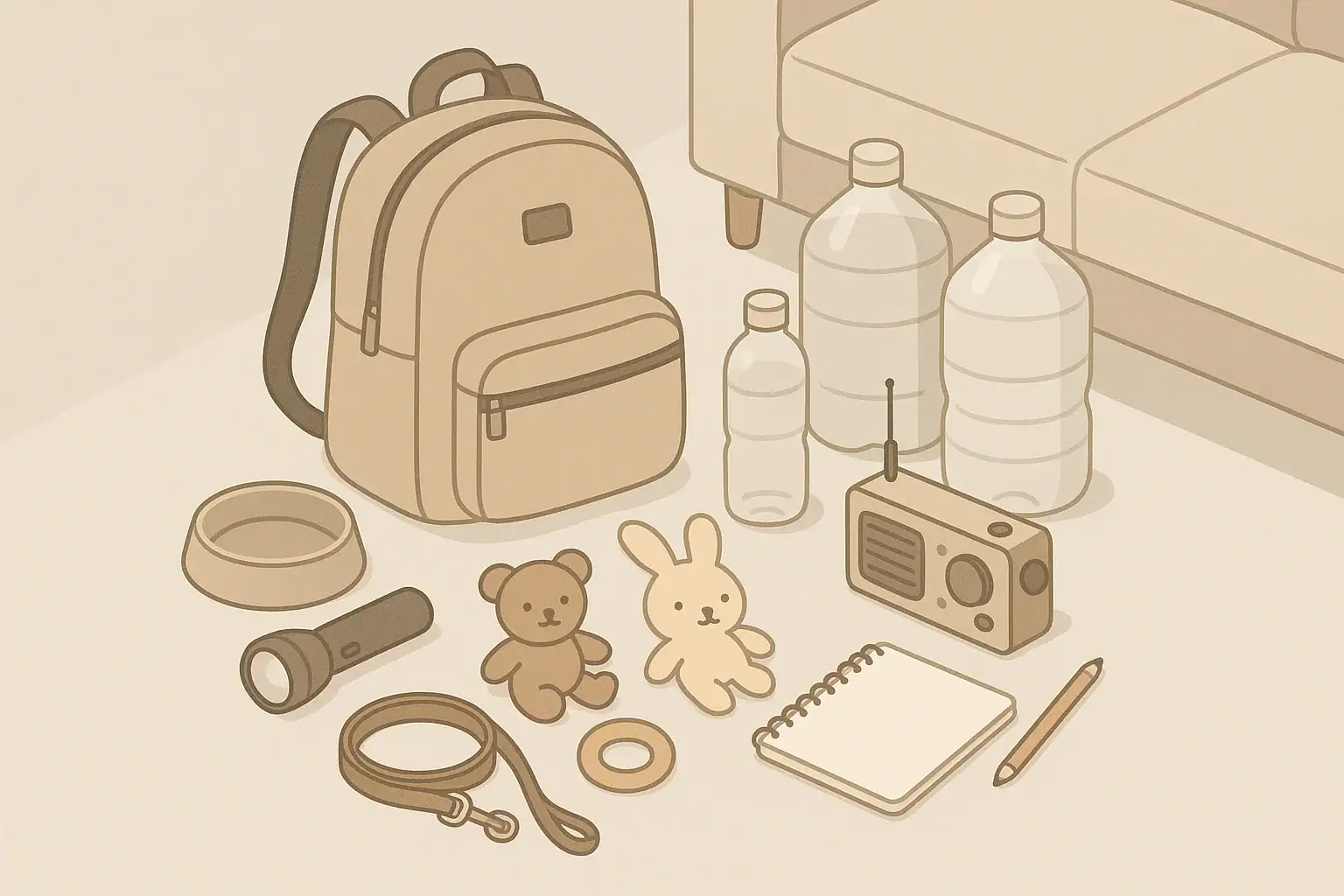
Why Sensory-Friendly Planning Matters in Emergencies
Many emergency checklists focus on supplies and gear but overlook sensory and communication needs. For autistic children and adults, loud sounds, bright lights, crowds, and sudden changes can be overwhelming, especially during a power outage, storm, or evacuation.
A sensory-friendly emergency plan aims to:
- Reduce unexpected sensory overload (noise, light, smells, touch)
- Support clear, predictable communication
- Make it easier to stay calm and follow a familiar routine
- Ensure comfort items are available when the environment changes suddenly
This approach works in apartments, houses, and small spaces. The goal is not to prepare for every possible disaster, but to make common short-term emergencies more manageable for autistic people and their families.
Know the Person’s Sensory and Communication Profile
Every autistic person is different. Before you buy supplies or write detailed plans, start by understanding what actually helps the person in your home.
Map Out Sensory Needs and Triggers
Make a simple written list for each autistic child or adult in your household:
- Sound: What noises are hardest (sirens, loud wind, generators, alarms, shouting)? What helps (noise-canceling headphones, earplugs, music)?
- Light: Are bright flashlights or emergency strobes distressing? Is dim, steady light calming?
- Touch: Are certain fabrics comforting or uncomfortable? Is a weighted item helpful when anxious?
- Smell: Are strong smells (cleaners, smoke, fuel) overwhelming? Are there neutral or preferred scents?
- Movement: Does rocking, pacing, or a swing help regulate? Is sitting still in a crowded place difficult?
Use this list as the foundation for your emergency plan. The same event, like a power outage, will feel very different if someone is sensitive to the dark versus sensitive to sudden bright light.
Clarify Communication Preferences
In stressful moments, communication can get harder for everyone. For some autistic people, speech may become limited or disappear temporarily. Plan with their preferred methods in mind:
- Spoken language
- Sign language
- Picture cards or communication boards
- Written notes or simple printed phrases
- Apps or devices (when charged and usable)
Create a one-page summary that includes how the person best understands information and how they usually express needs, especially when upset or tired.
Example values for illustration.
| Task | Why it matters | Notes |
|---|---|---|
| List top 3 sound triggers | Helps you choose quieter tools and routes | Example: sirens, generators, dogs barking |
| Identify calming items | Supports self-regulation during chaos | Example: soft hoodie, small toy, chew item |
| Note preferred communication | Reduces confusion under stress | Example: simple written steps, picture cards |
| Record medical and support needs | Helps others assist appropriately | Example: allergies, mobility aids |
| Describe meltdown or shutdown signs | Allows early support before escalation | Example: pacing, repeating phrases, going quiet |
| Outline preferred calming strategies | Guides caregivers and responders | Example: quiet corner, deep pressure, music |
| Summarize routine anchors | Maintains predictability in disruption | Example: same snack time, same bedtime steps |
Design a Sensory-Friendly Home Emergency Kit
Standard emergency kits focus on water, food, light, and first-aid. You still need those basics, but a sensory-friendly kit adds items that protect the autistic person’s comfort and predictability.
Core Supplies with Sensory Considerations
When choosing everyday essentials, think about noise, brightness, and textures:
- Lighting: Use steady, non-flashing lights. Choose soft, diffuse options instead of harsh beams. Avoid strobe or blinking modes.
- Sound: If you keep a radio or alert device, choose one that can be turned down or muffled. Store simple earplugs and headphones.
- Temperature: Include layers of soft clothing, hats, and blankets that the person already tolerates well.
- Hygiene items: Pack fragrance-free or familiar soaps and wipes to avoid overwhelming smells.
Comfort and Regulation Items
Set aside a small pouch or packing cube labeled mentally as the “comfort kit” (it does not need a physical label):
- Preferred small fidgets or sensory toys
- Chewelry or safe chew items if used
- Soft hat, hoodie, or scarf for a portable “cocoon”
- Compact weighted item (like a small lap pad) if tolerated and safe for the person
- Ear defenders or noise-canceling headphones
- Eye mask or dark glasses to block bright lights
Keep duplicates of high-importance items, so you are not pulling the only favorite object from daily use each time you repack.
Communication and Identification Tools
Include a clear folder or pouch with:
- One-page summary of the person’s needs and supports
- Communication board or printed picture cards
- Short, simple scripts for common situations (for caregivers to read)
- Basic identification information and emergency contacts
Even if you stay at home during a storm or power outage, this packet is useful if outside help arrives and needs quick information.
Create Predictable Plans for Common Scenarios
You do not need a separate plan for every hazard. Instead, create a few simple, repeatable plans around likely situations and where you live: a short power outage, a longer stay-at-home event, and a possible evacuation.
Power Outage in an Apartment or House
Power loss can be particularly intense for autistic people who rely on predictable lighting, temperature, and devices. Plan for:
- Lighting: Keep familiar, non-flickering lights in known locations. Practice turning them on together.
- Noise: If neighborhood generators are loud, have noise protection ready.
- Routine anchors: Maintain consistent meal times and bedtime steps, even if the details change.
- Backup for comfort devices: If someone depends on a fan for sound or airflow, consider a battery-powered option and note its expected runtime as an example, such as a few hours at low speed.
Stay-at-Home Severe Weather
Winter storms, heatwaves, or heavy rain can mean staying indoors for a day or more. Focus on:
- Movement: Simple indoor movement routines to reduce restlessness.
- Visual schedule: A basic printed schedule that shows “storm day” steps, even if they differ from school or work days.
- Backup entertainment: Low-tech favorites like books, drawing, building toys, or puzzles.
Short-Notice Evacuation
Evacuations can involve crowds, sirens, and unfamiliar spaces. Simplify by:
- Keeping a go-bag near the door with the sensory comfort kit inside
- Practicing leaving the home calmly with only a few items
- Planning a “quiet corner” idea for shelters or relatives’ homes, such as a blanket and headphones
Build Simple Visual and Written Supports
Visual supports can make emergencies feel more predictable. They also reduce the need for fast verbal processing during stress.
Visual Schedules for Different Scenarios
Create one-page visual schedules or checklists for:
- “Power Out at Home” – steps like turn on backup light, get comfort kit, stay in main room, use quiet activities.
- “Storm Day at Home” – morning, midday, and evening routines with flexible activities.
- “We Have to Leave” – put on shoes, grab go-bag, lock door, go to car or safe meeting point.
Use words, simple drawings, or icons, depending on what the person understands best. Post them in a consistent location on the wall, fridge, or inside a cabinet door.
Social Narratives and Scripts
Short, concrete stories can prepare autistic people for events like sirens, darkness, or staying in a shelter. Keep the language calm and factual. For example:
- “Sometimes the power goes out. The lights turn off. We turn on our backup light. We stay together in the living room. We can use headphones if it is too noisy. The power usually comes back.”
- “If we need to leave our home, we put on shoes and grab our bags. We might ride in a car with other people. It might be loud. We can use our comfort items and headphones.”
Print these stories and keep copies in the emergency kit and in everyday reading spaces.
Calm Phrases for Caregivers
During tense situations, it is easy for adults to speak quickly or in complicated ways. Prepare a few key phrases that are short and predictable, such as:
- “You are safe. I am with you.”
- “The power is off. Our light still works.”
- “We are going to the car now. Then we wait.”
- “It is loud. You can use your headphones.”
Caregivers can practice using these phrases during drills, so they feel natural later.
Practice Through Gentle, Low-Stress Drills
Practicing emergency steps in a calm moment builds familiarity, which is especially important for autistic people who rely on routine.
Start Small and Predictable
Instead of a surprise drill, announce what will happen:
- “After dinner, we will practice what we do if the power goes out.”
- “Today we will practice putting on shoes and taking our go-bags to the door.”
Keep early drills short, maybe five to ten minutes. Use the same visual schedule or checklist you would use in a real event, so it becomes familiar.
Role-Play Common Challenges
Over time, gently add elements that might be stressful:
- Using flashlights only for a few minutes and then turning regular lights back on
- Walking down the stairs or hallway in the dark with a backup light
- Sitting in a parked car as if waiting out a storm
Pause and ask what felt okay and what felt too hard. Adjust your plan based on this feedback.
Plan for Sensory Needs Away from Home
In some emergencies, you may need to stay with relatives, friends, or in a temporary shelter. Planning ahead can make these environments more manageable.
Portable “Quiet Space” Setup
Pack compact items that can turn almost any corner into a calmer space:
- Lightweight blanket or large scarf to define a space
- Headphones or ear defenders
- Eye mask or cap with a brim
- Small sensory toys and familiar objects
When you arrive at a new location, calmly identify where this quiet space will be, even if it is just a section of a room near a wall.
Communicating Needs to Others
Your one-page summary can help others understand how best to support the autistic person. It can include:
- How to explain changes or instructions
- What behaviors may appear when overwhelmed
- What responses are helpful (for example, giving space, using simple language)
If you feel comfortable, you can briefly share this with shelter staff or hosts when things are relatively calm.
Medication, Power, and Special Equipment
Some autistic people use medications, medical devices, or assistive technology that affects how you plan for outages and evacuations.
Medication and Routine
To support consistency during disruptions:
- Keep a small emergency reserve of essential medications when possible, following your prescriber’s guidance.
- Store a simple chart with medication names and usual times, in case a different caregiver needs to help.
- Use a watch, phone alarm, or visual schedule to maintain timing when routines shift.
Devices and Power Needs
Some individuals rely on communication tablets or sensory tools that need regular charging. For short-term power loss:
- Keep devices as charged as practical during seasons with higher risk of storms or outages.
- Use low-power settings when you know power may be limited, to extend battery life.
- Plan non-electronic backups for essential functions where feasible, such as printed communication boards.
Example values for illustration.
| Device type | Typical power use idea | Planning notes |
|---|---|---|
| Communication tablet | Low to moderate | Prioritize charging during outages and use only for essential communication. |
| Small fan for comfort | Moderate | Use on lowest setting and limit hours of use to conserve backup power. |
| Night light | Very low | Choose battery or low-power options to reduce fear of the dark. |
| Noise machine | Low | Consider battery-powered model or use pre-downloaded sounds on a device. |
| Portable heater or fan (climate) | Higher | Plan for blankets or layers as backup since many backup systems cannot run large devices for long. |
| Low-watt lamp | Low | Use instead of bright overhead lights when backup power is available. |
Involve the Autistic Person in Planning
Whenever possible, involve the autistic child or adult in building their own plan. This supports autonomy and makes the plan more accurate.
- Offer choices about comfort items and how they are packed.
- Ask what they want helpers to know about them.
- Review visual schedules together and invite changes that make sense.
- Practice using the kit and scripts in low-pressure ways, such as pretend play or simple walk-throughs.
Over time, update the plan as needs, preferences, and living situations change. The goal is a calm, realistic approach that respects sensory needs while covering basic safety for the whole household.
Authoritative sources
Safety recommendations can change. Confirm critical details with current official guidance and local authorities.
- CDC: Carbon Monoxide Poisoning Basics
- USDA FSIS: Keep Food Safe During Emergencies
- U.S. CPSC: Battery Safety
Frequently asked questions
What sensory items should be in a go-bag for autistic people?
Include small, familiar sensory items such as noise-reducing headphones or ear defenders, a soft hoodie or scarf for a portable cocoon, preferred fidgets or chew items, an eye mask or dark glasses, and a compact weighted lap pad if tolerated. Keep duplicates of especially important items so daily routines are not disrupted when you repack the bag.
How can caregivers prepare communication supports for emergencies?
Create a one-page summary that lists preferred communication methods, common signs of distress, and short scripts for helpers to read. Include printed picture cards or a communication board and keep electronic devices charged while also maintaining non-electronic backups in case power is unavailable.
How do I practice emergency drills without causing distress?
Use announced, short, and predictable practice sessions that rely on familiar visual schedules and supports, starting with five to ten minutes and increasing slowly as comfort grows. Pause to ask what felt okay and adjust the plan based on the person’s feedback.
What steps help manage device and medication power needs during outages?
Keep essential devices charged when storms are likely, use low-power settings to extend battery life, and consider portable battery packs for short outages. Maintain a small emergency reserve of medications per prescriber guidance and store a simple medication chart so a different caregiver can follow routine dosing if needed.
How can I make shelters or unfamiliar spaces more sensory-friendly?
Pack a portable quiet-space kit with a lightweight blanket to define a space, headphones, eye protection, and familiar objects, and calmly identify a quiet corner on arrival. Share the one-page summary with shelter staff or hosts when appropriate so they can offer simple, effective supports like reduced lighting, minimal verbal instructions, or a private area.
- Simple checklists and realistic planning
- Water, power, lighting, and pantry basics
- Family plans (kids, pets, seniors) and seasonal prep
Affiliate disclosure
As an Amazon Associate, we earn from qualifying purchases. Some links on this site may be affiliate links. If you buy through these links, we may earn a small commission at no extra cost to you. This helps support our content. Learn more.