Emergencies can be stressful for any household, and shared custody can add extra layers of uncertainty. Power outages, winter storms, heatwaves, or short-notice evacuations often raise immediate questions: Who picks up the kids? Which home do they go to? How do both homes stay informed?
A shared custody emergency plan aims to answer those questions before anything happens. Instead of focusing on worst-case scenarios, it focuses on simple, realistic steps that keep children safe, minimize conflict, and make communication easier for everyone involved.
Good planning does not have to be complicated. It usually comes down to:
- Agreeing on pickup and drop-off rules for disruptions
- Keeping key documents ready in both homes and in go-bags
- Setting clear communication expectations when phones or power are limited
- Coordinating basic home readiness for each household
Why a Shared Custody Emergency Plan Matters
Emergencies can be stressful for any household, and shared custody can add extra layers of uncertainty. Power outages, winter storms, heatwaves, or short-notice evacuations often raise immediate questions: Who picks up the kids? Which home do they go to? How do both homes stay informed?
A shared custody emergency plan aims to answer those questions before anything happens. Instead of focusing on worst-case scenarios, it focuses on simple, realistic steps that keep children safe, minimize conflict, and make communication easier for everyone involved.
Good planning does not have to be complicated. It usually comes down to:
- Agreeing on pickup and drop-off rules for disruptions
- Keeping key documents ready in both homes and in go-bags
- Setting clear communication expectations when phones or power are limited
- Coordinating basic home readiness for each household
Core Principles of a Shared Custody Emergency Plan
Every family situation is different, but a few principles tend to make shared custody emergency plans work more smoothly.
Child safety first, logistics second
Most parents already agree that the child’s immediate safety is the top priority. In practice, this often means:
- Agreeing that the nearest safe adult can make short-term decisions
- Letting the child stay put during a short, localized incident if travel is unsafe
- Reconnecting with the regular parenting schedule after the emergency passes
Clarity beats perfection
You do not need a perfect plan that covers every detail. It is more useful to have a short, written plan everyone understands, such as:
- Two or three emergency pickup options
- Simple communication rules (texts, calls, backup methods)
- A shared understanding of “default” choices if you cannot reach each other
Mirror the basics in both homes
Children feel less disruption when both homes have similar, simple preparations:
- A small emergency kit and flashlight in each home
- Copies of important documents available in both places
- Matching contact lists for family, neighbors, and schools
These steps help a child feel safe and reduce pressure on either parent to be the “only” prepared household.
Example values for illustration.
| Planning task | Why it matters | Notes |
|---|---|---|
| Write down pickup rules for closures | Reduces confusion when schools or daycares close suddenly | Keep a one-page summary both parents can access |
| List approved backup adults | Ensures children are only released to trusted people | Share with school and update yearly |
| Make duplicate document sets | Each home can make decisions if one parent is unreachable | Store in a simple labeled folder |
| Agree on primary and backup contacts | Keeps information flowing if phone service is spotty | Include at least one out-of-area relative |
| Prepare small go-bag for the child | Makes short-notice moves between homes easier | Include comfort items, clothes, and key copies |
| Choose a temporary meeting place | Provides a shared plan if home access is blocked | Example: a friend’s house in another neighborhood |
Pickup Rules When Schedules Are Disrupted
Many emergencies that affect families are short-term: a storm that closes schools for a day, a wildfire smoke event that keeps kids indoors, or a power outage that shuts down after-school programs. Clear pickup rules reduce last-minute stress.
School and daycare closure planning
Talk with the other parent and the child’s school or daycare about what should happen if they close unexpectedly while your child is there.
Topics to agree on:
- Who is the primary pickup adult on each day of the regular custody schedule
- Who is allowed as a backup (grandparents, relatives, close friends)
- How the school will verify identity (ID checks, password, or other process)
- What happens if no one can reach either parent right away
Provide the school with a written list of approved adults and update it when your situation changes. If possible, both parents should confirm the list together.
Weather and local hazard scenarios
Different emergencies may require different pickup decisions. You can use general guidelines such as:
- Short local events (brief power loss, heavy rain): child stays with whichever parent they are already with until it is clearly safe to travel.
- Road closures or unsafe driving conditions: the child stays at the nearest safe home, even if that means delaying a scheduled handoff.
- Evacuation orders: whoever is with the child follows local directions to leave safely, then updates the other parent as soon as possible.
Written backup pickup plan
A concise, written plan can help you and the school or daycare respond quickly. Consider including:
- The regular pickup parent for each weekday
- At least two backup adults with contact information
- Any legal limitations on who may pick up the child
- Instructions for the child: who they should look for, and where to wait safely
Essential Documents for Shared Custody Emergencies
In a disruption, basic documents help adults make timely decisions about health, schooling, transportation, and custody. Copies in both homes help avoid delays if one parent is traveling, unreachable, or affected by the emergency.
Core custody and identification documents
Each home should have access to the same core records, stored in a simple folder or envelope. Consider including:
- Child’s full legal name, date of birth, and recent photo
- Custody agreement or parenting plan, including holiday schedules
- Any court orders affecting pickup, travel, or contact
- Copies of birth certificate and any applicable ID (if available)
- List of legal guardians and emergency contacts
Digital copies can be helpful, but they should not fully replace paper copies in case of power or device issues.
Health and care information
While this article avoids medical advice, general health-related information is often vital in emergencies. Depending on your situation, your folder might include:
- Names and contact details of pediatricians and dentists
- Basic allergy or sensitivity information, if relevant
- Insurance card copies and policy numbers
- Preferred pharmacy and any standing instructions about refills
Again, keep details at a practical level and update them periodically.
School, daycare, and activity contacts
Both households benefit from having the same contact information easily available, such as:
- School and daycare front office numbers
- Teacher, coach, or program director contact details (as allowed)
- Bus route or transportation program information
- Any special instructions related to after-school pickup
Where and how to store documents
For practical home readiness, a layered approach works well:
- Primary set at home: in a simple folder in an easy-to-remember drawer or box.
- Secondary set in a go-bag: photocopies in a sealed envelope, in the child’s or parent’s go-bag for quick departures.
- Digital backup: secure digital copies stored where each parent can reach them if traveling.
Communication Plans Between Co-Parents
Communication can be challenging even on normal days. During a storm, outage, or local emergency, simple and predictable communication patterns matter more than ever.
Agree on primary and backup methods
Discuss and write down your communication ladder—how you will try to reach each other and in what order. For example:
- Primary: text messages for quick updates
- Secondary: phone calls if something is urgent or unclear
- Backup: email or a shared online calendar when power returns
If phone networks are overloaded, short texts sometimes go through more easily than calls. Including this expectation in your plan can prevent misunderstandings.
Set simple expectations during disruptions
Agree in advance on what each parent will try to communicate during an incident, such as:
- When and where the child has been picked up
- Any change in location (for example, leaving home to stay with relatives)
- Estimated return to the regular custody schedule
You might also agree on a rule like: “If we cannot reach each other, we will each send a short status update every few hours when possible.”
Out-of-area contact for larger events
During widespread events, local networks can become unreliable. Many families choose one relative or close friend who lives in another region to act as a shared contact point.
That person can:
- Receive short updates from each parent when direct contact fails
- Help pass along information when one parent is temporarily unreachable
- Provide a calm, outside perspective if plans need to shift
Write this person’s contact details in both homes and explain the role to older children in simple, age-appropriate terms.
Coordinating Go-Bags and Home Readiness Across Households
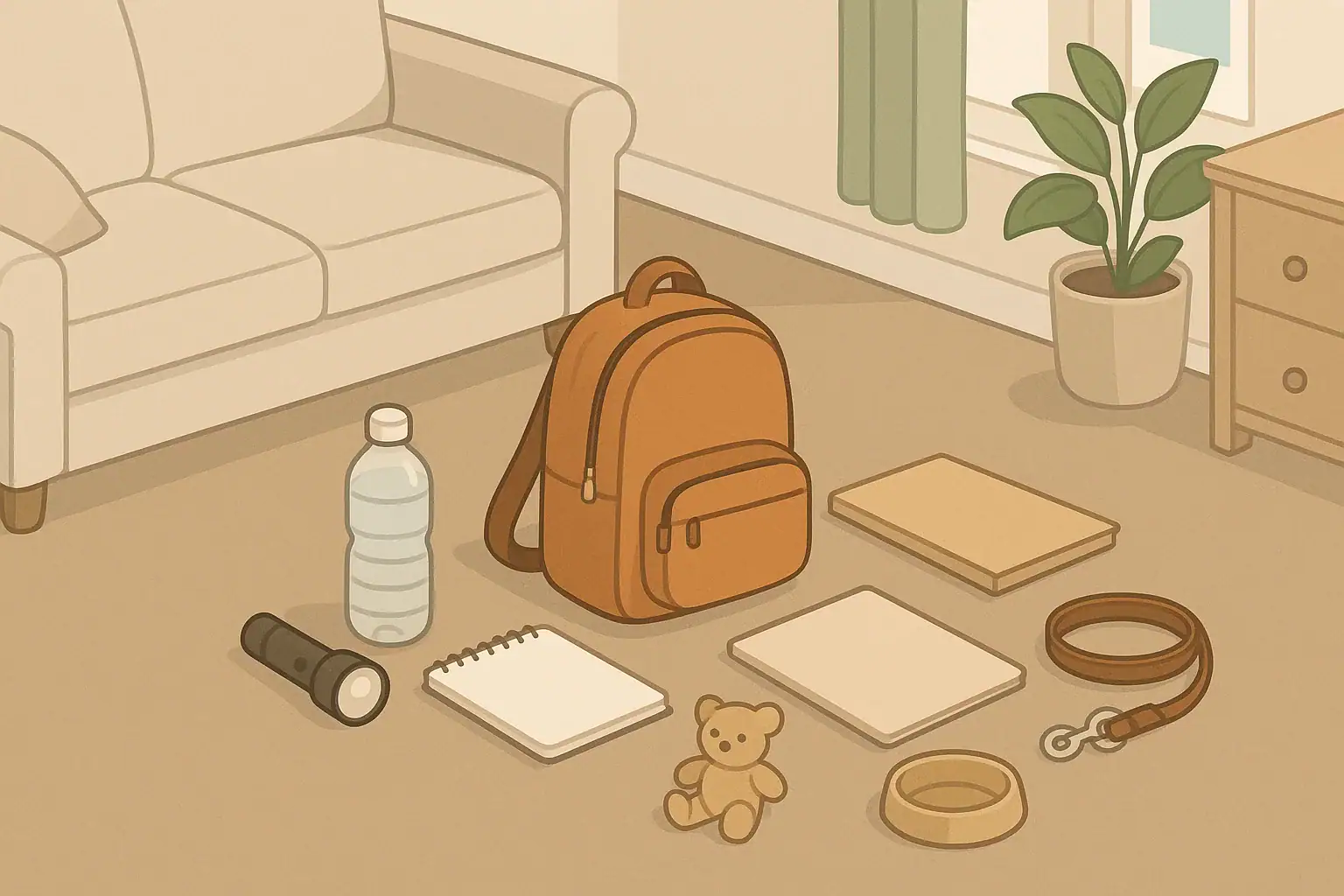
In shared custody, children may need to move between homes without much notice. Small, coordinated go-bags and matching basic supplies help that feel more routine and less disruptive.
A child’s simple go-bag for both homes
Rather than a large, complex kit, many families find a small, lightweight go-bag more realistic, especially for children. Items to consider include:
- Change of clothes and basic hygiene items
- Copy of key documents in a sealed envelope
- Comfort items: small toy, book, or notebook
- Basic flashlight and spare batteries
- Simple snack choices that store well
You can keep one bag at each home or one bag that usually travels with the child, depending on their age and schedule.
Aligning basic supplies in both homes
Children feel more secure when each home can handle a short outage or disruption. For shared custody households, that might mean each parent keeps:
- A few days’ worth of shelf-stable food the child is used to
- Basic water storage or access to safe drinking water
- Flashlights and battery-powered lights in known spots
- Backups of essential child items like simple clothing layers
Compare notes occasionally so there are no major gaps in one home compared to the other.
Example values for illustration.
| Who to contact | Method | Fallback | Meeting point note |
|---|---|---|---|
| Other parent | Text first with brief status | Phone call if no reply after a set time | If unreachable, follow written pickup rules |
| Older child (if appropriate) | Short, reassuring text | Call via school or caregiver | Remind them to stay with trusted adult |
| School or daycare | Main office phone | Designated emergency line if available | Confirm who is authorized to pick up |
| Out-of-area relative | Text or call with key updates | Email if phone coverage is limited | They log who is with the child and where |
| Local backup adult | Phone call if you need help with pickup | Text with child’s location and instructions | Use pre-agreed safe place like their home |
| Neighbors you trust | In-person check-in or call | Short written note if phones are out | Can be a temporary meeting spot |
Keeping the Plan Current and Child-Centered
Emergency plans work best when they are simple, revisited occasionally, and explained in calm, age-appropriate ways to the child.
Reviewing and updating the plan
Schedules, addresses, and phone numbers change over time. Set a recurring reminder, such as once or twice a year, to:
- Check contact lists and backup adult approvals
- Confirm document copies are up to date
- Replace any expired snacks or worn-out items in go-bags
- Discuss any new school or activity arrangements
These reviews do not have to take long; even 15–20 minutes can keep the plan practical.
Including the child in simple ways
Without creating worry, you can help children feel prepared and confident by:
- Showing them where their go-bag is at each home
- Practicing how to find a flashlight if the power goes out
- Explaining, in basic terms, who can pick them up and what to do if plans change
When children know there is a plan, shared custody emergencies feel less like chaos and more like a temporary change in routine—something their family is ready to handle together.
Authoritative sources
Safety recommendations can change. Confirm critical details with current official guidance and local authorities.
- US EPA: Emergency Disinfection of Drinking Water
- USDA FSIS: Keep Food Safe During Emergencies
- U.S. CPSC: Battery Safety
Frequently asked questions
Who should pick up my child if their school or daycare closes unexpectedly?
Agree in advance on a primary pickup adult for each custody day and provide the school with a written list of at least two approved backup adults. If neither parent can be reached, the school should release the child only to those named on the authorized list and follow any legal custody restrictions. Consider including verification methods such as a prearranged password or ID process.
What documents should each household keep accessible for a shared custody emergency?
Each home should keep a simple folder with the child’s legal name and photo, the custody agreement or parenting plan, court orders, birth certificate copies, and emergency contact names. Also include basic health information like insurance cards, pediatrician contacts, and allergy notes. Keep sealed paper copies in go-bags and secure digital backups accessible to both parents.
How should co-parents communicate during network outages or overloaded phone systems?
Agree on a communication ladder—start with short text messages for quick status updates, then phone calls for urgent issues, and email or a shared calendar as a backup when networks recover. Designate an out-of-area contact who can help relay information if local networks fail. Set a simple rule for periodic short updates so both parents know the child’s location and status.
What should we do if an evacuation order conflicts with the regular custody schedule?
In an evacuation, the child’s immediate safety takes priority: the adult with the child should follow local evacuation instructions and move to the nearest safe location. Notify the other parent and any designated out-of-area contact as soon as it is safe to do so, and follow your written backup pickup plan afterward. Document the child’s temporary location and any trusted adults caring for them to ease reunification.
How often should we review and update our shared custody emergency plan?
Review the plan at least once or twice a year and whenever there are changes in schedules, addresses, schools, or emergency contacts. Check go-bag contents, replace expired items, and confirm the school has the current authorized pickup list. Short, regular updates keep the plan practical without adding stress.
- Simple checklists and realistic planning
- Water, power, lighting, and pantry basics
- Family plans (kids, pets, seniors) and seasonal prep
Affiliate disclosure
As an Amazon Associate, we earn from qualifying purchases. Some links on this site may be affiliate links. If you buy through these links, we may earn a small commission at no extra cost to you. This helps support our content. Learn more.