Why Every Apartment Needs a Fire Escape Plan
Apartment buildings are designed with fire safety in mind, but the systems in the building are only part of the picture. A clear apartment fire escape plan helps you act quickly and calmly when alarms sound, smoke appears, or power goes out.
Planning ahead is especially important if you live in a small space, share walls with neighbors, or rely on elevators. Fire emergencies can develop quickly, and smoke can travel through hallways and stairwells. Having a simple, practiced plan means you are not figuring things out in the moment.
A basic apartment fire escape plan should cover:
- Primary and backup exits from your unit and floor
- How to react if there is smoke in the hallway or stairwell
- What to do if you cannot safely reach an exit
- Where everyone will meet outside and how you will communicate
- Special steps for children, older adults, and pets
This kind of planning is about practical readiness, not panic. A short walkthrough, a few notes on paper, and an occasional practice drill are usually enough for most households.
Know Your Building and Your Exits
The foundation of your apartment fire escape plan is understanding how to get out of your unit and your building safely. Every building is different, so it helps to pay close attention to the specific layout where you live.
Map Your Primary and Secondary Exits
Start inside your unit. Identify at least two ways to get out if possible:
- Primary exit: Usually your front door leading to a hallway and stairwell.
- Secondary exit: A second stairwell on your floor, a fire escape, or another safe route if your main hallway is blocked.
Walk the routes, counting doors or turns so you can navigate even if lights fail or smoke reduces visibility. For example, note that the stairwell is “three doors down, on the left” from your unit.
Understand Building Fire Features
Take a few minutes to notice the fire safety features in shared areas:
- Locations of stairwells and marked fire exits
- Fire doors that should stay closed to slow smoke and flames
- Emergency exit signs and any posted evacuation maps
- Areas that tend to collect clutter or stored items that could block paths
On higher floors, elevators are usually unsafe to use in a fire. Plan to use stairs, and know which stairwells are closest and which ones give you an alternative if one is blocked or full of smoke.
Think About Day and Night Scenarios
A quick mental check for both daytime and nighttime can make your plan more realistic:
- At night, you may be asleep, in different clothes, and less alert.
- During the day, some household members may be at work, school, or out with pets.
- Power might fail, making hallways darker and exit signs harder to see.
Consider keeping simple items near your bed, such as a flashlight and sturdy footwear, so you can move more safely in low light or if there is broken glass.
| Task | Why it matters | Notes |
|---|---|---|
| Identify two ways out of your unit | Reduces chance of being trapped if one route is blocked | Front door plus alternate stairwell or fire escape |
| Walk both routes in normal light | Builds muscle memory before an emergency | Count doors and turns as simple landmarks |
| Locate all stairwells on your floor | Gives options if one stairwell fills with smoke | Note which ones reach ground level exits |
| Note any fire doors and keep them clear | Helps slow spread of smoke and fire | Avoid propping these doors open |
| Check for clutter in hallways | Reduces tripping and obstacles while evacuating | Report persistent hazards to building management |
| Place flashlight and shoes by the bed | Makes night-time evacuation safer | Use a simple, easy-to-find spot |
| Write exits on a one-page floor sketch | Helps explain plan to guests and kids | Keep on the fridge or inside a cabinet |
What to Do When a Fire Alarm Sounds
When alarms ring or you smell smoke, treating it as real by default is usually the safest approach. It is easier to come back inside after a false alarm than to make up for lost time if a real fire spreads quickly.
Step-by-Step Response Inside Your Unit
If an alarm sounds and you are inside your apartment:
- Pause and feel the door: Use the back of your hand to feel the main door and door handle. If they are very hot, there may be fire nearby in the hallway.
- Look for visible smoke under the door: Heavy, fast-moving smoke at the base of the door can be a warning sign.
- If the door is cool and there is no heavy smoke: Open it slowly, staying low, ready to close it quickly if you see thick smoke or flames.
- Take your keys and simple essentials: Keys, phone, and any small go-bag by the door if it is within easy reach and does not delay your exit.
- Close doors behind you: Closing your apartment door and any opened stairwell doors can help slow smoke spread.
Elevators vs. Stairs in a Fire
In most fire situations, elevators should be avoided. Elevators can lose power, open on a floor with fire, or fill with smoke. Stairs are generally safer, even if slower. Move at a steady pace, staying to one side to allow emergency responders to pass if needed.
If There Is Smoke in the Hallway or Stairwell
Smoke is often more dangerous than flames because it can spread quickly and make it hard to see or breathe. If you open your door and find smoke in the hallway:
- Stay low: Air can be clearer closer to the floor. Crouch or crawl if necessary.
- Check your primary stairwell: If it is lightly smoky but passable, move quickly and calmly downward.
- If stairwell is filled with smoke: Try your secondary stairwell or fire escape if it is accessible and looks safer.
- If all routes are heavily smoky: It may be safer to stay inside your unit or a safe refuge area rather than entering thick smoke.
Your judgment about smoke conditions is important. Thick, dark, fast-moving smoke, especially if it makes it difficult to see a few steps ahead, can be extremely hazardous to move through.
If You Cannot Safely Exit Your Apartment
In some situations, leaving your unit is not safe. This may happen if fire or heavy smoke is blocking the hallway or both stairwells, or if you have mobility limitations that make rapid evacuation difficult. In these cases, plan for how to “stay put” in the safest way possible until help arrives or conditions change.
Seal In and Signal for Help
If you decide you cannot safely reach an exit:
- Go to a room with a window if available: Preferably a room facing the street or an open area.
- Close all doors between you and the fire: This creates layers of protection from smoke and heat.
- Seal gaps: Use towels, clothing, or other fabric to seal gaps under doors and around frames to slow smoke entry.
- Call emergency services: Clearly state your building address, floor, unit number, and that you are sheltering in place.
- Signal at the window if safe: Open a window slightly if smoke is not entering from outside and make yourself visible to responders.
If the building has instructions for areas of refuge, such as protected stair landings or designated rooms, follow posted guidance and include these locations in your personal plan, especially for anyone who uses mobility aids.
Stay Low and Monitor Conditions
Even while sheltering in place, conditions can change:
- Stay low to the floor where air may be clearer.
- Continue to check doors for heat before opening them.
- Keep communicating with emergency services if conditions worsen.
- Be ready to move to another room if smoke begins entering your current space.
Having a small flashlight and basic supplies in an easy-to-reach location can make waiting for assistance more manageable, especially during power outages or at night.
Planning for Children, Older Adults, and Pets
Households often include people and animals who need extra support in an emergency. A good apartment fire escape plan makes their needs part of the default steps, not an afterthought.
Children: Simple Instructions and Practice
Children may react unpredictably in a fire, especially if they are scared or half asleep. Consistent, simple guidance helps:
- Teach them how alarms sound in your building.
- Show them how to get low and move toward the exit.
- Assign an adult to each young child during drills.
- Practice unlocking the apartment door together, if appropriate for their age.
- Explain that they should not hide in closets or under beds if they hear alarms and see adults evacuating.
Short, calm practice walks once or twice a year help build familiarity without creating fear.
Older Adults and People with Mobility or Sensory Needs
For anyone in the household who uses mobility aids, has limited vision or hearing, or may move more slowly:
- Identify the most accessible exit routes with the fewest stairs or obstacles.
- Keep needed devices, such as mobility aids, in predictable locations near the bed.
- Consider a “buddy” system so a specific person knows they are responsible for assisting.
- Review any building policies for people who may need extra help during evacuations.
In some high-rise buildings, staying in place in a protected unit or area of refuge may be recommended for certain residents until firefighters arrive. Include this possibility in your plan, and make sure emergency services know about any mobility limitations in the household if you call for help.
Pets: Ready-to-Go Basics
Pets can become frightened during alarms and smoke, making them hard to catch if you have never practiced. Simple preparation goes a long way:
- Keep a leash, carrier, or harness in a consistent, easy-to-reach spot.
- Teach pets to come when called, even with background noise.
- If possible, assign one adult to be responsible for each pet during exit.
- Include pets in drills occasionally so they experience doors, hallways, and stairwells calmly.
While people come first, planning a realistic way to bring pets with you can reduce hesitation when seconds matter.
Choosing Safe Meeting Points and Communication Plans
A fire escape plan does not end at the building’s front door. Once you are outside, you still need a safe place to gather and a backup way to connect if phones are down or people exit from different doors.
Pick an Outdoor Meeting Point
Choose a simple, easy-to-remember location that is:
- At a safe distance: Far enough away to avoid falling glass or debris.
- Visible from exits if possible: So people can find it quickly.
- Not blocking fire lanes: Avoid standing where emergency vehicles may need to park.
Examples include a tree, a corner of the parking lot, or a landmark across the street. Write the meeting point on your printed plan and explain it to children and frequent guests.
Plan for People Who Are Away From Home
Fires sometimes happen when household members are at work, school, or visiting friends. Decide in advance:
- Who will check in with whom by phone or text.
- Which relative or friend outside the building can act as a relay contact.
- Where people should go if they return to a building that has been evacuated.
Having a single out-of-building contact can reduce confusion and repeated calls when several people are trying to reach each other.
Include Short-Term Evacuation Readiness
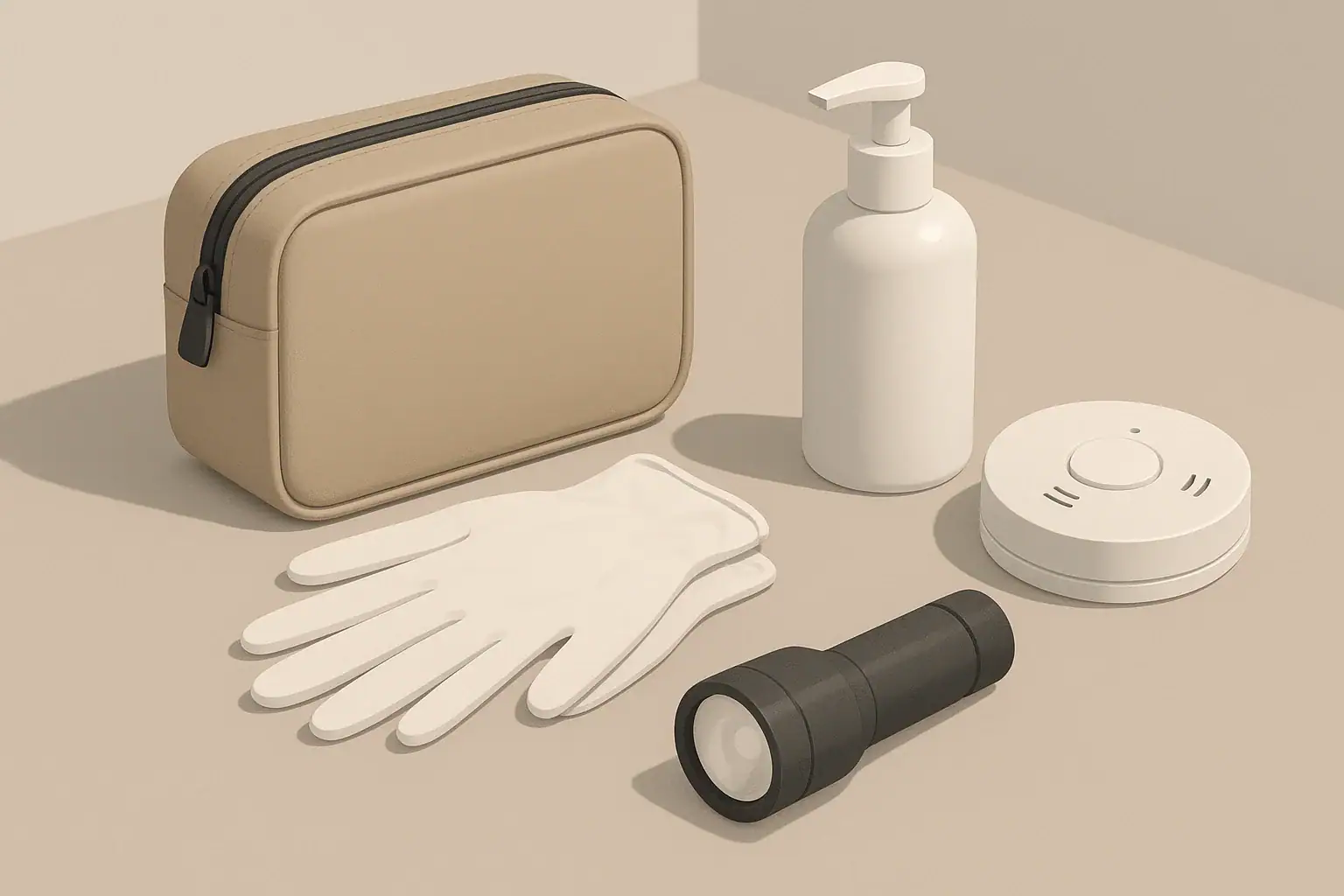
Most apartment fires are resolved quickly, but you may not be allowed back inside right away. A small go-bag or grab-and-go pouch near the door can help you manage a short displacement.
Items to consider include:
- Copies of key documents stored safely
- Basic hygiene items
- A small amount of cash
- Simple snacks and a bottle of water
- Medication list and basic supplies
Keep this bag compact and light so taking it with you does not delay evacuation.
| Who to contact | Method | Fallback | Meeting point note |
|---|---|---|---|
| Household members at home | Verbal at door / hallway | Text message if separated | Go directly to main outdoor meeting spot |
| Child at school | Call school main office | Text older child if they carry a phone | Arrange pickup at usual location if allowed |
| Partner at work | Text brief update | Call workplace main line if needed | Agree on backup meet spot near apartment |
| Out-of-building relative | Phone call or text | Leave a short voicemail | Serves as information relay for others |
| Neighbor you trust | Knock if safe while exiting | Text after reaching outside | Invite them to use same meeting area |
| Building management | Phone or office contact | Leave message with emergency number | Confirm when it is safe to re-enter |
| Emergency services | Call emergency number as needed | Flag responders in person outside | Follow their instructions about staying clear |
Putting Your Apartment Fire Escape Plan Into Practice
Once you have thought through exits, smoke safety, and meeting points, capture your plan in a simple, visible format and practice it occasionally.
Write It Down and Post It
A one-page sketch of your floor plan with arrows to exits, notes on stairwells, and your outdoor meeting point can be enough. Keep it somewhere easy to see, such as on the refrigerator or inside a cabinet door. Review it briefly with any new roommate, partner, or frequent visitor.
Short, Low-Stress Drills
You do not need elaborate exercises. A quick drill once or twice a year can be as simple as:
- Announcing a practice run in advance.
- Walking from bedrooms to the primary exit route.
- Going down the stairs to your building’s exit.
- Gathering at your outdoor meeting point.
- Talking about what went smoothly and what to adjust.
Include children and pets when practical so the routine feels familiar. Keep the tone calm to avoid creating anxiety.
Review After Changes
Revisit your plan when things change, such as:
- Moving to a different apartment or floor
- Changes to building exits or stairwells
- New household members, including babies, older relatives, or pets
- Significant renovations that affect your layout
Small updates and occasional practice keep your apartment fire escape plan current and usable, turning a once-and-done task into a simple, ongoing part of living safely in a shared building.
Related guides: Fire Extinguishers 101: Types, Ratings, and Where to Keep Them · Restart Sequence After an Outage: What to Plug In First.
Authoritative sources
Safety recommendations can change. Confirm critical details with current official guidance and local authorities.
- USDA FSIS: Keep Food Safe During Emergencies
- U.S. CPSC: Battery Safety
- CDC: Guidelines for Cleaning Safely After a Disaster
Frequently asked questions
How often should I practice my apartment fire escape plan?
Practice a short, low-stress drill once or twice a year and any time your household or building layout changes. Also run a quick drill after moving, after major renovations, or when new people or pets join the household so everyone knows the plan.
What should I include on a one-page apartment fire escape plan?
Include your unit’s primary and secondary exit routes, stairwell locations, your outdoor meeting point, and emergency contact numbers. Add notes about mobility needs, where a grab-and-go bag is kept, and any building-specific refuge areas.
Is it ever safe to use the elevator during an apartment fire?
No, elevators should generally be avoided during fires because they can lose power, open on a floor with fire, or fill with smoke. Use stairwells instead and stay to one side so emergency responders can pass if needed.
What steps should I take if I cannot safely exit my apartment?
If you cannot leave, move to a room with a window, close doors between you and the fire, and seal gaps under doors with towels or clothing to slow smoke entry. Call emergency services to report your location, signal from the window if safe, and stay low while monitoring conditions.
How can I assist a household member with mobility or sensory needs during an evacuation?
Plan accessible routes with the fewest obstacles, keep mobility aids in predictable locations near the bed, and assign a specific “buddy” to assist during evacuations. Check building policies for areas of refuge and notify emergency services of any mobility limitations if you need help.
- Simple checklists and realistic planning
- Water, power, lighting, and pantry basics
- Family plans (kids, pets, seniors) and seasonal prep
Affiliate disclosure
As an Amazon Associate, we earn from qualifying purchases. Some links on this site may be affiliate links. If you buy through these links, we may earn a small commission at no extra cost to you. This helps support our content. Learn more.