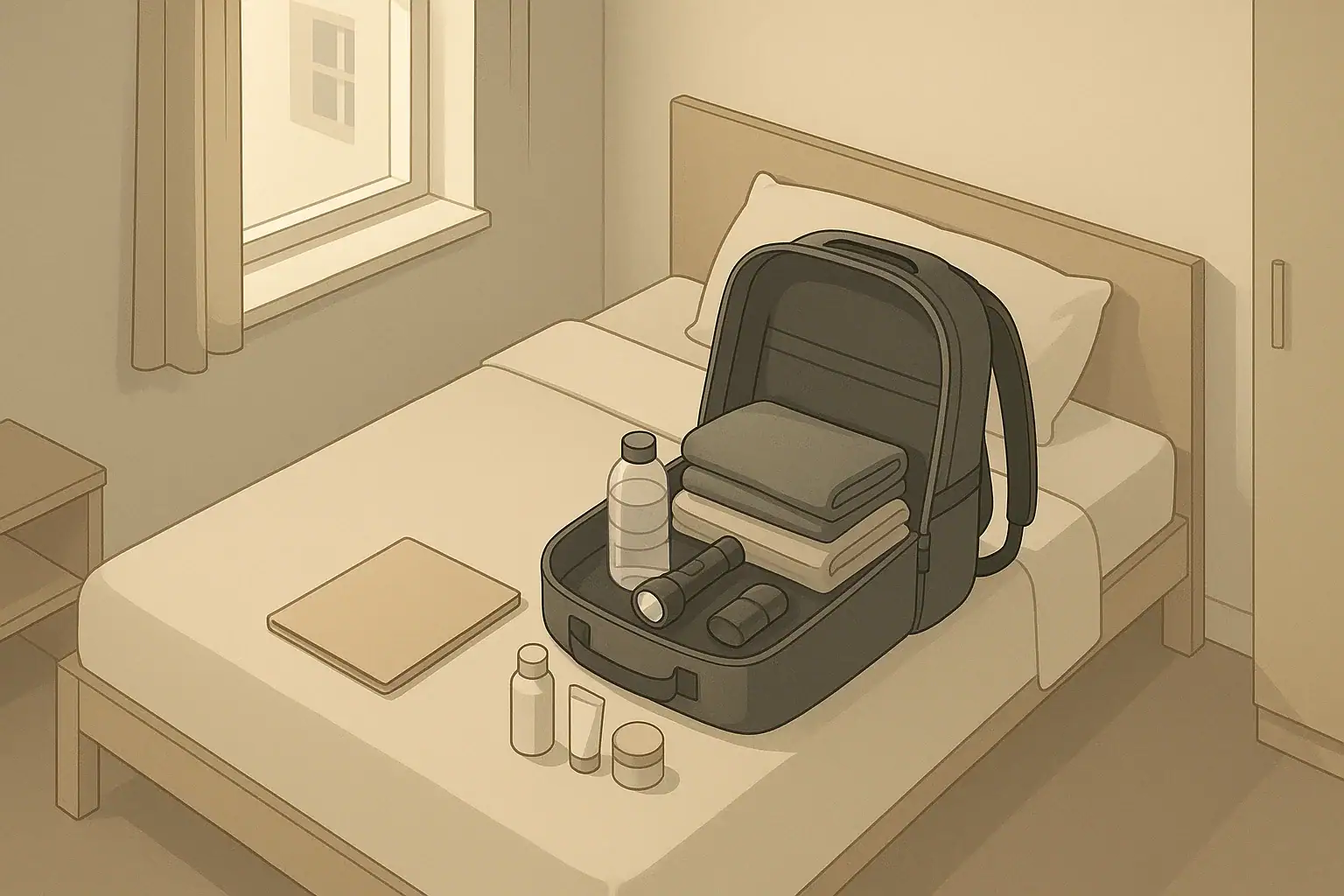
A go-bag is meant to be grabbed quickly and carried safely for a walk, stairs, or a short ride to a safer place. The weight of that bag can make the difference between a manageable evacuation and a struggle, especially for kids, older adults, and people with limited strength or mobility.
Keeping go-bags carryable is less about hitting a perfect number and more about matching the load to each person. In many real evacuations, people walk several blocks, navigate crowded stairwells, or stand in lines. An overpacked bag may be left behind or cause strain, while a thoughtfully packed lighter bag is more likely to stay with its owner.
This guide focuses on practical, calm planning for typical short-term disruptions and evacuations in the United States, especially for households in apartments and small spaces. The goal is simple: every person has what they reasonably need and can actually carry.
Why Go-Bag Weight Matters for Everyday Readiness
A go-bag is meant to be grabbed quickly and carried safely for a walk, stairs, or a short ride to a safer place. The weight of that bag can make the difference between a manageable evacuation and a struggle, especially for kids, older adults, and people with limited strength or mobility.
Keeping go-bags carryable is less about hitting a perfect number and more about matching the load to each person. In many real evacuations, people walk several blocks, navigate crowded stairwells, or stand in lines. An overpacked bag may be left behind or cause strain, while a thoughtfully packed lighter bag is more likely to stay with its owner.
This guide focuses on practical, calm planning for typical short-term disruptions and evacuations in the United States, especially for households in apartments and small spaces. The goal is simple: every person has what they reasonably need and can actually carry.
General Weight Guidelines: Starting Points, Not Rules
There is no official, one-size-fits-all standard for go-bag weight. However, some general starting points can help you choose a reasonable range, then adjust based on real-world testing.
Simple Example Ranges by Age and Ability
The following example weight ranges are commonly used as starting points when thinking about carryable loads, not as strict limits. Always adjust for individual strength, fitness, and health considerations.
- Healthy, active adults: Often comfortable around 10–15% of body weight for walking short distances, sometimes a bit more if accustomed to carrying loads.
- Adults with lower strength or stamina: Aim for the lower end of that range or below, with more items in shared or wheeled bags.
- Teens: Similar percentage ranges as adults, but only if they routinely carry comparable loads (such as heavy school bags).
- School-age children: Often closer to 5–10% of body weight as a starting point, sometimes less for younger or smaller kids.
- Older adults: Often do best with very light bags, focusing on essentials only and using rolling options when possible.
These ranges are examples only. The safest way to judge weight is to pack the bag and walk with it regularly, then adjust.
Body Weight Percentages vs. Real Life
Percentages are helpful for planning, but real life is messier. A person who walks, bikes, or carries bags routinely may tolerate higher loads than someone who is mostly sedentary. Apartment dwellers who use stairs daily may tolerate going up and down with a moderate bag better than someone unaccustomed to stairs.
Instead of aiming for a specific formula, use these ideas:
- Start light and add only what clearly matters.
- Prioritize items that are hard to replace quickly (documents, basic supplies).
- Move extra comfort items or duplicates into a shared or vehicle kit.
Example values for illustration.
| Task | Why it matters | Notes |
|---|---|---|
| List each person and rough body weight | Helps estimate a reasonable starting load range | Round to the nearest 10 pounds for simplicity |
| Set an example target range per person | Prevents bags from quietly getting too heavy | Example: adult 10–15%, child 5–10% of body weight |
| Decide who carries shared items | Keeps kids’ and seniors’ bags lighter | Assign heavier shared items to strongest adult |
| Choose bag type for each person | Fit and support can matter as much as weight | Backpack, small daypack, or rolling bag |
| Schedule a test walk with packed bags | Reveals comfort issues otherwise missed | Aim for 10–20 minutes of normal walking |
| Adjust contents after testing | Fine-tunes weight to real capabilities | Remove extras, reassign heavier items |
| Write final target weight on a card | Makes future weight checks simple | Example: “Keep under 12 lb” |
Weighing Your Go-Bag: Simple Methods at Home
Checking go-bag weight does not require special tools. You can use common household items to measure and track weight over time.
Using a Bathroom or Luggage Scale
The easiest method is usually a standard scale:
- Bathroom scale method: Step on the scale without the bag and note your weight. Then step on holding or wearing the bag. Subtract the difference to estimate bag weight.
- Luggage scale method: Clip the scale to the bag handle, lift, and read the weight. This can be helpful for wheeled or odd-shaped bags.
Write the weight down on a card or piece of tape inside the bag so you can quickly re-check after updates.
Tracking Weight Over Time
Go-bags tend to get heavier as you add “just one more thing.” A simple habit can keep this in check:
- Weigh each bag when you first pack it.
- Re-weigh after seasonal changes (like adding a jacket or blanket).
- Re-weigh after adding new gear or supplies.
If the weight creeps above your target range, decide what to remove or move to a shared kit or home-based stay-at-home bin.
Matching Bag Weight to Different Household Members
Every person in a home has different needs and physical abilities. Your go-bag plan works best when it respects those differences instead of trying to make all bags identical.
Adults: Primary Carriers of Shared Items
Most households assign the heavier, shared items to the strongest adults. These might include:
- Extra water containers.
- Compact cooking items, if included.
- Shared first-aid supplies.
- Small backup power devices.
- Larger hygiene items like extra soap or wipes.
To keep weight reasonable, adults can:
- Use a backpack with a waist strap for better weight distribution.
- Limit duplicates of heavy items (such as multiple metal containers).
- Shift some items to a rolling bag if terrain and storage allow.
Kids: Lightweight and Familiar Items
Children’s bags should be noticeably lighter and sized to their body. Focus on items that are:
- Lightweight and compact.
- Simple to use and understand.
- Comforting, such as a small toy or blanket.
Examples of kid-friendly contents include:
- Light snacks they like and recognize.
- A small flashlight or headlamp they know how to switch on and off.
- A light change of clothes.
- A basic water bottle (with refills carried by an adult).
Adults can carry heavier essentials, while kids carry just enough to feel prepared and involved without being overloaded.
Older Adults and People with Limited Mobility
For seniors or anyone with limited mobility, stability and safety come first. A heavy backpack can affect balance or be hard to put on and take off. Consider:
- Very light personal bag with essentials only.
- Rolling bag or small suitcase for anything heavier.
- Placing heavier shared items with a different household member.
Weight can also vary by day for people with chronic conditions or varying energy levels. Test on “average” days and be willing to adjust downward as needed.
Pets: Weight You May End Up Carrying
Pet gear adds weight, even if it is stored separately. Common items include:
- Food and collapsible bowls.
- Leash, harness, and waste bags.
- Copy of vaccination records or tags.
- Familiar blanket or small toy.
When planning human bag weight, remember that in some situations you may also be carrying a pet carrier or supporting a pet that tires quickly. This may be a reason to keep your own go-bag lighter than you otherwise would.
Prioritizing Essentials: What Deserves the Weight
Not every helpful item is worth its weight. Focusing on core needs first helps keep bags reasonable. Many households use a simple priority list such as: identification, communication, water, basic food, light, warmth, hygiene, and simple tools.
High-Value, Low-Weight Items
Some items take up little space and weight but add a lot of value in various scenarios, such as:
- Copies of key documents in a waterproof sleeve.
- Small flashlight or headlamp with spare batteries.
- Compact emergency blanket or lightweight layer.
- Basic whistle and small notepad with pen.
- Small hygiene kit (toothbrush, travel-sized soap or wipes).
Start by packing these lighter, high-utility items before considering heavier or bulkier gear.
Weight-Heavy Items to Scrutinize
Some categories can add a lot of weight quickly. Before adding them, ask what problem they solve and whether a lighter alternative exists.
- Water: Essential, but heavy. Balance carried water with a plan for refilling when safe and feasible.
- Tools: Large multi-tools, hammers, and similar items add weight. Consider whether smaller tools or shared tools could work instead.
- Clothing: Multiple outfits, heavy shoes, or thick blankets may be better suited to a vehicle kit or home storage.
- Books and electronics: A single device or compact resource may be plenty; extras add up quickly.
Seasonal Adjustments Without Overloading
Seasonal gear can be heavier, especially in colder regions. Instead of permanently packing heavy winter items in every bag, some households:
- Store seasonal layers near the door to grab if time allows.
- Use lightweight, compact layers that provide warmth without bulk.
- Keep the same core kit year-round and add only a few seasonal pieces.
This approach keeps base weight consistent while still allowing for regional needs like winter storms or summer heat.
Test Walks: The Most Honest Weight Check
The most reliable way to know whether a go-bag is truly carryable is to wear it for a short, normal walk. This practical test shows more than any number on a scale.
How to Run a Simple Home Test
A basic test can be done around your building, house, or block:
- Choose a safe route you might realistically use in an evacuation (stairs, hallway, or nearby sidewalk).
- Have each person wear or carry their bag as they normally would.
- Walk for 10–20 minutes at a natural pace.
- Notice any discomfort, slipping straps, or balance issues.
If someone struggles, adjust immediately. That might mean lightening their load, changing the bag type, or shifting shared items.
Questions to Ask After the Test
After your test walk, a brief conversation can guide changes:
- Did the straps dig into shoulders or slip?
- Was it easy to put the bag on and take it off without help?
- Did anyone feel off-balance on stairs or curbs?
- Could each person carry the bag a bit longer if needed?
Use answers to reduce weight where needed, choose more supportive bags, or practice better strap adjustment.
Practicing With Kids and Older Adults
Children and older adults may benefit from shorter, more frequent test walks. This builds familiarity and confidence with their bags:
- Let kids help pack their own lightweight items so they know what is inside.
- Show older adults how to put on, adjust, and remove the bag safely.
- Re-test after any major changes to health, mobility, or bag contents.
Regular practice can turn the bag from an unfamiliar object into something each person knows and can handle.
Storing and Adjusting Go-Bags in Small Spaces
Many people in apartments and smaller homes worry about where to store go-bags and how to keep them current without adding clutter. A simple, repeatable system can help.
Where to Store Bags for Easy Access
Ideal storage spots are:
- Close to primary exit paths, such as near the front door.
- Off the floor, if possible, to protect from minor leaks or pests.
- Visible enough that they are not forgotten but not blocking walkways.
In multi-story buildings, some people choose a main storage spot near the exit and a secondary grab point (like a coat closet) for seasonal items or shoes.
Using Shared and Vehicle Kits to Keep Personal Bags Lighter
To keep individual go-bags light, you can separate gear into layers:
- Personal go-bag: Core items each person needs directly (identification, basic lighting, simple snacks, minimal clothes).
- Shared household bag: Heavier items used by everyone (larger first-aid kit, extra water containers, additional food).
- Vehicle kit (if applicable): Bulky items like blankets, more water, and extended supplies for longer stays.
This layered approach is especially useful in small apartments where space is limited and weights must stay manageable.
Example values for illustration.
| Food type | Storage tip | Rotation interval idea | No-cook use |
|---|---|---|---|
| Granola or snack bars | Keep in original box inside a sealed bag | Check every 6–12 months | Quick energy snack during travel or waiting |
| Nut or seed mixes | Store in small resealable bags | Replace every few months for freshness | Simple protein and fat source |
| Ready-to-eat canned items | Choose easy-open lids when possible | Rotate into regular meals a few times a year | Eat directly from can with utensil |
| Instant oatmeal packets | Bundle in a dry pouch with utensils | Check yearly and replace as needed | Can soak in cool water if hot water unavailable |
| Dried fruit | Keep in portioned pouches | Rotate every few months | Lightweight, ready-to-eat snack |
| Crackers or dry biscuits | Store in crush-resistant container | Replace every 6–12 months | Pair with spreads or canned items |
Simple Routine to Keep Go-Bags Carryable
Home maintenance and simple routines help prevent weight creep and outdated items. A light routine helps prevent weight creep and outdated items.
Quarterly or Seasonal Check-In
Every few months, or when seasons change:
- Weigh each bag and compare with your target range.
- Remove expired snacks or supplies and replace them with items from your regular pantry.
- Decide whether seasonal clothing layers need updating.
- Check straps, zippers, and any battery-powered items.
Writing the check date on a small card in each bag makes it easy to see when the next review is due.
Adjusting for Life Changes
Go-bag weight and contents should evolve with your household. Update bags after:
- Moves to a new home or region.
- Changes in household members, such as new children or roommates.
- Shifts in mobility or strength for any person.
- Changes in transportation options, such as getting or no longer having a car.
Each update is an opportunity to re-check weight and ensure every bag still matches the person who will carry it.
Over time, this calm, routine approach turns go-bag weight checks into a simple household habit, supporting practical readiness without overpacking or strain.
Authoritative sources
Safety recommendations can change. Confirm critical details with current official guidance and local authorities.
- US EPA: Emergency Disinfection of Drinking Water
- USDA FSIS: Keep Food Safe During Emergencies
- U.S. CPSC: Battery Safety
Frequently asked questions
How do I set a practical target weight for each person’s go-bag?
Use example percentage ranges as starting points (roughly 10–15% of body weight for many healthy adults and 5–10% for school-age children), but prioritize real-world testing. Pack the bag, do a 10–20 minute test walk, and adjust based on comfort, balance, and ability to manage stairs or curbs.
What’s the simplest way to weigh a go-bag if I don’t have a luggage scale?
The bathroom scale method is quick: step on the scale without the bag, then step on again while holding or wearing the bag and subtract the difference. Record that weight on a card inside the bag so you can re-check after updates.
How often should I re-weigh and update go-bags to prevent weight creep?
Weigh bags when first packed and again after any seasonal changes, new additions, or household changes. A quarterly or seasonal check-in is a practical routine to catch gradual weight increases and expired supplies.
How much water should I include without making the bag too heavy?
Water is heavy, so balance carried amounts with a plan for refilling. For short evacuations, a single personal bottle (about 16–32 fl oz) plus access to shared water or refill plans may be enough; for longer stays, rely more on shared or vehicle kits to carry large volumes.
How should I account for pets or older adults when doing a go-bag weight check?
If you may be carrying a pet carrier or supporting someone with limited mobility, keep your personal bag lighter and assign heavier shared items to stronger household members. Consider rolling bags or vehicle kits for bulky items and run test walks that simulate carrying a pet or assisting an older adult.
- Simple checklists and realistic planning
- Water, power, lighting, and pantry basics
- Family plans (kids, pets, seniors) and seasonal prep
Affiliate disclosure
As an Amazon Associate, we earn from qualifying purchases. Some links on this site may be affiliate links. If you buy through these links, we may earn a small commission at no extra cost to you. This helps support our content. Learn more.