How long do water purification tablets last?
Most water purification tablets have a shelf life between 3 and 5 years from the date of manufacture when stored correctly. The exact time depends on the active ingredient and the brand, so the printed expiration or “use by” date on the package is your main guide.
Once tablets are past their expiration date, they may lose strength. That means they might not kill germs as effectively, even if they still look normal. For emergency use, it is safest to treat expired tablets as unreliable and replace them.
Always follow the manufacturer’s instructions on the package. If they conflict with anything you read here, follow the package directions and local public health guidance first.
Common types of water purification tablets
Different tablets use different chemicals to disinfect water. Shelf life and storage needs are similar, but not identical.
- Sodium dichloroisocyanurate (NaDCC) / chlorine-based tablets
Common in household emergency kits. They release free chlorine into the water. Typically have a multi-year shelf life when sealed and stored well. - Iodine-based tablets
Use iodine to disinfect water. Often have a shorter shelf life than many chlorine tablets and may change color or smell as they age. - Chlorine dioxide tablets
Used for camping and emergency kits. Often come in foil blisters. Shelf life is usually several years if the foil is intact and kept dry.
Because each product is different, check the label for:
- Expiration or “best by” date
- Storage temperature range
- Any special instructions once the package is opened
How to store water purification tablets
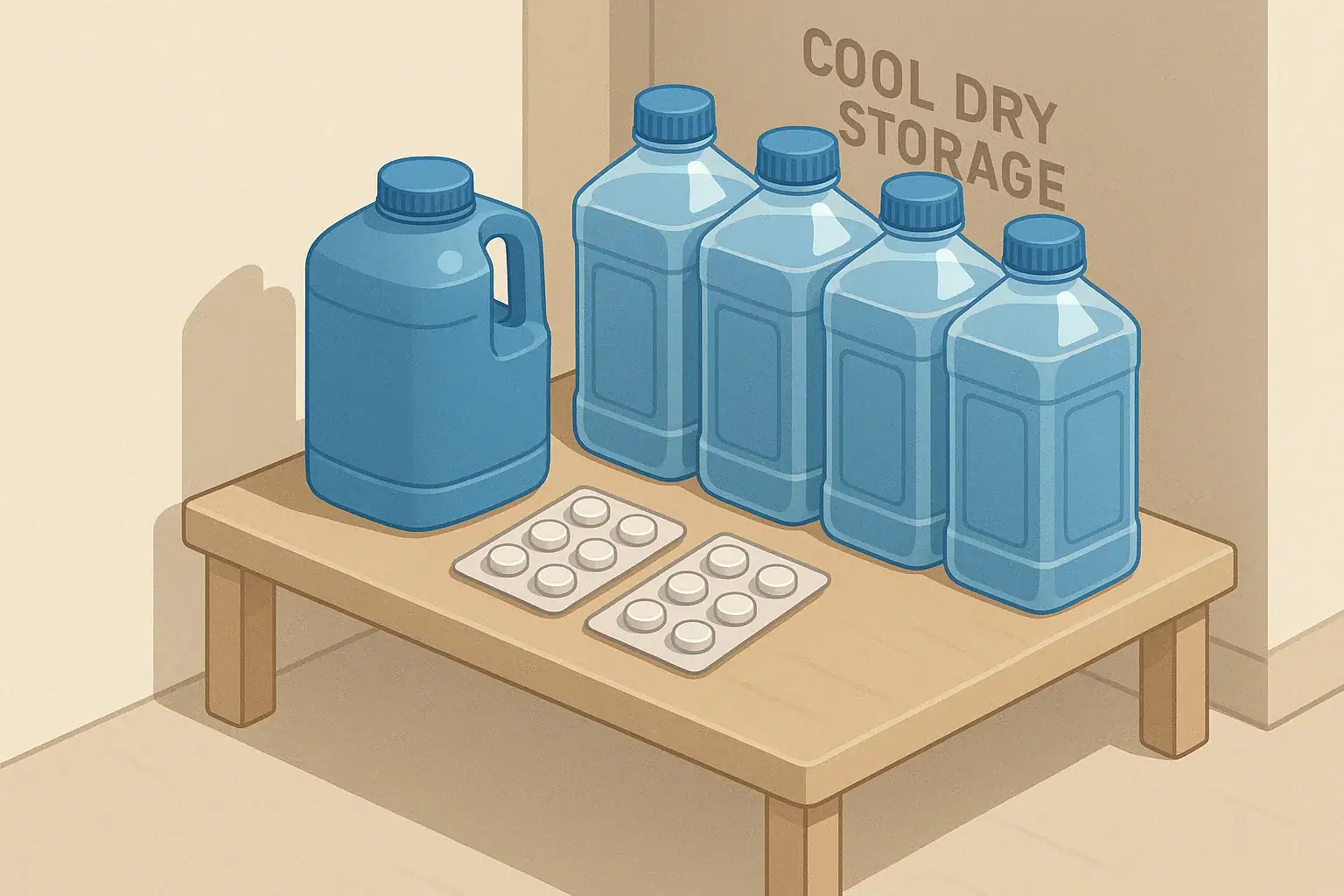
Good storage is the easiest way to keep tablets effective for their full shelf life. In general, tablets should be kept:
- Cool – Room temperature or cooler is usually best. Avoid hot attics, vehicles, or sheds that heat up.
- Dry – Moisture is one of the fastest ways to ruin tablets. Keep them away from sinks, humid basements, and bathrooms when possible.
- Dark – Store in a dark place or in opaque containers, away from direct sunlight or strong indoor light.
- Sealed – Keep tablets in their original, unopened packaging until you need them. Foil blisters and sealed bottles protect them from air and humidity.
Simple storage tips:
- Place tablets in a small, labeled bin or box with other water supplies.
- Keep them off the floor and away from heat sources and cleaning chemicals.
- If the outer box is flimsy, keep the tablets in a small, waterproof pouch or container, but do not remove them from their original blister or bottle.
The U.S. Environmental Protection Agency (EPA) gives general guidance on emergency water disinfection and storage in its page on emergency disinfection of drinking water. Always follow any instructions from local health or emergency officials during an incident.
Rotation: when to replace your tablets
Rotation simply means checking your supplies on a schedule and replacing items before they expire. For water purification tablets, a basic rotation plan can look like this:
- Check dates once or twice a year.
Pick a recurring time, such as the start of spring and fall, to look at expiration dates on all water-related supplies. - Replace tablets within 6–12 months of expiration.
Many people prefer to replace them before the printed date so there is a cushion if an emergency happens right at the end of their shelf life. - Mark a reminder.
Write the expiration month and year on the outside of your storage bin with a marker, or add a reminder to your calendar or phone. - Keep the newest stock in back.
When you buy new tablets, place them behind the older ones so you use the older package first if you ever need to.
If you discover that all your tablets are expired and you have no other safe water options during an emergency, contact local health or emergency authorities for current guidance. The U.S. Centers for Disease Control and Prevention (CDC) provides general advice on preparing an emergency water supply, including storage and treatment options.
Signs your tablets should not be used
Even before the expiration date, tablets can be damaged by heat, moisture, or rough handling. Do not use tablets that show any of these signs:
- Packaging is torn, punctured, or badly crushed
- Tablets are soft, sticky, or crumbling into powder
- Tablets are discolored in a way the instructions do not describe
- There is a strong, unusual odor from the container compared with when it was new
- Tablets have gotten wet or show signs of moisture inside the package
If you are unsure whether tablets are still good, it is safer to replace them and use other safe water sources or treatment methods recommended by public health authorities.
Using tablets safely in an emergency
Water purification tablets can reduce many germs in water, but they do not remove chemicals, fuel, or other toxins. If water is contaminated with fuel, pesticides, or other hazardous chemicals, do not use tablets; follow instructions from local officials and look for an alternate water source.
In general, safe use includes:
- Reading the label every time. Follow the exact number of tablets per volume of water and the contact time before drinking.
- Pre-filtering cloudy water. If water is very cloudy, strain it through a clean cloth, coffee filter, or similar material before adding tablets to help the disinfectant work better.
- Waiting the full time. Most tablets require a set wait (for example, 30 minutes) before the water is considered treated.
- Storing treated water safely. Keep treated water in clean, covered containers and use it within the time recommended on the product label or by local health guidance.
The CDC’s guidance on drinking water treatment methods explains how chemical disinfection fits alongside boiling and filtration. During any local emergency, instructions from your water utility or emergency management office should take priority over general advice.
Building a simple water readiness plan
Tablets work best as one part of a broader water plan. Consider:
- Stored water: Keep at least several days of stored drinking water for your household if you can. Many U.S. emergency planners suggest at least one gallon per person per day for basic needs, but your needs may be higher in hot weather, during pregnancy, or for medical reasons.
- Multiple treatment options: Alongside tablets, you might keep a small filter or a way to boil water if power and fuel are available.
- Special needs: Talk with your child’s pediatrician, your healthcare provider, or your veterinarian about water treatment for infants, people with health conditions, and pets. Some products, especially iodine-based tablets, may not be appropriate for everyone.
For more on household water planning, see the CDC’s page on creating an emergency water supply, and follow any instructions from your local or state health department.
Frequently asked questions
Can I still use water purification tablets after they expire?
Expired tablets may have lost some of their disinfecting power. Because you cannot easily test their strength at home, it is safest to treat them as unreliable for drinking water and replace them. In an emergency with no other options, contact local health or emergency authorities for current guidance on making water safer.
Do water purification tablets go bad if they never get opened?
Yes. Even sealed tablets age over time, and the chemicals slowly break down. Unopened packages usually last until their printed expiration date if stored correctly, but they do not last forever. Check dates during your regular supply review and replace as needed.
Is it safe to use water purification tablets for babies or during pregnancy?
Some products, especially iodine-based tablets, may not be recommended for infants, pregnant people, or those with thyroid or other medical conditions. Before relying on tablets for these groups, talk with a healthcare provider and follow their advice. In many cases, stored safe water or boiled water (when possible) may be preferred.
Can I use purification tablets in water that smells like fuel or chemicals?
No. Tablets are designed to kill many germs, not to remove gasoline, solvents, pesticides, or other chemicals. If your water smells or looks like it has fuel or chemicals in it, do not drink it. Use sealed bottled water if available and follow instructions from your local water utility or emergency management office.
- Simple checklists and realistic planning
- Water, power, lighting, and pantry basics
- Family plans (kids, pets, seniors) and seasonal prep
Affiliate disclosure
As an Amazon Associate, we earn from qualifying purchases. Some links on this site may be affiliate links. If you buy through these links, we may earn a small commission at no extra cost to you. This helps support our content. Learn more.