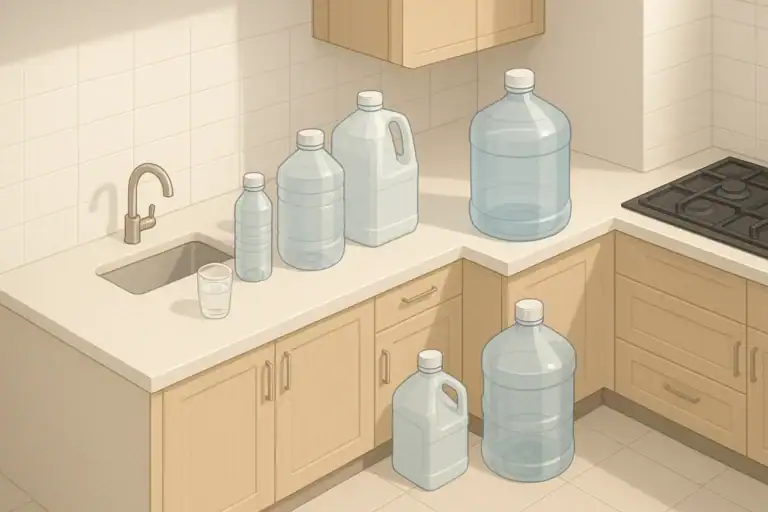
Water is one of the simplest, most practical parts of home readiness, but it is also the one many people put off because of space. In apartments and small homes, every shelf and closet counts, and bulky water containers can feel unrealistic.
Short-term disruptions are more common than major disasters. Boil-water advisories, water main breaks, plumbing issues in your building, or a storm that knocks out power to pumps can all limit your access to clean tap water for a few hours to a few days.
Having some stored water at home reduces stress in those moments. For most households, the goal is not a huge stockpile. A realistic starting point is enough water to comfortably get through 2–3 days without relying on the tap.
Many guidance sources suggest planning around several gallons of water per person per day for drinking and basic hygiene. In a small space, you may adjust this based on your actual storage capacity and focus on drinking and essential use first.
Why Water Storage Matters Even in an Apartment
Water is one of the simplest, most practical parts of home readiness, but it is also the one many people put off because of space. In apartments and small homes, every shelf and closet counts, and bulky water containers can feel unrealistic.
Short-term disruptions are more common than major disasters. Boil-water advisories, water main breaks, plumbing issues in your building, or a storm that knocks out power to pumps can all limit your access to clean tap water for a few hours to a few days.
Having some stored water at home reduces stress in those moments. For most households, the goal is not a huge stockpile. A realistic starting point is enough water to comfortably get through 2–3 days without relying on the tap.
Many guidance sources suggest planning around several gallons of water per person per day for drinking and basic hygiene. In a small space, you may adjust this based on your actual storage capacity and focus on drinking and essential use first.
How Much Water Do You Really Need in a Small Space?
In a compact home, perfection is less important than having something. Instead of aiming for a large number that feels impossible, decide on a practical baseline and build slowly.
Starting with a realistic goal
For a typical apartment household, a helpful way to think about water is:
- First step: Enough drinking water for everyone for 2–3 days.
- Next step: Add water for simple hygiene (hand washing, quick sponge baths, tooth brushing).
- Stretch goal: A few extra days of water if you can store it without overcrowding your home.
Pets should be included in your plan. A small pet may only need a little extra space, while larger animals will affect your total more noticeably.
Balancing water needs with limited storage
In small spaces, it helps to split your water plan into two categories:
- Ready-to-drink water: Smaller containers you can grab quickly or keep in frequently used areas.
- Bulk storage: Larger or stackable containers tucked into closets or out-of-the-way spots.
Instead of thinking about a single big container, picture many small containers spread throughout your apartment: some in the pantry, a few under the bed, a couple in the closet. This distributed approach makes water storage more flexible and less visually overwhelming.
Example values for illustration.
| Living situation | If this sounds like you… | Then consider starting with… |
|---|---|---|
| Studio or micro-apartment | Very limited floor space, minimal closets | Multiple small bottles or jugs in pantry, under-bed cases of water |
| One-bedroom apartment | Some closet space, standard kitchen | Stackable 1–3 gallon containers plus bottled water for grab-and-go |
| Family in small apartment | Several people, shared closets, kids’ items | Mix of bulk containers in one closet corner and smaller bottles spread around |
| Roommates | Everyone keeps their own essentials | Each person stores a small personal supply in their room |
| Pet owners | Dog or cat in the household | Extra small jug or bottles labeled mentally as “pet water” |
| Mobility or lifting limits | Heavy containers are hard to move | Several small, easy-to-lift containers instead of a single large one |
Apartment-Friendly Water Containers and Storage Spots
The container style you choose matters as much as the amount of water. In an apartment, the best containers are those that fit your actual living space and are easy to move and refill.
Small bottles and jugs
Smaller containers are flexible and easy to tuck into gaps. Options include:
- Individual bottles: Simple to grab in an evacuation, easy to share among family members.
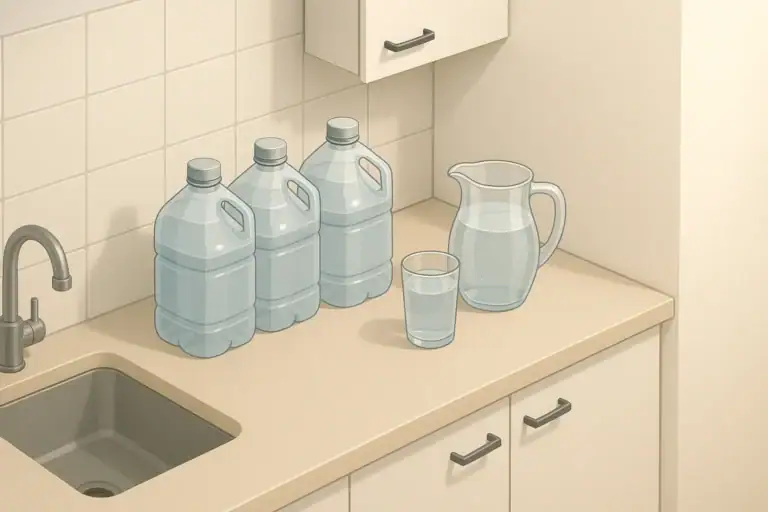
- Half-gallon or 1-gallon jugs: Good balance of portability and capacity.
These work well in:
- Pantry shelves
- Under-sink areas
- Bedroom closets
- Under or behind furniture, if stable and protected
Stackable and slim containers
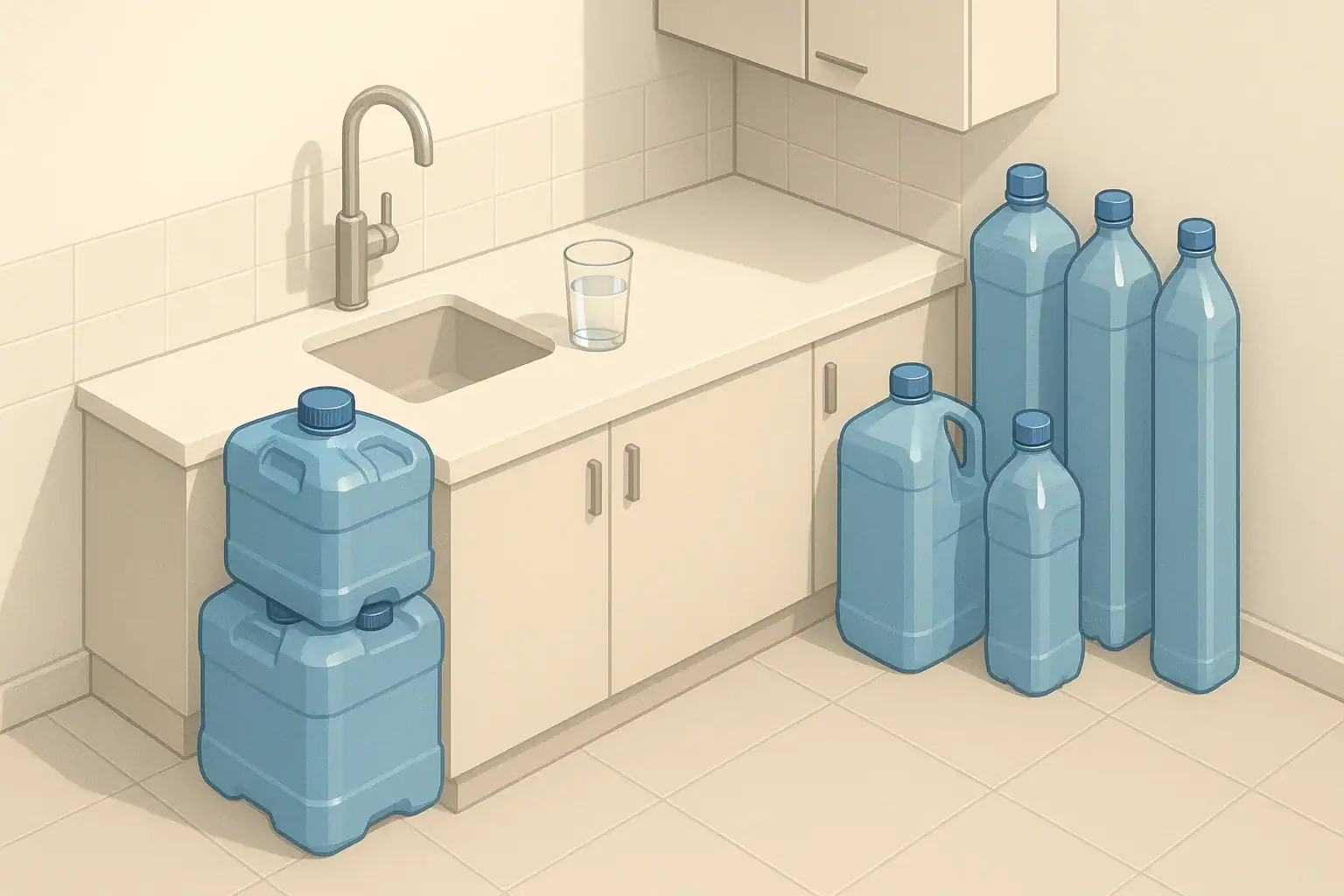
Stackable or flat-sided containers help you build vertical storage in tight areas. Some are designed to store several gallons while fitting against a wall or in a closet corner.
People often place these:
- Along the back wall of a coat or utility closet
- Behind hanging clothes in a bedroom closet
- Against a wall in a laundry area
- On a strong, lower shelf in a storage cabinet
When stacking, keep heavier containers low and make sure they are stable so they cannot tip or leak if bumped.
Under-bed and furniture-based storage
The space under beds, sofas, and low furniture is often underused. This is a good spot for cases of bottled water or low-profile containers.
Consider:
- Sliding shallow storage bins that can hold water containers and other emergency items.
- Storing a few days of drinking water under each bed, spreading the weight across the apartment.
Make sure nothing sharp or heavy rests directly on top of the containers. Check occasionally for leaks, especially if your floor is wood or if you live above another unit.
Creative “hidden” locations
In very small spaces, you may need to get creative while still keeping safety in mind. Some ideas include:
- Behind books or bins on lower shelves where the extra depth allows for a row of small bottles.
- Inside empty suitcases or travel bags that are stored most of the year.
- On balcony or patio only if containers are suitable for outdoor temperatures and protected from direct sunlight and freezing, and if your building rules allow it.
Whatever spots you choose, avoid locations that get very hot for long periods, such as right next to a heater or tightly enclosed near large appliances.
Closet-Friendly Water Storage Setup
Closets are often the best place to gather your main water reserve, especially in apartments without garages or basements. A small section of one closet can support several days’ worth of water if organized well.
Planning your closet layout
To use a closet safely and efficiently:
- Choose the right closet: A hallway or bedroom closet that stays relatively cool and dark is ideal.
- Keep weight low: Store water on the floor or very low shelves to protect shelving and reduce tipping risk.
- Leave access space: Avoid building a wall of containers that blocks important items such as electrical panels or shutoff valves.
Combining water with other readiness items
Many people like to turn one section of a closet into a home readiness zone. Water often sits alongside:
- A small bin with flashlights, batteries, and a basic radio
- A simple first aid kit
- Non-perishable food containers
- Go-bags or overnight bags for quick evacuation
Keeping related items together makes it easier to check supplies a few times a year and to find them quickly during an outage or boil-water advisory.
Weight and building considerations
Water is heavy. A single gallon weighs several pounds, and even modest storage plans can add up. In most apartments, normal household amounts are not an issue, but it is still wise to:
- Distribute water between two or more locations instead of concentrating all of it in one tight corner.
- Place water along load-bearing walls or over strong structural areas when possible.
- Keep large containers off weak or wobbly shelving.
If you are considering unusually large amounts of water in an upper-floor unit, it may be worth discussing general load limits with your building manager, but typical small-space storage levels are usually well within normal residential use.
Tap Water, Store-Bought, and Refillable Options
There is no single “right” way to build a small-space water reserve. Many households combine several approaches to match budget, preferences, and available space.
Store-bought bottled water
Pre-packaged bottled water is easy to track and store. It works well for renters because it does not require special cleaning or long-term container care.
Pros include:
- Convenient to buy gradually with regular grocery trips.
- Comes in sealed, portable containers.
- Simple to rotate by drinking and replacing.
Consideration points:
- Cases can be bulky; under-bed or closet floor space helps.
- Plastic can weaken over time in heat or direct sun.
Refillable containers with tap water
Refillable containers let you store water more affordably and precisely fit your space. Before filling, containers should be intended for drinking water and cleaned following common food-safe practices.
Pros include:
- Flexible sizes and shapes, from small jugs to larger stackable units.
- Lower cost over time than always buying bottled water.
- Can be quickly topped up before a storm or planned outage.
Consideration points:
- Containers need periodic inspection for cracks, leaks, or odors.
- Stored tap water should be rotated from time to time for best taste and quality.
Using pitchers and existing containers
Some people add a bit of redundancy by keeping extra water in everyday containers:
- Pitchers or carafes in the refrigerator.
- Reusable bottles kept filled rather than stored empty.
These do not replace a dedicated emergency supply but can add a small buffer in short disruptions.
Water treatment as a backup tool
In addition to storing water, some households keep simple treatment methods on hand. This might include basic filters or other commonly available options suitable for treating tap or other water sources if needed.
For apartment living, treatment is best viewed as a backup, not a substitute for stored water. It can help extend your supply or give you options if you need to use water from building systems or local sources when quality is uncertain.
Rotation, Labeling, and Simple Maintenance
Water storage does not have to be complicated, but a few simple habits keep your supply more pleasant to use and easier to manage in a small space.
Easy rotation habits
Instead of setting a strict schedule that is hard to remember, attach water to routines you already have:
- Seasonal check: When you adjust clocks or do seasonal closet changes, look over your water supply.
- Use and replace: Drink the oldest bottles during hot weather or regular use, then replace with new ones.
- Before known storms: Top off any refillable containers and fill extra pitchers.
Labeling and organizing
Simple labeling helps you use the oldest water first and remember what is stored where. Ideas include:
- Writing the month and year on refillable containers when you fill them.
- Keeping a small note inside your readiness closet listing roughly how much water you have and where it is.
- Grouping containers by fill date so the oldest is easiest to reach.
Checking for leaks and container condition
In upstairs units and shared buildings, preventing leaks is especially important. During your routine checks:
- Run a hand along the bottom of containers to feel for dampness.
- Look for bulging, cracking, or discoloration, especially on older plastic.
- Place containers on trays, shallow bins, or towels if you are worried about floors.
Any container that looks questionable can be emptied, recycled or repurposed as appropriate, and replaced with a new one.
Special Considerations: Kids, Pets, and Mobility Limits
Small-space water storage should match the people and animals who live in your home. A few adjustments can make your setup safer and easier to use for everyone.
Households with children
If you live with children, think about:
- Safety: Store heavy containers where they cannot tip onto small feet.
- Access: Keep at least some water where older kids can reach it in an outage if adults are briefly occupied.
- Portions: Having some smaller bottles that kids can handle without spills.
Pets in apartments
Pets rely completely on you during disruptions. Include them by:
- Estimating several days of normal water use for each pet.
- Keeping a separate small container mentally earmarked for pet use so you do not unintentionally use it all for people.
- Storing a lightweight bowl or collapsible dish near your water supplies.
Mobility, lifting, and accessibility
For anyone with limited strength or mobility, the best water storage is the one you can safely access when you need it. Consider:
- Choosing multiple small containers instead of one large heavy one.
- Placing water where you can reach it without climbing or bending deeply.
- Using small carts or bins with wheels if you may need to move several containers at once.
If you depend on in-home medical equipment, you may already plan for power needs. Adding a realistic water plan alongside that can reduce one more source of worry during service interruptions.
Example values for illustration.
| People / pets | Days you are planning for | Storage approach idea | Rotation cue |
|---|---|---|---|
| 1 adult | 3 days | Mix of small bottles in pantry and 1–2 gallon jugs in closet | Check every time seasons change |
| 2 adults | 3 days | Cases of bottled water under bed plus one closet container | Rotate oldest case during hot months |
| 2 adults + 1 child | 3–4 days | Stackable containers in hallway closet and small bottles for child | Review at back-to-school and spring cleaning |
| 1 adult + 1 pet | 3 days | Personal drinking supply plus one small jug kept for pet | Note on calendar twice a year |
| Household with mobility limits | 2–3 days | Several small, easy-lift bottles on low shelves | Quick check whenever doing routine medical supply review |
| Roommates (3+ people) | 3 days | Each person keeps personal supply in bedroom | Rotate during shared cleaning days |
Putting It All Together in a Small Home
Water storage in apartments and other small spaces works best when it is simple, realistic, and built into your normal life. A few key ideas can guide your approach:
- Start with what fits comfortably now rather than waiting for a perfect system.
- Spread water across several safe spots instead of overloading one corner.
- Choose container sizes you can easily move, lift, and refill.
- Attach your water checks to routines you already have, such as seasonal cleaning.
Over time, these small steps create a quiet but meaningful buffer against everyday disruptions like water outages, building plumbing problems, or short-term storms—without taking over your limited space or your peace of mind.
Frequently asked questions
How much water should I store in a small apartment for 2–3 days?
A practical baseline is about 1 gallon per person per day for drinking and minimal hygiene; for a 2–3 day buffer plan roughly 2–3 gallons per person. Adjust upward for pets, hot weather, or additional hygiene needs if you have the space to store more.
What types of containers work best when storing water in small spaces?
Use food-grade containers designed for potable water such as sealed bottled water, small jugs, or flat-sided stackable units that fit closets and narrow spaces. Avoid long-term use of single-use cartons for storage, keep containers in cool, dark areas, and inspect them regularly for cracks or odors.
How can I prevent leaks and floor damage when keeping water in an upstairs unit?
Place water containers on trays, shallow bins, or towels to catch minor leaks and store heavier items low and over strong floor areas to reduce risk. Check containers periodically for dampness, bulging, or discoloration and distribute weight across multiple spots rather than concentrating it in one corner.
Is it okay to store water on a balcony or patio?
Only in suitable conditions: containers must be protected from direct sunlight, extreme heat, and freezing, and you should verify building rules before storing water outdoors. Temperature swings can degrade plastics and affect taste and safety, so outdoor storage is best used only when those risks are managed.
Can water treatment replace having stored water in a small home?
Water treatment methods like filters or purification tablets are useful backups but are not a full substitute for ready-to-drink stored water because they require time and sometimes equipment to treat uncertain sources. Treat water to extend supplies or when you must use building or collected water, but keep a basic stored reserve for immediate needs.
Recommended next:
- Simple checklists and realistic planning
- Water, power, lighting, and pantry basics
- Family plans (kids, pets, seniors) and seasonal prep
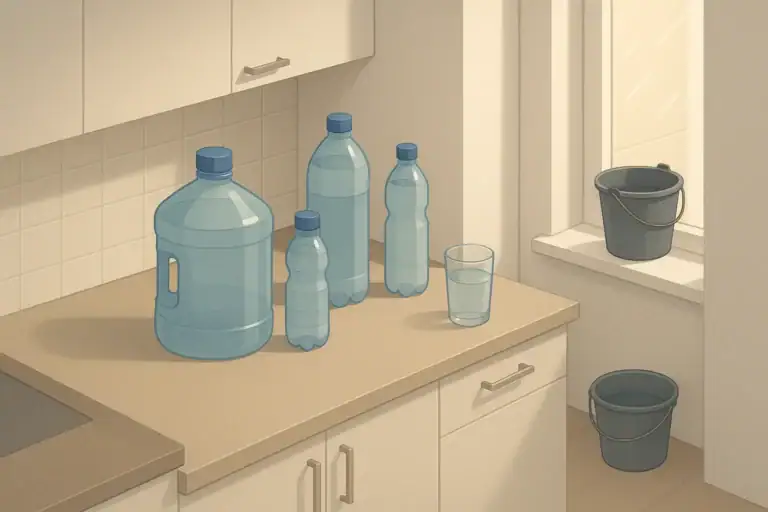
How to Transport Water Safely: Car, Stairs, and Heavy Containers
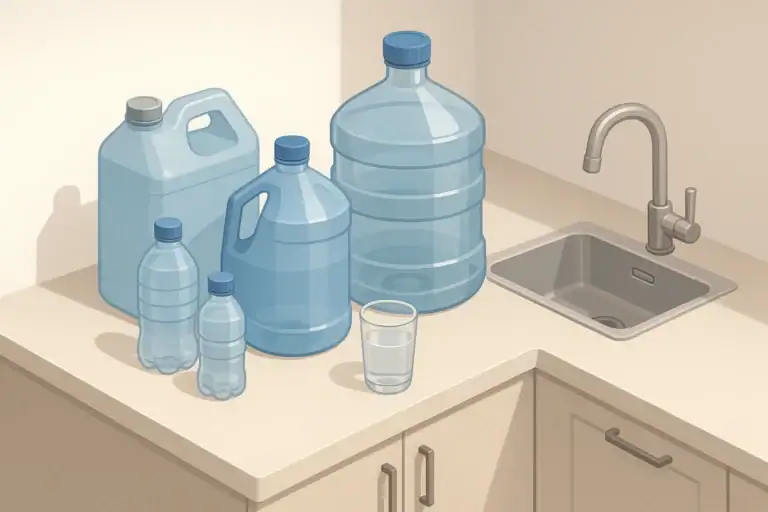
Rainwater for Emergency Use: Practical Limits and Safety Basics
Emergency Household Water Sources: What’s Safe to Use and What’s Not
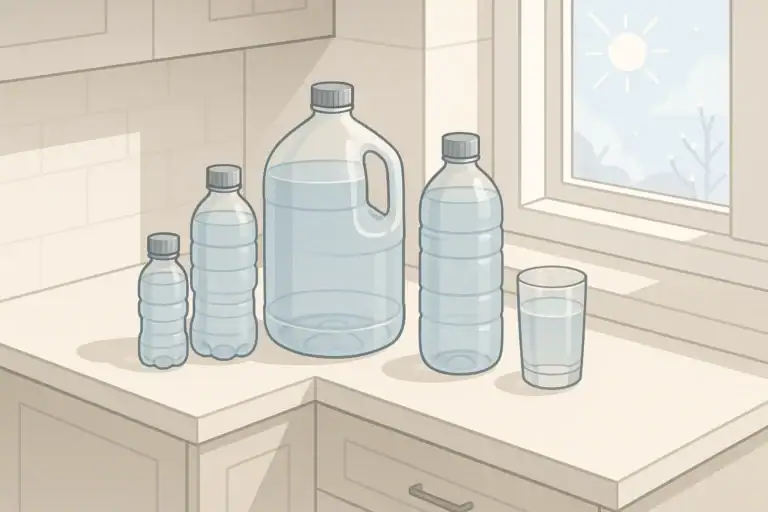
Storing Water in Heat or Freezing Conditions: What Changes
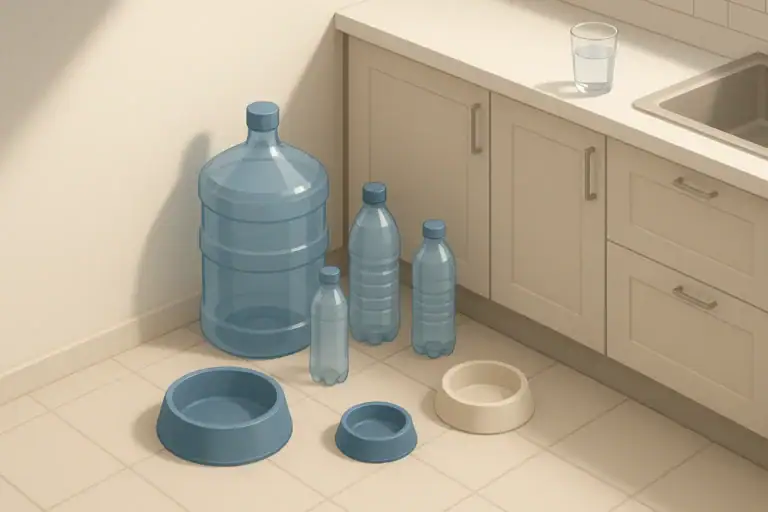
Emergency Water for Pets: How Much to Store and How to Serve It
Making Tap Water Taste Better in an Emergency: Easy Steps