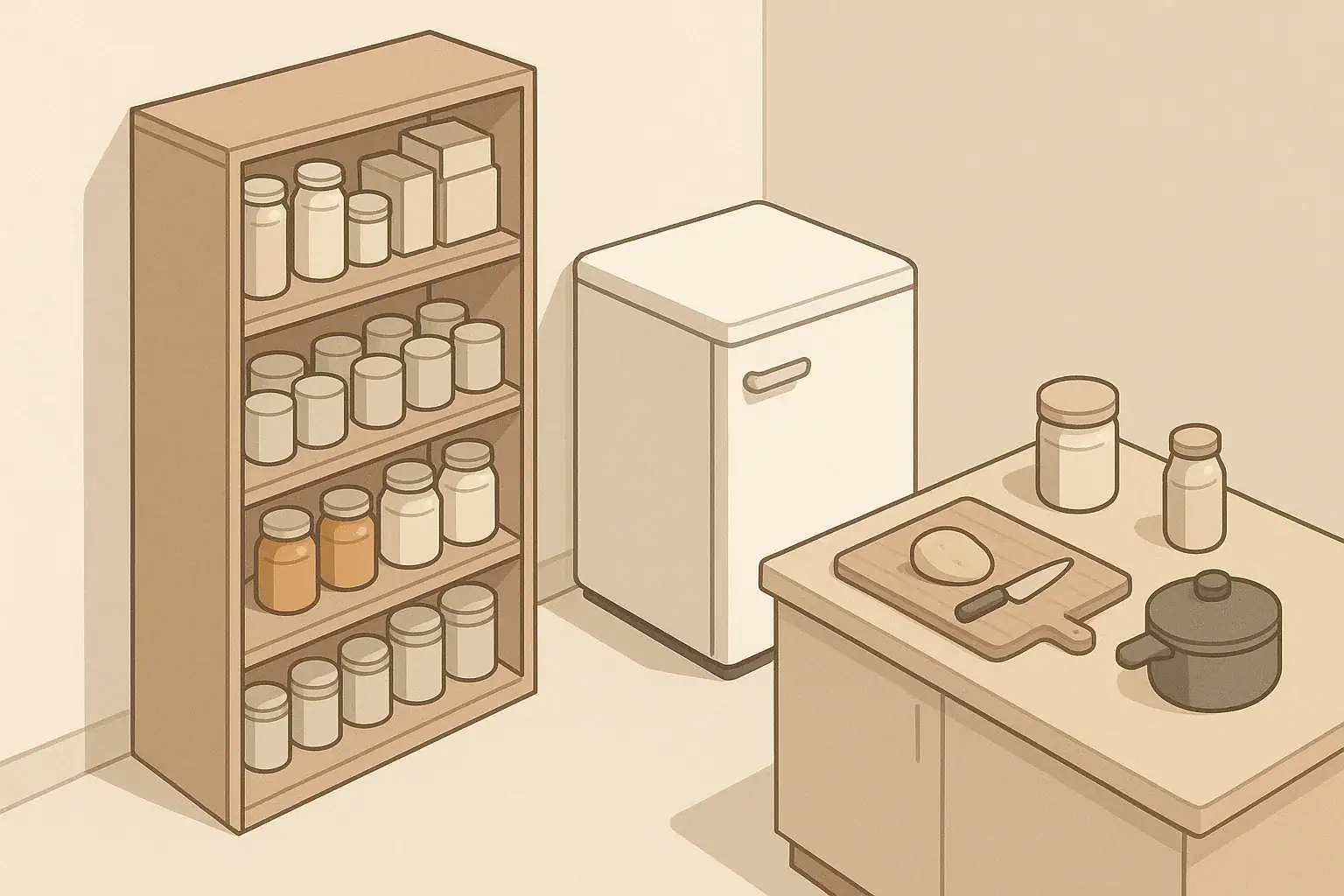
Why Every Apartment Needs a Small Freezer Emergency Plan
In a small apartment, your freezer space is limited, and so is your ability to store backup food. During a power outage or short emergency, knowing what to use first can prevent waste, keep meals simple, and reduce stress.
A basic small freezer emergency plan helps you:
- Decide which foods to cook or eat first
- Stretch what you have without guesswork
- Maintain food safety as the freezer warms
- Avoid opening the door more than needed
This guide focuses on realistic, short-term situations in apartments: a storm that knocks out power overnight, a heatwave outage, or building maintenance that shuts power off for several hours.
How Long a Small Freezer Can Protect Food
Most apartment freezers are attached to a refrigerator and are opened frequently in daily life. In an outage, small actions have a big impact on how long food stays frozen or safely cold.
In general terms, and assuming the door stays closed:
- A packed freezer tends to stay cold longer than a nearly empty one.
- Opening the door repeatedly speeds up warming.
- Room temperature and humidity affect how fast it warms.
Because every appliance and situation is different, think in rough time bands and avoid relying on exact hours. Your plan should assume that some items will thaw faster than others and that you may lose the freezer after about a day without power, especially in warm weather or if the door is opened often.
Temperature is your best guide when possible. If you have a basic appliance thermometer in the freezer, check it quickly when needed and close the door right away. Food that remains fully frozen is safer to keep; once it is fully thawed and warm, it should be used quickly or discarded if safety is uncertain.
Example values for illustration.
| Step | What to check | Action to take |
|---|---|---|
| 1 | Is power back within a few hours? | Keep door closed; leave food as-is if still hard frozen. |
| 2 | Are small items (like vegetables) softening first? | Plan to use them in the next meal or day. |
| 3 | Is meat still icy or partially frozen? | Move to fridge space if cool; cook soon. |
| 4 | Has anything fully thawed and warmed? | Do not refreeze; cook or discard if doubtful. |
| 5 | Do you have safe cooking heat available? | Prioritize items that need cooking while you can still heat. |
| 6 | Are there neighbors to share with? | Share extra cooked food safely to reduce waste. |
What to Use First: A Simple Priority Order
When the power goes out, it helps to have a mental list of what to use first from your small freezer. This keeps you from standing with the door open trying to decide.
Priority 1: Foods That Thaw Fast or Are High-Risk
These items are usually the most time-sensitive if they begin to thaw:
- Pre-cooked frozen meals (saucy dishes, mixed meals)
- Frozen seafood (fillets, shellfish)
- Ground meats (beef, poultry, mixed ground meat)
- Items with cream-based sauces
- Small cuts or thin portions of meat that warm quickly
These tend to lose quality quickly and can move into unsafe temperatures sooner once thawed. If you have safe cooking heat, use these in your first hot meals.
Priority 2: Loose Frozen Vegetables and Mixed Items
Loose vegetables and mixed freezer items thaw relatively quickly, especially small pieces.
- Frozen mixed vegetables and single vegetables
- Frozen fruit pieces
- Frozen side dishes and snack items
These are good for simple one-pot meals, soups, or stir-style dishes. If you cannot cook, some vegetables and fruits can be eaten thawed and cold if they remain fresh-looking and smell normal.
Priority 3: Large Solid Items and Dense Foods
Larger, dense items usually stay frozen longer:
- Whole poultry pieces or roasts
- Big blocks of frozen leftovers
- Bulk packages of meat
- Large loaves of bread
These often act like ice blocks in the freezer and can help keep other items colder. Use them later in the outage, or move them to the coldest spot if power returns and some items have already thawed.
Priority 4: Low-Risk, Quality-Focused Items
Some foods are low-risk but lose texture when thawed and refrozen:
- Ice cream and frozen desserts
- Bread, muffins, and baked goods
- Frozen herbs and purees
These are more about quality than safety. Use them when you can, but give priority to items that need cooking for safety.
Planning Meals Around a Warming Freezer
A small freezer emergency plan works best when paired with a simple meal strategy. In an apartment, you may have limited cooking options during an outage, so plan around what you can realistically do.
If You Still Have Safe Cooking Heat
If gas is still working, or you have a safe, approved backup cooking method for indoor use, you can focus on cooking high-risk foods first.
Consider making:
- One-pot meals using meat plus frozen vegetables
- Soups or stews that combine several thawing items
- Cook-once, eat-twice meals to avoid repeated cooking
Cool cooked food quickly and store it in the refrigerator section if it is still cold inside. Eat these meals within a short time and discard anything that sits at room temperature for too long.
If You Cannot Cook at All
If you have no safe way to cook indoors, your freezers foods are mainly useful while they are still cold or just thawed and safe.
In this case, focus on:
- Frozen bread or tortillas that can be eaten thawed
- Fruits that are still firm and appealing once thawed
- Frozen vegetables that work in cold salads with pantry items
Combine these with your no-cook pantry foods, such as canned beans, shelf-stable spreads, and dry snacks, to round out simple meals.
Using the Freezer to Support the Rest of the Apartment
While power is out and food is still frozen, the freezer can also support other parts of your home plan:
- Cold packs for a cooler: If you have ice packs or bags of frozen vegetables, move them to a cooler to keep high-priority refrigerator items cold.
- Ice blocks: Large frozen containers of water can help maintain cold in the freezer and later be used as drinking water once fully melted and clean.
- Shared meals: In a cooperative building, coordinated use of thawing food can reduce waste for everyone.
Setting Up Your Freezer Before an Emergency
You can make any future outage easier by organizing your small freezer in everyday life. The goal is to know what you have, reach it quickly, and use the space to support your wider home readiness plan.
Organize by Use-First Zones
Even in a small apartment freezer, you can divide space mentally:
- Front or top: Pre-cooked meals and small items that will thaw first.
- Middle: Medium-size packages, vegetables, and fruits.
- Back or bottom: Large, dense items that stay frozen longest.
Keep a simple written list on the fridge or inside a cabinet with what is in the freezer and a rough date. This lets you plan without opening the door repeatedly during an outage.
Include Multi-Use Items
Choose a few freezer items that support both daily life and emergencies:
- Frozen chopped vegetables that work in many dishes.
- Plain frozen meat or poultry instead of complicated marinades.
- Frozen bread or flatbreads that thaw quickly.
- Frozen containers of water that double as ice blocks and backup drinking water when melted (use clean containers and label them).
Rotate with Your Regular Meals
Use your freezer as a short-to-medium-term storage, not a permanent archive. Plan meals that use older items first and keep newer items toward the back. This natural rotation keeps food fresher and means that when an outage happens, you are not dealing with very old or forgotten packages.
Freezer Safety in a Small Apartment
Food safety becomes more important as a freezer warms. In a small apartment, you may not have extra space to move food around, so careful decisions matter.
Limit Door Openings
Each time the freezer door opens, warm air enters and cold air escapes. During an outage:
- Open the door only when you are ready to remove several items at once.
- Decide what you will take before you open it.
- Keep a flashlight nearby so you are not searching in the dark.
Use Your Senses and Common Sense
If food has fully thawed, feels warm, looks unusual, or smells off, it is safer to discard it. When in doubt, do not keep questionable items just to avoid waste. Your emergency plan should accept that some food may need to be thrown away if safety is uncertain.
Separate Raw and Ready-to-Eat Foods
In tight spaces, raw meat packages might be near ready-to-eat items. During an outage:
- Keep raw meat on lower shelves or in leak-proof bags.
- Store thawing items in containers that can catch drips.
- Wash hands and surfaces after handling raw items, even when water is limited, using a small amount of soap and water or sanitizing wipes if appropriate.
Coordinating Freezer Use with Your Pantry Plan
A small freezer is only one part of your home readiness. Pair it with a basic pantry plan so that thawing freezer items can be turned into full meals without extra shopping.
Match Frozen Foods with Shelf-Stable Basics
Think in simple combinations you can make even in an outage:
- Frozen vegetables + canned beans + spices
- Frozen meat + dry rice or pasta + jarred sauce
- Frozen fruit + oats or dry cereal
These combinations let you stretch limited freezer foods further and keep meals familiar.
Use the Freezer to Protect Key Pantry Items
Some foods that are normally shelf-stable can benefit from short-term freezer storage in everyday life to extend their useful life and support emergencies:
- Bread and tortillas for later use in power outages.
- Leftover cooked beans or grains frozen in small portions.
- Small amounts of grated cheese to add to simple meals.
Having these building blocks ready means that when you pull one or two freezer items during an outage, you can assemble a complete meal with pantry items.
Apartment-Friendly Space Strategies
In small apartments, storage space is limited. Some ideas:
- Keep only a modest amount of frozen food that you know you will use.
- Use stackable containers to reduce wasted space.
- Store an accurate, up-to-date list of freezer contents in a drawer, not on the door.
Example values for illustration.
| Food type | Storage tip | Rotation interval idea | No-cook or low-cook use |
|---|---|---|---|
| Canned beans | Store upright in a cool cabinet. | Plan to use and replace every few months. | Rinse and mix with thawed vegetables for salads. |
| Dry pasta or rice | Keep in sealed containers. | Use in regular meals several times a month. | Pair with quickly cooked frozen vegetables and sauce. |
| Nut or seed spreads | Store in a dark, cool spot. | Rotate with everyday snacks and lunches. | Spread on bread or crackers with thawed fruit. |
| Oats and cereals | Seal to keep out moisture. | Use weekly to keep stock fresh. | Combine with thawed frozen fruit and shelf-stable milk. |
| Canned vegetables | Store near eye level so they are used. | Cycle into soups or side dishes monthly. | Mix with thawed meat or grains for quick meals. |
| Crackers and flatbreads | Keep dry and sealed. | Replace during regular grocery trips. | Serve with thawed cheese or spreads for simple snacks. |
Simple Checklist: Your Small Freezer Emergency Plan
You can turn all of this into a short, written plan and tape it inside a kitchen cabinet. Keep it calm and straightforward.
For example, your checklist might say:
- 1. During a power outage: Keep the freezer door closed. Note the time power went out.
- 2. At meal times: Use pre-cooked meals, seafood, and ground meat first if still safely cold.
- 3. Later in the outage: Use frozen vegetables and fruits, then large frozen items.
- 4. Cooking: If safe heat is available, make one-pot meals and soups to use several items at once.
- 5. Safety: Discard fully thawed items that feel warm, look off, or smell unusual.
- 6. After power returns: Check what stayed frozen solid, what thawed but is still cold, and what needs to be discarded. Update your freezer list.
By thinking through these steps ahead of time, your small apartment freezer becomes a useful part of your home readiness plan instead of a source of worry during an outage.
Authoritative sources
Safety recommendations can change. Confirm critical details with current official guidance and local authorities.
- US EPA: Emergency Disinfection of Drinking Water
- USDA FSIS: Keep Food Safe During Emergencies
- U.S. CPSC: Battery Safety
Frequently asked questions
How long will food in a small apartment freezer stay safe during a power outage?
Storage time depends on the appliance and how often the door is opened. A full standalone freezer can often keep food safe for about 48 hours if unopened, while refrigerator-freezer combos common in apartments typically hold safe temperatures closer to 24 hours or less, especially in warm conditions. When unsure, prioritize high-risk items and check for ice crystals or use a thermometer.
What should I use first from my small freezer when the power goes out?
Prioritize high-risk items that thaw quickly, such as pre-cooked meals, seafood, ground meats, cream-based dishes, and thin cuts of meat. If you have safe cooking heat, cook those items first; otherwise focus on thawed breads, fruits, and vegetables that can be eaten cold. Remove multiple items at once to minimize door openings.
Can I safely refreeze food that has partially thawed in a small freezer?
You can refreeze food if it still contains ice crystals or has remained at 40°F (4°C) or below; in that case you may refreeze or cook it. If food has fully thawed and warmed above 40°F for more than two hours, it is safest to discard it. When in doubt, cook and consume immediately or discard rather than refreezing uncertain items.
How can I use freezer items to keep refrigerator foods cold during an outage?
Move large frozen items, bags of frozen vegetables, or frozen water containers into a cooler or the refrigerator section to act as cold packs. Transfer them quickly, keep doors closed, and store the coldest, densest items nearest to what you want to protect. This helps extend safe temperatures for perishable fridge items.
What prep steps should I take before an expected outage to make my small freezer emergency plan effective?
Organize the freezer into use-first zones, keep an up-to-date list of contents, and freeze clean containers of water to serve as ice blocks. Rotate older items to the front, include multi-use staples like plain meats and chopped vegetables, and store a thermometer and flashlight nearby. Having simple one-pot recipes planned also makes it easier to use thawing items efficiently.
- Simple checklists and realistic planning
- Water, power, lighting, and pantry basics
- Family plans (kids, pets, seniors) and seasonal prep
Affiliate disclosure
As an Amazon Associate, we earn from qualifying purchases. Some links on this site may be affiliate links. If you buy through these links, we may earn a small commission at no extra cost to you. This helps support our content. Learn more.