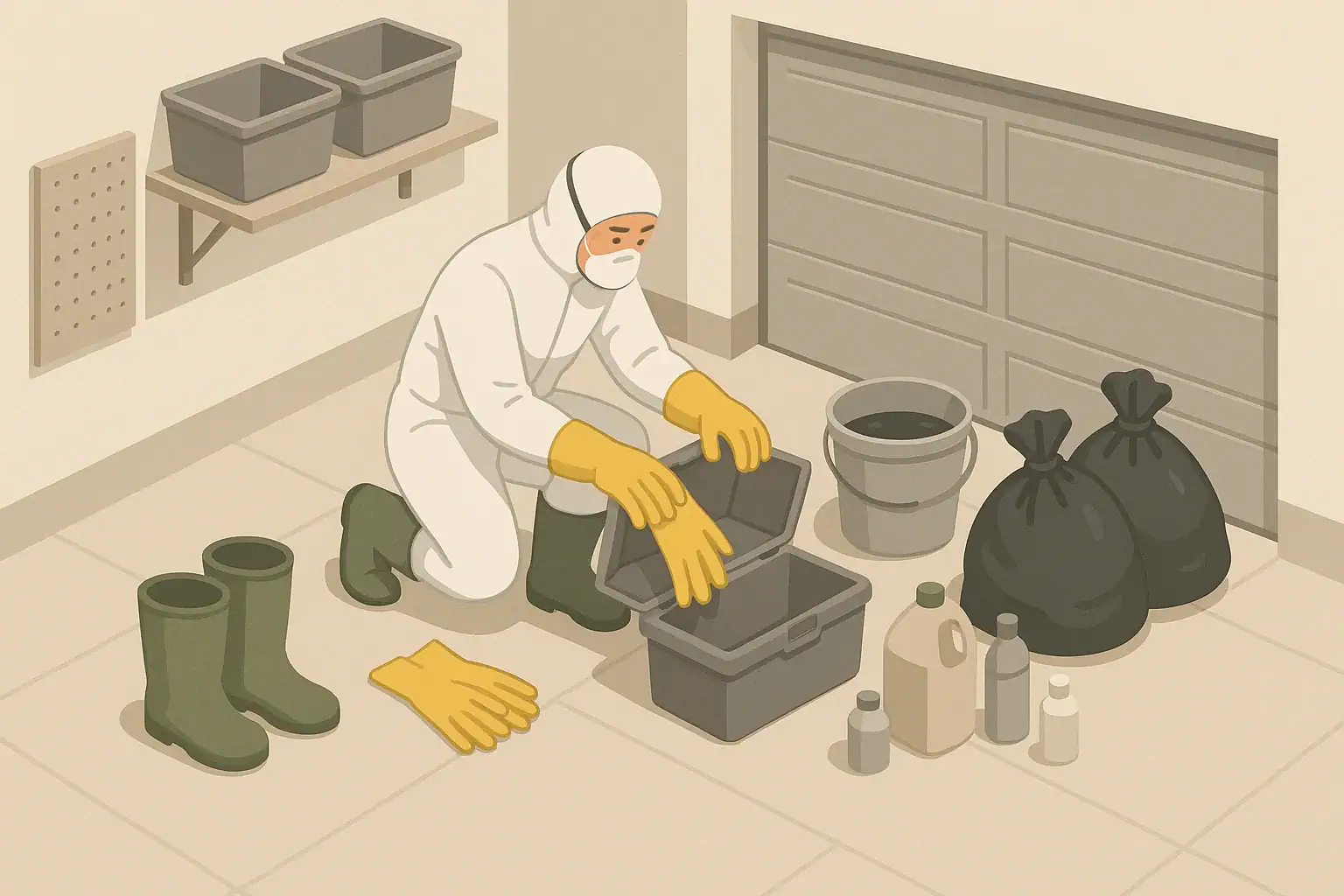
Why you need a sewage backup cleanup kit
A sewage backup is more than a messy plumbing problem. Sewage can contain germs that cause illness, and it can damage your home and belongings. Having a basic sewage backup cleanup kit ready means you can protect yourself and do safe first steps while you wait for a plumber or cleanup crew, or handle small, simple incidents yourself.
This guide walks through what to keep in a sewage backup cleanup kit, how to use personal protective equipment (PPE), simple disinfection steps for minor backups, and what to avoid so you do not make the situation more dangerous. For anything more than a small, contained spill, local health authorities or a professional cleanup service should take the lead.
When to call professionals or authorities first
Before you reach for your kit, pause and decide whether it is safe to handle the situation yourself.
- Call your local sewer authority or a licensed plumber immediately if sewage is coming from a floor drain, toilet, or basement line and is still flowing.
- Call your local health department or non-emergency line if a large area is affected, multiple homes are involved, or you are unsure about safety.
- Evacuate the area and call 911 if you smell strong gas, see electrical hazards, or someone has collapsed or is having trouble breathing.
Do not enter a flooded basement or room if water may be in contact with electrical outlets, appliances, or wiring. A qualified electrician or emergency services should declare it safe first.
For general guidance on sewage and floodwater safety, see the U.S. Centers for Disease Control and Prevention (CDC) page on sewage and floodwater after an emergency.
Core items for a sewage backup cleanup kit
Store your kit in a sturdy plastic bin with a lid, in a dry area that is easy to reach (such as a garage shelf or utility closet). Check it once a year and replace anything damaged or expired.
Personal protective equipment (PPE)
- Disposable nitrile or latex gloves (multiple pairs)
- Heavy-duty waterproof work gloves to wear over disposable gloves if handling rough items
- Waterproof boots that cover at least to mid-calf
- Disposable coveralls or old long-sleeve shirt and long pants you can wash on hot immediately afterward
- Eye protection (safety glasses or goggles) to prevent splashes
- Disposable or washable mask (for example, a simple respirator or mask) to reduce splash and odor exposure
Cleaning and disinfection supplies
- Plastic buckets (one for clean solution, one for dirty water)
- Stiff-bristle scrub brushes with handles
- Mops and mop heads that can be disinfected or discarded
- Absorbent materials (old towels, rags, or disposable absorbent pads)
- Heavy-duty trash bags and twist ties or tape
- Measuring cup dedicated to cleaning chemicals (do not use for food)
- Household detergent (for example, dish soap or general-purpose cleaner)
- Household bleach (unscented, plain, 5–8.25% sodium hypochlorite)
- Spray bottles clearly labeled for cleaning solutions
- Paper towels or disposable wipes
Protection for your home
- Plastic sheeting or large trash bags to protect clean areas or cover items
- Duct tape for temporary sealing or securing plastic
- Permanent marker to label bags and items as contaminated
- Old cardboard or mats to create a “dirty zone” at the entry to the affected area
Comfort and hygiene items
- Handwashing supplies (soap, clean water, or an alcohol-based hand sanitizer)
- Disposable towels for drying hands and face
- Change of clothes in a sealed bag
Using PPE safely during sewage cleanup
PPE only helps if you use it correctly and remove it without spreading contamination.
Before you start
- Keep children, pets, and anyone with weakened immune systems away from the affected area.
- Open windows and doors for ventilation if it is safe to do so.
- Turn off power to the affected area at the breaker if there is any chance of water contacting outlets or cords, and only if you can do so without standing in water.
- Set up a “clean zone” outside the affected room where you can put on and remove PPE.
Putting on PPE
- Wash your hands or use hand sanitizer.
- Put on long pants and long sleeves if you are not using coveralls.
- Put on waterproof boots.
- Put on disposable coveralls or protective clothing.
- Put on mask and eye protection.
- Put on disposable gloves, then heavy-duty gloves over them if needed.
Taking off PPE
Assume the outside of your PPE is contaminated.
- Remove heavy-duty gloves and place them in a bucket with disinfectant or in a labeled bag if discarding.
- Peel off disposable coveralls by turning them inside out as you go; place them in a trash bag.
- Remove boots at the edge of the dirty zone; clean them with disinfectant solution and let them dry.
- Remove eye protection and mask by handling straps only; clean reusable items with disinfectant.
- Remove disposable gloves last and place them in the trash bag.
- Seal trash bags and wash your hands thoroughly with soap and clean water.
- Shower as soon as you can, using soap and washing hair and under nails.
Basic disinfection steps for a small sewage backup
The steps below are for a small, contained backup on hard, non-porous surfaces (like tile or concrete) where you can safely reach the area. If sewage has soaked into carpets, drywall, insulation, mattresses, or large areas, a professional cleanup service is usually safer and more effective.
1. Stop the source and keep it contained
- Stop using toilets, sinks, or drains that feed the affected line.
- Block access with chairs, tape, or signs so others do not walk through the area.
- Use plastic sheeting or trash bags to protect nearby clean items or pathways.
2. Remove standing sewage and solids
- Use absorbent materials (old towels, rags) to soak up liquid. Treat these as contaminated waste.
- Use a dustpan, scoop, or disposable tools to pick up solid material and place it into a lined trash bag or bucket.
- Do not use a household vacuum or shop vacuum unless it is specifically designed and rated for hazardous liquids and you follow the manufacturer’s instructions.
3. Wash with detergent and water
- Mix warm water with household detergent in a bucket.
- Scrub affected hard surfaces (floors, baseboards, non-porous furniture) with brushes or mops.
- Work from the least contaminated area toward the most contaminated area to avoid spreading germs.
- Rinse with clean water and remove the dirty water with mops or towels.
4. Disinfect with a bleach solution
Bleach can help kill many germs when used correctly. Never mix bleach with ammonia or other cleaners, as this can create dangerous gases.
The CDC provides general guidance on using bleach solutions for disinfection in emergencies on its page about cleaning and sanitizing after an emergency.
For hard, non-porous surfaces:
- Prepare a fresh bleach solution in a well-ventilated area, following the instructions on the bleach label.
- Apply the solution to cleaned surfaces using a mop, cloth, or spray bottle.
- Allow the surface to stay wet for the contact time recommended on the bleach label.
- Rinse with clean water if recommended by the product label, especially on surfaces where children or pets may crawl or play.
5. Dry the area thoroughly
- Use fans and open windows if weather and safety allow.
- Run a dehumidifier if you have one and it is safe from electrical hazards.
- Check for lingering dampness along walls, under baseboards, and under furniture. Persistent moisture can lead to mold growth.
6. Handle contaminated items
- Porous items like rugs, cardboard, and some upholstered furniture that were soaked in sewage are often safer to discard in sealed trash bags.
- Washable fabrics (towels, some clothing) can sometimes be washed separately in hot water with detergent and then dried completely. Run an empty cycle afterward with detergent or a small amount of bleach to rinse the machine, following the washer manufacturer’s guidance.
- Children’s toys that are soft or porous and contacted sewage are usually best discarded. Hard plastic toys may be washed with detergent and then disinfected, following guidance similar to other hard surfaces.
Follow your local waste management rules for disposing of contaminated items. Some areas may have special requirements for large amounts of waste.
What to avoid during sewage backup cleanup
Certain actions can increase health risks or damage your home.
- Do not ignore electrical hazards. Never step into water that may be in contact with outlets, cords, or appliances.
- Do not mix cleaning chemicals. Bleach plus ammonia or acidic cleaners can create toxic gases.
- Do not use household vacuums or unapproved shop vacs to pick up sewage or contaminated water.
- Do not allow children, pets, or vulnerable adults into the affected area until cleanup and disinfection are complete and the area is dry.
- Do not eat, drink, or smoke in the contaminated area or while wearing contaminated clothing or gloves.
- Do not delay drying. Leaving damp materials in place can lead to mold and additional damage.
- Do not assume well water or private water sources are safe if sewage has flooded near them. The U.S. Environmental Protection Agency (EPA) offers guidance on protecting household water from contamination; local health departments can advise on testing.
After cleanup: health and follow-up steps
Even with careful cleanup, pay attention to how you and your household feel afterward.
- Watch for symptoms such as stomach upset, vomiting, diarrhea, fever, or skin infections. Contact a healthcare provider if anyone becomes ill and mention the sewage exposure.
- Check the cleaned area over the next several days for new odors, damp spots, or signs of mold (such as visible growth or musty smells).
- Take photos and notes of the damage and cleanup steps if you may file an insurance claim.
- Talk with a plumber about the cause of the backup and long-term fixes, such as backflow prevention devices or line repairs.
If you have questions about vaccines, wound care, or specific health risks after sewage exposure, your healthcare provider or local health department can give guidance tailored to your situation.
Frequently asked questions
Is it safe to clean a sewage backup myself?
It can be reasonable for a healthy adult to clean a small, contained sewage backup on hard surfaces if there are no electrical hazards, the source is stopped, and proper PPE and disinfection steps are used. Large backups, deep flooding, or contamination of walls, insulation, or HVAC systems are usually best handled by professionals or under guidance from local health authorities.
What bleach ratio should I use for sewage cleanup?
Bleach products vary in strength, and labels may change over time. Follow the instructions on your specific bleach product for disinfecting hard surfaces. If label guidance is unclear, your local health department or the CDC’s emergency cleaning resources can provide up-to-date recommendations.
Can I save carpet after a sewage backup?
Carpet and padding that have been soaked with sewage are difficult to disinfect fully. In many cases, removal and disposal are recommended, especially in living areas, bedrooms, or homes with children, older adults, or people with weakened immune systems. A professional remediation service or local health department can advise based on the extent of contamination.
How do I protect my well or home water during a sewage backup?
If you have a private well or on-site water system and sewage has flooded near it, do not assume the water is safe to drink. Contact your local health department or extension service about testing and any needed disinfection steps. The EPA’s guidance on protecting household water supplies can also help you understand general precautions.
- Simple checklists and realistic planning
- Water, power, lighting, and pantry basics
- Family plans (kids, pets, seniors) and seasonal prep
Affiliate disclosure
As an Amazon Associate, we earn from qualifying purchases. Some links on this site may be affiliate links. If you buy through these links, we may earn a small commission at no extra cost to you. This helps support our content. Learn more.