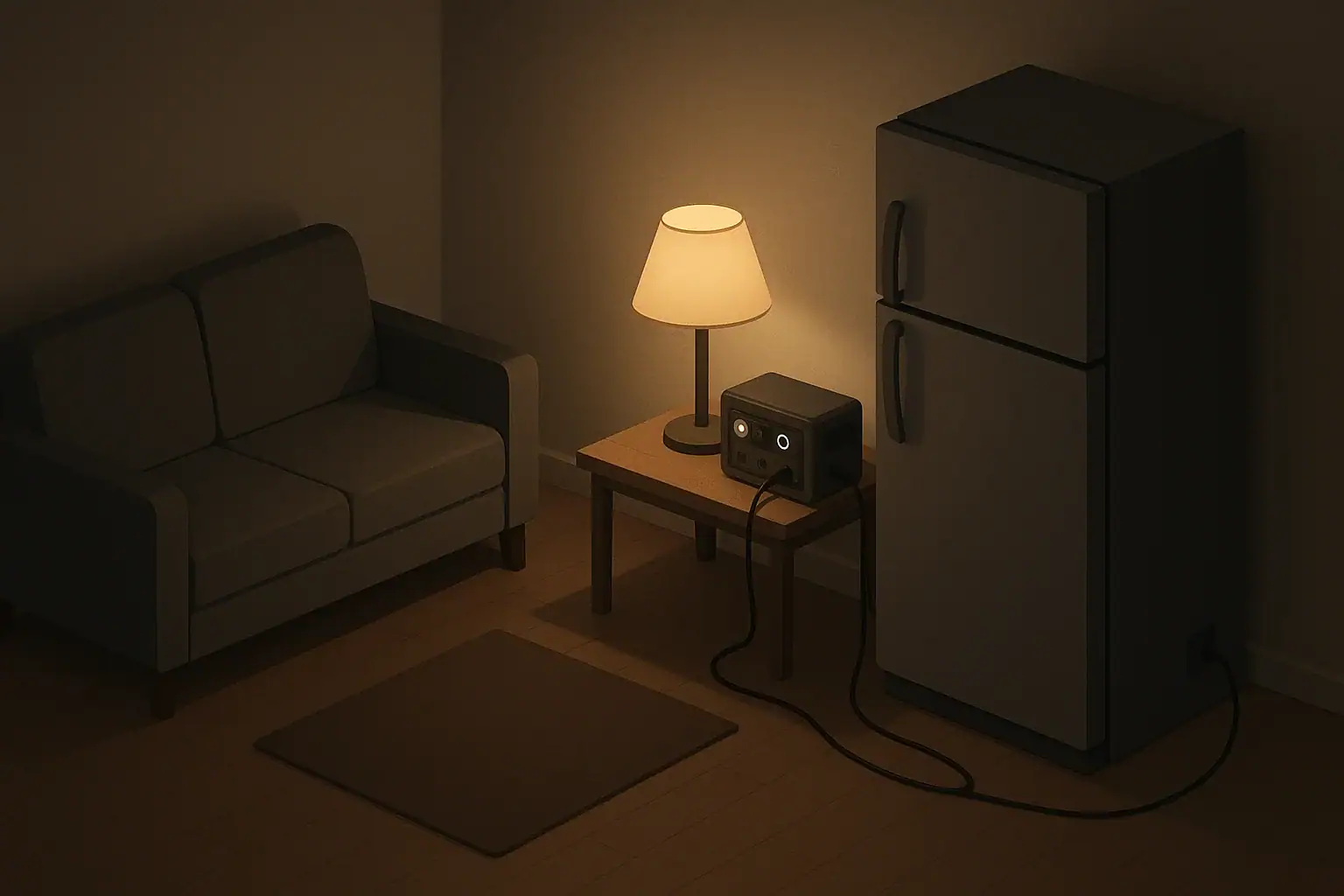
During a power outage that lasts more than a few hours, knowing whether your refrigerated food is still safe becomes a practical challenge. The fridge feels cool when you open the door, but that does not tell you how warm it has gotten over time or how long food has been in the “unsafe” zone.
A simple refrigerator thermometer log gives you a record of temperatures and time so you can make calmer, more informed decisions. Instead of guessing, you can look at your notes and see a pattern: how quickly your refrigerator warms, how well it holds cold, and when you crossed key temperature thresholds.
This is especially useful in real-world situations such as:
- Winter storms that knock power out for a day or two
- Summer heatwaves that strain the grid and cause rolling blackouts
- Hurricanes or strong storms that cut power to a neighborhood for several days
- Apartment outages where you do not control the building systems
With a thermometer and a log, you have a simple, low-stress way to track what is happening in your fridge and freezer and decide what to move, cook, or discard.
Why a Refrigerator Thermometer Log Matters in a Multi-Day Outage
During a power outage that lasts more than a few hours, knowing whether your refrigerated food is still safe becomes a practical challenge. The fridge feels cool when you open the door, but that does not tell you how warm it has gotten over time or how long food has been in the “unsafe” zone.
A simple refrigerator thermometer log gives you a record of temperatures and time so you can make calmer, more informed decisions. Instead of guessing, you can look at your notes and see a pattern: how quickly your refrigerator warms, how well it holds cold, and when you crossed key temperature thresholds.
This is especially useful in real-world situations such as:
- Winter storms that knock power out for a day or two
- Summer heatwaves that strain the grid and cause rolling blackouts
- Hurricanes or strong storms that cut power to a neighborhood for several days
- Apartment outages where you do not control the building systems
With a thermometer and a log, you have a simple, low-stress way to track what is happening in your fridge and freezer and decide what to move, cook, or discard.
Basic Refrigerator Safety Concepts During an Outage
You do not need to be a food safety expert to use a refrigerator thermometer log. A few basic principles will guide most decisions in a household outage scenario.
Cold storage basics
Refrigerators are designed to keep perishable foods cold enough to slow bacterial growth. In everyday use, that generally means the main compartment is kept in a cold range, and the freezer is kept much colder to keep food solidly frozen.
During a power outage, the temperature inside the refrigerator and freezer will slowly rise. How quickly that happens depends on:
- How full the fridge and freezer are
- How often the doors are opened
- Room temperature around the appliance
- Age and condition of the refrigerator
Because there are so many variables, a thermometer reading and a written log are more reliable than rules of thumb alone.
Why time and temperature both matter
For refrigerated foods, both how warm they get and how long they stay warm matter. Short periods of mild warming are usually less concerning than many hours at warmer temperatures. A thermometer log lets you track both pieces of information together:
- Temperature at each check: what the fridge or freezer is at right now
- Elapsed time without power: how long cold food has been gradually warming
This combined view helps you sort foods into three practical categories:
- Likely safe to keep: stayed cold with only brief, mild warming
- Use soon or cook thoroughly: had some warming but still in a cautious but usable range
- Best to discard: warmed too much or for too long to be comfortable keeping
Example values for illustration.
| Task | Why it matters | Simple notes to record |
|---|---|---|
| Note the time power went out | Creates a starting reference for all later readings | Write approximate time and date on paper or in a notebook |
| Place a thermometer inside fridge | Gives objective readings instead of guessing by feel | Center shelf is a common choice for consistent readings |
| Place a thermometer inside freezer | Shows how long food remains fully frozen | Put near front so you can see quickly when door is opened |
| Decide on a checking interval | Reduces unnecessary door opening and temperature swings | For example, every 4 hours during the day |
| Prepare a simple table for notes | Keeps information organized for decisions later | Columns for time, fridge temp, freezer temp, door openings |
| Limit door openings between checks | Helps the interior stay cold longer without power | Plan what you need before opening doors briefly |
| Mark any cooking or moving of food | Shows which items were used early or relocated | Note when you cook, move to a cooler, or discard items |
How to Set Up and Use a Refrigerator Thermometer Log
Setting up a log can be as simple as a sheet of paper taped to the fridge or a page in a household notebook. The goal is clarity, not perfection.
What you need
To track temperatures during an outage, gather:
- One or two basic refrigerator-safe thermometers
- A pen or pencil
- A log sheet, notebook, or printed table
- Optional: a flashlight or lantern for reading thermometers in the dark
If you have a thermometer with a remote probe, you can place the sensor inside and keep the display outside, but it is not required. Simple, inexpensive thermometers work well as long as they are easy to read.
Choosing thermometer locations
Placement affects your readings. For everyday households, these simple guidelines are practical:
- Refrigerator: Middle shelf, away from the door and back wall
- Freezer: Near the front or on top of frozen items, not pressed against the door
This gives you a reasonable picture of the average internal temperature in spots where food is stored, without focusing only on the coldest or warmest small pockets.
Creating your log format
You can draw a quick grid with columns such as:
- Time
- Fridge temperature
- Freezer temperature
- Power status (on/off or generator/battery)
- Door openings since last check
- Notes (moves, cooking, discards)
Write the time the power went out at the top. If power cycles on and off (such as rolling blackouts or running a generator in limited blocks of time), note that in your log as well.
How often to log temperatures
In a short outage of a few hours, you may only need one or two readings. In a multi-day outage, a regular schedule helps:
- Daytime: Check every 3–4 hours if practical
- Overnight: Check before bed and on waking
If opening the door for readings causes too much warming, you can lengthen the interval, especially if the fridge is very full and the room is cool. The main priority is to minimize door openings while still getting enough information to make decisions.
Special considerations for apartments and shared housing
In an apartment, you may be dealing with shared hallways, limited space, and a smaller refrigerator. A log is still useful, but it may help to:
- Coordinate with roommates so only one person is responsible for readings
- Post the log on the fridge door where everyone can see it
- Set a simple rule like “only open the fridge when absolutely necessary”
For seniors or anyone with mobility challenges, assigning a family member or neighbor to read and record temperatures can reduce strain and confusion during the outage.
Interpreting Your Refrigerator Thermometer Log
Once you have several entries in your log, you can start to see a pattern. The key is not just one temperature reading, but how temperatures change over time and how long foods have been out of their normal cold range.
Spotting warming trends
Look down your log at the fridge and freezer columns and ask:
- How many hours did it take to noticeably warm?
- Is the temperature rising faster at certain times (such as during the heat of the day)?
- Do large door openings show up as sudden jumps?
This helps you predict when you may cross into a range where you are less comfortable keeping highly perishable foods, and when to move foods to a cooler, cook them, or discard them.
Using the log to guide what to eat first
When you know your refrigerator and freezer are slowly warming, a sensible strategy is to use the most fragile items first. Your log tells you how much time you have spent above your usual cold range, which can guide a simple order of operations:
- Plan early meals around foods that are already thawing or warming
- Save fully frozen items in a still-cold freezer for later if temperatures are holding well
- Combine multiple items into cooked dishes you can eat now or soon after
Writing simple notes like “Cooked chicken and vegetables at 6 p.m.” or “Moved dairy to ice chest at 10 a.m.” provides context to go with your temperature history.
When the log suggests it is time to discard
There is no one rule that fits every situation, but your log can raise red flags. Be especially cautious when your records show both:
- Sustained higher temperatures in the refrigerator section
- Several hours or more at those warmer temperatures
In those situations, discarding high-risk items such as cooked leftovers, certain meats, or dairy may be the more conservative choice, especially for households with young children, older adults, or anyone who is more vulnerable to foodborne illness.
For foods that are still partly frozen and have only recently softened, your log can support a decision to cook and eat soon rather than automatically discard, assuming there are no signs of spoilage such as off odors or textures.
Freezer Thermometer Logs and Partial Power Options
A freezer often stays cold longer than the refrigerator, especially if it is packed and remains closed. In a multi-day outage, the freezer acts like a cold battery for your food supply, and a thermometer log helps you understand how long that battery lasts in your specific home.
Reading and logging freezer temperatures
Because freezers start at much colder temperatures, they can climb for hours or even a day or more before food fully thaws. Your log can include short notes such as:
- “All items still hard frozen”
- “Outer items soft but center still solid”
- “Most items fully thawed by mid-day”
Combining these notes with thermometer readings and time stamps gives you a clearer picture of how long foods have been in various conditions.
Using backup power to extend cold storage
Some households use small generators or battery power stations during outages. If you choose to power a refrigerator or freezer this way, your log becomes even more important. It shows:
- How quickly the appliance cools back down when power is restored
- How warm it gets during the periods without power
- Whether your chosen schedule (for example, powering the fridge for a few hours twice a day) keeps temperatures in a range you are comfortable with
Write entries such as “Generator on 8–10 a.m.” or “Battery power to fridge 6–8 p.m.” in the power status column. Over time, this can help you fine-tune how you use limited power to protect the most food.
Apartments, shared generators, and building rules
In multi-unit buildings, you may be limited in what backup power you can safely or legally use. A log is still useful because it lets you coordinate with neighbors or building management:
- If there is a shared generator schedule, you can match your log to those times.
- If you have access to a communal freezer or cooler, the log helps you decide when to move items.
- If emergency staff or inspectors ask how long food has been warm, you have written notes.
Even with limited options, tracking temperatures supports calmer, evidence-based decisions.
Example values for illustration.
| Food type | Storage tip | Rotation interval idea | No-cook or low-cook use |
|---|---|---|---|
| Canned beans and vegetables | Store in a cool, dry cupboard away from heat | Check dates a few times per year | Drain and mix with oil and seasoning for salads |
| Canned fish or poultry | Group similar items together for quick inventory | Incorporate into meals every few months | Combine with crackers or bread for simple meals |
| Shelf-stable milk alternatives | Store upright and avoid freezing temperatures | Rotate into regular use every few months | Use with cereal or in beverages without cooking |
| Nut butters | Keep tightly sealed and away from direct sunlight | Use regularly and replace when opened | Spread on bread, crackers, or fruit slices |
| Dry grains and pasta | Store in sealed containers to limit moisture | Review supplies once or twice a year | Use with limited fuel for quick-cooking dishes |
| Ready-to-eat soups and stews | Arrange oldest items at the front of the shelf | Plan to use a few cans each season | Eat at room temperature if heating is not available |
| Dried fruit and nuts | Keep in sealed bags or jars to maintain quality | Check for freshness several times per year | Eat as snacks or mix into simple trail blends |
Simple Preparedness Steps Before the Next Outage
A refrigerator thermometer log is most helpful when you think about it ahead of time. A few small actions taken now can make your next multi-day outage less stressful:
- Keep at least one easy-to-read thermometer in the fridge and another in the freezer.
- Print or sketch a blank log sheet and store it with your household documents.
- Decide where you will keep the log (on the fridge door, in a kitchen drawer, or in a binder).
- Talk with family members or roommates about who will record readings during an outage.
- Review your pantry to ensure you have some shelf-stable options if fridge food needs to be discarded sooner than hoped.
With these pieces in place, you are better prepared to track temperatures calmly, prioritize which foods to use, and reduce waste while keeping household food safety in mind during a multi-day power interruption.
Authoritative sources
Safety recommendations can change. Confirm critical details with current official guidance and local authorities.
- CDC: Carbon Monoxide Poisoning Basics
- USDA FSIS: Keep Food Safe During Emergencies
- U.S. CPSC: Battery Safety
Frequently asked questions
How do I start a refrigerator thermometer log right after the power goes out?
Note the approximate time the outage began, place one thermometer on a middle fridge shelf and one in the freezer, and record those starting temperatures. Create a simple table with columns for time, fridge temp, freezer temp, power status, door openings, and short notes so subsequent checks are easy to add.
What temperature thresholds should I track in the log to decide if food is safe?
Track when the refrigerator rises above about 40°F (4°C) and when the freezer climbs toward 0°F (−18°C), since these are common benchmarks for safe cold storage. Also record how long temperatures stay above those points, because sustained warming for several hours increases the risk to perishable foods.
How often should I record temperatures during a multi-day outage?
During daytime, check every 3–4 hours if practical; overnight, a check before bed and one on waking is usually sufficient. Adjust intervals to minimize door openings—if the fridge is very full and the room is cool, you can lengthen checks while still recording any large changes when they occur.
Can a refrigerator thermometer log help me use a generator or partial power efficiently?
Yes. Recording when backup power is on and off plus the corresponding temperature changes shows how quickly the appliance cools and how long it stays cold, letting you test schedules that maximize protection for priority items. Over several cycles you can refine generator or battery run times to keep key foods safe with minimal fuel or battery use.
Should I record door openings and movements of food in the log?
Yes—brief notes about door openings, moved items, or cooked/discarded foods provide context for sudden temperature spikes and help explain why a reading changed. That context makes the log more useful when deciding which items to cook, move to an ice chest, or discard.
- Simple checklists and realistic planning
- Water, power, lighting, and pantry basics
- Family plans (kids, pets, seniors) and seasonal prep
Affiliate disclosure
As an Amazon Associate, we earn from qualifying purchases. Some links on this site may be affiliate links. If you buy through these links, we may earn a small commission at no extra cost to you. This helps support our content. Learn more.