Why Compare Power Stations and Generators for Home Readiness?
Short power outages are common in many parts of the United States, whether from thunderstorms, winter storms, heatwaves, or local grid issues. For most households, the goal is not to power everything, but to keep key items running: a few lights, phone chargers, maybe a small fan or medical device, and in some cases a refrigerator.
Two common options for backup power are portable power stations and fuel-powered generators. They both provide electricity when the grid is down, but they work differently, have different safety considerations, and fit different living situations.
This guide focuses on calm, practical home readiness for everyday people, including renters, apartment dwellers, and families in smaller homes. It walks through how each option works, what they power realistically, and how to decide which fits your space, budget, and comfort level.
How Portable Power Stations Work
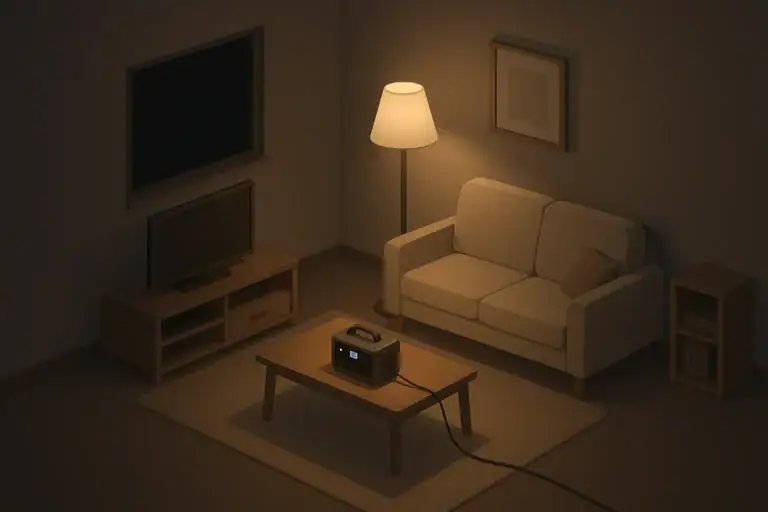
A portable power station is essentially a large rechargeable battery with built-in electronics that let you plug in devices. Many models include standard household outlets, USB ports, and a way to charge from the wall, a vehicle, or solar panels.
Key Features of Power Stations
While individual models vary, most portable power stations include:
- Built-in battery: Stores energy for later use. Capacity is usually labeled in watt-hours (Wh).
- Inverter: Converts stored battery power into AC power for household devices.
- Multiple outputs: AC outlets, USB ports, and sometimes 12V car-style ports.
- Recharge options: Typically wall outlet, car charger, and optional solar input.
Strengths of Power Stations for Home Readiness
Portable power stations are well-suited to many everyday outage scenarios, especially for apartments and small homes.
- Indoor-safe: No fuel exhaust, so they can be used safely indoors when operated according to manufacturer instructions.
- Low noise: Usually very quiet, which is helpful at night and in shared buildings.
- Simple to use: Often plug-and-play, making them accessible for family members who are not technically inclined.
- Good for small loads: Excellent for phones, tablets, small fans, LED lights, routers, and some laptops or small medical equipment (check device requirements).
- Solar-friendly: Many can be paired with solar panels to extend runtime during daytime outages.
Limitations of Power Stations
Despite their convenience, portable power stations have practical limits.
- Finite stored energy: Once the battery is empty, you need a way to recharge (wall power, car, or solar). In long outages without sun or vehicle access, this can be a constraint.
- Power capacity: Most consumer units are best for smaller devices, not whole-house loads or central air conditioning.
- Cost per watt-hour: Compared with fuel-powered generators, stored battery energy is often more expensive for large power needs.
- Charging time: Recharging from empty can take several hours, depending on the input source.
How Fuel-Powered Generators Work
Portable generators use gasoline, propane, or diesel to spin an engine that produces electricity. They are typically used outdoors and connected to appliances via extension cords or a transfer system installed by an electrician.
Key Features of Generators
Generators vary widely in size and capability, but common features include:
- Fuel-powered engine: Runs on gasoline, propane, or diesel.
- Power output: Rated in watts; larger generators can power more or bigger appliances at once.
- Multiple outlets: Several AC outlets, sometimes a twist-lock outlet for connection to a transfer switch.
- Runtime tied to fuel: As long as you have fuel and follow safe operating practices, you can continue to run the generator.
Strengths of Generators for Home Readiness
Generators are often chosen by households that need to run higher-power devices or extended loads.
- Higher power output: Many can power refrigerators, sump pumps, and other large appliances (within their rated limits).
- Longer runtime with fuel: You can refuel as needed, which is useful during multi-day outages.
- Better for whole-house approaches: With a professionally installed transfer switch, a generator can power selected circuits in your home.
Limitations and Safety Concerns with Generators
Generators provide significant power but come with important safety and practicality considerations.
- Carbon monoxide risk: Generators must be operated outside, away from doors, windows, and vents to prevent exhaust from entering the home.
- Noise: Many generators are loud, which can disturb neighbors and be stressful at night.
- Fuel storage: You need a safe, compliant place to store fuel and a way to keep it fresh.
- Maintenance: Engines require periodic runs, oil changes, and checks, or they may fail when you need them.
- Space and logistics: You need outdoor space for safe operation, which may not be feasible for some apartments or townhomes.
Example values for illustration.
| Situation | Power station tends to fit better if… | Generator tends to fit better if… |
|---|---|---|
| Home type | You live in an apartment, condo, or rental with limited outdoor space. | You have a house with yard/driveway space for outdoor operation. |
| Power needs | You mainly need phones, small electronics, lights, and maybe a small fan. | You need to run a fridge, sump pump, or several larger appliances. |
| Outage length | Most outages are a few hours to a day in your area. | Multi-day outages are common and you can safely store fuel. |
| Noise tolerance | Quiet operation is a priority for you and neighbors. | You can tolerate engine noise and have some distance from neighbors. |
| Comfort with fuel | You prefer not to store or handle fuel at home. | You are comfortable managing fuel storage and generator maintenance. |
| Budget focus | You prefer paying more per watt for simplicity and low maintenance. | You want more total power per dollar and can handle upkeep. |
Matching Backup Power to Realistic Outage Scenarios
Rather than starting with equipment, it helps to start with the most likely outages where you live. Different regions in the U.S. face different risks:
- Winter storms: Ice and heavy snow can down lines, causing cold-weather outages.
- Hurricanes and tropical storms: Wind and flooding can bring multi-day power loss.
- Heatwaves: High demand may cause rolling outages or local failures.
- Wildfire-related shutoffs: Planned safety shutoffs can occur in high-risk areas.
Next, consider your living situation and priorities.
Apartment and Condo Considerations
If you rent or live in a multi-unit building:
- Outdoor space may be limited: Running a fuel generator on a balcony or near windows is unsafe. Many buildings prohibit it.
- Noise rules: Shared walls and building quiet hours may limit noisy equipment.
- Elevators and hallways: Large, heavy generators may be impractical to move.
In these settings, a portable power station paired with efficient LED lights and phone chargers is often more realistic. You can store the unit in a closet, keep it charged, and use it indoors when needed.
Single-Family Homes and Townhouses
Detached homes and some townhouses have more flexibility:
- Outdoor placement: You may have a driveway or yard where a generator can run safely away from windows and doors.
- Transfer switch options: An electrician can install a system that allows you to power selected home circuits during an outage.
- Fuel storage: You may have space for fuel containers, stored according to local guidelines and safety recommendations.
In these homes, some people choose a generator for high-demand needs (like a sump pump during heavy rain) and keep a small power station indoors for quiet nighttime use and sensitive electronics.
Household Needs: Families, Kids, Pets, and Seniors
Think beyond watts and consider who lives in your home:
- Families with kids: Extra lighting, a way to charge devices, and possibly a small fan can reduce stress during outages.
- Pets: Backup power for fans or small heaters (used safely) may help keep indoor temperatures more comfortable.
- Seniors or mobility challenges: Reliable power for mobility aids, communication devices, or other equipment may be a priority. Discuss specific medical equipment needs with the appropriate professionals.
For many of these needs, a well-sized power station can provide quiet, indoor-safe power for the devices that matter most. For higher loads, a generator may still play a role, provided safe setup and operation are feasible.
How to Estimate Your Backup Power Needs
Before choosing any device, it helps to estimate which items you truly need during an outage and roughly how much power they use.
Step 1: Make a Short Priority List
For most short-term outages, this list stays small. Typical priority items include:
- Cell phones and basic communication devices
- Internet router (if your internet service still works without grid power)
- One or two LED lamps or lanterns
- A small fan in hot weather
- Refrigerator (especially during multi-day outages)
- Sump pump or other critical home system where applicable
Step 2: Look Up Approximate Wattages
Check device labels or manuals when possible. If you cannot, you can find typical ranges for many household items. Add together the devices you expect to run at the same time.
For a power station, compare this to the unit’s continuous watt rating and battery capacity in watt-hours. For a generator, compare to its continuous power rating in watts.
Step 3: Decide What You Can Cycle
Few homes need everything running continuously. For example:
- Run the refrigerator for 15–30 minutes every few hours (door closed otherwise).
- Rotate chargers so not all devices charge at once.
- Use one main room for lighting instead of lighting the whole home.
This cycling approach lets smaller power systems cover more needs, which may make a power station a workable option where a generator seems necessary at first glance.
Safety Considerations for Backup Power
Any backup power source must be used safely, especially around children, pets, and in multi-unit buildings.
Generator Safety Basics
- Placement: Always run generators outdoors, far from doors, windows, and vents, and never in garages, basements, or enclosed spaces.
- Carbon monoxide alarms: Ensure you have working alarms in your home, with batteries checked regularly.
- Fuel handling: Store fuel in proper containers away from living spaces and heat sources, and follow local guidance on quantities and locations.
- Weather protection: Generators should be kept dry and operated under proper covers that allow ventilation, not indoors.
- Electrical safety: Avoid backfeeding power into home outlets. Use extension cords rated for outdoor use and, for whole-home connections, have a transfer mechanism installed by a qualified electrician.
Power Station Safety Basics
- Ventilation and heat: Use on stable surfaces away from heat sources, and allow ventilation openings to remain clear.
- Charging: Use appropriate chargers and follow guidelines on charging times and environments.
- Storage: Store in a dry area within the recommended temperature range, out of reach of small children.
- Cable management: Keep cords organized to prevent tripping, especially in dark rooms during outages.
Combining a Power Station and Generator
Some households choose to use both tools in a complementary way. This can balance convenience, safety, and long-term capability.
Daytime vs Nighttime Strategy
One practical approach is:
- Daytime: Use a generator outdoors to power higher-demand loads, and optionally charge a power station at the same time.
- Nighttime: Shut down the generator for quiet and safety, and switch to the charged power station indoors for phones, lights, and small fans.
This approach can reduce fuel use, limit noise overnight, and provide more comfort for sleeping and for children or pets who may be sensitive to loud engines.
Solar as a Supplemental Option
Pairing a power station with portable solar panels can stretch your backup power during sunny periods. This can be especially useful when fuel is scarce or difficult to transport.
Keep in mind:
- Solar charging is weather-dependent and slower on cloudy days.
- You need a safe, accessible space to place panels in the sun.
- Solar works well for smaller daily loads (lights, phones) but may not fully cover heavy appliances.
Planning for Blackout Runtime on Essential Devices
Once you have a sense of your likely loads, it can help to think in terms of how long you can run each category of device. This is especially important when you rely on a single power station or a limited fuel supply.
The example table below shows how you might think about device types, typical wattage ranges, and planning notes for outages. Actual numbers vary by device; check labels whenever possible.
Example values for illustration.
| Device type | Typical watt range (example) | Planning notes for backup power |
|---|---|---|
| Smartphone charging | 5–20 watts while charging | Cluster charging sessions; even a small power station can recharge several phones per day. |
| LED lamp | 5–15 watts | Very efficient; a modest power source can run several lamps for many hours. |
| Wi-Fi router | 10–20 watts | Check if your internet provider’s network also has backup; if not, powering the router may not restore service. |
| Small box fan | 30–70 watts | Plan to run intermittently to manage heat, especially in bedrooms. |
| Refrigerator | 50–150 watts when running | Compressor cycles on and off; plan to power it in blocks of time and keep the door closed. |
| Sump pump | 300–800 watts during operation | High priority in some basements; often a better fit for a generator due to peak draw. |
| Laptop | 30–90 watts while charging | Charge during the day; dim the screen and use battery-saving modes to extend runtime. |
Building a Calm, Realistic Backup Power Plan
Choosing between a power station and a generator is less about finding the “best” device and more about matching a tool to your actual life, space, and most likely outages. For some renters, a compact, always-ready power station plus a few efficient lights may be enough. For some homeowners, a maintained generator with safe fuel storage is a better fit, possibly supported by a small indoor power station for quiet comfort.
Whichever route you choose, treating backup power as one part of a broader readiness plan—alongside water storage, pantry staples, safe lighting, and a simple communication plan—can make short-term disruptions more manageable and less stressful for everyone in your home.
Frequently asked questions
Can a portable power station run a refrigerator during a multi-day outage?
Yes, a portable power station can run a refrigerator for limited periods depending on the station’s battery capacity and the refrigerator’s compressor duty cycle. For multi-day outages you’ll likely need either a very large-capacity power station with solar recharging or a fuel-powered generator to sustain continuous refrigeration.
Is it safe to use a fuel-powered generator in a townhouse or apartment?
Using a fuel-powered generator is generally unsafe in enclosed spaces and is only appropriate outdoors, well away from doors, windows, and vents. Many multi-unit buildings prohibit generators due to carbon monoxide and noise risks, so check building rules and local codes before planning to use one.
How do I decide what size generator or power station I need for my home?
Estimate the wattage of the devices you need to run at the same time and the total energy (watt-hours) you want for a typical outage period. Compare those numbers to a power station’s continuous watt rating and battery capacity or a generator’s continuous power rating and plan for some headroom for startup surges.
Can I charge a power station with solar panels during an outage?
Yes, many portable power stations accept solar input and can recharge during sunny periods, extending runtime without fuel. Solar is weather-dependent and typically slower than wall charging, so it’s best for supplementing daytime loads or topping up a battery rather than replacing high continuous demand.
Is combining a power station and generator beneficial, and how should I use them together?
Combining both can be practical: run a generator during the day to power heavy loads and charge a power station, then switch to the quiet, indoor-safe power station at night. This reduces fuel use and noise while providing continuous capability for both high and low-power needs.
Recommended next:
- Blackout Plan (Apartment / House): Step-by-Step Checklist for the First 24 Hours
- Blackout Plan for Apartments: What to Do When the Power Goes Out
- Blackout Plan for Houses: What to Do When the Power Goes Out
- Backup Power Basics: Watts vs Watt-Hours and Why It Matters
- How to Estimate Runtime for Your Devices (Without Guessing)
- Load Priorities: What to Power First in an Outage
- More in Blackouts & Backup Power →
- Simple checklists and realistic planning
- Water, power, lighting, and pantry basics
- Family plans (kids, pets, seniors) and seasonal prep
Backup Power Costs Explained: One-Time Gear vs Ongoing Fuel and Batteries
Backup Power Maintenance: Monthly Checks and Seasonal Prep
Lighting Strategy for Outages: Zone Your Home for Safety and Comfort
Sump Pump Backup Options: Planning for Basement Flood Risk
Water and Power: What Stops Working in Most Homes During Outages
Can You Run a Microwave, Kettle, or Space Heater on Backup Power? Reality Check