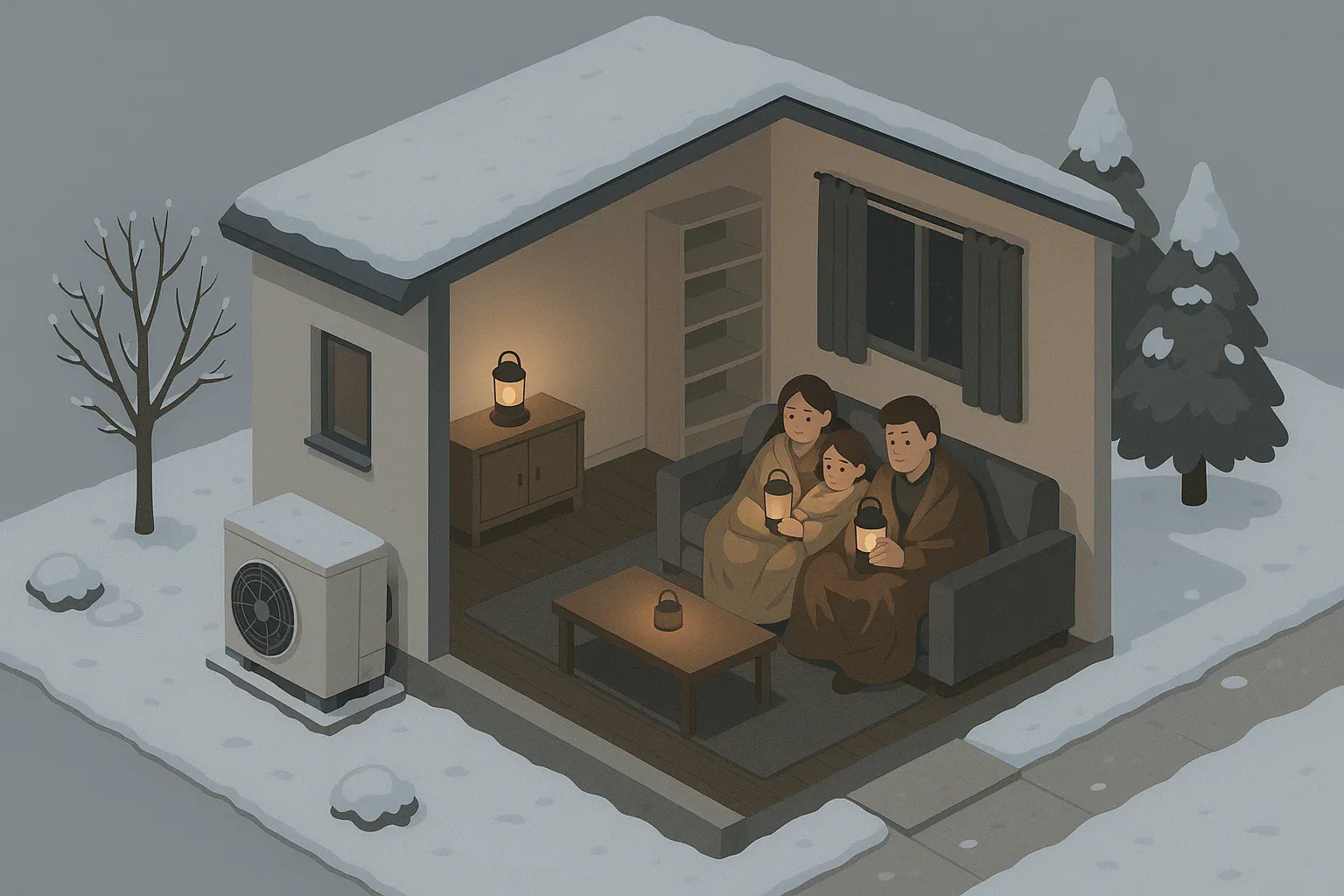
Can a heat pump run during a power outage?
A standard electric heat pump stops working as soon as the power goes out. The outdoor unit, indoor air handler, and controls all need electricity. Without it, the system cannot move heat, even if the outside temperature is mild.
To keep a heat pump running during an outage, you need a power source large enough to handle its electrical load and safe enough to use for several hours or days. For most homes, that means a permanently installed standby generator or a carefully sized whole-house battery system, not a small portable generator.
Because those systems are expensive and complex, many households focus instead on staying safe and reasonably comfortable until grid power returns, using simpler backup heat or cooling strategies.
What actually works when the power goes out
When the grid fails, think in layers:
- Short outage (a few hours): Keep heat or cool air trapped inside, use clothing and blankets, and avoid adding moisture (like long hot showers) that can make the home feel clammy.
- Medium outage (half a day to a day): Add safe backup heat or cooling in one or two rooms, and protect pipes if it is below freezing.
- Longer outage (multi-day): Rely on safe, non-electric heat or cooling options, consider staying with friends, family, or a community shelter if your home becomes unsafe.
Your heat pump itself will not help once power is gone, but your home’s insulation, air sealing, and layout can buy you time. A well-insulated home may stay above freezing for many hours even in cold weather, while a drafty home can cool down quickly.
How long your home may stay warm or cool
Every home is different, but a few factors strongly affect how quickly temperatures change inside when the heat pump shuts off:
- Insulation and air sealing: Better insulation and fewer drafts slow heat loss in winter and heat gain in summer.
- Outdoor temperature and wind: Colder, windier weather pulls heat out faster; hot sun heats up poorly shaded homes quickly.
- Home size and layout: Smaller, compact homes often change temperature faster than larger, well-insulated ones, but large open spaces can feel drafty.
- Thermal mass: Heavy materials like brick, concrete, and stone can slow temperature swings.
Because conditions vary, it is safer to plan for faster temperature changes than you hope. If you have infants, older adults, or anyone with medical conditions that are sensitive to heat or cold, build your plan around their needs first.
Backup power for a heat pump: realistic limits
Heat pumps draw a lot of power, especially in cold weather or when using electric resistance backup strips. That makes them challenging to run from small backup systems.
Portable generators
Most small portable portable generators are not designed to start and run a central heat pump. Trying to do so can overload the generator or damage equipment. If you are considering this option:
- Have a licensed electrician calculate the starting and running load of your specific heat pump.
- Follow the generator and heat pump manufacturer instructions exactly.
- Use a proper transfer switch; never backfeed a home through a wall outlet.
Improper generator use can cause carbon monoxide poisoning, fire, or electrocution. The U.S. Consumer Product Safety Commission provides detailed guidance on portable generator safety.
Standby generators and whole-house batteries
A permanently installed standby generator or whole-house battery system can sometimes run a heat pump, but only if it is sized and wired for that load. This usually requires:
- Professional design and installation.
- Careful selection of which circuits are backed up.
- Clear limits on what can be used at the same time.
Even with a large backup system, you may choose to run the heat pump only part-time during an outage to conserve fuel or battery capacity.
Small battery backups
Portable power stations and small battery backups are useful for lights, phones, modems, and some medical devices, but they are not suitable for running a central heat pump. Treat them as a way to keep communication and basic lighting going, not as whole-home climate control.
Safer backup heat options when the heat pump is off
If you live where winter outages are possible, it is wise to plan a backup heat source that does not depend on your heat pump. Any fuel-burning device adds risk, so safety comes first.
Electric space heaters (when limited power is available)
If you have some backup electricity (for example, from a generator that cannot run the whole heat pump), a few electric space heaters can warm a small area:
- Use only space heaters with automatic tip-over and overheat shutoff.
- Keep at least 3 feet of clearance from anything that can burn.
- Plug directly into a wall outlet or properly wired generator circuit, not a power strip.
- Turn them off when you sleep or leave the room, unless a professional or manufacturer specifically states that your model is designed for attended overnight use.
The National Fire Protection Association offers guidance on space heater safety in the home.
Non-electric heaters
Some homes have non-electric backup heat, such as certain gas fireplaces, wood stoves, or vented gas heaters. These can be valuable during an outage, but only if they are properly installed, maintained, and used according to the manufacturer’s instructions.
Key points:
- Use only heaters that are approved for indoor use and correctly vented, if required.
- Never use outdoor grills, camp stoves, or portable generators indoors or in enclosed spaces like garages or basements.
- Install and maintain carbon monoxide (CO) alarms on every level of your home and outside sleeping areas.
The U.S. Centers for Disease Control and Prevention explains how to prevent carbon monoxide poisoning during power outages.
Staying safe and comfortable without backup power
If you do not have a generator or alternate heat source, you can still reduce risk and discomfort during a short outage.
In cold weather
- Close off unused rooms and focus on one or two spaces.
- Layer clothing and bedding instead of relying on a single heavy blanket.
- Use draft stoppers (towels, rugs) at the bottom of doors and around leaky windows.
- Open curtains on sunny windows during the day and close them tightly at night.
- Protect pipes by opening cabinet doors under sinks and letting a small trickle of water run if temperatures are expected to drop below freezing and local water guidance allows it.
For broader cold-weather outage tips, see the guidance on power outages from Ready.gov.
In hot weather
- Close blinds and curtains on sun-facing windows.
- Use cross-ventilation by opening windows on opposite sides of the home when outdoor air is cooler than indoors.
- Limit cooking heat by using outdoor grills away from doors and windows, and never indoors or in garages.
- Use cool cloths and frequent sips of water to help your body manage heat.
Heat can be dangerous for infants, older adults, and people with certain medical conditions. Local public health agencies often open cooling centers during extreme heat; follow their guidance if your home becomes too hot to stay safe.
Planning ahead for your household
A simple plan can make a power outage much less stressful, especially if you rely on a heat pump for all your heating and cooling.
- Know your priorities: Decide in advance which rooms you will focus on heating or cooling and who in your household is most vulnerable to temperature extremes.
- Stock basic supplies: Flashlights, extra batteries, blankets, warm clothing, battery-powered fans, and a small supply of shelf-stable food and water.
- List safe places to go: Friends, family, or community shelters you could use during a long outage.
- Review medical needs: Talk with healthcare providers about any temperature-sensitive medications or equipment and how to manage them during outages.
- Talk with a professional: If you are considering a generator, whole-house battery, or new backup heater, consult a licensed electrician or qualified heating contractor who can evaluate your specific home and equipment.
Local building codes, utility rules, and climate all matter. When official guidance from local authorities or your utility conflicts with general advice, follow the local instructions.
Frequently asked questions
Can a mini-split heat pump run on a small generator?
Some smaller mini-split systems draw less power than a central heat pump, but they still have significant starting and running loads. Whether a specific generator can run a specific mini-split depends on the exact models and how they are wired. A licensed electrician should review the equipment specifications and local codes before you plan to power any heat pump from a generator.
Will my heat pump automatically restart after a power outage?
Most modern heat pumps will restart on their own once power is restored, often after a short delay to protect the compressor. If your system does not come back on, check your thermostat settings and breakers first. If it still will not run, contact a qualified HVAC technician rather than repeatedly cycling breakers or changing wiring.
Is it safe to use my oven or stove for heat during an outage?
Using a gas oven or stove for space heating is unsafe because it can produce dangerous levels of carbon monoxide and increase fire risk. Electric ovens and stoves can also be a fire hazard when used as heaters. It is safer to use heating equipment that is designed and approved for space heating and to follow the manufacturer’s instructions.
Should I leave my heat pump on or off if a storm is coming?
In most cases, you can leave your heat pump on during a storm. Some people choose to pre-heat or pre-cool their home slightly before severe weather so the interior stays comfortable longer if power fails. If you expect flooding or have been advised by local authorities or your utility to shut off power, follow those instructions and consult a qualified professional afterward before restarting equipment that may have been exposed to water.
- Simple checklists and realistic planning
- Water, power, lighting, and pantry basics
- Family plans (kids, pets, seniors) and seasonal prep
Affiliate disclosure
As an Amazon Associate, we earn from qualifying purchases. Some links on this site may be affiliate links. If you buy through these links, we may earn a small commission at no extra cost to you. This helps support our content. Learn more.